#EndFGM

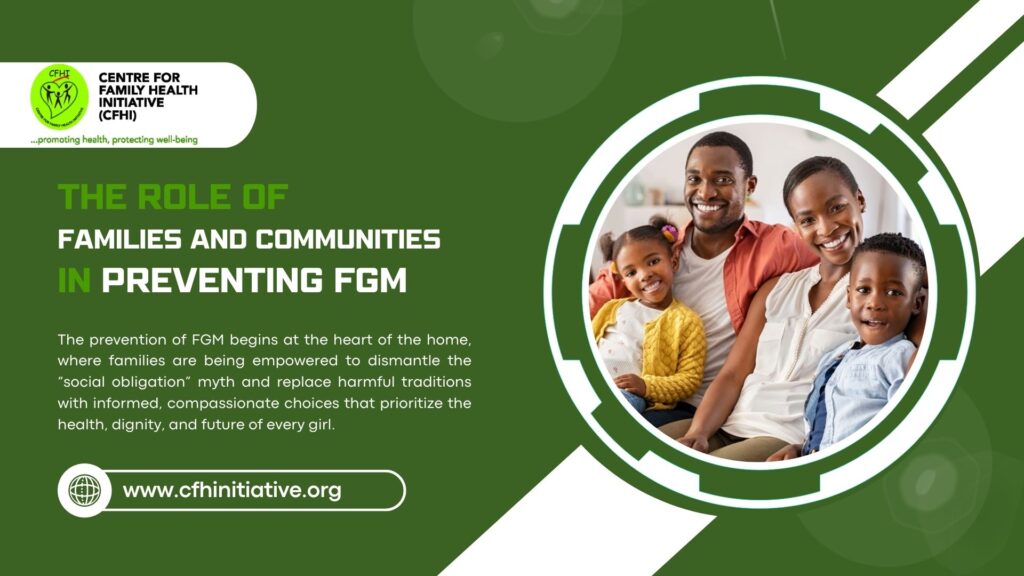
The Role of Families and Communities in Preventing FGM

In the landscape of global health in 2026, Female Genital Mutilation (FGM) stands as one of the most persistent violations of human rights, yet the tide is beginning to turn through sophisticated, community-led interventions. As of this year, over 230 million women and girls alive today have undergone the procedure, and UNICEF projects that 4.5 million more remain at risk in 2026 alone [1]. The struggle to end this practice is no longer just a legal battle; it has evolved into a deep-rooted cultural shift focusing on the intersection of family protection and communal health [4].

The prevention of FGM begins at the heart of the home, where families are being empowered to dismantle the “social obligation” myth. Recent research from the UNFPA-UNICEF Joint Programme indicates that when mothers are provided with formal education and economic agency, the likelihood of their daughters being cut drops significantly [3]. Families are now being reached through “Positive Masculinity” programs, where over 800,000 men and boys have pledged to protect their female relatives, challenging the outdated notion that FGM is a prerequisite for marriageability [3]. By addressing the family as the primary decision-making unit, advocacy groups are successfully replacing fear of social exclusion with a shared commitment to a daughter’s physical integrity and future health.

Moving beyond the front door, the most effective preventative measure in 2026 has been the rise of Public Declarations of Abandonment within local communities. This collective approach shifts the “social contract,” ensuring that no single family feels isolated in their choice to stop the practice. Many regions have successfully implemented Alternative Rites of Passage (ARP), which preserve the cultural celebration of womanhood through education, mentorship, and gifts minus the physical harm. This allows communities to maintain their rich heritage while evolving their health standards. Simultaneously, health systems are closing the gap on “medicalization” the dangerous trend of health professionals performing the cut. The World Health Organization has recently tightened codes of conduct, training midwives and doctors to serve as the first line of defense, educating parents on the $1.4 billion annual global cost of treating FGM-related complications, ranging from obstetric hemorrhage to lifelong psychological trauma [2].

To ensure these gains are permanent, a robust network of local surveillance and cross-border cooperation has emerged. In 2026, over 3,200 communities have established “watchdog” groups that monitor girls during school holidays, a peak time for the practice [3]. These grassroots efforts, supported by national laws that criminalize “vacation cutting,” create a safety net that follows a girl from her village to the city and beyond. The data proves that this holistic approach works; for every dollar invested in these prevention measures, there is a tenfold return in health savings and economic productivity [2]. By weaving together, the strength of the family unit with the collective will of the community, we are finally moving toward a world where every girl can grow up whole, healthy, and empowered.

Call to Action

The end of FGM is within our reach, but it requires your voice and your action. You can make a difference today:

  • Educate and Advocate: Share the facts about the health risks of FGM within your social circles. Silence is where the practice thrives.
  • Support Grassroots Organizations: Donate to or volunteer with local NGOs that facilitate Alternative Rites of Passage and provide education to at-risk families.
  • Report Risk: If you know a girl is at risk of being subjected to FGM, contact local child protection services or international helplines immediately.
  • Engage Men and Boys: Start conversations with the men in your community about the importance of protecting the rights and health of women and girls.

Monday Health Burst is an initiative of CFHI to address issues of basic health concern. Join us every Monday on all our social media platforms for more episodes.

References

  • UNICEF Data (2025/2026): FGM Prevalence and Statistics
  • WHO Global Health Update: The Cost of FGM and Prevention Strategies
  • UNFPA 2025 Annual Report: Eliminating FGM through Community Action
  • United Nations: International Day of Zero Tolerance for FGM


The Role of Families and Communities in Preventing FGM Read More »
Female Genital Mutilation as Gender-Based Violence: A Violation of Girls’ Rights

Female Genital Mutilation (FGM) is a harmful traditional practice and a clear form of gender-based violence that fundamentally violates the human rights of girls and women. The World Health Organization defines FGM as all procedures involving the partial or total removal of the external female genitalia or other injury to female genital organs for non-medical reasons (1). The practice has no health benefits and causes lifelong harm, violating girls’ rights to health, bodily integrity, security, and freedom from cruel, inhuman, or degrading treatment (1).

Globally, more than 230 million girls and women alive today have undergone FGM, spanning at least 30 countries across Africa, the Middle East, and parts of Asia (1). Each year, an estimated 4 million additional girls remain at risk, most of them under the age of 15, highlighting the urgent need for accelerated action (1). These figures reflect not isolated incidents, but a sustained pattern of violence rooted in gender inequality.

FGM persists primarily because of unequal power relations and entrenched social norms that subordinate girls and women. In many communities, the practice is falsely justified as a cultural rite of passage, a prerequisite for marriage, or a means of controlling female sexuality. These beliefs reinforce the notion that girls’ bodies are subject to communal control rather than individual rights, a hallmark of gender-based violence (2).

FGM remains most prevalent in sub-Saharan Africa, with some of the highest rates recorded in Somalia (approximately 99%), Guinea (94.5%), and Djibouti (93%) among women aged 15–49 (3). In Nigeria, an estimated 19.9 million girls and women have undergone FGM, making it one of the countries with the highest absolute number of survivors globally (4). Prevalence varies significantly across regions, with higher rates reported in the South-East and South-West, including states such as Imo, where prevalence exceeds 60% in some communities (4). These statistics underscore how deeply embedded the practice remains at both national and sub-national levels.

As a form of violence, FGM is typically carried out without informed consent, often during childhood, and results in enduring physical, psychological, and social harm. Survivors frequently report anxiety, emotional distress, reduced self-esteem, and loss of bodily autonomy, which can persist throughout adulthood (5). The trauma associated with the experience often affects girls’ confidence, participation in education, and ability to form healthy relationships later in life.

Beyond psychological harm, FGM has serious implications for sexual and reproductive health. It increases the risk of complications during pregnancy and childbirth, contributes to maternal and neonatal morbidity, and places additional strain on already fragile health systems in low-resource settings (1). These consequences further affirm why FGM is recognized globally as both a public health crisis and a human rights violation.

Recognizing its severity, the international community has committed to eliminating FGM under Sustainable Development Goal (SDG) Target 5.3, with a global target year of 2030 (5). Agencies such as the World Health Organization (WHO) and UNICEF have led coordinated efforts focusing on legal reform, community engagement, survivor-centred health services, and prevention strategies that challenge harmful gender norms (6).

At the national level, progress has been uneven. In countries like Somalia, WHO and partners have supported health system reforms, professional training, and community-based interventions to address both FGM and broader gender-based violence (7). In Nigeria, UNICEF has supported community-led abandonment initiatives in high-prevalence states, mobilizing local leaders, families, and youth to protect girls at risk and shift social norms (4).

The impact of FGM on confidence and well-being cannot be overstated. Many survivors live with lasting psychological effects, including post-traumatic stress, fear, and diminished self-worth, which influence education, employment, and social participation (5). These invisible scars are often overlooked, yet they shape the life chances of millions of women and girls.

Ending FGM requires decisive, multi-level action. Governments must strengthen and enforce laws that criminalize the practice. Communities must be supported to challenge harmful norms through dialogue and education. Health systems must provide survivor-centred care, including mental health services. Men and boys must be engaged as allies in promoting gender equality, while robust data systems are needed to monitor progress and guide policy decisions. Only through sustained, coordinated action can FGM be eliminated, and girls’ rights fully protected.

FGM is not culture it is violence. Ending it is not optional; it is an urgent moral, public health, and human rights imperative.

References

  1. World Health Organization (WHO). Female Genital Mutilation.
    https://www.who.int/health-topics/female-genital-mutilation
  2. WHO Regional Office for Africa. Female Genital Mutilation.
    https://www.afro.who.int/health-topics/female-genital-mutilation
  3. UNICEF. New Statistical Report on Female Genital Mutilation.
    https://www.unicef.org/png/press-releases/new-statistical-report-female-genital-mutilation-shows-harmful-practice-global
  4. UNICEF Nigeria. FGM on the Rise Among Young Nigerian Girls.
    https://www.unicef.org/nigeria/press-releases/unicef-warns-fgm-rise-among-young-nigerian-girls
  5. UNICEF DATA. Female Genital Mutilation Statistics.
    https://data.unicef.org/topic/gender/fgm/
  6. World Health Organization. New Recommendations to End Medicalized FGM.
    https://www.who.int/news/item/28-04-2025-who-issues-new-recommendations-to-end-the-rise-in–medicalized–female-genital-mutilation-and-support-survivors
  7. World Health Organization. Addressing FGM and GBV in Somalia.
    https://www.who.int/about/accountability/results/who-results-report-2020-mtr/country-story/2023/improving-maternal-health-outcomes-by-addressing-female-genital-mutilation-and-gender-based-violence-in-somalia


Female Genital Mutilation as Gender-Based Violence: A Violation of Girls’ Rights Read More »

Female Genital Mutilation as Gender-Based Violence: A Violation of Girls’ Rights

Female Genital Mutilation (FGM) is a harmful traditional practice and a clear form of gender-based violence that fundamentally violates the human rights of girls and women. The World Health Organization defines FGM as all procedures involving the partial or total removal of the external female genitalia or other injury to female genital organs for non-medical reasons (1). The practice has no health benefits and causes lifelong harm, violating girls’ rights to health, bodily integrity, security, and freedom from cruel, inhuman, or degrading treatment (1).

Globally, more than 230 million girls and women alive today have undergone FGM, spanning at least 30 countries across Africa, the Middle East, and parts of Asia (1). Each year, an estimated 4 million additional girls remain at risk, most of them under the age of 15, highlighting the urgent need for accelerated action (1). These figures reflect not isolated incidents, but a sustained pattern of violence rooted in gender inequality.

FGM persists primarily because of unequal power relations and entrenched social norms that subordinate girls and women. In many communities, the practice is falsely justified as a cultural rite of passage, a prerequisite for marriage, or a means of controlling female sexuality. These beliefs reinforce the notion that girls’ bodies are subject to communal control rather than individual rights, a hallmark of gender-based violence (2).

FGM remains most prevalent in sub-Saharan Africa, with some of the highest rates recorded in Somalia (approximately 99%), Guinea (94.5%), and Djibouti (93%) among women aged 15–49 (3). In Nigeria, an estimated 19.9 million girls and women have undergone FGM, making it one of the countries with the highest absolute number of survivors globally (4). Prevalence varies significantly across regions, with higher rates reported in the South-East and South-West, including states such as Imo, where prevalence exceeds 60% in some communities (4). These statistics underscore how deeply embedded the practice remains at both national and sub-national levels.

As a form of violence, FGM is typically carried out without informed consent, often during childhood, and results in enduring physical, psychological, and social harm. Survivors frequently report anxiety, emotional distress, reduced self-esteem, and loss of bodily autonomy, which can persist throughout adulthood (5). The trauma associated with the experience often affects girls’ confidence, participation in education, and ability to form healthy relationships later in life.

Beyond psychological harm, FGM has serious implications for sexual and reproductive health. It increases the risk of complications during pregnancy and childbirth, contributes to maternal and neonatal morbidity, and places additional strain on already fragile health systems in low-resource settings (1). These consequences further affirm why FGM is recognized globally as both a public health crisis and a human rights violation.

Recognizing its severity, the international community has committed to eliminating FGM under Sustainable Development Goal (SDG) Target 5.3, with a global target year of 2030 (5). Agencies such as the World Health Organization (WHO) and UNICEF have led coordinated efforts focusing on legal reform, community engagement, survivor-centred health services, and prevention strategies that challenge harmful gender norms (6).

At the national level, progress has been uneven. In countries like Somalia, WHO and partners have supported health system reforms, professional training, and community-based interventions to address both FGM and broader gender-based violence (7). In Nigeria, UNICEF has supported community-led abandonment initiatives in high-prevalence states, mobilizing local leaders, families, and youth to protect girls at risk and shift social norms (4).

The impact of FGM on confidence and well-being cannot be overstated. Many survivors live with lasting psychological effects, including post-traumatic stress, fear, and diminished self-worth, which influence education, employment, and social participation (5). These invisible scars are often overlooked, yet they shape the life chances of millions of women and girls.

Ending FGM requires decisive, multi-level action. Governments must strengthen and enforce laws that criminalize the practice. Communities must be supported to challenge harmful norms through dialogue and education. Health systems must provide survivor-centred care, including mental health services. Men and boys must be engaged as allies in promoting gender equality, while robust data systems are needed to monitor progress and guide policy decisions. Only through sustained, coordinated action can FGM be eliminated, and girls’ rights fully protected.

FGM is not culture it is violence. Ending it is not optional; it is an urgent moral, public health, and human rights imperative.

Speak Wednesday is an initiative of CFHI to address issues around gender-base violence and gender-bias.

References

  1. World Health Organization (WHO). Female Genital Mutilation.
    https://www.who.int/health-topics/female-genital-mutilation
  2. WHO Regional Office for Africa. Female Genital Mutilation.
    https://www.afro.who.int/health-topics/female-genital-mutilation
  3. UNICEF. New Statistical Report on Female Genital Mutilation.
    https://www.unicef.org/png/press-releases/new-statistical-report-female-genital-mutilation-shows-harmful-practice-global
  4. UNICEF Nigeria. FGM on the Rise Among Young Nigerian Girls.
    https://www.unicef.org/nigeria/press-releases/unicef-warns-fgm-rise-among-young-nigerian-girls
  5. UNICEF DATA. Female Genital Mutilation Statistics.
    https://data.unicef.org/topic/gender/fgm/
  6. World Health Organization. New Recommendations to End Medicalized FGM.
    https://www.who.int/news/item/28-04-2025-who-issues-new-recommendations-to-end-the-rise-in–medicalized–female-genital-mutilation-and-support-survivors
  7. World Health Organization. Addressing FGM and GBV in Somalia.
    https://www.who.int/about/accountability/results/who-results-report-2020-mtr/country-story/2023/improving-maternal-health-outcomes-by-addressing-female-genital-mutilation-and-gender-based-violence-in-somalia


Female Genital Mutilation as Gender-Based Violence: A Violation of Girls’ Rights Read More »

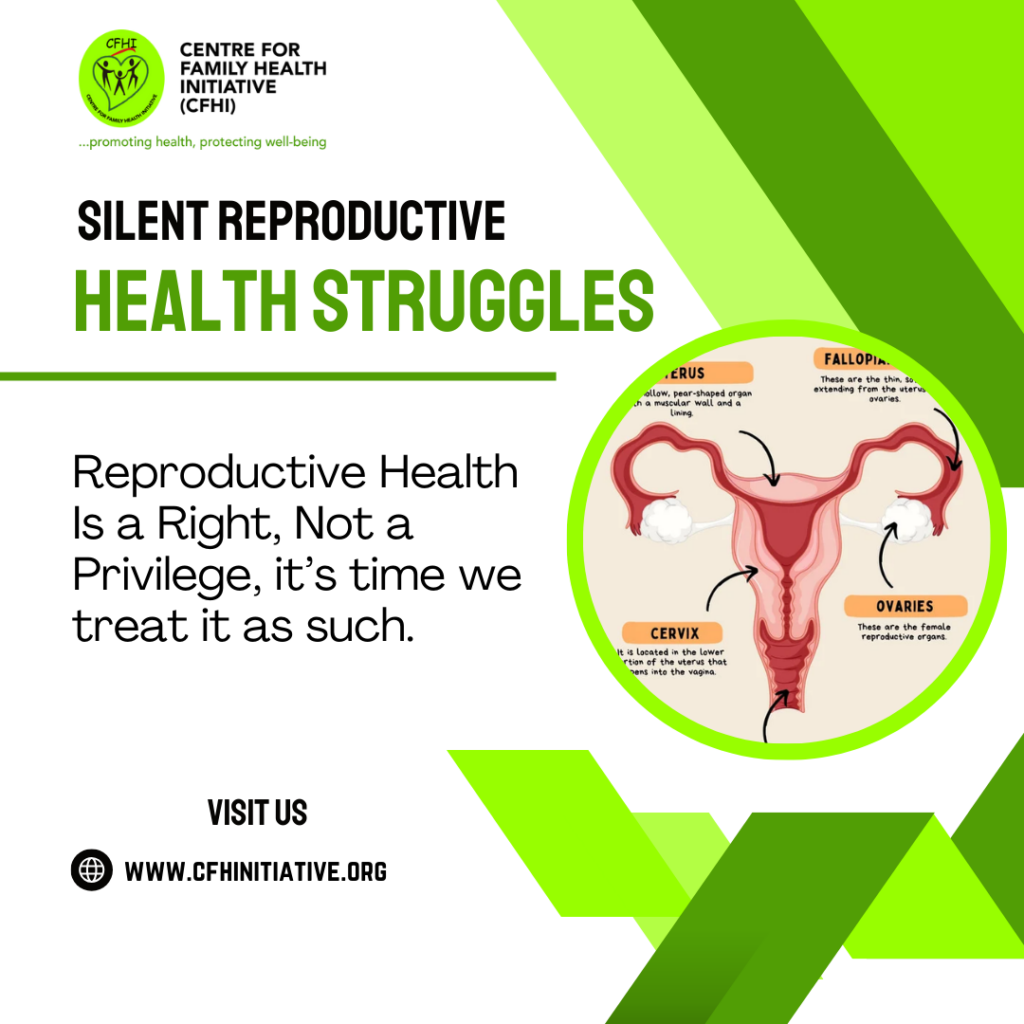
Silent Reproductive Health Struggles

Women’s reproductive health is fundamental to their overall well-being, yet millions of women globally and in Nigeria face persistent, often silent challenges that compromise their health, autonomy, and quality of life [1]. Despite progress in some areas, vast inequities remain in access to services, information, and rights leaving many women vulnerable to preventable health problems [2].

One of the major silent struggles is limited access to essential reproductive health services, including family planning, maternal care, and safe delivery support. In sub-Saharan Africa, one in four women who wish to delay or stop childbearing do not use any contraceptive method, reflecting gaps in availability, choice, and quality of reproductive care [1][5]. These shortfalls contribute to high rates of unintended pregnancies, unsafe abortions, and increased maternal morbidity and mortality. Globally, about 800 women die each day from pregnancy-related causes, many of which are preventable with proper services and support [1].

In Nigeria, reproductive health disparities are stark. A survey of reproductive health concerns found that sexual health, contraception, infections, fertility issues, and reproductive cancers were among the most pressing worries for women, indicating broad unmet needs across the reproductive spectrum [3]. Despite various policies, only a few Nigerian states meet benchmarks for women’s participation in decisions about their sexual and reproductive health, reflecting systemic barriers rooted in socio-cultural norms and limited autonomy [4]. Economic challenges also contribute, with millions of women lacking access to modern contraceptives and comprehensive family planning services due to cost, misinformation, fear of side effects, cultural opposition, and weak health systems [5][6].

Another under-recognized struggle is infertility, which affects a significant portion of women yet remains stigmatized and poorly supported. Recent WHO guidance highlights infertility as a major public health concern, with more than one in six people of reproductive age affected [7]. Access to affordable fertility evaluation and treatment is limited in many countries, forcing women to choose between financial hardship and their desire for children [7].

Maternal health remains a critical issue. Globally, approximately 287,000 women die yearly from complications in pregnancy and childbirth, with nearly all these deaths occurring in low- and middle-income settings where health systems are weak and resources scarce [1]. In areas affected by conflict or economic strain, such as parts of northern Nigeria, women face even greater risks due to disrupted services, insecurity, and collapsed care infrastructure [8].

The impact of these struggles extends beyond physical health. When women cannot access respectful, quality reproductive care, the consequences ripple into social and economic domains limiting educational opportunities, reducing workforce participation, and perpetuating cycles of poverty and inequality [2].

Improving women’s reproductive health requires a holistic approach that ensures affordable and accessible services such as contraception, antenatal care, skilled delivery, and emergency support reach even the most underserved communities [1][5], while also equipping women with accurate, culturally sensitive information to make informed choices about their bodies and health [2]. At the same time, policies must actively protect women’s autonomy and reproductive rights by challenging harmful norms and discrimination [2][4], supported by strong, well-funded health systems with trained personnel to guarantee continuity of care, especially in fragile settings [1][8]. Integrating affordable infertility care and psychosocial support into routine reproductive health services is also essential to address the often hidden emotional and social burdens many women silently endure [7].

Speak Wednesday is an initiative of CFHI to address issues around gender-base violence and gender-bias.

References

  1. WHO Regional Office for Africa. Women’s Health. Available from: https://www.afro.who.int/health-topics/womens-health
  2. United Nations Population Fund (UNFPA). New UNFPA report finds 30 years of progress in sexual and reproductive health has mostly ignored the most marginalized communities. Available from: https://www.unfpa.org/press/new-unfpa-report-finds-30-years-progress-sexual-and-reproductive-health-has-mostly-ignored
  3. Sa’adatu TS, Dieng B, Danmadami AM. Reproductive health issues of concern among Nigerians: an online survey. Int J Community Med Public Health. Available from: https://doi.org/10.18203/2394-6040.ijcmph20234114
  4. Premium Times Nigeria. Only eight Nigerian states meet women’s health benchmark – Report. Available from: https://www.premiumtimesng.com/news/top-news/830200-only-eight-nigerian-states-meet-womens-health-benchmark-report.html
  5. World Health Organization. Sexual and Reproductive Health and Research (SRH): Family planning and contraception. Available from: https://www.who.int/teams/sexual-and-reproductive-health-and-research-%28srh%29
  6. Ballard Brief. Barriers to Family Planning for Women in West Africa. Available from: https://ballardbrief.byu.edu/issue-briefs/barriers-to-family-planning-for-women-in-west-africa
  7. WHO releases first global guideline on infertility care. Reddit; 2025. Available from: https://www.reddit.com/r/EmbryologyIVFSupport/comments/1pcjrzh/who_releases_first_global_guideline_on/
  8. AP News. Pregnancy has become a nightmare for many women in Nigeria’s conflict-hit north. Available from: https://apnews.com/article/c5846961ed87cddd8a24d1c2b04564a0

Silent Reproductive Health Struggles Read More »

CFHI Leads GBV Awareness Outreach at King Fahad Hospital to Mark 16 Days of Activism

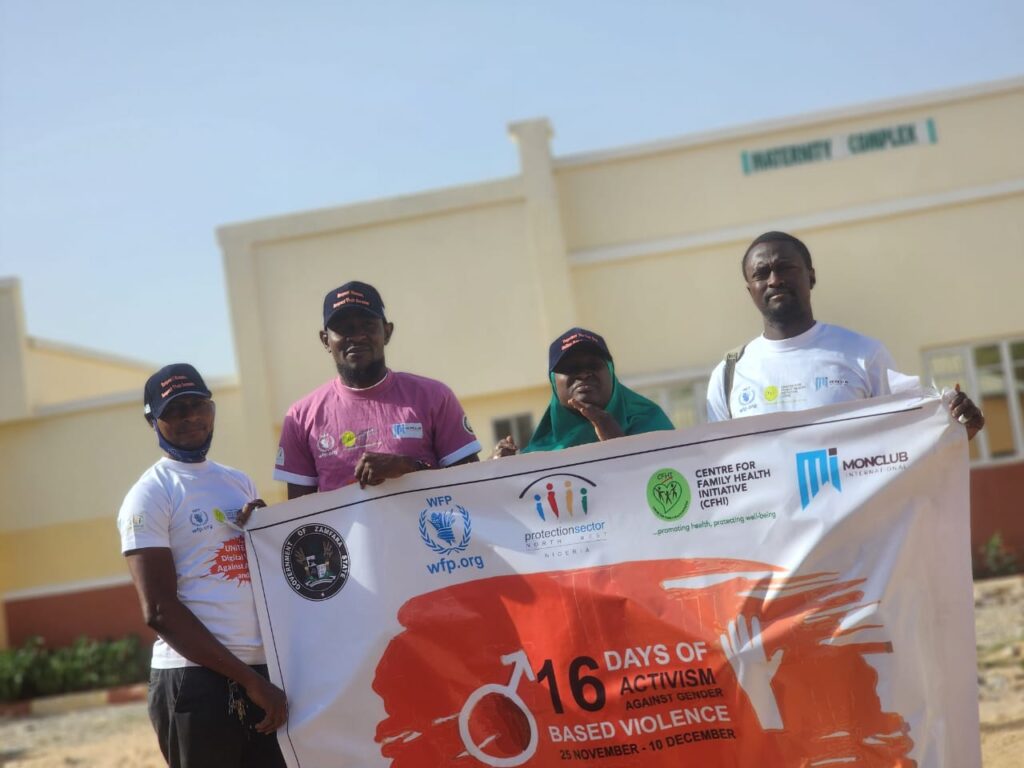
As part of activities commemorating the 2025 16 Days of Activism Against Gender-Based Violence, the Centre for Family Health Initiative (CFHI) in collaboration with MonClub International conducted a targeted GBV awareness and sensitization outreach at King Fahad Hospital in Gusau, Zamfara State. The session which held during the facility’s Antenatal Clinic (ANC) day, formed part of CFHI’s intensified advocacy to reduce violence against women and girls and strengthen community-level prevention systems within maternal health settings.

More than 120 pregnant women and caregivers in attendance received comprehensive enlightenment on the various forms of GBV including domestic violence, emotional abuse, harmful traditional practices, and sexual abuse. Facilitators also emphasized key prevention approaches, early disclosure, available medical and psychosocial support systems, and safe channels for reporting cases. Questions raised by attendees were addressed to promote improved knowledge, confidence, and help-seeking behavior.

Stakeholders present at the outreach included CFHI and MonClub International staff, ANC matrons, facility health workers, and a UNICEF supervision team. During the sensitization, attendees were educated on the impact of gender-based violence on maternal health, emotional wellbeing, and household stability, and further enlightened on its wider social and economic repercussions. Their participation reinforced collaborative support for survivor-centered response mechanisms and validated the effectiveness of the outreach on facility-based clients.

Facility staff expressed appreciation, noting that GBV remains an underlying barrier to maternal health outcomes, and that continuous sensitization helps improve disclosure and access to services.

The outreach was successfully executed and well-received by both participants and the facility leadership, who commended CFHI’s timely engagement during the global campaign period. CFHI reaffirmed its commitment to advancing stronger advocacy, providing information, enhancing survivor referral pathways, and working with institutional partners to scale GBV prevention initiatives across Zamfara State

CFHI Leads GBV Awareness Outreach at King Fahad Hospital to Mark 16 Days of Activism Read More »

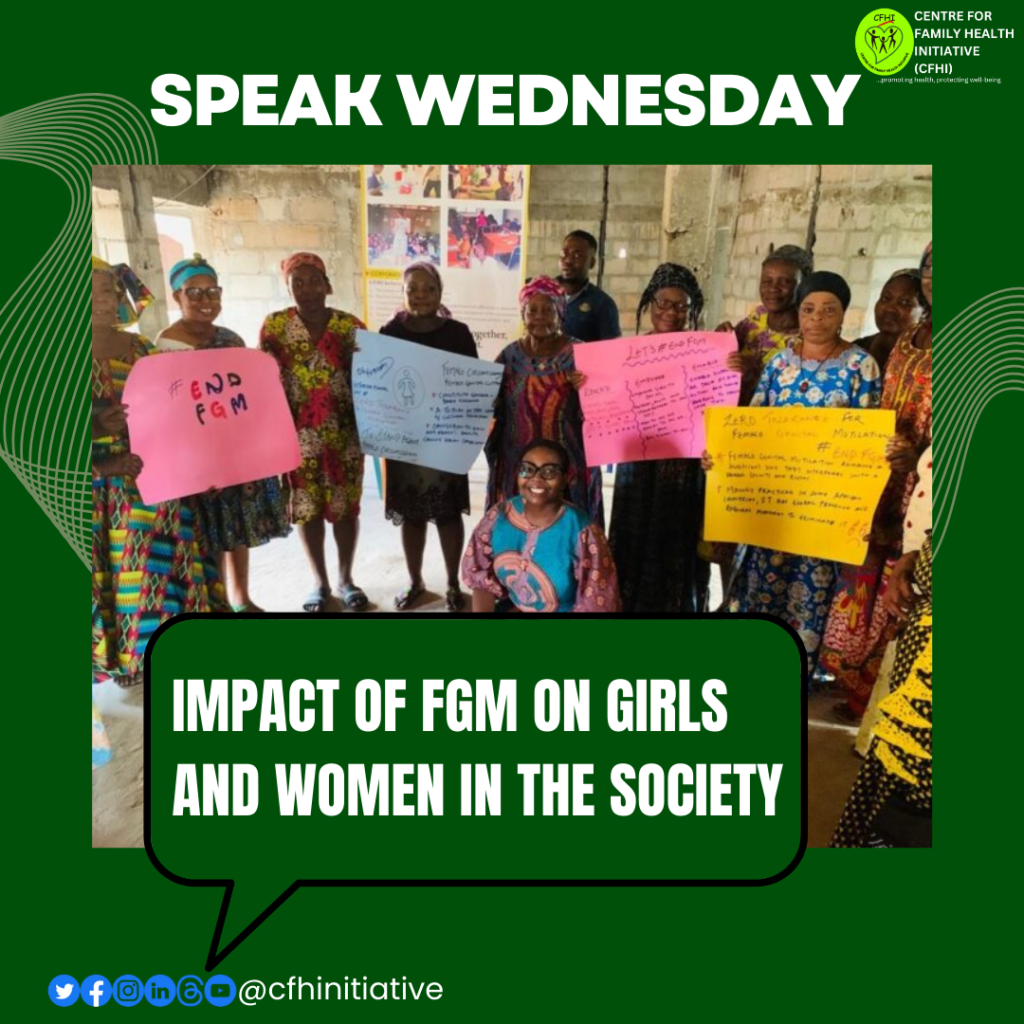
IMPACT OF FGM ON GIRLS AND WOMEN IN THE SOCIETY

The Centre for Family Health Initiative (CFHI) stands in solidarity with worldwide efforts aimed at eliminating FGM in commemoration of the International Day of Zero Tolerance for Female Genital Mutilation (FGM).

Female Genital Mutilation (FGM) is a form of gender-based violence that has plagued women and girls for centuries. It is internationally denounced as a breach of the fundamental human rights of girls and women. The United Nations reports that over 200 million girls and women currently alive have been subjected to FGM.1 Alarmingly, in the year 2024 alone, approximately 4.4 million girls—or more than 12,000 daily—are at imminent risk of undergoing FGM across the globe.2

Proponents of FGM often defend the practice by citing cultural traditions, alleging that it curtails female sexuality and preserves virginity before marriage. Others mistakenly believe that FGM offers hygienic benefits, reduces promiscuity, modifies socio-sexual behaviour, promotes fertility, and even augments marriage prospects.

However, research and studies unequivocally demonstrate that FGM offers no health advantages to girls or women. On the contrary, those subjected to FGM experience immediate complications such as intense pain, shock, excessive bleeding, infection, and difficulties urinating. The long-term repercussions are equally dire, adversely affecting their sexual, reproductive, and mental health. These findings underscore the fact that FGM is a cultural practice deeply rooted in gender inequality, as highlighted by the United Nations.

The persistence of FGM underscores the critical need for comprehensive education and community engagement to dismantle myths surrounding the practice and promote gender equality. Empowering girls and women through education, providing support to communities in transitioning away from FGM, and enforcing legal frameworks that protect the rights of girls and women are vital steps towards eradicating FGM.

As we observe the International Day of Zero Tolerance for Female Genital Mutilation, CFHI echoes the call for a united action by the government, organisations, stakeholders, and individuals in the fight against FGM. It is imperative to listen to and amplify the voices of girls and women affected by FGM, to ensure their rights are protected, and to work tirelessly towards a future where every girl can grow up free from the threat of gender-based violence.

Her voice. Her future. Let’s End FGM Today.

Speak Wednesday is an initiative of CFHI to address issues around gender-based violence and gender bias.

.1. United Nations_Female Genital Mutilation Day Observance
.2. UNFPA_International Day of Zero Tolerance Female Genital Mutilation

IMPACT OF FGM ON GIRLS AND WOMEN IN THE SOCIETY Read More »

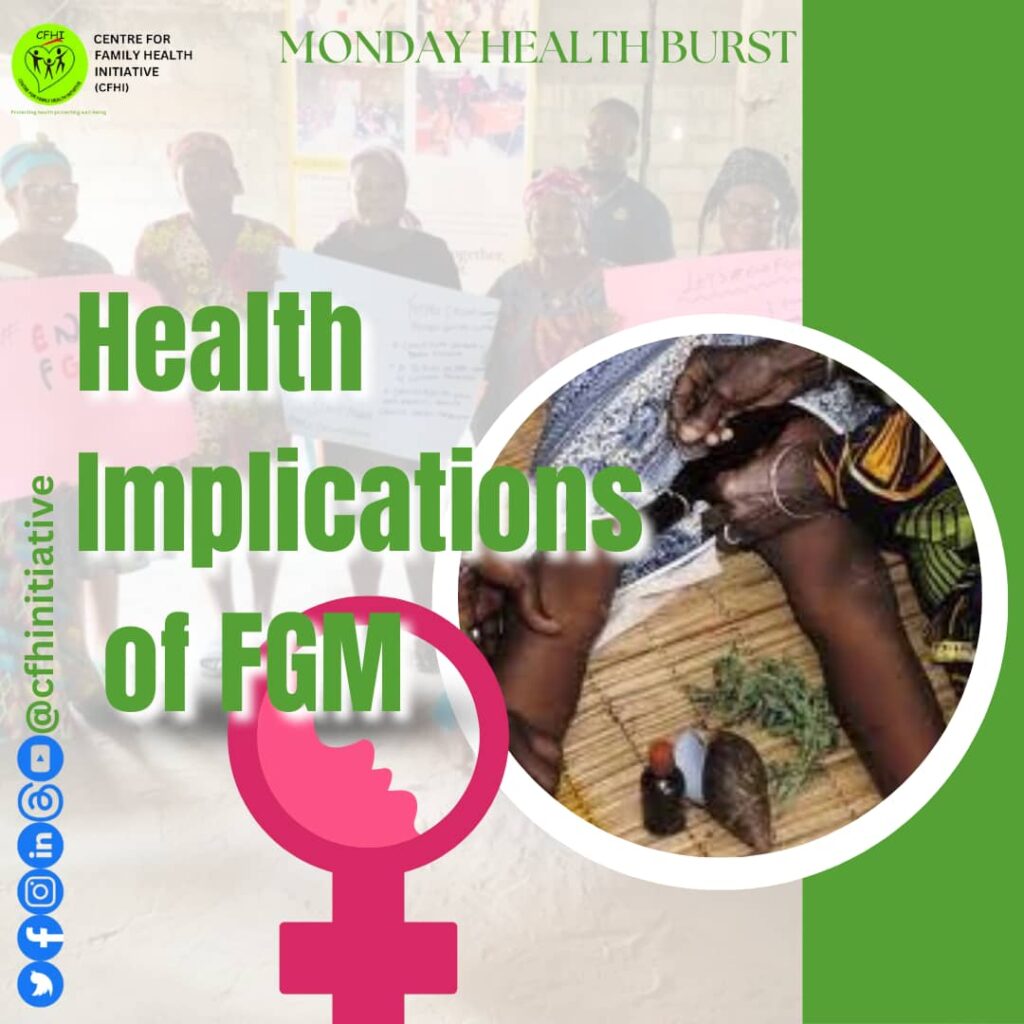
HEALTH IMPLICATIONS OF FEMALE GENITAL MUTILATION

Female Genital Mutilation (FGM) is a harmful traditional practice that involves altering or injuring the female genitalia for non-medical reasons.1 This practice, prevalent in many cultures around the world, has severe health implications for women and girls who undergo it. From physical to psychological consequences, FGM leaves a lasting impact on the well-being of individuals subjected to it. Some of the health implications include:

Immediate Complications: FGM can result in severe pain, bleeding, and shock immediately following the procedure. In some cases, it can even lead to death due to excessive bleeding or infections.

Long-term Health Issues: Women and girls who undergo FGM may face long-term health problems such as chronic pain, infections, urinary problems, and complications during childbirth. Scar tissue formation and damage to the reproductive organs can cause difficulties in sexual intercourse and menstruation.

Increased Risk of Infections: The practice of FGM often involves using unsterilized tools or performing the procedure in unsanitary conditions, leading to an increased risk of infections such as tetanus, HIV/AIDS, and hepatitis B and C.

Trauma and Psychological Distress: The experience of undergoing FGM can cause significant trauma and psychological distress, leading to anxiety, depression, and post-traumatic stress disorder (PTSD). The violation of bodily integrity and the associated pain can have long-lasting effects on mental well-being.

Interference with Sexual Functioning: FGM can interfere with sexual functioning and intimacy, causing pain during intercourse and reducing sexual pleasure. This can strain relationships and have negative effects on overall quality of life.

The health implications of FGM are profound and multifaceted, encompassing physical, psychological, and social dimensions. Efforts to address FGM must take a comprehensive approach, including education, advocacy, and support for affected individuals, as well as community engagement and legal reforms to eradicate this harmful practice and uphold the rights and dignity of women and girls.

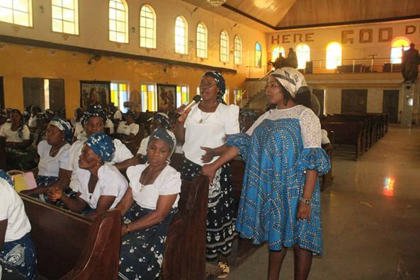
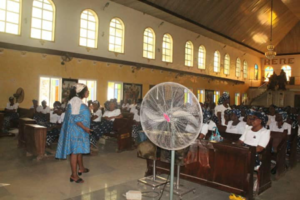
Over the years, CFHI has observed the International Day of Zero Tolerance for Female Genital Mutilation as part of its own efforts to curb Female Genital Mutilation (FGM). A notable aspect of it was the celebration held at the St. Theresa Catholic church in Anurie Omanze, Idu LGA, Imo state, wherein the community was made aware of the importance of achieving zero FGM records. Over 100 participants were reached and they all pledged to join the movement.

Monday Health Burst is an initiative of CFHI to address issues of basic health concern. Join us every Monday on all our social media platforms for more episodes.

.1. World Health Organization_Female Genital Mutilation

HEALTH IMPLICATIONS OF FEMALE GENITAL MUTILATION Read More »

Movement to End FGM Event in Abuja

Movement for Good to End Female Genital Mutilation

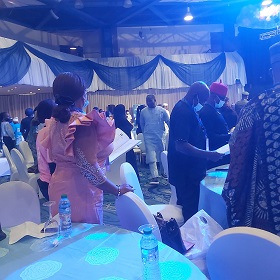
Happening now is the Movement for Good to End Female Genital Mutilation (FGM) in Nigeria, organised by Federal Ministry of Women Affairs, Nigeria in partnership with UNICEF Nigeria, United Nations, UNFPA Nigeria, and other development partners.
 
With our collective efforts, we are sure to achieve zero FGM cases in Nigeria by 2030.
 
Movement for Good to End FGM Event

Movement for Good to End Female Genital Mutilation Read More »

Say No To FGM

Speak Wednesday – Female Genital Mutilation

Following the expository overview of the practice of female genital mutilation (FGM) last week, there is no gainsaying the fact that FGM has no health benefits for girls and women, but rather constitutes a major risk for women and children who are affected.

Today on Speak Wednesday, we will be discussing one of the long-term complications of FGM which is child delivery complications. There is a high probability that women with FGM tend to experience complications during childbirth. This depends on the type of FGM, meaning the more severe the type of FGM, the more serious the complications.

A study coordinated by @WHO in 28 obstetric centres in 6 African countries including Nigeria shows that deliveries of women who had undergone genital mutilation were significantly more likely to be complicated by caesarean section, postpartum haemorrhage, and prolonged maternal hospitalization than those of women who had not.

Besides being associated with childbirth complications, FGM could lead to obstetric complications that can result in a higher incidence of infant resuscitation at delivery and intrapartum stillbirth and neonatal death.

There is no justifiable reason for FGM. It is a crime against nature’s integrity and a violation of human right, with the risk of causing trauma and leading to problems related to girls’ and women’s mental health and well-being. (WHO,2020)

#EndFGM #SpeakWednesday

Speak Wednesday – Female Genital Mutilation Read More »

FGM-Commemoration-2022 in Imo State

International Day of Zero Tolerance for Female Genital Mutilation

FGM-Commemoration-2022 Imo
In commemoration of International Day of Zero Tolerance for FGM, Centre for Family Health Initiative was at St. Theresa Catholic Church, Amurie Omanze in Isu LGA of Imo State over the weekend to deliver talk on how to achieve zero record of female genital mutilation in the community.
All participants pledged to join the movement. You too can!
 

International Day of Zero Tolerance for Female Genital Mutilation Read More »