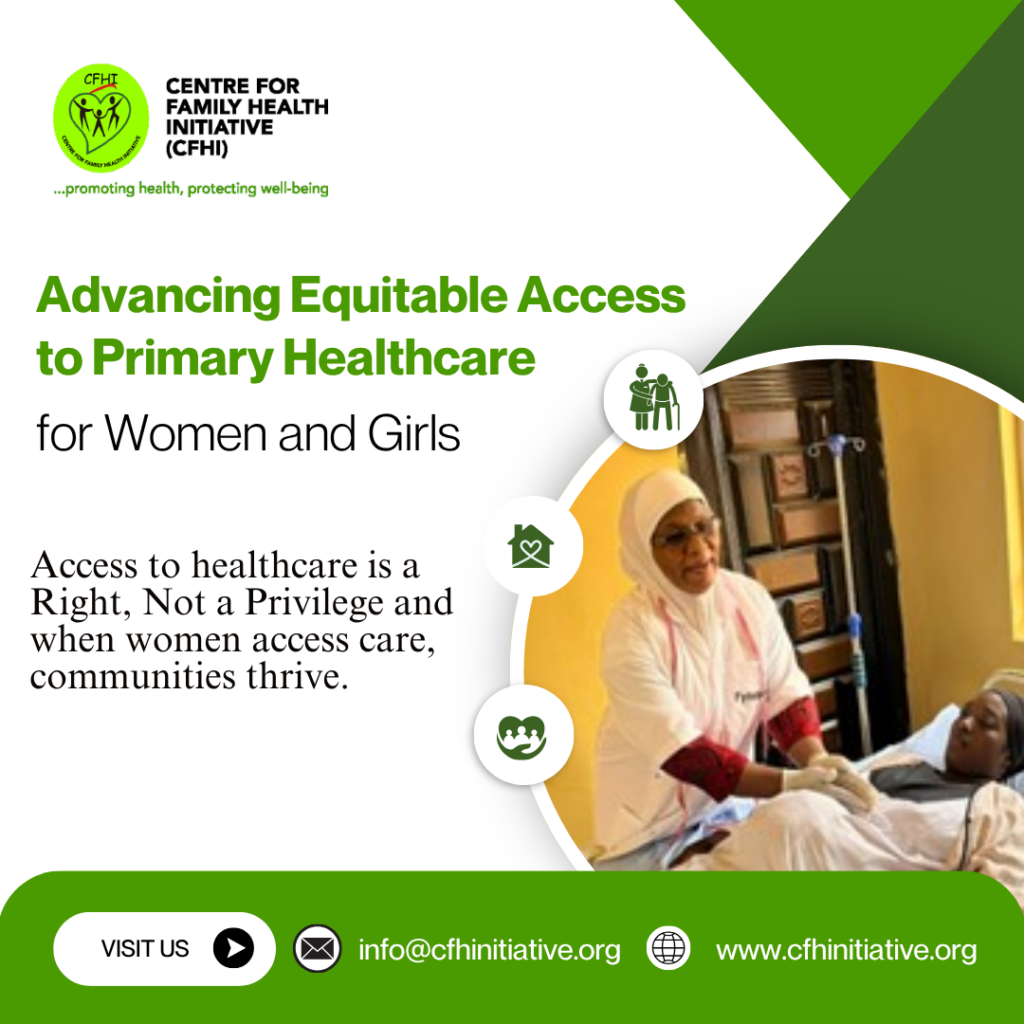
Advancing Equitable Access to Primary Healthcare for Women and Girls
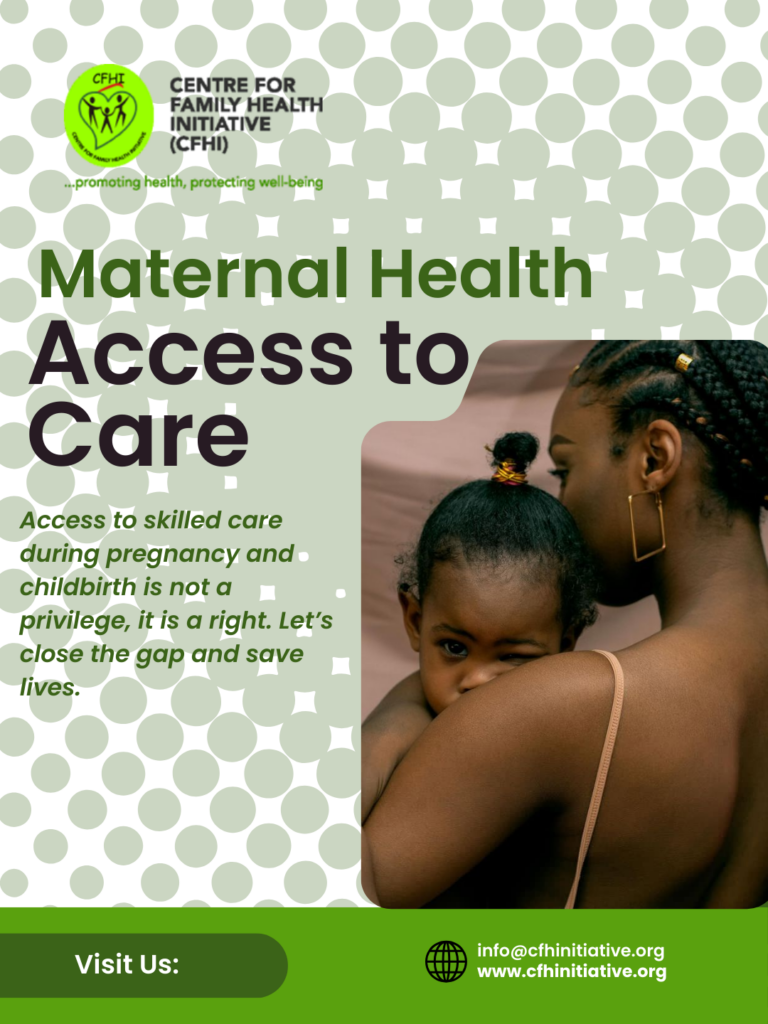
Access to quality primary healthcare is a fundamental human right, yet for millions of women and girls in Nigeria and across sub-Saharan Africa, this right remains far from reality. Despite global commitments to universal health coverage, structural inequalities continue to shape who gets care, when, and how. In Nigeria, nearly 52% of women report facing at least one barrier to accessing healthcare, with financial constraints, distance to facilities, and lack of autonomy among the most pressing challenges [1]. These barriers are not just statistics; they translate into preventable suffering and loss of life. Nigeria continues to carry one of the highest burdens of maternal mortality globally, with an estimated 145 women dying daily from pregnancy-related causes and a lifetime risk of 1 in 18 for women [2].
The roots of this inequity are deeply embedded in socioeconomic and cultural systems. For many women, especially those in rural and underserved communities, the cost of healthcare remains prohibitive. Out-of-pocket payments dominate the health financing system, and without adequate insurance coverage, seeking care often becomes a last resort rather than a first step. Even when services are available, geographic barriers such as long distances to health facilities, poor road networks, and inadequate transportation systems further limit access [3]. Compounding these challenges are entrenched gender norms that restrict women’s ability to make independent decisions about their health. Evidence shows that in some settings, more than half of healthcare providers still believe women should not independently choose family planning methods, reflecting systemic biases that undermine women’s agency [4].
Weak health systems further widen the gap. Many primary healthcare facilities lack skilled personnel, essential medicines, and functional infrastructure, making them unable to meet the needs of women and girls effectively. At the same time, the growing reliance on digital health solutions risks leaving women behind due to persistent gender gaps in digital access and literacy [5]. These overlapping barriers highlight the urgent need for a more inclusive and equitable approach to healthcare delivery.
Yet, evidence consistently shows that strengthening primary healthcare systems is one of the most effective ways to improve health outcomes for women and girls. Community-based healthcare models, particularly those that deploy trained community health workers, have demonstrated remarkable impact, contributing to reductions of up to 30% in child mortality by bringing essential services closer to households [3]. Beyond saving lives, equitable primary healthcare improves family planning uptake, enhances disease prevention, and strengthens the overall resilience of communities.
Recognizing these realities, the Nigerian government has introduced several interventions aimed at expanding access to primary healthcare. The National Primary Health Care Development Agency (NPHCDA) continues to play a central role in revitalizing primary healthcare systems and improving service delivery at the grassroots level [6]. Initiatives such as the Maternal and Neonatal Mortality Reduction Innovation Initiative (MAMII) have been implemented to tackle high maternal mortality rates through targeted system strengthening and improved care delivery [2]. At the state, Centre for Family Health Initiative (CFHI)’s BIRTH Project have demonstrated promising results in improving maternal and child health outcomes by addressing malnutrition through community-based education, promotion of optimal infant and young child feeding practices, and strengthened linkage to quality primary healthcare services [9]. Community-Based Health Insurance Schemes have also emerged as a practical approach to reducing out-of-pocket expenses and improving access to care for vulnerable populations [7].
Beyond government efforts, international organizations and development partners have contributed significantly to advancing equitable healthcare. UNICEF’s Equitable Impact Sensitive Tool (EQUIST) has supported policymakers in identifying and prioritizing interventions that address disparities in maternal and child health outcomes [8]. The World Health Organization continues to advocate for decentralized, community-based healthcare delivery models and gender-responsive health systems that prioritize the needs of women and girls [3]. At the same time, partnerships leveraging digital innovation are opening new pathways for service delivery, although these must be intentionally designed to close, rather than widen, existing gender gaps.
Despite these efforts, progress remains uneven, and much more needs to be done. Advancing equitable access to primary healthcare for women and girls requires sustained investment in healthcare infrastructure, particularly in rural and underserved areas, alongside expanded health insurance coverage to reduce financial hardship. It demands policies that actively challenge gender inequality and empower women to make informed decisions about their health. Strengthening community health systems, improving health education, and ensuring inclusive governance with women represented in leadership and decision-making processes are equally critical.
Equitable access to primary healthcare is not just a health issue; it is a matter of justice, dignity, and human rights. No woman should die while giving life, and no girl should be denied access to care because of poverty, distance, or discrimination. The time to act is now. Governments, civil society organizations, and development partners must intensify efforts to dismantle barriers, invest in inclusive systems, and prioritize women and girls in health policies and programs. By doing so, we can build a future where every woman and every girl can live a healthy, empowered life.
References
[1] https://en.wikipedia.org/wiki/Women_in_Nigeria
[2] https://articles.nigeriahealthwatch.com/iwd2025-accelerating-womens-access-to-quality-care-for-improved-maternal-outcomes/
[3] https://www.afro.who.int/sites/default/files/2017-06/report-of-the-commission-on-womens-health-in-the-african-region—chapter-6.pdf
[4] https://pmc.ncbi.nlm.nih.gov/articles/PMC7934485/
[5] https://gatesopenresearch-files.f1000.com/posters/docs/gatesopenres-208586.pdf
[6] https://en.wikipedia.org/wiki/National_Primary_Health_Care_Development_Agency_%28Nigeria%29
[7] https://womeningh.org/the-road-to-uhc-passes-through-gender-responsive-health-systems-the-case-of-wgh-nigeria/
[8] https://pmc.ncbi.nlm.nih.gov/articles/PMC7046112/ [9] https://www.cfhinitiative.org/news/promoting-maternal-nutrition-through-food-demonstration-at-adamawa-phc/
Advancing Equitable Access to Primary Healthcare for Women and Girls Read More »