
Education

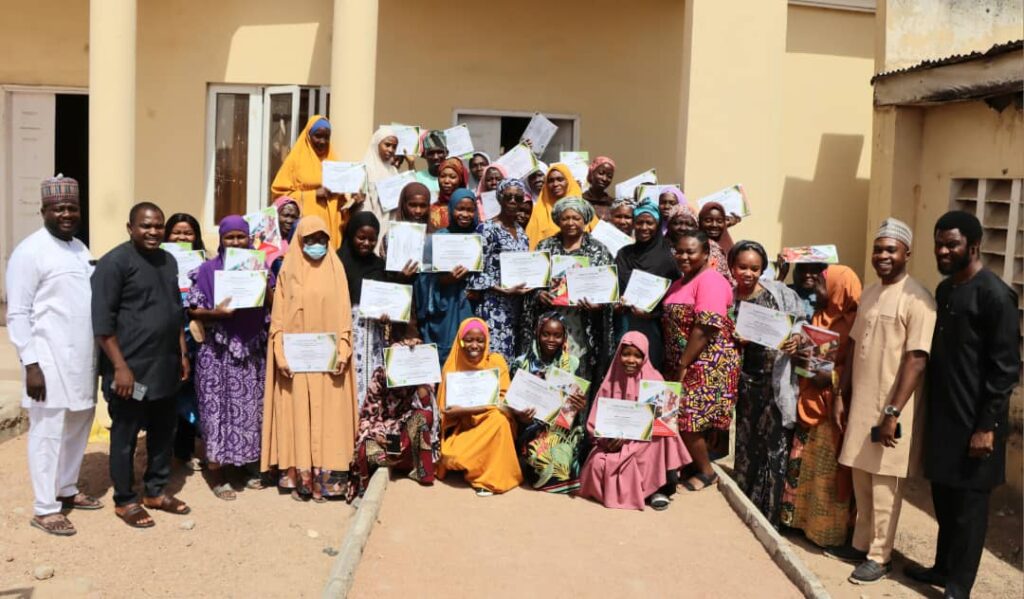
Menstrual Hygiene Management Day Commemoration at GSS Idu-Koro

In commemoration of the 2026 edition of Menstrual Hygiene Management Day, the Centre for Family Health Initiative (CFHI), in collaboration with the May Ashley Yusuf Foundation, organized a menstrual health sensitization and outreach activity at Government Secondary School (GSS) Idu-Koro aimed at promoting menstrual hygiene awareness, education, and dignity among adolescent girls.

The event served as a platform to educate students on menstrual hygiene management through interactive health education sessions focused on menstrual health, hygiene practices, and the importance of breaking harmful myths and misconceptions surrounding menstruation. During the session, facilitators engaged the students in discussions on myths and facts about menstruation, helping them understand menstruation as a normal biological process while correcting misinformation that often fuels stigma, shame, and poor menstrual practices.


As part of the intervention, sanitary pads were distributed to female students to support menstrual dignity and ensure that lack of access to menstrual products does not hinder girls’ confidence, health, or school attendance.

Speaking on the significance of the commemoration, CFHI stated that commemorating Menstrual Hygiene Management Day presents an opportunity to strengthen awareness, improve access to menstrual health education, provide practical support, and empower girls with the knowledge and confidence to manage menstruation safely and with dignity.

The collaboration between CFHI and the May Ashley Yusuf Foundation reflects a shared commitment and joint effort to sensitize adolescent girls on menstrual hygiene management, eliminate stigma, and create safe spaces for open conversations around menstruation. Through partnerships such as this, both organizations continue to advocate for menstrual health education, access to menstrual products, and increased awareness to ensure that no girl is left behind due to menstruation.

The activity aligns with the global observance of Menstrual Hygiene Management Day marked annually on May 28, reinforcing the importance of awareness, education, and access to menstrual health resources for girls and young women in schools and communities.

Menstrual Hygiene Management Day Commemoration at GSS Idu-Koro Read More »

CFHI Equips LEA Primary School Kabusa Library

CFHI carried out a library intervention at LEA Primary School, Kabusa, FCT, as part of its commitment to promoting education and nurturing young minds. The initiative focused on improving access to learning materials by donating a variety of books to support reading culture among pupils. This intervention is in line with CFHI’s broader goal of empowering children through education and creating opportunities for intellectual growth at the grassroots level.

The donation included age-appropriate storybooks, academic texts, and educational resources designed to stimulate curiosity, creativity, and learning among the pupils. By providing these materials, CFHI aims to bridge the gap in access to quality reading resources, particularly in underserved schools where such materials are often limited. The presence of these books is expected to enhance both classroom learning and independent reading habits.


Teachers and school administrators expressed appreciation for the intervention, noting that access to books plays a vital role in improving literacy levels and academic performance. They highlighted that the availability of diverse reading materials will encourage pupils to develop a love for reading, expand their vocabulary, and improve comprehension skills. The initiative also supports teachers in delivering more engaging and effective lessons.

Pupils of LEA Primary School, Kabusa, received the donation with excitement and enthusiasm, demonstrating eagerness to explore the new materials.  “Readers are leaders, and with these books, we will raise leaders. This initiative will not only benefit the students but also support teachers in their research and continuous learning.” Asst head teacher Haruna Joseph

The intervention created an opportunity for students to interact with books beyond their regular curriculum, fostering imagination and critical thinking. It also served as a reminder of the importance of creating a supportive learning environment where children feel inspired to learn and grow.

In conclusion, CFHI encourages pupils to make effective use of the donated books and cultivate a consistent reading culture. They were advised to handle the materials with care and share knowledge with their peers. CFHI remains committed to supporting educational initiatives that contribute to the holistic development of children, recognizing that investing in young minds today is key to building a brighter and more informed future.

CFHI Equips LEA Primary School Kabusa Library Read More »

Training on Maternal and Neonatal Child Health for TBAs and CHEWs

The Centre for Family Health Initiative (CFHI) with support from relevant partners successfully conducted a specialized 4-day training program in Adamawa State, focused on enhancing the synergy between Traditional Birth Attendants (TBAs) and Community Health Extension Workers (CHEWs). The exercise commenced on the 2nd and 3rd of March 2026 at the NSHIP Hall in Girei LGA, followed by sessions on the 4th and 5th of March at the NSHIP Hall in Yola North LGA. A total of 90 participants, 45 from each Local Government Area were reached, creating a robust network of community health providers equipped to tackle maternal mortality at the grassroots level. The sessions were led by a team of expert facilitators who utilized interactive modules to bridge the gap between traditional practices and clinical standards.


The core of the curriculum centered on the critical roles of TBAs and CHEWs before, during, and after pregnancy and delivery. Participants were trained on the “Three Delays” model, emphasizing their role in early danger sign recognition during the prenatal period and the necessity of immediate referral to skilled facilities during labor. Facilitators detailed the collaborative workflow required during delivery to ensure sanitary conditions and professional overwatch, while the postnatal sessions focused on essential newborn care and monitoring the mother for hemorrhaging. By clarifying these roles, the training sought to transform TBAs from isolated practitioners into “Community Linkage Agents” who work together with CHEWs to ensure every birth is attended by a skilled professional.


The importance and benefits of this training lie in its ability to significantly reduce maternal and neonatal morbidity rates across Adamawa State. By integrating TBAs into the formal health referral system, CFHI is ensuring that cultural trust is maintained while medical safety is prioritized. The primary benefit is the creation of a seamless “Continuum of Care,” where pregnant women are encouraged to seek antenatal services early and deliver in safe environments. Ultimately, this intervention empowers community health actors with the knowledge to save lives, ensuring that pregnancy is a journey of joy rather than a risk, and strengthening the overall health ecosystem in Girei and Yola North.


Training on Maternal and Neonatal Child Health for TBAs and CHEWs Read More »