
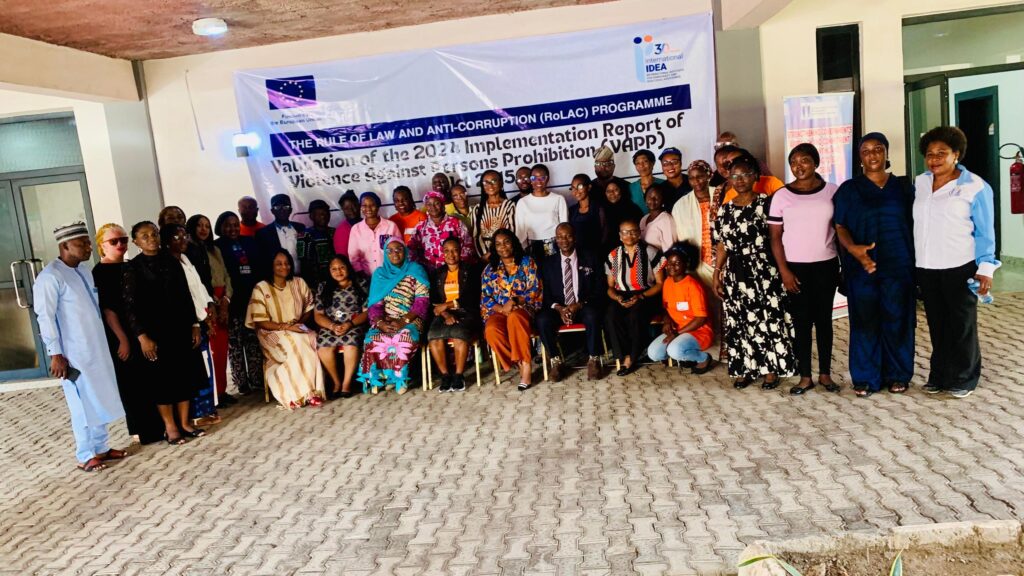
Representatives from government institutions, Civil Society Organizations (CSOs), Non-Governmental Organizations (NGOs), and other key stakeholders convened for the Validation of the 2024 Violence Against Persons (Prohibition) Act (VAPP) Annual Implementation Report. The validation meeting followed the submission of implementation reports from all partner organizations working across various states in Nigeria. This annual review served as a critical step in ensuring that the collective efforts to enforce the provisions of the VAPP Act are effectively monitored, measured, and reported in line with national gender and human rights priorities.
During the session, participants engaged in a rigorous process of reviewing, harmonizing, and validating submitted data to ensure accuracy, consistency, and accountability. Data validation was particularly focused on the documentation of reported cases, interventions, and outcomes achieved by different implementing partners under the year in review. The process also helped strengthen coordination among stakeholders by identifying discrepancies, aligning indicators, and updating performance records to reflect the true extent of progress made in addressing Gender-Based Violence (GBV) nationwide.
The meeting further provided a platform for sharing experiences, success stories, and best practices from the field. Participants discussed major achievements such as increased community awareness of the VAPP Act, improved case management systems, and enhanced collaboration between law enforcement agencies and service providers. However, they also highlighted existing gaps, including inadequate funding, limited data disaggregation, weak referral mechanisms in some states, and the need for continuous capacity strengthening at both state and local levels.
In conclusion, stakeholders reaffirmed their collective commitment to the effective implementation of the VAPP Act and to sustaining the momentum toward eliminating all forms of violence, particularly against women and girls. The validation exercise underscored the importance of evidence-based reporting, accountability, and multi-sectoral collaboration in achieving a violence-free society. Participants called for continuous engagement between government and non-state actors to ensure that future reports reflect not only activities and outputs but also the real impact of interventions on the lives of survivors and vulnerable populations across Nigeria.