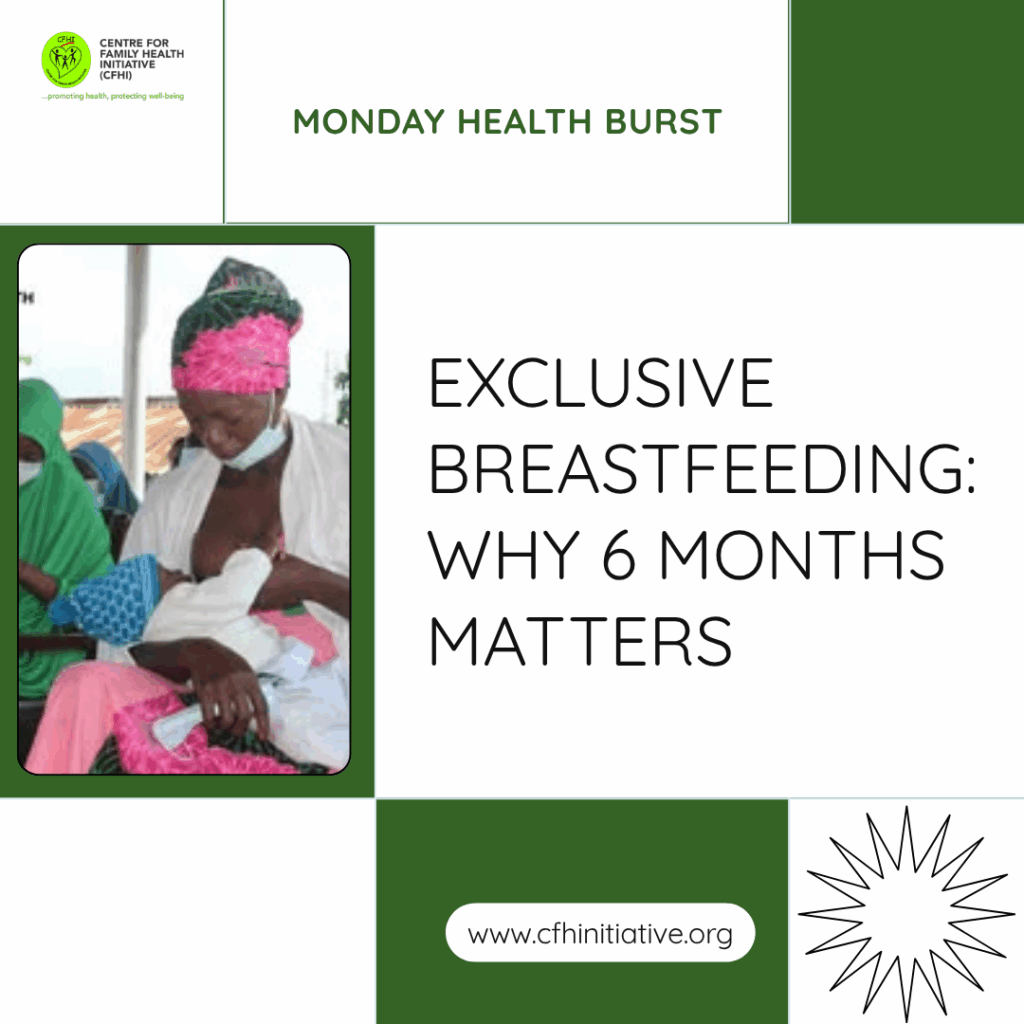
Breastfeeding is more than just a feeding method it’s a powerful tool for nurturing healthy babies and building stronger communities. According to the World Health Organization (WHO) and UNICEF, “infants should be exclusively breastfed for the first six months of life to achieve optimal growth, development and health” (WHO & UNICEF, 2003)1. But why is this six-month period so crucial?
What is Exclusive Breastfeeding?
Exclusive breastfeeding means giving a baby only breast milk, no water,2formula, or solid food for the first six months of life. The only exceptions are oral rehydration salts (ORS), drops, and syrups (vitamins, minerals, or medicines) when medically necessary.
Why the First 6 Months?
- Optimal Nutrition
Breast milk contains the perfect mix of nutrients, antibodies, and enzymes tailored to meet a baby’s developmental needs. It changes in composition over time to keep up with the baby’s growing body. (UNICEF). 2 - Strong Immunity
Breast milk acts as a baby’s first vaccine, packed with antibodies that help fight off infections like diarrhea, pneumonia, and ear infections conditions that are among the leading causes of child mortality in low- and middle-income countries. (UNICEF USA). 3 - Gut Health and Growth
Babies’ digestive systems are still developing. Breast milk is gentle and easily digestible. Introducing other foods too early can disrupt gut development and lead to food allergies or malnutrition. ((PAHO). 4 - Protection Against Malnutrition and Obesity
Exclusive breastfeeding helps establish healthy growth patterns and reduces the risk of undernutrition, overweight, and obesity later in life.(WHO) 5 - Bonding and Emotional Development
The close skin-to-skin contact during breastfeeding enhances bonding, fosters emotional security, and supports brain development. (UNICEF Ghana). 6
Achieving six months of exclusive breastfeeding requires community support, including:
- Maternity leave and breastfeeding-friendly workplaces
- Support from health workers and peer counsellors.
- Encouraging messages from family and communities
- Access to skilled lactation counselling.
Exclusive breastfeeding for six months is not just a recommendation, it’s a lifesaving practice. It gives babies the healthiest start in life and strengthens maternal health.7 By supporting and empowering mothers to breastfeed exclusively, we invest in the health of the next generation.
The Centre for Family Health Initiative (CFHI) consistently promoted exclusive breastfeeding through several targeted interventions. As part of its maternal and child health outreach, CFHI conducted antenatal and postnatal health education sessions in primary healthcare centers and communities, where pregnant and nursing mothers were sensitized on the benefits of exclusive breastfeeding for six months. During its Safe Motherhood campaigns, breastfeeding demonstrations and Q&A sessions were held to address common misconceptions, particularly in rural areas. In collaboration with traditional birth attendants and community volunteers, CFHI also distributed visual educational materials on infant feeding practices and supported breastfeeding mothers through home visits under its OVC program. These activities ensured that women received the encouragement and accurate information needed to exclusively breastfeed their infants, even in resource-limited settings.
References
- https://www.who.int/publications/i/item/9241562218
- https://www.unicefusa.org/what-unicef-does/childrens-health/breastfeeding
- https://www.unicef.cn/en/parenting-site/8-facts-on-breastfeeding
- https://www.paho.org/en/enlace/exclusive-breastfeeding-infant-under-six-months-age
- https://www.who.int/news-room/fact-sheets/detail/infant-and-young-child-feeding
- https://www.unicef.org/ghana/stories/6-ways-breastfeeding-boosts-childrens-future
- https://www.unicef.org/nutrition/why-breastfeeding-best-babies