In many rural communities across Nigeria, a girl child is still born into an inheritance she never asked for one where her worth is measured against a boy, and consistently found wanting. She is the first to be pulled from school when money is tight, the first to be handed a hoe instead of a pen, and in some communities, the first to be laid on a mat and cut, not because anyone asks whether she consents, but because “that is how it has always been done.” This is not culture. This is injustice, inherited and repeated.
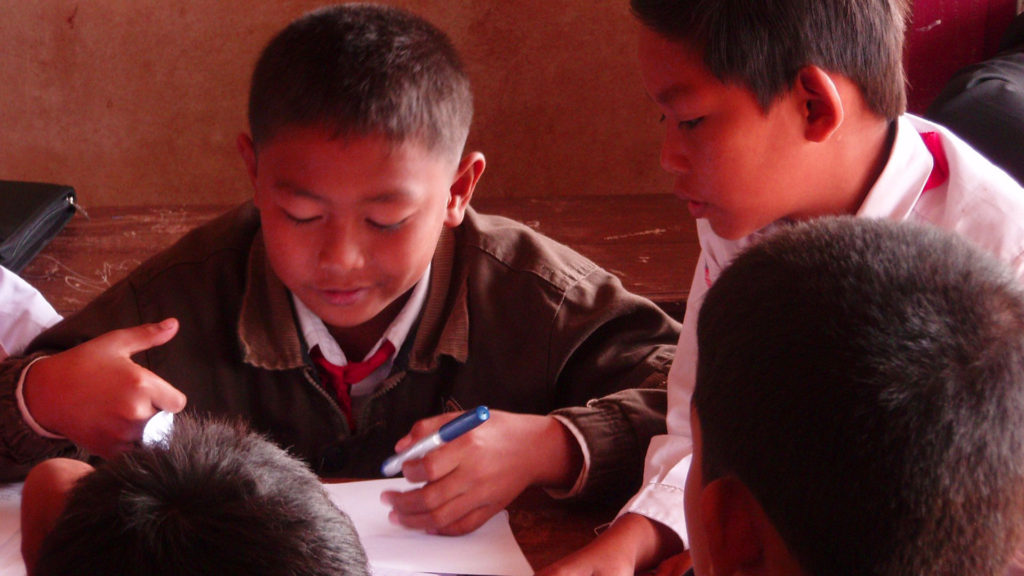
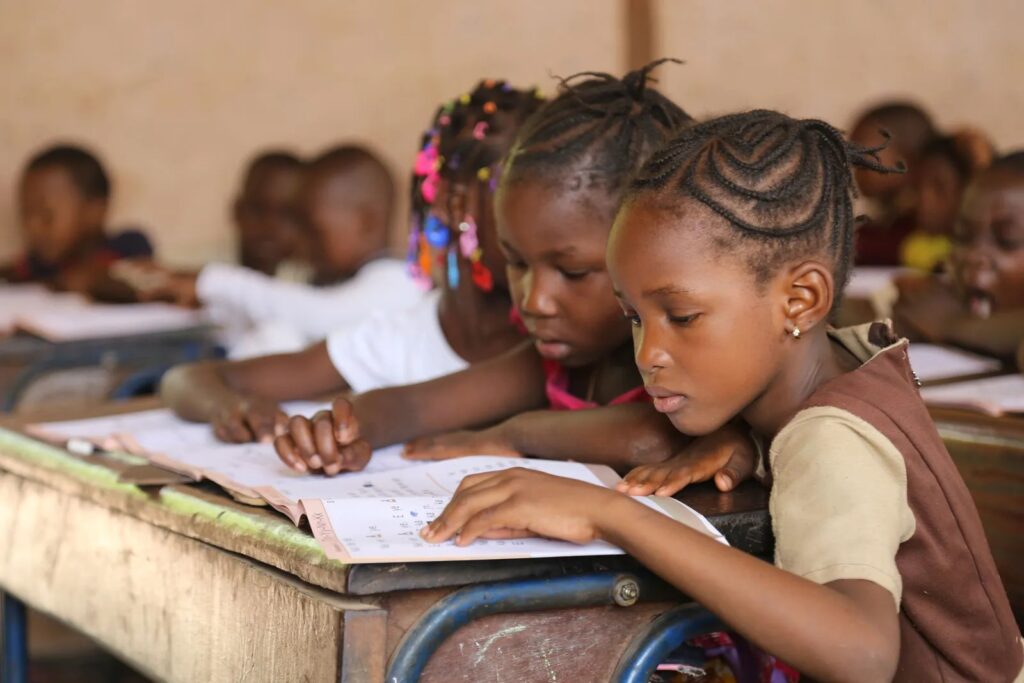
Ask why a girl in a rural community is kept home while her brother is sent to school, and the answers rarely hold up: she will marry into another family anyway; educating her is “wasted investment”; her place is the kitchen, not the classroom. These are not values they are excuses dressed up as tradition, and they carry a real cost. More than half of girls are not attending school at the basic education level in Nigeria, and 86 percent of out-of-school children are from rural areas [7]. In some cohorts, a million girls drop out between the first and last year of primary school alone, and only 9 percent of the poorest girls attend secondary school compared to 81 percent from the richest households [8].
Behind every one of those numbers is a girl who could have been a doctor, an engineer, a policymaker reduced instead to a statistic because someone decided her education wasn’t worth the investment.
Nowhere is this devaluation of the girl child more brutally physical than in the practice of Female Genital Mutilation (FGM). Nigeria carries a disproportionate burden of FGM, with an estimated nearly 20 million women and girls living with its consequences the third-highest number of any country in the world [5].
Imo State is one of the epicentres of this crisis. Imo State records the highest state-level FGM prevalence in Nigeria, at 61.7 percent among women aged 15–49 [6]. FGM in Nigeria has historically been more prevalent in rural areas [6], and the practice offers no medical benefit only lasting physical, psychological, and sexual harm [1].
This is why the Centre for Family Health Initiative’s (CFHI) work in Imo State matters so profoundly. Through the PROTECT HER Project Promoting Rights, Opportunities, and Transformative Engagement for Community Accountability and the Elimination of Harmful Practices CFHI, supported by Global Affairs Canada, ActionAid Nigeria and the Renewed Women’s Voice and Leadership Project, has been engaging directly with the traditional institutions that hold the real power to end this practice [1]. In an advocacy visit to Amakohia, Ikeduru LGA, community leaders and stakeholders including the traditional ruler, women’s, youth, and religious groups renewed their commitment to preventing FGM and promoting sexual and reproductive health and rights (SRHR) [1]. A separate community-entry engagement in Mbubu Amiri, Oru East LGA, secured similar buy-in from the palace of HRH Eze Cyril U. Uzoukwu toward eliminating FGM and advancing girls’ bodily autonomy [2].
This is the model that works: not lecturing communities from outside, but sitting with the gatekeeper’s traditional rulers, religious leaders, women’s groups, youth structures and rebuilding, from within, the idea that a girl’s body belongs to her alone.
Sexual and reproductive health and rights (SRHR) is where the injustice compounds. A girl who is cut is more likely to face complications in childbirth. A girl denied education is more likely to be married off early, denied family planning information, and left without the language to even name what has been done to her. Nigeria’s adolescent fertility rate remains stubbornly high, and it is rising fastest among the youngest girls [8] a sign that SRHR education and access are arriving too late, if they arrive at all.
SRHR is not a foreign concept forced onto African communities. It is the basic right to make informed decisions about one’s own body, to access health information without shame, and to be protected from harm a right CFHI’s PROTECT HER Project frames explicitly around informed choices and bodily autonomy for girls and young women [1][2].
The girl child in rural Nigeria is not less deserving of school, of health, of bodily autonomy, of a future she chooses for herself. Every uncut girl, every girl who finishes secondary school, every girl who walks into a health facility without fear, is proof that the old excuses can be unlearned. Imo State’s story one of the highest FGM burdens in the country, now also home to community leaders publicly renewing their commitment to end it shows that change is not only necessary. It is already beginning.
References
- CFHI — “Amakohia, Ikeduru Leaders Renew Commitment to End FGM and Protect Girls’ Rights”: https://www.cfhinitiative.org/news/amakohia-ikeduru-leaders-renew-commitment-to-end-fgm-and-protect-girls-rights/
- CFHI — “Mbubu Amiri Autonomous Community Renews Commitment to End FGM and Protect Girls’ Rights”: https://www.cfhinitiative.org/news/mbubu-amiri-autonomous-community-renews-commitment-to-end-fgm-and-protect-girls-rights/
- Centre for Family Health Initiative — official website: https://www.cfhinitiative.org/
- Alliances for Africa — “Immediate Action Needed as Nigeria Bears Disproportionate Burden of FGM — Imo State Among Highest in Southeast”: https://alliancesforafrica.org/?p=2279
- UNICEF Nigeria — “UNICEF warns FGM on the rise among young Nigerian girls”: https://www.unicef.org/nigeria/press-releases/unicef-warns-fgm-rise-among-young-nigerian-girls
- 28 Too Many — Nigeria FGM/C Country Profile, Key Findings (March 2023): https://www.28toomany.org/media/uploads/Country%20Research%20and%20Resources/Nigeria/nigeria_country_profile_update_key_findings_(march_2023)_(1).pdf
- UNICEF Nigeria — Cheat Sheet: Out-of-School Children (June 2022): https://unicef.org/nigeria/media/7746/file/UNICEF%20Nigeria%20Cheat%20Sheet:%20Out-of-school%20Children.pdf
- UNICEF Nigeria — Cheat Sheet: Girls’ Education (June 2022): https://unicef.org/nigeria/media/7741/file/UNICEF%20Nigeria%20Cheat%20Sheet%20-%20Girls%20Education.pdf