Written by Oluwatobi Bamidele
Yet your blood pressure could be rising without your knowledge. This is what makes hypertension, commonly known as high blood pressure, particularly dangerous. It can develop without obvious symptoms, silently putting your heart, brain, kidneys, and overall health at risk (1, 4).
According to the World Health Organization (WHO), an estimated 1.4 billion adults aged 30–79 years were living with hypertension in 2024, yet only about one in five had their condition under control (2). This highlights the importance of early detection, regular screening, and access to proper treatment.
Blood pressure refers to the force with which blood pushes against the walls of the arteries as the heart pumps. When this pressure remains consistently too high, it is known as hypertension. A blood pressure reading consists of two numbers: systolic pressure, the upper number, measures the pressure when the heart contracts, while diastolic pressure, the lower number, measures the pressure when the heart relaxes between beats (1).
According to WHO, hypertension is diagnosed when a person’s blood pressure is consistently at or above 140/90 mmHg, based on measurements taken on two different days (1). However, a single elevated reading does not automatically confirm hypertension; repeated measurements and professional assessment are important.
The danger of hypertension lies not only in its silent nature but also in the damage it can cause over time. When left uncontrolled, it increases the risk of heart attacks, strokes, heart failure and chronic kidney disease. It can also damage blood vessels and affect other vital organs (1, 4). Unfortunately, waiting until symptoms appear before checking your blood pressure can mean missing an important opportunity for early intervention.
Several factors can increase the risk of developing hypertension. These include excessive salt consumption, unhealthy eating habits, physical inactivity, being overweight or obese, tobacco use, excessive alcohol consumption, increasing age and a family history of high blood pressure. Certain health conditions, including diabetes and kidney disease, can also increase cardiovascular risk. While some risk factors cannot be changed, many can be managed through healthier daily habits (1, 4).
The good news is that high blood pressure can be prevented and controlled. Start by making practical changes to your lifestyle. Eat a balanced diet rich in fruits, vegetables, and other nutritious foods, reduce your intake of salt and highly processed foods, engage in regular physical activity, maintain a healthy weight, and avoid tobacco. Limiting alcohol consumption and managing stress are also important. If you have been diagnosed with hypertension, take prescribed medication as directed, attend follow-up appointments, and never discontinue treatment simply because you feel better (1, 4).
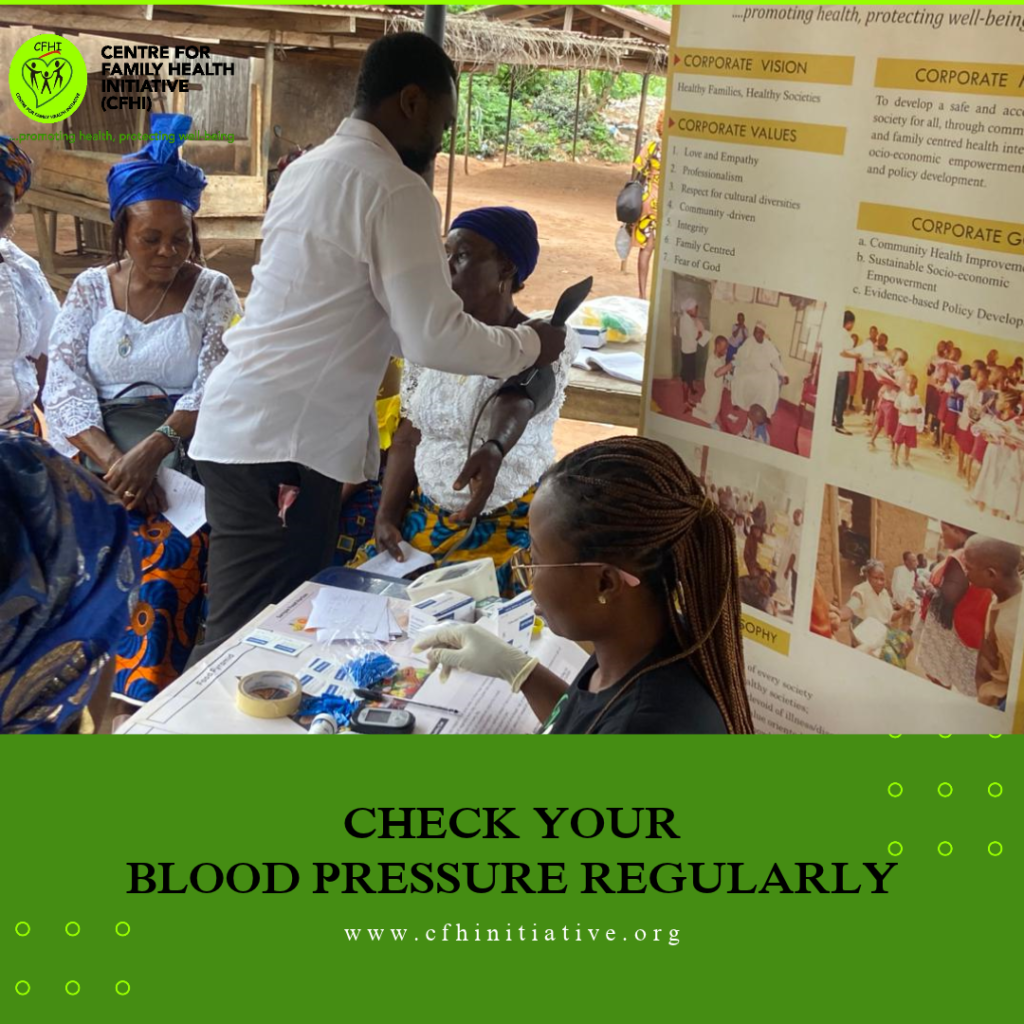
It is equally important to know your numbers. Make blood pressure screening part of your routine, even when you feel healthy. You can have your blood pressure checked at a healthcare facility or pharmacy or use a reliable home blood pressure monitor with guidance from a health professional (3). If your readings are repeatedly elevated, seek medical advice. A reading above 180/120 mmHg requires immediate medical attention, particularly if accompanied by chest pain, difficulty breathing, weakness, changes in vision or difficulty speaking (3, 4).
Your health should never depend on whether you feel sick before acting. A simple blood pressure check can reveal what your body may not be telling you and give you the opportunity to make informed decisions about your health.
Monday Health Burst is an initiative of CFHI to address issues of basic health concern. Join us every Monday on all our social media platforms for more episodes.
References
- World Health Organization (WHO). (2025). Hypertension: Fact sheet.
https://www.who.int/news-room/fact-sheets/detail/hypertension - World Health Organization (WHO). (2025). Global Report on Hypertension 2025.
https://www.who.int/publications/i/item/9789240115569 - Centers for Disease Control and Prevention (CDC). Measuring Your Blood Pressure.
https://www.cdc.gov/high-blood-pressure/measure/ - Centers for Disease Control and Prevention (CDC). About High Blood Pressure.
https://www.cdc.gov/high-blood-pressure/about/index.html