A simple act like washing your hands can make the difference between staying healthy and spreading an infection. Yet, it is one of the easiest preventive health practices people often overlook. From preparing meals and using public facilities to caring for children and interacting with others, our hands meet countless surfaces and germs throughout the day. Without proper hand hygiene, these germs can easily enter our bodies or be passed on to someone else.
Handwashing is a fundamental part of Water, Sanitation and Hygiene (WASH), an approach that promotes clean water, proper sanitation, and good hygiene practices to protect public health. According to the World Health Organization (WHO) and UNICEF, washing hands with soap and water can reduce diarrhoeal diseases by approximately 30% and acute respiratory infections by 17% [1]. This demonstrates that a simple, consistent habit can prevent illnesses and reduce the burden on healthcare systems.
The need for proper hand hygiene remains urgent. The WHO/UNICEF Joint Monitoring Programme estimates that 1.7 billion people lacked basic hygiene services at home in 2024, including 611 million who had no handwashing facility at all [2]. Without access to clean water and soap, maintaining proper hygiene becomes difficult, increasing the risk of preventable infections.
This is particularly relevant as Nigeria continues to respond to infectious disease threats. The Nigeria Centre for Disease Control and Prevention (NCDC) reported a confirmed Ebola case in the Federal Capital Territory, with its situation update recording one confirmed case as of 7 November 2026 [3]. The NCDC has advised Nigerians to practise regular hand hygiene using soap and running water or alcohol-based hand rub. However, handwashing is only one part of prevention; avoiding contact with the blood and body fluids of suspected cases and following official public health guidance are equally important.
So, when should we wash our hands? Always wash with soap and clean water before preparing food, before eating or feeding others, after using the toilet, after changing a child’s diaper, after coughing, sneezing, or blowing your nose, and whenever your hands are visibly dirty [4].
Effective handwashing requires more than briefly rinsing your hands. Wet your hands with clean running water, apply soap, and rub your palms, the backs of your hands, between your fingers, under your nails, and around your thumbs for at least 20 seconds. Rinse thoroughly and dry with a clean towel or air dry. When soap and water are unavailable and your hands are not visibly dirty, an alcohol-based hand sanitiser containing at least 60% alcohol can be used [5].
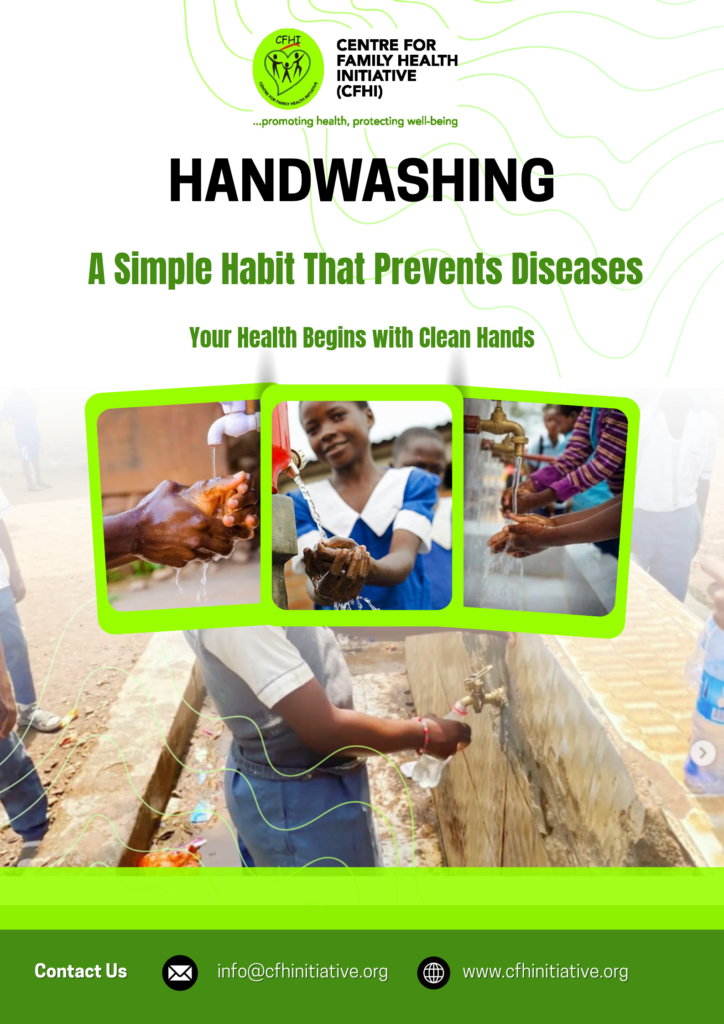
At the Centre for Family Health Initiative (CFHI), promoting good hygiene practices has always been an important part of our commitment to healthier communities. In line with this, we established a handwashing station equipped with clean water and soap in schools within our local community. This initiative provides children with access to proper handwashing facilities while educating and encouraging them to develop good handwashing habits. Through this effort, we aim to help children understand the importance and benefits of hand hygiene in preventing diseases, protecting their health, and promoting a cleaner school environment.
Do not wait until illness strikes before making hygiene a habit. Wash your hands frequently, practise proper sanitation, and encourage those around you to do the same. Clean hands protect lives.
Make handwashing part of your daily routine. Provide soap and water at home, school, and work, remind children to wash their hands, and share this message to help prevent the spread of diseases. Your clean hands can help protect someone else’s health.
Monday Health Burst is an initiative of CFHI to address issues of basic health concern. Join us every Monday on all our social media platforms for more episodes.
References
- WHO/UNICEF (2025). Guidelines on Hand Hygiene in Community Settings.
https://www.who.int/publications/i/item/9789240116559 - WHO/UNICEF Joint Monitoring Programme (2025). Progress on Household Drinking Water, Sanitation and Hygiene 2000–2024.
https://data.unicef.org/resources/jmp-report-2025/ - Nigeria Centre for Disease Control and Prevention (NCDC). Ebola Disease Situation Update – Nigeria, November 2026.
https://evdmicrosite.ncdc.gov.ng/en/outbreaks/ebola-2026 - WHO/UNICEF (2025). Effective Hand Hygiene: Key Times for Handwashing.
https://www.ncbi.nlm.nih.gov/books/NBK619535/ - Centers for Disease Control and Prevention (CDC). Handwashing Facts.
https://www.cdc.gov/clean-hands/data-research/facts-stats/ - UN-Water. Handwashing and Hand Hygiene.
https://www.unwater.org/water-facts/handwashing-and-hand-hygiene