What if something as simple as a glass of water could determine a child’s health, growth and future?
Clean water is more than a necessity; it is a lifeline for every child. It supports healthy growth, proper nutrition, personal hygiene, and protection against preventable diseases. Yet, millions of children and families worldwide still lack access to safe drinking water, exposing them to infections, poor health, and avoidable risks.
According to the World Health Organization (WHO), approximately 2.1 billion people worldwide lacked safely managed drinking-water services in 2024 [1]. This means that billions of people still depend on water sources that may be far away, unavailable when needed or contaminated.
Access to safe water remains a significant public health concern in Nigeria. The 2024 Nigeria Demographic and Health Survey (NDHS) reports that 71% of the household population had access to at least basic drinking-water services, while only 38% of households had water available on their premises [2]. The report also reveals that 88% of the household population did not use any method to treat their drinking water, while only 7% lived in households using an appropriate water-treatment method [2].
These figures highlight an important distinction: having access to a water source does not automatically mean the water is safe to drink. Water can become contaminated during collection, transportation, storage, or handling, putting children at risk even when it appears clean.
Children are particularly vulnerable to illnesses associated with contaminated water and poor hygiene. Drinking unsafe water can expose them to diarrhoeal diseases, cholera, dysentery, typhoid, and other infections [3]. Repeated diarrhoeal illnesses can contribute to dehydration, malnutrition, and poor physical development. When children frequently become ill, they may miss school, struggle to concentrate and experience disruptions to their learning and social development.
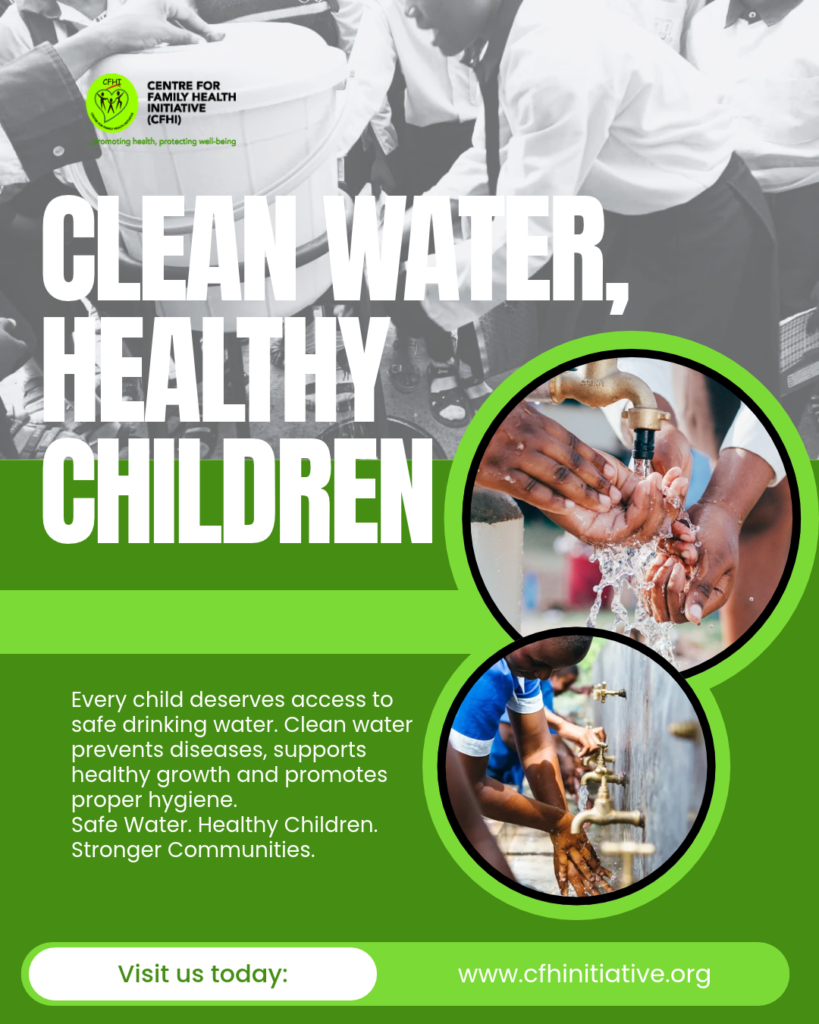
Access to clean water helps prevent waterborne diseases, supports children’s healthy growth, improves school attendance and learning, promotes personal hygiene and dignity, and reduces the spread of infections, creating healthier families and communities.
Clean water should never be considered a privilege reserved for a few. Every child deserves access to safe drinking water, proper sanitation, and a healthy environment in which to grow, learn and thrive.
At the Centre for Family Health Initiative (CFHI), promoting healthier families and empowered communities requires sustained attention to the conditions that influence people’s health and wellbeing. Ensuring access to clean water is an essential part of that responsibility.
Let us protect our children by making clean water, proper hygiene, and safe sanitation a priority in every home, school, and community. Healthy children begin with safe water!
Make every drop count! Promote safe water practices, protect community water sources and advocate for reliable access to clean water for every child. Together, we can build healthier families and stronger communities.
Monday Health Burst is an initiative of CFHI to address issues of basic health concern. Join us every Monday on all our social media platforms for more episodes.
References
[1] World Health Organization (WHO). Drinking-water – Fact Sheet.
https://www.who.int/news-room/fact-sheets/detail/drinking-water
[2] National Population Commission (NPC) and ICF. Nigeria Demographic and Health Survey 2024 – Household Water and Sanitation.
https://health.gov.ng/wp-content/uploads/2025/10/NDHS-2024-Final-Report_Disseminated17102025.pdf
[3] World Health Organization (WHO). Drinking-water – Health Risks and Key Facts.
https://www.who.int/news-room/fact-sheets/detail/drinking-water
[4] WHO/UNICEF Joint Monitoring Programme. Progress on Drinking Water, Sanitation and Hygiene in Schools, 2015–2025.
https://data.unicef.org/resources/jmp-wash-in-schools-2026/