
Cultural practices in Africa

SPEAK WEDNESDAY

SPEAK WEDNESDAY – SEXISM

According to Wikipedia, Sexism is prejudice or discrimination based on a person’s sex or gender. Sexism can affect anyone, but it primarily affects women and girls. It has been linked to stereotypes and gender roles, and may include the belief that one sex or gender is intrinsically superior to another.
Sexism manifests in various forms and due to stigmatization from the society, women are forced to accept abuse and neglect. Some females are denied access to proper health care, good nutrition, education and legal rights which is an infringement on their basic human rights as humans. Child marriage, female genital mutilation and other traditional harmful practices, objectification, women trafficking, forced labour, and unequal school participation are other instruments of sexism.

It is pertinent to know that not just violence but other forms of sexism have devastating consequences. Some of these repercussions affect the physical and mental health of the individuals. Sexual transmitted infections, mental disorders, depression, anxiety, low birth weight and sometimes death of the fetus of teenage mothers, obstetric fistula, death of the victim, excessive bleeding, urinary tract infections, neuroses, hatred for any form of sexual relation and psychoses fall into this category.

Education is the key for women to achieve economic independence, yet, Unite Nations (UN) estimates that women make up more than two-third of the world’s 796 million illiterate people. If a nation must achieve sustainable success, education and proper sensitization is essential. According to a popular quote by African Proverb “If you educate a man, you educate an individual. But if you educate a woman, you educate a nation”.

Proper sensitization with full participation of all genders should be encouraged to end gender stereotypes and harmful cultural practices that affect women and girls. The goal is to create a balanced system for everyone.

Speak Wednesday is an initiative of Centre for Family Health Initiative to stop the cycle of domestic violence by breaking the silence around gender based violence. Join us every Wednesday on all our social media handles for more episodes.
SPEAK WEDNESDAY Read More »

SPEAK WEDNESDAY

HARMFUL GENDER-BASED CULTURAL PRACTICES IN AFRICA

Africa accommodates various cultural, religious and traditional beliefs and practices that encourage discrimination, marginalization and injustice. Women and girls in Africa are mostly subjected to these harmful practices because these cultures encourage male preference and domination.

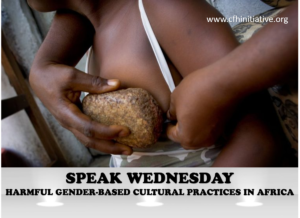
Female genital mutilation, breast ironing, early marriage, widowhood rites, girls initiation rites, trokosi, sororate, levirate, inability to access good healthcare especially during childbirth, lack of access to education and good nutrition, lip plate, milk teeth extraction, eyebrow incision are some of the harmful cultural practices melted out to women and girls in Africa. Females are groomed to fit into these stereotypes and are stigmatized when they do otherwise.

Female genital mutilation can lead to serious health complications such as infection, infertility, prolonged bleeding and complications during delivery, often leading to death. Infants of teenage mothers are likely to be still born or die in the first month of life. Pregnant and nursing mothers who suffer malnourishment are majorly victims of early marriage, who dropped out of school and may never get the opportunity to return.

Some victims of harmful cultural practices run away to break free from these practices, only to become vulnerable to sexual predators and human traffickers. They could suffer emotional and psychological damage that may lead to depression and suicide.  Other effects include pain, resentment for sex, premature birth, low birth weight, increased violence against women and girls, increased risk of contracting HIV and STIs, impaired emotional and sexual relations, social stigma and isolation.

Raising awareness on the dangers of harmful gender-based cultural practices in Nigeria is one of the effective ways to curb this silent menace. Just like Centre for Family Health Initiative, other Community Based Organizations and Non-Governmental Organizations can work with communities to source ways to end harmful practices and promote gender equality. The government should enact policies at all levels to protect women and girls, ensuring that these policies are implemented irrespective of the socioeconomic class.

Free education, skill acquisition trainings, increased access to basic health amenities, especially for the poor and vulnerable are measures that can aid the eradication of harmful practices in communities.

Speak Wednesday is an initiative of Centre for Family Health Initiative to stop the cycle of domestic violence by breaking the silence around gender based violence. Join us every Wednesday on all our social media handles for more episodes.

SPEAK WEDNESDAY Read More »