Cultural practices in Africa

Validation of the 2024 VAPP Annual Implementation Report

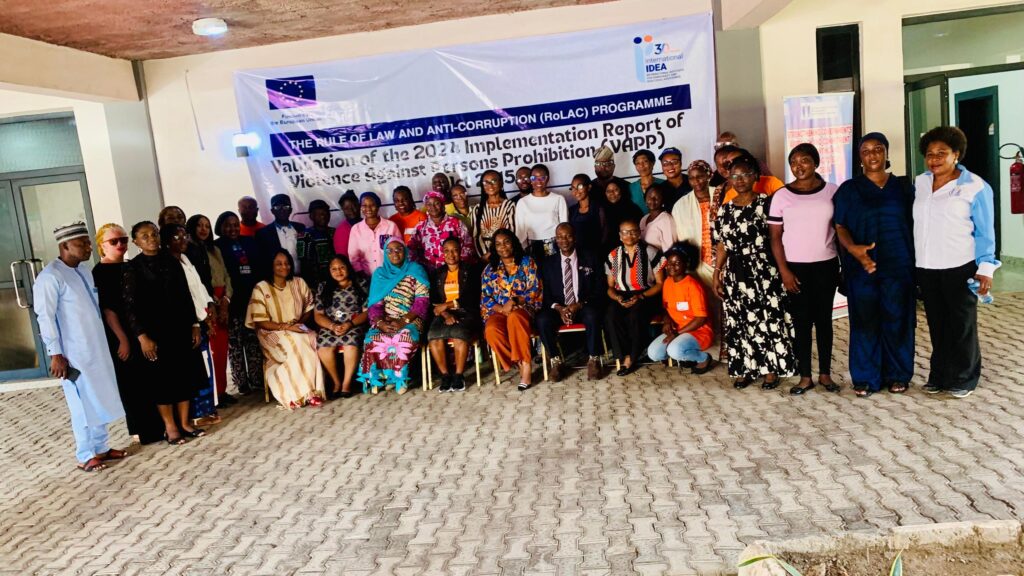
Representatives from government institutions, Civil Society Organizations (CSOs), Non-Governmental Organizations (NGOs), and other key stakeholders convened for the Validation of the 2024 Violence Against Persons (Prohibition) Act (VAPP) Annual Implementation Report. The validation meeting followed the submission of implementation reports from all partner organizations working across various states in Nigeria. This annual review served as a critical step in ensuring that the collective efforts to enforce the provisions of the VAPP Act are effectively monitored, measured, and reported in line with national gender and human rights priorities.

During the session, participants engaged in a rigorous process of reviewing, harmonizing, and validating submitted data to ensure accuracy, consistency, and accountability. Data validation was particularly focused on the documentation of reported cases, interventions, and outcomes achieved by different implementing partners under the year in review. The process also helped strengthen coordination among stakeholders by identifying discrepancies, aligning indicators, and updating performance records to reflect the true extent of progress made in addressing Gender-Based Violence (GBV) nationwide.

The meeting further provided a platform for sharing experiences, success stories, and best practices from the field. Participants discussed major achievements such as increased community awareness of the VAPP Act, improved case management systems, and enhanced collaboration between law enforcement agencies and service providers. However, they also highlighted existing gaps, including inadequate funding, limited data disaggregation, weak referral mechanisms in some states, and the need for continuous capacity strengthening at both state and local levels.

In conclusion, stakeholders reaffirmed their collective commitment to the effective implementation of the VAPP Act and to sustaining the momentum toward eliminating all forms of violence, particularly against women and girls. The validation exercise underscored the importance of evidence-based reporting, accountability, and multi-sectoral collaboration in achieving a violence-free society. Participants called for continuous engagement between government and non-state actors to ensure that future reports reflect not only activities and outputs but also the real impact of interventions on the lives of survivors and vulnerable populations across Nigeria.

Validation of the 2024 VAPP Annual Implementation Report Read More »

Systemic Barriers to Eliminating GBV in Nigeria

  1. Weak Legal Frameworks and Poor Enforcement

Gender-based violence (GBV) in Nigeria is not only a symptom of individual wrongdoing it is a structural problem rooted in weak laws, uneven adoption of protections, and chronically poor enforcement. To end GBV we must look beyond individual cases and address how laws, institutions and social systems consistently fail survivors.

At the federal level, Nigeria enacted the Violence Against Persons (Prohibition) Act (VAPP), 2015, a comprehensive law criminalizing many forms of GBV. Yet the VAPP is a federal law that must be domesticated (adopted) by state legislatures to take full effect in most states. Domestication has been inconsistent and slow: as recently as 2022–2023 different trackers and reports showed wide variation across states in adoption and implementation of VAPP-style protections. The patchwork adoption means many survivors still lack access to the full.

Even where anti-GBV laws exist, legal gaps remain. Some forms of abuse most notably marital rape are still not uniformly criminalized or enforced across Nigeria. Customary and religious legal systems in many communities treat marital relations as private and beyond criminal law, which results in survivors being denied legal redress. Research and rights reports document how legal definitions, exceptions, and cultural exclusions leave key protections unenforced or unavailable to many women and girls. (Human Rights Watch)

A law on the books means little if enforcement agencies are under-resourced, untrained, or indifferent. Investigations and prosecutions for GBV face multiple obstacles: victims face hostile or dismissive police responses, evidence is poorly collected or stored, and prosecution is slow or lacking. Human rights organizations have repeatedly documented cases in which survivors are shamed, blamed, or pressured to withdraw complaints outcomes that deter reporting and allow perpetrators to act with impunity. (Human Rights Watch)

“Survivors’ experiences show how enforcement failures deepen the harm. Human Rights Watch reported that a lawyer who helped a rape survivor in Enugu was herself assaulted after filing the complaint, exposing hostile treatment by police toward survivors and their advocates. Such incidents discourage reporting and let perpetrators act with near impunity.” (Human Rights Watch, Feb 6, 2020). Human Rights Watch

Effective GBV response requires functioning social services: emergency shelters, forensic and medical support, trauma counselling, and legal aid. In Nigeria these services are often underfunded, unevenly distributed, or run by civil society with precarious support. The result: even survivors who do report rarely receive the wraparound care needed for justice and recovery. Multilateral surveys during the COVID era showed the pandemic worsened women’s safety and access to services an acute example of how weak systems fail under stress.

Official statistics dramatically undercount GBV. Survivors often do not report abuse because they distrust institutions, fear stigma, or lack knowledge of legal options. In turn, poor data collection and fragmented record-keeping between police, health services and civil society hide patterns of violence and make evidence-based policy difficult. The lack of a centralized, trusted data system contributes to weak policy responses. (Human Rights Watch)

Civil society monitoring and journalistic investigations reveal spikes in femicide and intimate partner killings, prompting activists to call for emergency measures. These tragic outcomes are the predictable endgame of weak laws, poor enforcement, and under-resourced prevention and protection systems. Public outrage reflects not only grief but the recognition that structural failures make homes and communities unsafe for many women and girls. (The Guardian)

Reports by national and international organizations converge on several priorities:

  • Full domestication of VAPP-style laws in all states and harmonization with customary/religious systems to ensure survivors’ rights everywhere. (wfd.org)
  • Clear criminalization of all forms of GBV including marital rape and other forms often excluded by law. (Human Rights Watch)
  • Police and judicial reform, including specialized GBV units, survivor-sensitive investigation protocols, and fast-track prosecution for sexual and domestic violence. (Human Rights Watch)
  • Investment in survivor services medical forensic care, psychosocial support, shelters, and legal aid with sustainable public funding and coordination with civil society. (Amnesty International)
  • Robust data systems that unify reporting from police, health facilities and NGOs to produce reliable prevalence and response metrics. (UN Women Data Hub)

Nigeria’s VAPP Act and other legal instruments are important steps, but legal texts without consistent, rights-based enforcement become symbolic rather than transformative.


Bibliography

  • Partners Nigeria — VAPP Tracker (domestication status across states). (partnersnigeria.org)
  • WFD: Impact of the VAPP and related laws in 12 states (2023). (wfd.org)
  • Human Rights Watch — Violence against women pervasive in Nigeria (2019). (Human Rights Watch)
  • UN Women / Measuring the Shadow Pandemic: Violence against women during COVID-19 in Nigeria (2021). (UN Women Data Hub)
  • Amnesty International — Nigeria reports on rights and GBV (2021/2023 reports). (Amnesty International)
  • The Guardian — Activists call for state of emergency over GBV in Nigeria (Feb 2025). (The Guardian)


TO BE CONTINUED…WATCH OUT FOR

NO 2 BARRIER

Systemic Barriers to Eliminating GBV in Nigeria Read More »

HEALTH IMPLICATIONS OF FEMALE GENITAL MUTILATION

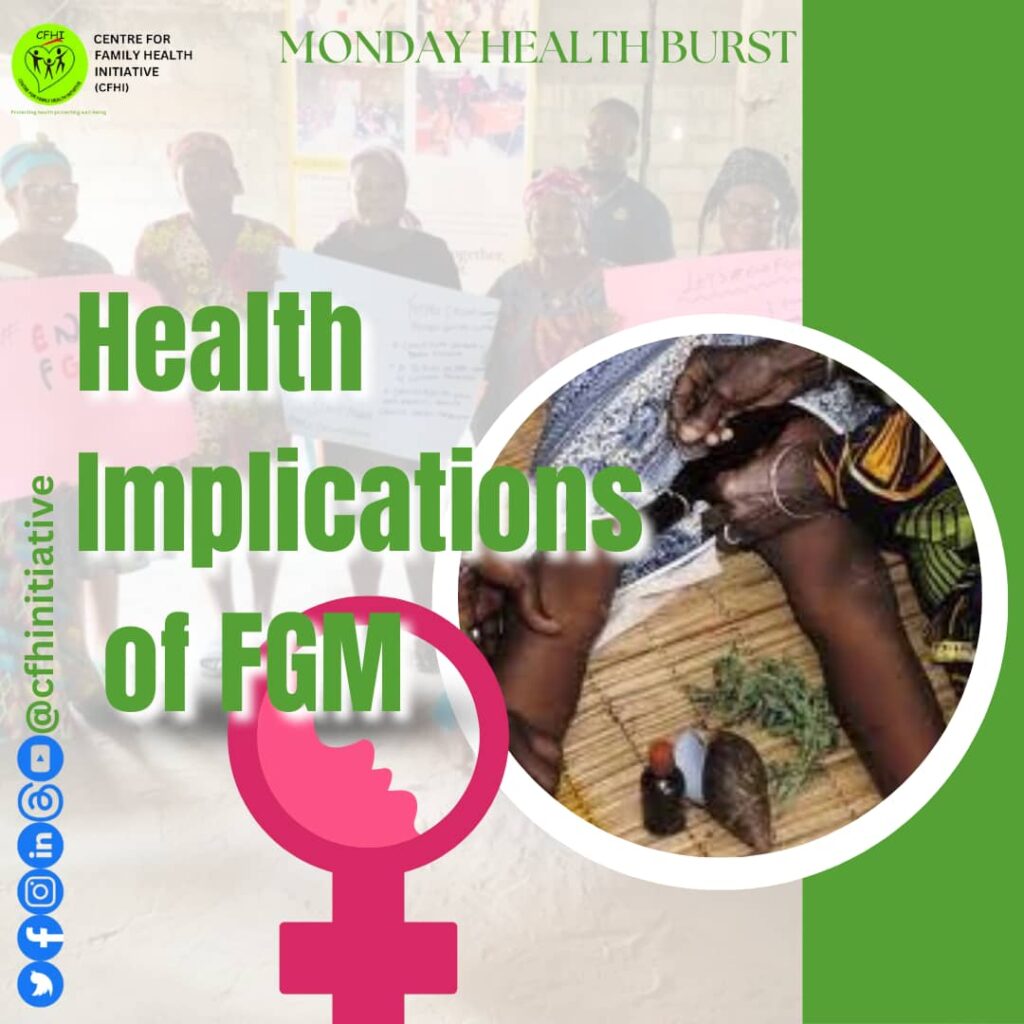
Female Genital Mutilation (FGM) is a harmful traditional practice that involves altering or injuring the female genitalia for non-medical reasons.1 This practice, prevalent in many cultures around the world, has severe health implications for women and girls who undergo it. From physical to psychological consequences, FGM leaves a lasting impact on the well-being of individuals subjected to it. Some of the health implications include:

Immediate Complications: FGM can result in severe pain, bleeding, and shock immediately following the procedure. In some cases, it can even lead to death due to excessive bleeding or infections.

Long-term Health Issues: Women and girls who undergo FGM may face long-term health problems such as chronic pain, infections, urinary problems, and complications during childbirth. Scar tissue formation and damage to the reproductive organs can cause difficulties in sexual intercourse and menstruation.

Increased Risk of Infections: The practice of FGM often involves using unsterilized tools or performing the procedure in unsanitary conditions, leading to an increased risk of infections such as tetanus, HIV/AIDS, and hepatitis B and C.

Trauma and Psychological Distress: The experience of undergoing FGM can cause significant trauma and psychological distress, leading to anxiety, depression, and post-traumatic stress disorder (PTSD). The violation of bodily integrity and the associated pain can have long-lasting effects on mental well-being.

Interference with Sexual Functioning: FGM can interfere with sexual functioning and intimacy, causing pain during intercourse and reducing sexual pleasure. This can strain relationships and have negative effects on overall quality of life.

The health implications of FGM are profound and multifaceted, encompassing physical, psychological, and social dimensions. Efforts to address FGM must take a comprehensive approach, including education, advocacy, and support for affected individuals, as well as community engagement and legal reforms to eradicate this harmful practice and uphold the rights and dignity of women and girls.

Over the years, CFHI has observed the International Day of Zero Tolerance for Female Genital Mutilation as part of its own efforts to curb Female Genital Mutilation (FGM). A notable aspect of it was the celebration held at the St. Theresa Catholic church in Anurie Omanze, Idu LGA, Imo state, wherein the community was made aware of the importance of achieving zero FGM records. Over 100 participants were reached and they all pledged to join the movement.

Monday Health Burst is an initiative of CFHI to address issues of basic health concern. Join us every Monday on all our social media platforms for more episodes.

.1. World Health Organization_Female Genital Mutilation

HEALTH IMPLICATIONS OF FEMALE GENITAL MUTILATION Read More »

SPEAK WEDNESDAY

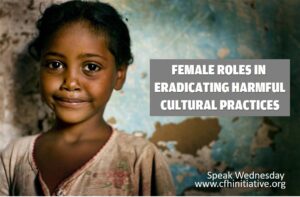
FEMALE ROLES IN ERADICATING HARMFUL CULTURAL PRACTICES

Certain cultures in different parts of the world accommodate harmful practices that encourage forms of exploitation, violence, abuse, injustice, discrimination and marginalization, committed primarily against women and children. Female Genital Mutilation (FGM), child/forced marriage, initiation rites, infanticide, male preference, honour killings, forced begging, stoning, acid attacks, bonded labour, sexual slavery, breast ironing, and nutritional taboos are harmful practices that are detrimental to the health and wellbeing of its victims.

Significant progress has been made thus far to eradicate harmful cultural practices globally, but the economic, physical and social disruptions caused by the ongoing pandemic could deter the advancement. The new United Nations Population Fund (UNFPA) projections in April 2020 predict that the COVID-19 pandemic may cause about 2 million more cases of Female Genital Mutilation and about 13 million new child marriages in the next decade because of significant delays in programmes organized to tackle harmful cultural practices and economic hardships.

Women are at the forefront raising their voices against harmful cultural practices and providing interventions to support its victims even amidst the pandemic. Stephanie Linus is an award winning Nigerian actress, filmmaker and activist passionate about women and child rights. ‘Dry’ an award winning movie produced by her exposes the evils of child marriage and the physical and psychological consequences associated with it. Through her foundation ‘Extended Hands’ she has  partnered with local and international organizations in building awareness on fistula prevention, maternal health, family planning and has provided various medical interventions to indigent girls and women suffering Vesico Vaginal Fistula (VVF) in Sokoto, Kebbi, Cross River, Oyo, and Kwara states in Nigeria. Her foundation has continued to provide more interventions to vulnerable women and girls, deflating the number of new victims of harmful traditional practices in the COVID-19 era. She was recently appointed as the UNFPA Regional Goodwill Ambassador for West and Central Africa.

It is important to note that women are the most qualified advocates to fight for the eradication of harmful traditional practices. This is because women are the highest fatalities who have experienced and survived the repercussions of these practices. Hence, more women should be encouraged to speak up and empowered to be self-reliant.

Centre for Family Health Initiative (CFHI) continues to echo the call for an end to the suffering of girls and women caused by harmful traditional practices through community outreaches, policy-oriented research, and media campaigns. CFHI has through the United States Consulate Women And Youth Empowerment (WYNE) project, mitigated the rate of female genital mutilation, child marriage, violence against women, land disinheritance, gender (Son) preference, Incest, rape and harmful widowhood practices in Ngor Okpala community, Imo State, Nigeria.  After having ten community dialogues with the community stakeholders, resolutions on these harmful practices were reached, leading to the development of a community charter that was signed by the paramount traditional ruler and representatives of the villages that make up the community. Operation-Know-Your-Right Campaign was thereafter organized through which over 735 women and 28 youths were sensitized with the right knowledge to stand against harmful cultural practices within and outside the community.

Speak Wednesday is an initiative of Centre for Family Health Initiative to stop the cycle of domestic violence by breaking the silence around gender based violence and gender bias. Join us every Wednesday on all our social media handles for more episodes.

SPEAK WEDNESDAY Read More »

SPEAK WEDNESDAY

SPEAK WEDNESDAY – SEXISM

According to Wikipedia, Sexism is prejudice or discrimination based on a person’s sex or gender. Sexism can affect anyone, but it primarily affects women and girls. It has been linked to stereotypes and gender roles, and may include the belief that one sex or gender is intrinsically superior to another.

Sexism manifests in various forms and due to stigmatization from the society, women are forced to accept abuse and neglect. Some females are denied access to proper health care, good nutrition, education and legal rights which is an infringement on their basic human rights as humans. Child marriage, female genital mutilation and other traditional harmful practices, objectification, women trafficking, forced labour, and unequal school participation are other instruments of sexism.

It is pertinent to know that not just violence but other forms of sexism have devastating consequences. Some of these repercussions affect the physical and mental health of the individuals. Sexual transmitted infections, mental disorders, depression, anxiety, low birth weight and sometimes death of the fetus of teenage mothers, obstetric fistula, death of the victim, excessive bleeding, urinary tract infections, neuroses, hatred for any form of sexual relation and psychoses fall into this category.

Education is the key for women to achieve economic independence, yet, Unite Nations (UN) estimates that women make up more than two-third of the world’s 796 million illiterate people. If a nation must achieve sustainable success, education and proper sensitization is essential. According to a popular quote by African Proverb “If you educate a man, you educate an individual. But if you educate a woman, you educate a nation”.

Proper sensitization with full participation of all genders should be encouraged to end gender stereotypes and harmful cultural practices that affect women and girls. The goal is to create a balanced system for everyone.

Speak Wednesday is an initiative of Centre for Family Health Initiative to stop the cycle of domestic violence by breaking the silence around gender based violence. Join us every Wednesday on all our social media handles for more episodes.

SPEAK WEDNESDAY Read More »

SPEAK WEDNESDAY

HARMFUL GENDER-BASED CULTURAL PRACTICES IN AFRICA

Africa accommodates various cultural, religious and traditional beliefs and practices that encourage discrimination, marginalization and injustice. Women and girls in Africa are mostly subjected to these harmful practices because these cultures encourage male preference and domination.

Female genital mutilation, breast ironing, early marriage, widowhood rites, girls initiation rites, trokosi, sororate, levirate, inability to access good healthcare especially during childbirth, lack of access to education and good nutrition, lip plate, milk teeth extraction, eyebrow incision are some of the harmful cultural practices melted out to women and girls in Africa. Females are groomed to fit into these stereotypes and are stigmatized when they do otherwise.

Female genital mutilation can lead to serious health complications such as infection, infertility, prolonged bleeding and complications during delivery, often leading to death. Infants of teenage mothers are likely to be still born or die in the first month of life. Pregnant and nursing mothers who suffer malnourishment are majorly victims of early marriage, who dropped out of school and may never get the opportunity to return.

Some victims of harmful cultural practices run away to break free from these practices, only to become vulnerable to sexual predators and human traffickers. They could suffer emotional and psychological damage that may lead to depression and suicide.  Other effects include pain, resentment for sex, premature birth, low birth weight, increased violence against women and girls, increased risk of contracting HIV and STIs, impaired emotional and sexual relations, social stigma and isolation.

Raising awareness on the dangers of harmful gender-based cultural practices in Nigeria is one of the effective ways to curb this silent menace. Just like Centre for Family Health Initiative, other Community Based Organizations and Non-Governmental Organizations can work with communities to source ways to end harmful practices and promote gender equality. The government should enact policies at all levels to protect women and girls, ensuring that these policies are implemented irrespective of the socioeconomic class.

Free education, skill acquisition trainings, increased access to basic health amenities, especially for the poor and vulnerable are measures that can aid the eradication of harmful practices in communities.

Speak Wednesday is an initiative of Centre for Family Health Initiative to stop the cycle of domestic violence by breaking the silence around gender based violence. Join us every Wednesday on all our social media handles for more episodes.

SPEAK WEDNESDAY Read More »