
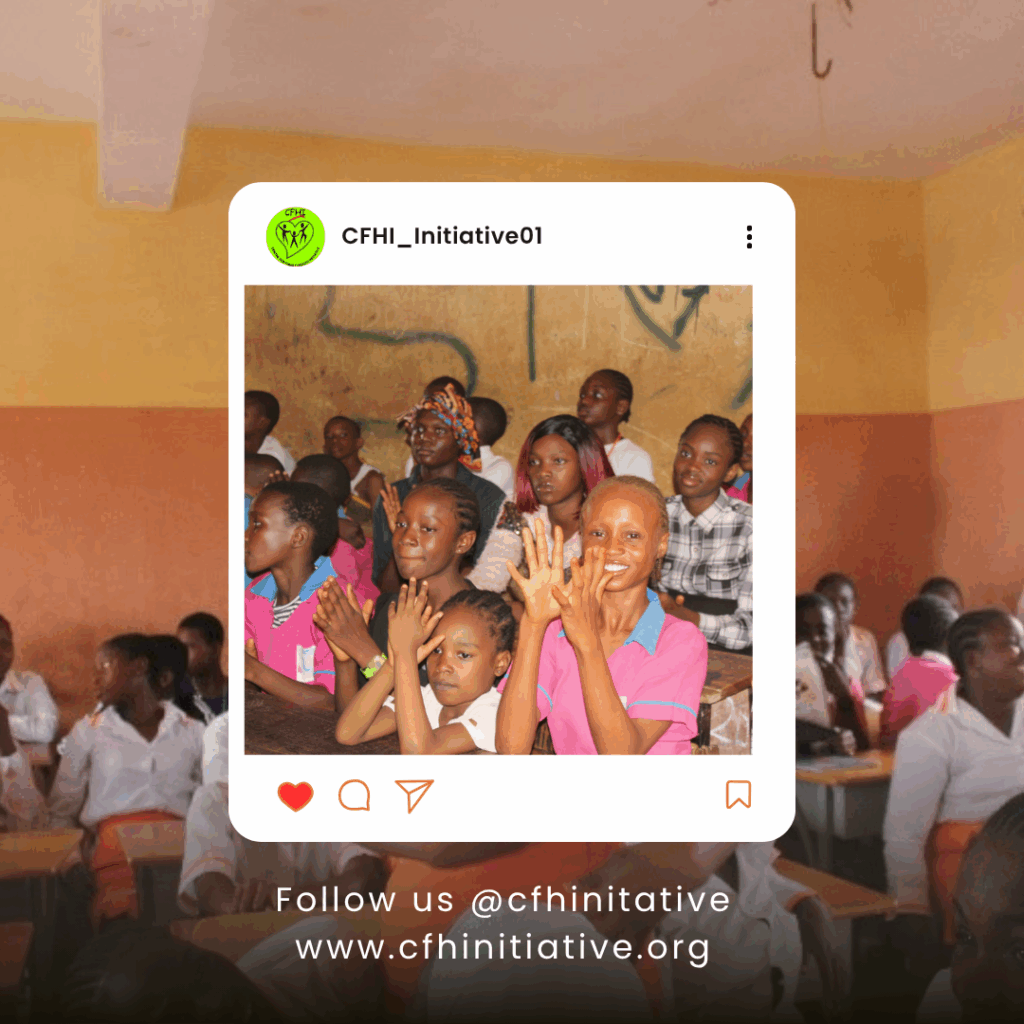
Safe Spaces, Safe Girls
Every girl deserves to feel safe at home, in school, online, and within her community. Yet, for many adolescent girls, safety is not always guaranteed. From bullying and harassment to harmful gender norms and abuse, too many young girls are forced to grow up in environments that threaten their confidence, education, and dreams.
Safe spaces are not just physical places; they are environments where girls can freely express themselves, learn, share experiences, and access guidance without fear of judgment or harm. They are spaces where girls’ voices are heard, their ideas are valued, and their rights are respected.
When girls feel safe, they thrive, they speak up, lead, innovate. But when fear replaces safety, silence grows and with silence comes vulnerability. According to the United Nations, https://www.un.org/en/observances/ending-violence-against-women-day one in three women worldwide experiences physical or sexual violence in her lifetime, much of which begins during adolescence. Unsafe spaces often normalize this violence, teaching young girls that their safety and dignity can be negotiated; but they cannot.
Why Safe Spaces Matter
Safe spaces help girls:
- Build self-esteem and confidence through open conversations and mentorship.
- Access accurate health information, including sexual and reproductive health education.
- Develop leadership skills that empower them to challenge stereotypes and discrimination.
- Find support networks to overcome trauma, bullying, and gender-based violence.
Beyond protection from physical harm, girls also need safety in the digital world; shielding them from cyberbullying, online exploitation, and exposure to harmful content. As the digital world becomes a second home for adolescents, creating safe online communities is just as important as protecting physical spaces.
Parents, guardians, teachers, and instructors play a vital role in shaping the safety and confidence of young girls. They must create nurturing environments that make girls feel protected, valued, and always heard.
Adults should provide constant reassurance, letting girls know they are not alone in their challenges. They should encourage them to brace up against the trials of adolescence, reminding them that every challenge is part of growth. Girls should be motivated to stay focused on their goals, believe in their dreams, and never let temporary setbacks define their worth.
When caregivers listen with empathy and guide with love, they give girls the courage to rise above fear, pressure, or self-doubt; building strong, confident women who will lead tomorrow.
Through our gender norms transformation programs, school and community outreaches, and Gender-Based Violence (GBV) prevention campaigns, CFHI continues to educate adolescents and their caregivers on creating supportive, respectful, and inclusive environments. We work to ensure that every girl has access to information, mentorship, and opportunities that build resilience and confidence.
To every adolescent girl reading this: your voice matters. You have the right to safety, respect, and dignity. Speak up when something feels wrong, support your peers, and stand for what is right even when it’s hard.
To parents, teachers, and guardians be the reason a girl feels safe. Create spaces filled with trust, understanding, and love. Encourage her to stay focused, stay brave, and never give up on her dreams.
Because when girls are safe, they are unstoppable. And when girls are unstoppable, communities thrive.
As the African proverb says, “Train a girl, and you train a nation.” This reminds us that creating safe spaces for girls is not only a moral duty but a foundation for building stronger, safer, and more prosperous communities.
Speak Wednesday is an initiative of CFHI to address issues around gender-base violence and gender-bias.