Overview of Breast Cancer
Breast cancer remains one of the most prevalent and life-altering diseases affecting millions globally. Despite significant advances in detection and treatment, it continues to pose a major public health challenge.
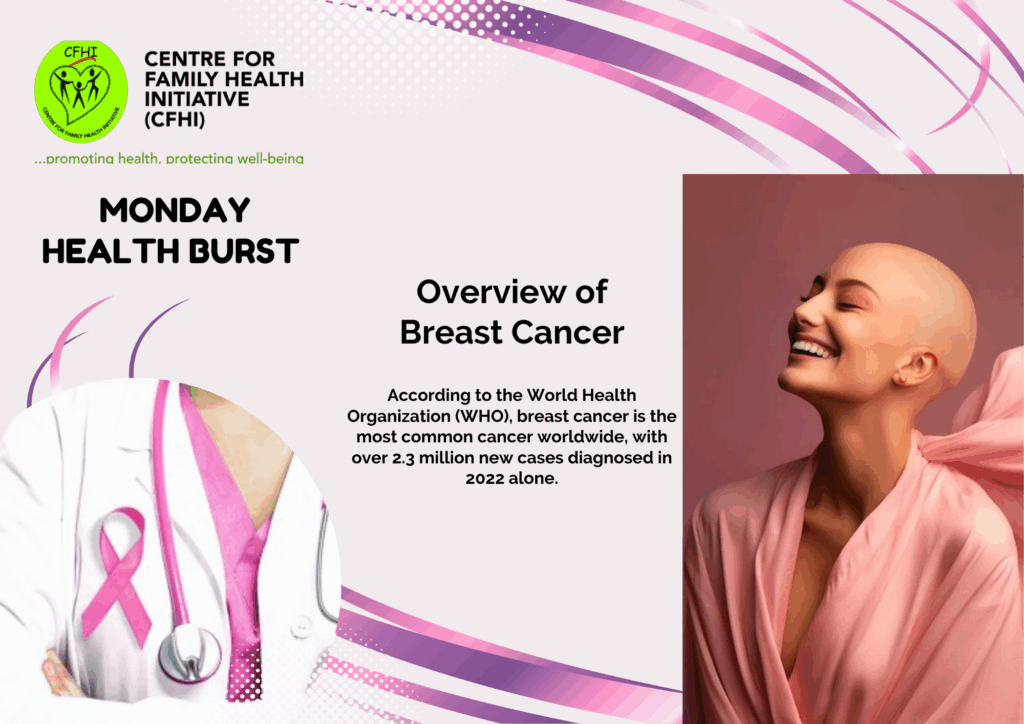
Breast cancer is a malignant tumor that originates in the cells of the breast. It occurs when breast cells mutate and grow uncontrollably, forming a mass of tissue. These cells can invade surrounding tissues and spread to other parts of the body through the lymphatic system or bloodstream—a process known as metastasis. According to the World Health Organization (WHO)1World Health Organization Breast Cancer Fact Sheet. WHO, breast cancer is the most common cancer worldwide, with over 2.3 million new cases diagnosed in 2022 alone.
Types of Breast Cancer
Breast cancer is not a single disease but a group of diseases with various subtypes. The most common types include:
- Ductal Carcinoma In Situ (DCIS): A non-invasive cancer where abnormal cells are found in the lining of a breast duct but haven’t spread.
- Invasive Ductal Carcinoma (IDC): The most common type, accounting for about 80% of cases. It begins in the ducts and invades surrounding tissue.
- Invasive Lobular Carcinoma (ILC): Starts in the lobules (milk-producing glands) and can spread to nearby tissues.
- Triple-Negative Breast Cancer (TNBC): Lacks estrogen, progesterone, and HER2 receptors, making it more aggressive and difficult to treat.
- HER2-Positive Breast Cancer: Characterized by overexpression of the HER2 protein, which promotes cancer cell growth.
Each type has different treatment options and prognoses, emphasizing the importance of accurate diagnosis.
Breast cancer development is influenced by genetic, hormonal, and environmental factors. Mutations in genes like BRCA1 and BRCA2 significantly increase the risk. These mutations can be inherited or acquired over time due to exposure to carcinogens, lifestyle factors, or aging.
The process typically follows these stages:
- Initiation: Genetic mutations occur in breast cells.
- Promotion: Mutated cells begin to multiply.
- Progression: Cells form a tumor and may invade surrounding tissues.
- Metastasis: Cancer cells spread to other parts of the body.
In Nigeria, breast cancer accounts for 22.7% of all cancer cases among women, globally, 1 in 8 women will be diagnosed with breast cancer in their lifetime. Men are also affected, though less frequently—about 1% of all breast cancer cases occur in men, the highest incidence rates are found in high-income countries, but mortality rates are disproportionately higher in low- and middle-income countries due to late diagnosis and limited access to treatment. Nigerian Cancer Society. Cancer Statistics in Nigeria. NCS
Signs and Symptoms
Common symptoms of breast cancer may include a lump or thickening in the breast or underarm, changes in breast size, shape, or appearance, dimpling or puckering of the skin, nipple discharge (especially if it is bloody), nipple inversion or pain, and redness, scaling, or swelling of the breast or nipple. Regular self-examinations and clinical screenings play a vital role in ensuring early detection. While not all breast cancers are preventable, several strategies can reduce risk:
At CFHI, we are committed to transforming lives through health education, advocacy, and preventive care. We empower individuals and communities with the knowledge and tools they need to make informed health decisions. By fostering a culture of health consciousness, CFHI is helping to reduce the burden of preventable illnesses and build a healthier, more resilient society.
Breast cancer affects millions, but together, we can change the narrative. CFHI invites you to join the movement; whether by attending our health seminars, volunteering in community outreach, sharing educational materials, or simply encouraging loved ones to get screened. Your voice, your time, and your support can save lives.
Monday Health Burst is an initiative of CFHI to address issues of basic health concern. Join us every Monday on all our social media platforms for more episodes.
References
- World Health Organization Breast Cancer Fact Sheet. WHO
- Nigerian Cancer Society. Cancer Statistics in Nigeria. NCS