Violence against women and girls remains one of the most widespread human rights and public health challenges in the world today. Across communities, homes, schools, workplaces, and even online spaces, millions of women and girls continue to experience abuse, discrimination, fear, and silence. Many victims suffer quietly because of stigma, shame, threats, fear of rejection, or lack of support systems. Yet, silence only allows the violence to continue. Breaking the silence is an important step toward protecting lives, restoring dignity, and creating safer communities for women and girls everywhere. [1]
Violence against women and girls includes physical, emotional, psychological, sexual, and economic abuse. It can appear in different forms such as domestic violence, rape, sexual harassment, child marriage, female genital mutilation (FGM), trafficking, cyberbullying, and emotional manipulation. While some forms of violence leave visible injuries, others leave emotional and psychological scars that can last a lifetime. Many survivors experience depression, anxiety, fear, trauma, poor reproductive health, and social isolation as a result of abuse. [1][2]
According to the World Health Organization (WHO), nearly 1 in 3 women globally have experienced physical and/or sexual violence at least once in their lifetime. Research also shows that millions of adolescent girls are exposed to violence at a young age, often by people they know or trust. Reports from UN Women reveal that hundreds of millions of women worldwide have experienced intimate partner violence, while thousands lose their lives each year due to gender-related killings and abuse. These figures highlight that violence against women is not just a personal issue but a global crisis that affects families, communities, economies, and national development. [1][2][3]
The effects of violence go beyond immediate physical harm. Many women and girls lose educational opportunities, struggle with low self-esteem, face financial difficulties, and withdraw from social activities because of fear and trauma. Children who grow up in violent homes are also more likely to suffer emotional distress and may continue cycles of violence later in life. This means violence against women and girls affects entire generations and weakens the social fabric of communities. [2][4]
One major challenge in addressing gender-based violence is underreporting. Many women and girls do not speak up because they fear being blamed, ignored, embarrassed, or threatened. In some communities, harmful cultural beliefs and gender inequality continue to normalize abuse, making it difficult for survivors to seek justice or support. Financial dependence, lack of trust in authorities, and limited access to healthcare or counselling services also prevent many victims from reporting violence. As a result, countless cases remain hidden, and survivors continue to suffer in silence. [2][4]
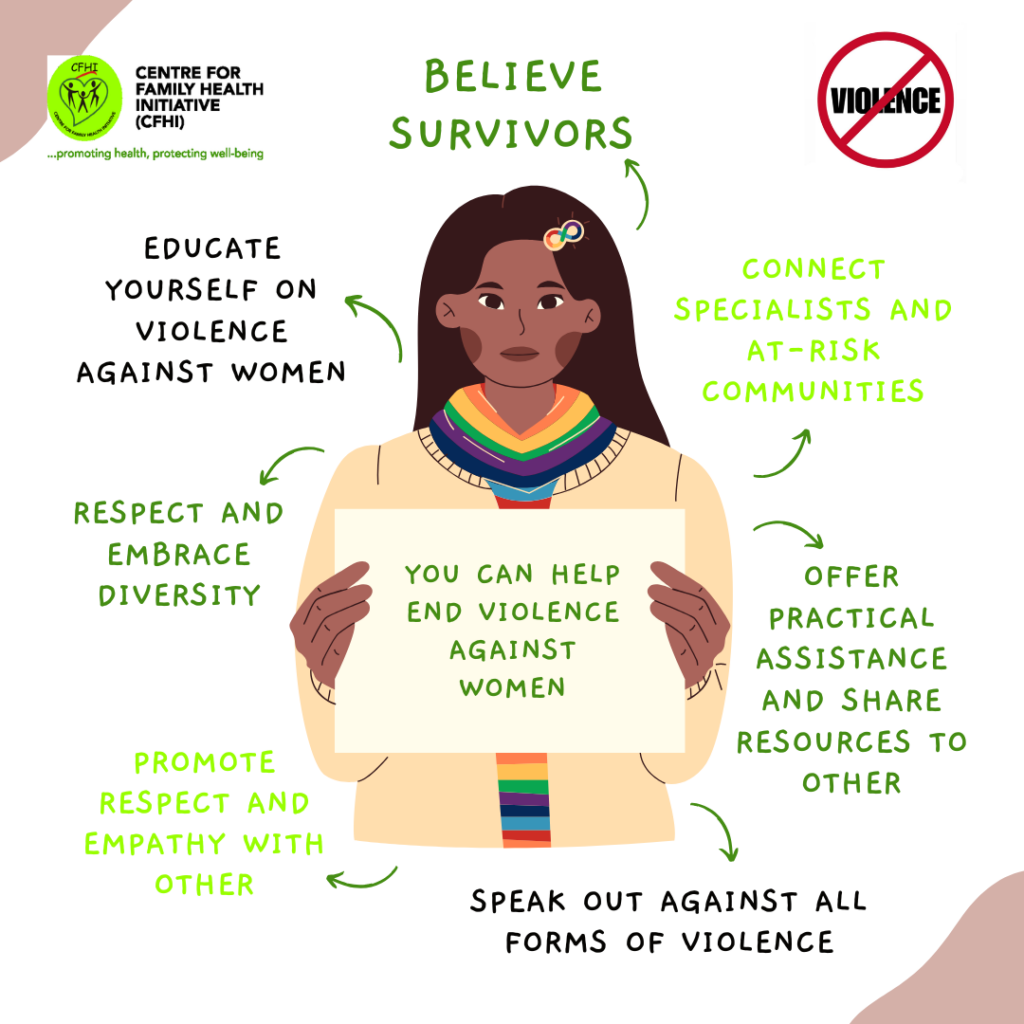
Ending violence against women and girls requires collective action from everyone. Families, schools, religious leaders, healthcare providers, governments, media organizations, and community groups all have important roles to play. Raising awareness about gender equality, teaching respect and consent, supporting survivors without judgment, and strengthening laws against abuse are necessary steps toward change. Communities must also create safe spaces where women and girls can speak openly, seek help, and access healthcare, counselling, and legal support without fear or discrimination. [1][3]
Education and empowerment are powerful tools in preventing violence. When girls have access to education, accurate information, supportive environments, and equal opportunities, they are better equipped to protect themselves and make informed decisions. Engaging boys and men in conversations about respect, healthy relationships, and positive masculinity is also important in challenging harmful social norms and reducing violence. [3][4]
Technology and social media have created new opportunities to raise awareness and amplify the voices of survivors. However, online violence against women is also increasing through cyberbullying, harassment, threats, and image-based abuse. This highlights the need for stronger digital safety measures and responsible online behaviour to protect women and girls both offline and online. [2]
Violence against women and girls is preventable, and every voice matters in the fight against abuse. Speaking up, supporting survivors, reporting violence, and promoting equality can help break the cycle of silence and fear. Communities become stronger and healthier when women and girls feel safe, respected, valued, and empowered to live free from violence. Together, through awareness, education, advocacy, and collective action, society can create a future where every woman and girl can live with dignity, freedom, and hope.
References
[1] World Health Organization (WHO) – Violence Against Women Factsheet (World Health Organization)
[2] UN Women – Facts and Figures on Ending Violence Against Women (UN Women Knowledge hub)
[3] United Nations Population Fund (UNFPA) – Gender Equality and Protection Reports
[4] UNICEF – Gender-Based Violence and Child Protection Reports