Child Trafficking

Creating a Safe Environment for Girls in Schools and Communities.

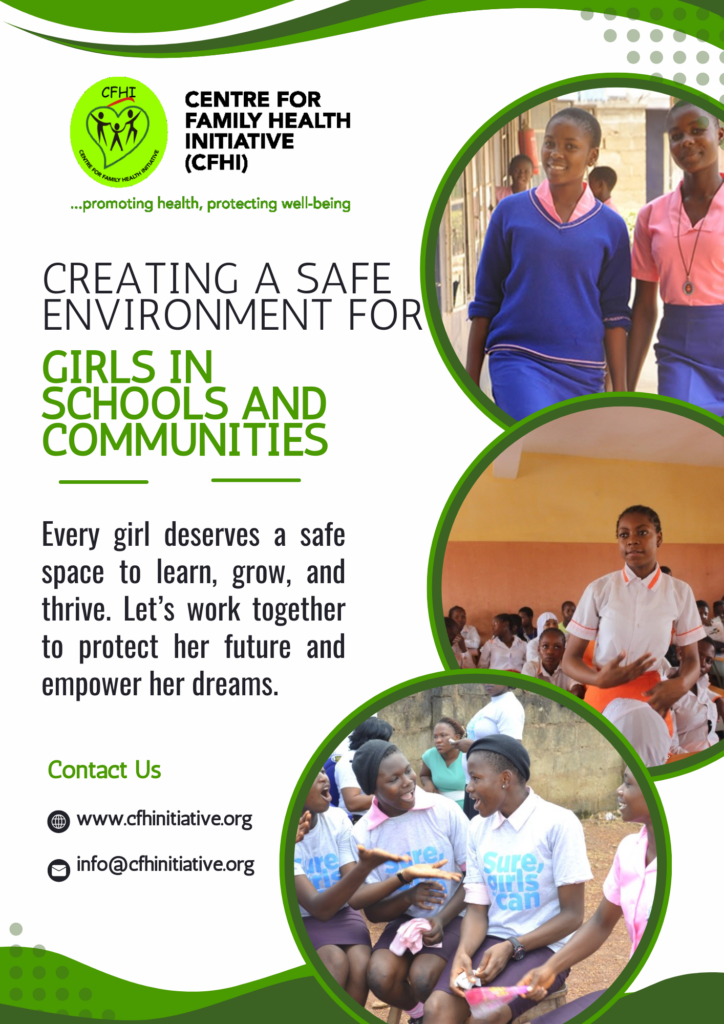
Creating a safe environment for girls in schools and communities is not a luxury; it is a necessity for national growth, justice, and human dignity. When a girl walks into a classroom, she should be thinking about her lessons and dreams not about fear. Yet for millions of girls around the world, safety is not guaranteed. According to the Malala Fund State of Girls’ Education Report, more than 120 million girls globally are out of school, with insecurity, poverty, and gender discrimination among the leading causes (Malala Fund, 2023). Behind these numbers are real girls whose futures are delayed or permanently disrupted.

Nigeria reflects this global crisis in painful ways. Data from UNICEF shows that Nigeria has one of the highest numbers of out-of-school children in the world estimated at over 18 million with girls disproportionately affected in conflict-affected regions (UNICEF Nigeria, 2023). The abduction of schoolgirls from Chibok in 2014 drew global outrage, yet attacks on schools have continued in parts of Kaduna, Niger, Zamfara, and Sokoto States. Recent education security reporting highlights ongoing threats and forced withdrawals of girls from school due to fear of violence. (See UNICEF Press Release on education safety.)

Violence is not only external. Research by Plan International shows that many girls experience harassment, bullying, or sexual violence within school environments, often from peers or authority figures. Such incidents frequently go unreported due to stigma and weak reporting mechanisms (Plan International, 2022). When girls feel unsafe in school, attendance drops and dropout rates increase. According to UNESCO Global Education Monitoring Report, school-related gender-based violence significantly affects learning outcomes and contributes to early school leaving (UNESCO, 2023).

Infrastructure gaps also contribute to insecurity. Thousands of schools in Nigeria lack perimeter fencing, security personnel, and adequate lighting, making them vulnerable to intrusion, theft, and attacks (Nigeria Security and Civil Defence Corps Report, 2024). Beyond physical security, access to water, sanitation, and hygiene (WASH) facilities is essential. The WHO/UNICEF Joint Monitoring Programme reports that inadequate sanitation disproportionately affects adolescent girls, especially during menstruation, leading to absenteeism and reduced participation (WHO/UNICEF JMP Report, 2023).

Community norms further shape girls’ vulnerability. According to UN Women, harmful gender norms, early marriage, and tolerance of violence increase girls’ risk of dropping out and experiencing abuse. In areas with high gender inequality, girls face restricted mobility and limited decision-making power, undermining their educational continuity and safety (UN Women, 2023).

Creating safer environments therefore requires coordinated action. Governments must strengthen school security architecture, implement early warning systems, and enforce child protection policies. Schools should adopt safeguarding frameworks and confidential reporting systems. Communities must challenge harmful norms and actively support girls’ education. Civil society organizations should be supported to expand advocacy, mentorship, and survivor support services.

Ensuring safety for girls is not simply about protection it is about possibility. When girls learn in secure environments, they are more likely to complete their education, participate in the workforce, delay early marriage, and contribute to economic growth. Safety forms the bedrock of confidence and achievement. If development is truly our goal, then protecting girls in schools and communities must be our shared responsibility.

Speak Wednesday is an initiative of CFHI to address issues around gender-base violence and gender-bias.

References

Creating a Safe Environment for Girls in Schools and Communities. Read More »
Silent Reproductive Health Struggles

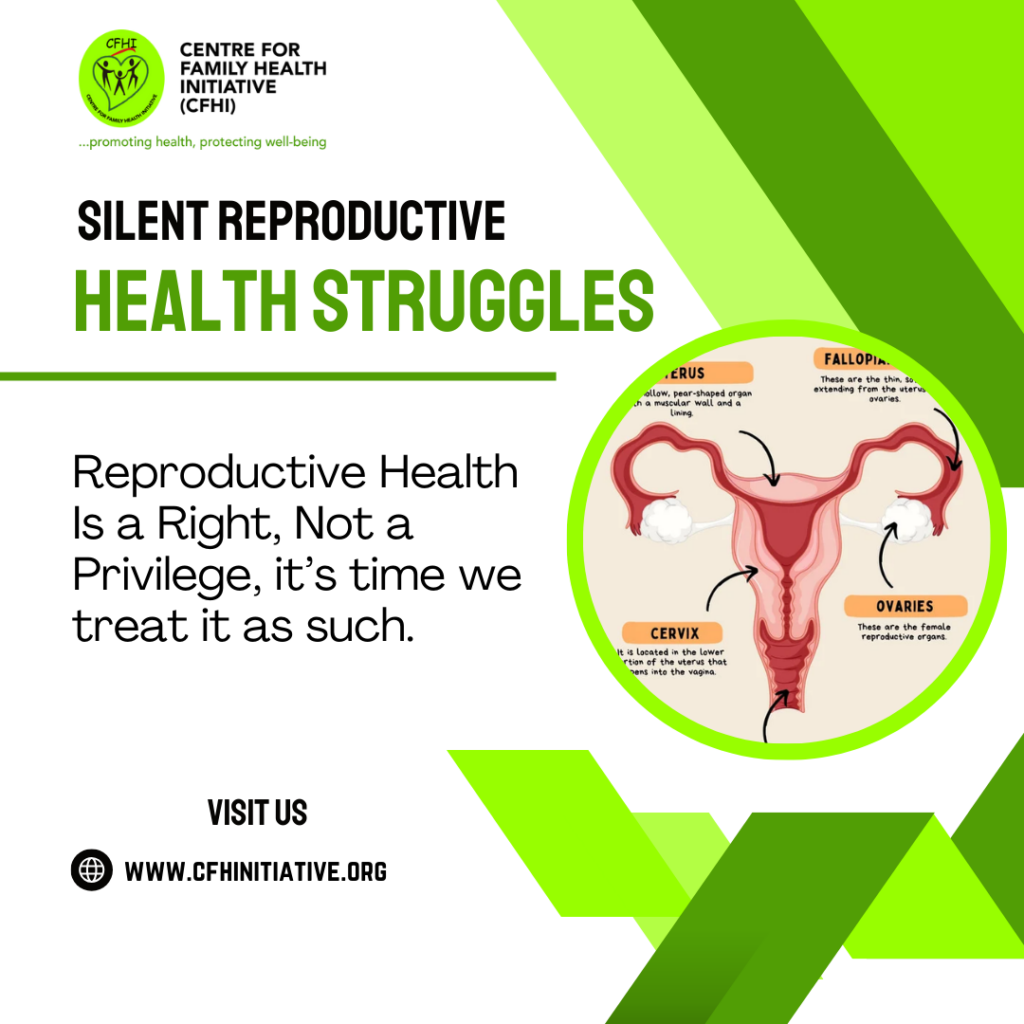
Women’s reproductive health is fundamental to their overall well-being, yet millions of women globally and in Nigeria face persistent, often silent challenges that compromise their health, autonomy, and quality of life [1]. Despite progress in some areas, vast inequities remain in access to services, information, and rights leaving many women vulnerable to preventable health problems [2].

One of the major silent struggles is limited access to essential reproductive health services, including family planning, maternal care, and safe delivery support. In sub-Saharan Africa, one in four women who wish to delay or stop childbearing do not use any contraceptive method, reflecting gaps in availability, choice, and quality of reproductive care [1][5]. These shortfalls contribute to high rates of unintended pregnancies, unsafe abortions, and increased maternal morbidity and mortality. Globally, about 800 women die each day from pregnancy-related causes, many of which are preventable with proper services and support [1].

In Nigeria, reproductive health disparities are stark. A survey of reproductive health concerns found that sexual health, contraception, infections, fertility issues, and reproductive cancers were among the most pressing worries for women, indicating broad unmet needs across the reproductive spectrum [3]. Despite various policies, only a few Nigerian states meet benchmarks for women’s participation in decisions about their sexual and reproductive health, reflecting systemic barriers rooted in socio-cultural norms and limited autonomy [4]. Economic challenges also contribute, with millions of women lacking access to modern contraceptives and comprehensive family planning services due to cost, misinformation, fear of side effects, cultural opposition, and weak health systems [5][6].

Another under-recognized struggle is infertility, which affects a significant portion of women yet remains stigmatized and poorly supported. Recent WHO guidance highlights infertility as a major public health concern, with more than one in six people of reproductive age affected [7]. Access to affordable fertility evaluation and treatment is limited in many countries, forcing women to choose between financial hardship and their desire for children [7].

Maternal health remains a critical issue. Globally, approximately 287,000 women die yearly from complications in pregnancy and childbirth, with nearly all these deaths occurring in low- and middle-income settings where health systems are weak and resources scarce [1]. In areas affected by conflict or economic strain, such as parts of northern Nigeria, women face even greater risks due to disrupted services, insecurity, and collapsed care infrastructure [8].

The impact of these struggles extends beyond physical health. When women cannot access respectful, quality reproductive care, the consequences ripple into social and economic domains limiting educational opportunities, reducing workforce participation, and perpetuating cycles of poverty and inequality [2].

Improving women’s reproductive health requires a holistic approach that ensures affordable and accessible services such as contraception, antenatal care, skilled delivery, and emergency support reach even the most underserved communities [1][5], while also equipping women with accurate, culturally sensitive information to make informed choices about their bodies and health [2]. At the same time, policies must actively protect women’s autonomy and reproductive rights by challenging harmful norms and discrimination [2][4], supported by strong, well-funded health systems with trained personnel to guarantee continuity of care, especially in fragile settings [1][8]. Integrating affordable infertility care and psychosocial support into routine reproductive health services is also essential to address the often hidden emotional and social burdens many women silently endure [7].

Speak Wednesday is an initiative of CFHI to address issues around gender-base violence and gender-bias.

References

  1. WHO Regional Office for Africa. Women’s Health. Available from: https://www.afro.who.int/health-topics/womens-health
  2. United Nations Population Fund (UNFPA). New UNFPA report finds 30 years of progress in sexual and reproductive health has mostly ignored the most marginalized communities. Available from: https://www.unfpa.org/press/new-unfpa-report-finds-30-years-progress-sexual-and-reproductive-health-has-mostly-ignored
  3. Sa’adatu TS, Dieng B, Danmadami AM. Reproductive health issues of concern among Nigerians: an online survey. Int J Community Med Public Health. Available from: https://doi.org/10.18203/2394-6040.ijcmph20234114
  4. Premium Times Nigeria. Only eight Nigerian states meet women’s health benchmark – Report. Available from: https://www.premiumtimesng.com/news/top-news/830200-only-eight-nigerian-states-meet-womens-health-benchmark-report.html
  5. World Health Organization. Sexual and Reproductive Health and Research (SRH): Family planning and contraception. Available from: https://www.who.int/teams/sexual-and-reproductive-health-and-research-%28srh%29
  6. Ballard Brief. Barriers to Family Planning for Women in West Africa. Available from: https://ballardbrief.byu.edu/issue-briefs/barriers-to-family-planning-for-women-in-west-africa
  7. WHO releases first global guideline on infertility care. Reddit; 2025. Available from: https://www.reddit.com/r/EmbryologyIVFSupport/comments/1pcjrzh/who_releases_first_global_guideline_on/
  8. AP News. Pregnancy has become a nightmare for many women in Nigeria’s conflict-hit north. Available from: https://apnews.com/article/c5846961ed87cddd8a24d1c2b04564a0

Silent Reproductive Health Struggles Read More »

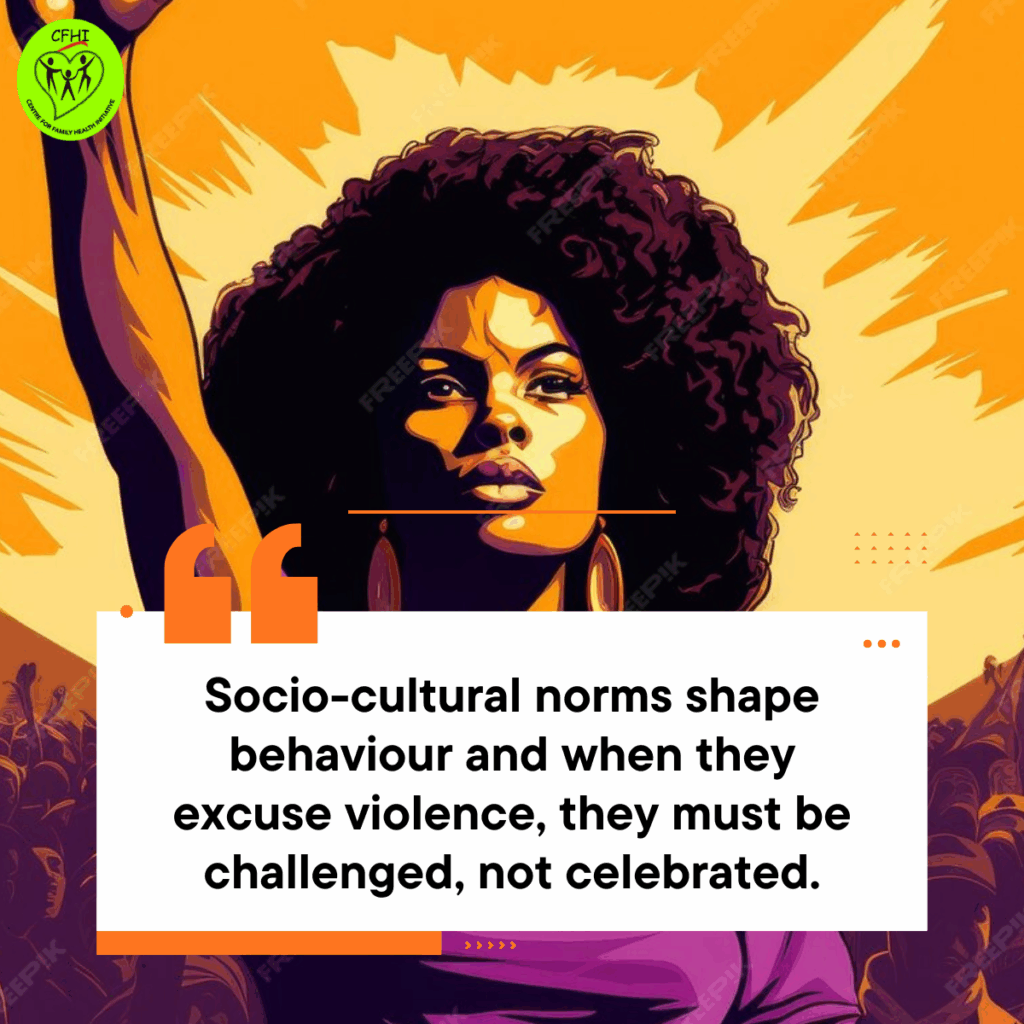
Socio-Cultural Norms and Practices A Deep-Rooted Barrier to Ending GBV

Across communities, the fight against Gender-Based Violence (GBV) is often undermined not by the absence of laws or policies, but by something far more entrenched socio-cultural norms and practices. These norms act as invisible rules that govern how people think, behave, and relate to each other, shaping gender expectations from childhood into adulthood. When these expectations are rooted in inequality, they form a powerful barrier that normalizes violence against women and girls and shields perpetrators from accountability. To truly eliminate GBV, we must confront these beliefs, because they are the soil from which violence grows.

In many parts of Nigeria, men are socialized to be dominant and authoritative, while women are groomed to be submissive, tolerant, and “obedient.” These expectations directly reinforce violence. A study in Northwest Nigeria showed that domestic violence is often justified by community members as a “corrective measure,” particularly when women fail to adhere to traditional roles of respect and submission to their husbands 2. This cultural acceptance makes reporting violence extremely difficult, as survivors fear being blamed, shamed, or even punished by their own families or communities.

Deep-seated practices such as female genital mutilation (FGM), child marriage, widowhood rituals, and the payment of bride price further cement gender inequality. In Northern Nigeria, child marriage is frequently defended as a cultural or religious requirement, yet research shows it exposes girls to sexual violence, health risks, and lifelong disempowerment 3 Similarly, FGM persists in communities where it is considered a rite of passage or a marker of purity, despite its severe physical and psychological consequences. These practices reinforce the idea that a woman’s value is tied to her body and her obedience, not her autonomy or humanity 6.

Gender norms also influence how communities perceive survivors and perpetrators. In the Niger Delta, for instance, over 75% of respondents in one study believed that women provoke violence when they fail to meet cultural expectations of submission and domestic responsibility 7. This belief creates a dangerous cycle where victims are blamed and perpetrators are excused, further emboldening violence. Even in settings considered more progressive, such as universities, harmful beliefs remain widespread. Research among students at the University of Calabar revealed that many still view men as inherently superior and justified in exerting control over women through violence 4.

These norms are not just personal attitudes they have structural consequences. A multivariate analysis across different regions of Nigeria confirmed a strong correlation between cultural beliefs and the prevalence of GBV 10. They influence legal reporting, access to justice, community support systems, and even the willingness of institutions to intervene. So long cultural frameworks continue to excuse or minimize violence, GBV will persist regardless of how many laws or policies exist on paper.

To dismantle these barriers, Nigeria must invest in cultural transformation alongside policy reforms. This requires community dialogues, gender-transformative education, economic empowerment of women, and meaningful engagement with traditional and religious leaders who hold influence over cultural practices. It also means amplifying survivor voices, strengthening community accountability systems, and challenging harmful norms through storytelling, media campaigns, and grassroots activism. Socio-cultural norms are deeply rooted but they are not unchangeable. Change begins when communities recognize that culture should protect, not destroy.


References

  1. Ede V, Arinze-Umobi C. Gender Issues in Islam. Teologia. 2024.
    https://journal.walisongo.ac.id/index.php/teologia/article/view/25466
  2. Argungu AM, Safiyanu S, Abba M. Domestic Violence and Women’s Rights in Northwest Nigeria. ASJP African Journal of Arts, Humanities & Social Sciences.
    https://aspjournals.org/ajahss/index.php/ajahss/article/view/173
  3. Adeyemi S, Engwa GA. Influence of Socio-Cultural Beliefs on Gender-Based Violence in Nigeria.
    Semantics Scholar.
    https://www.semanticscholar.org/paper/Socio-Cultural-Beliefs-and-Gender-Based-Violence-Adeyemi-Engwa/3cd20061f7caa3c54b6b88ff063d5ba2272f2c6b
  4. Ibekwe J. Influence of cultural norms and stereotypes on gender-based violence among students of the University of Calabar. International Journal of Medical Students.
    https://ijms.pitt.edu/IJMS/article/view/2956
  5. Olaseni AO, Akpa OM. Socio-cultural perspectives of GBV in Nigeria. SAGE Journals.
    https://journals.sagepub.com/doi/full/10.1177/2158244020982992
  6. Ojedokun U. Religion, Culture and Violence Against Women in Nigeria. Religions Journal. 2023.
    https://www.mdpi.com/2077-1444/16/3/359
  7. Idumwonyi I, Aigbokhaevbolo O. Community Perceptions of GBV in the Niger Delta Region of Nigeria. DOAJ.
    https://doaj.org/article/670a61e4b2bc4c9fbe669857804551ab
  8. Mulbah J, et al. Cultural beliefs and GBV in Sub-Saharan Africa. BMC Public Health.
    https://bmcpublichealth.biomedcentral.com/articles/10.1186/s12889-020-09138-9
  9. Onyekwere G. Widowhood practices and socio-cultural norms reinforcing GBV in Nigeria. African Journals Online (AJOL).
    https://www.ajol.info/index.php/jsda/article/view/233564
  10. Bala RY, Idris A. Socio-Cultural Drivers of Gender-Based Violence: A Multivariate Analysis in Nigeria.
    IJMRA. https://ijmra.in/v7i5/6.php


Socio-Cultural Norms and Practices A Deep-Rooted Barrier to Ending GBV Read More »

Validation of the 2024 VAPP Annual Implementation Report

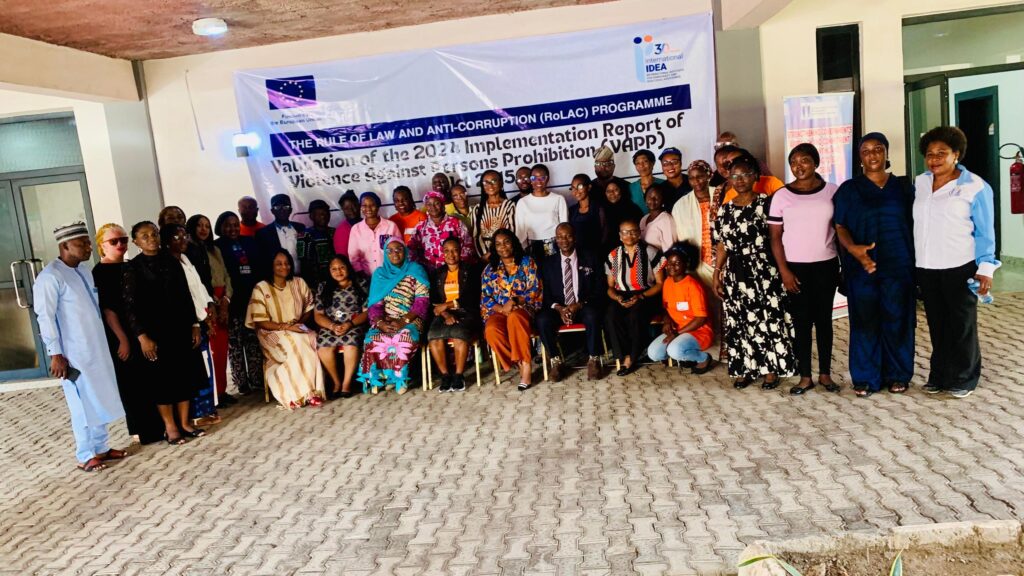
Representatives from government institutions, Civil Society Organizations (CSOs), Non-Governmental Organizations (NGOs), and other key stakeholders convened for the Validation of the 2024 Violence Against Persons (Prohibition) Act (VAPP) Annual Implementation Report. The validation meeting followed the submission of implementation reports from all partner organizations working across various states in Nigeria. This annual review served as a critical step in ensuring that the collective efforts to enforce the provisions of the VAPP Act are effectively monitored, measured, and reported in line with national gender and human rights priorities.

During the session, participants engaged in a rigorous process of reviewing, harmonizing, and validating submitted data to ensure accuracy, consistency, and accountability. Data validation was particularly focused on the documentation of reported cases, interventions, and outcomes achieved by different implementing partners under the year in review. The process also helped strengthen coordination among stakeholders by identifying discrepancies, aligning indicators, and updating performance records to reflect the true extent of progress made in addressing Gender-Based Violence (GBV) nationwide.

The meeting further provided a platform for sharing experiences, success stories, and best practices from the field. Participants discussed major achievements such as increased community awareness of the VAPP Act, improved case management systems, and enhanced collaboration between law enforcement agencies and service providers. However, they also highlighted existing gaps, including inadequate funding, limited data disaggregation, weak referral mechanisms in some states, and the need for continuous capacity strengthening at both state and local levels.

In conclusion, stakeholders reaffirmed their collective commitment to the effective implementation of the VAPP Act and to sustaining the momentum toward eliminating all forms of violence, particularly against women and girls. The validation exercise underscored the importance of evidence-based reporting, accountability, and multi-sectoral collaboration in achieving a violence-free society. Participants called for continuous engagement between government and non-state actors to ensure that future reports reflect not only activities and outputs but also the real impact of interventions on the lives of survivors and vulnerable populations across Nigeria.

Validation of the 2024 VAPP Annual Implementation Report Read More »

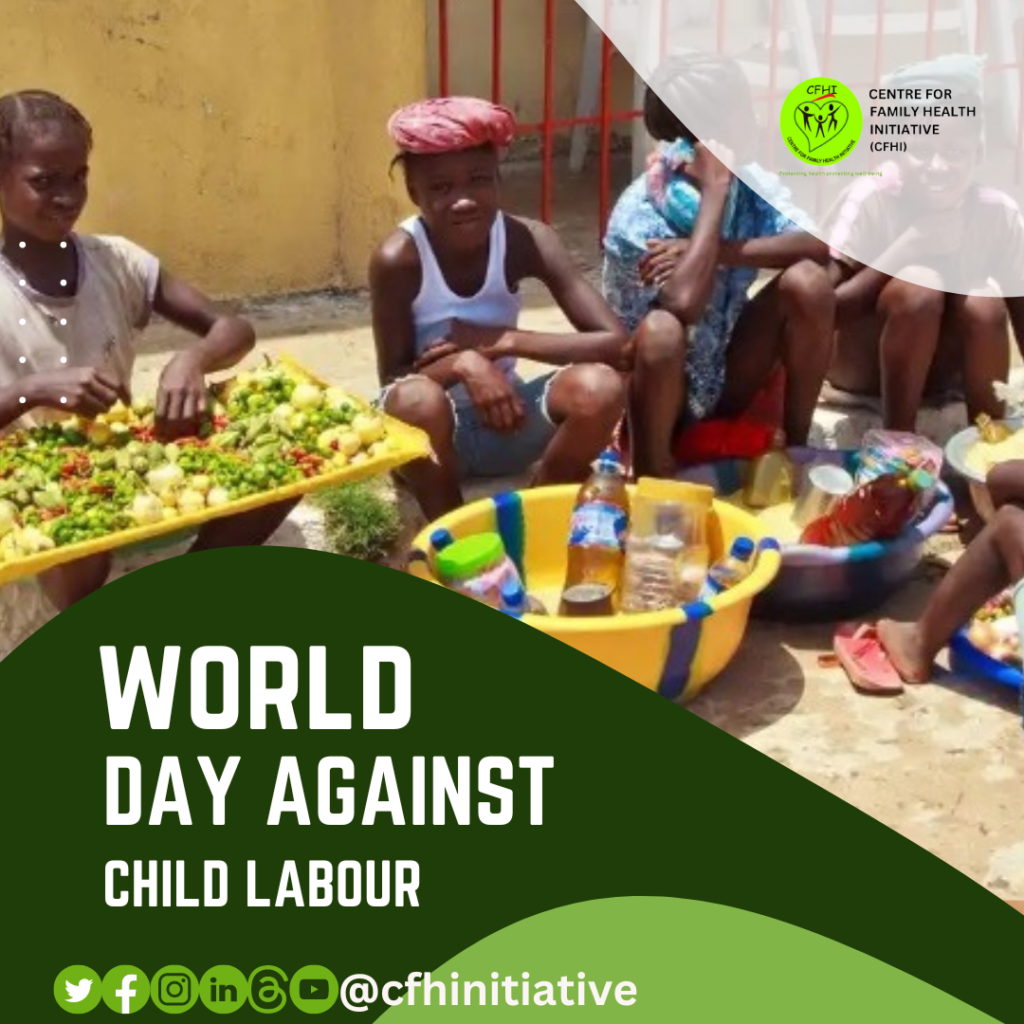
WORLD DAY AGAINST CHILD LABOUR

Every year, on June 12th, the world comes together to recognize World Day Against Child Labour, a day dedicated to raising awareness about the plight of child labourers globally and encouraging actions to eliminate this scourge. This year, the theme, “Let’s Act on Our Commitments: End Child Labour!” calls upon governments, organizations, and individuals to reaffirm their pledges and take concrete steps toward eradicating child labour.

Child labour is defined by the International Labour Organization (ILO) as work that is mentally, physically, socially, or morally dangerous and harmful to children. It deprives them of the opportunity to attend school and impedes their overall development. As per Business Insider (2018), child labour not only denies children their right to education but also exposes them to severe human rights violations, including sexual assault, human trafficking, and exploitation by drug dealers and armed groups.

An estimated 218 million children worldwide, aged between 5 and 17, are engaged in labour, with 152 million of them working under hazardous conditions. These children toil away in fields, factories, and homes, sacrificing their childhood and their future for survival.

In today’s reality, poverty remains a significant driver of child labour, especially in countries like Nigeria. Children are often forced to toil in harsh conditions to support their families, becoming the primary breadwinners. This harsh reality not only perpetuates the cycle of poverty but also compounds social inequality and discrimination.

While constructive activities like helping with light housework or taking on part-time jobs during school breaks can benefit children, child labour starkly contrasts by severely restricting access to education and impeding a child’s physical, mental, and social growth. For girls, the situation is even more dire, as they bear the “triple burden” of school, work, and household chores, heightening their risk of falling behind and increasing their vulnerability to poverty and exclusion.

On this day, CFHI joins the global community in reminding us that there is no justification for child labour. CFHI actively engages in awareness campaigns, educational programs, and advocacy efforts to highlight the dangers of child labour and champion systemic changes that safeguard vulnerable children from exploitation.

As UNICEF aptly puts it, “There is no reason, there is no excuse. Child labour is child abuse.” By acting on our commitments and working together, we can ensure that every child enjoys a childhood free from labour, filled with education, play, and the promise of a brighter future.


WORLD DAY AGAINST CHILD LABOUR Read More »

SPEAK WEDNESDAY-CHILD ABUSE

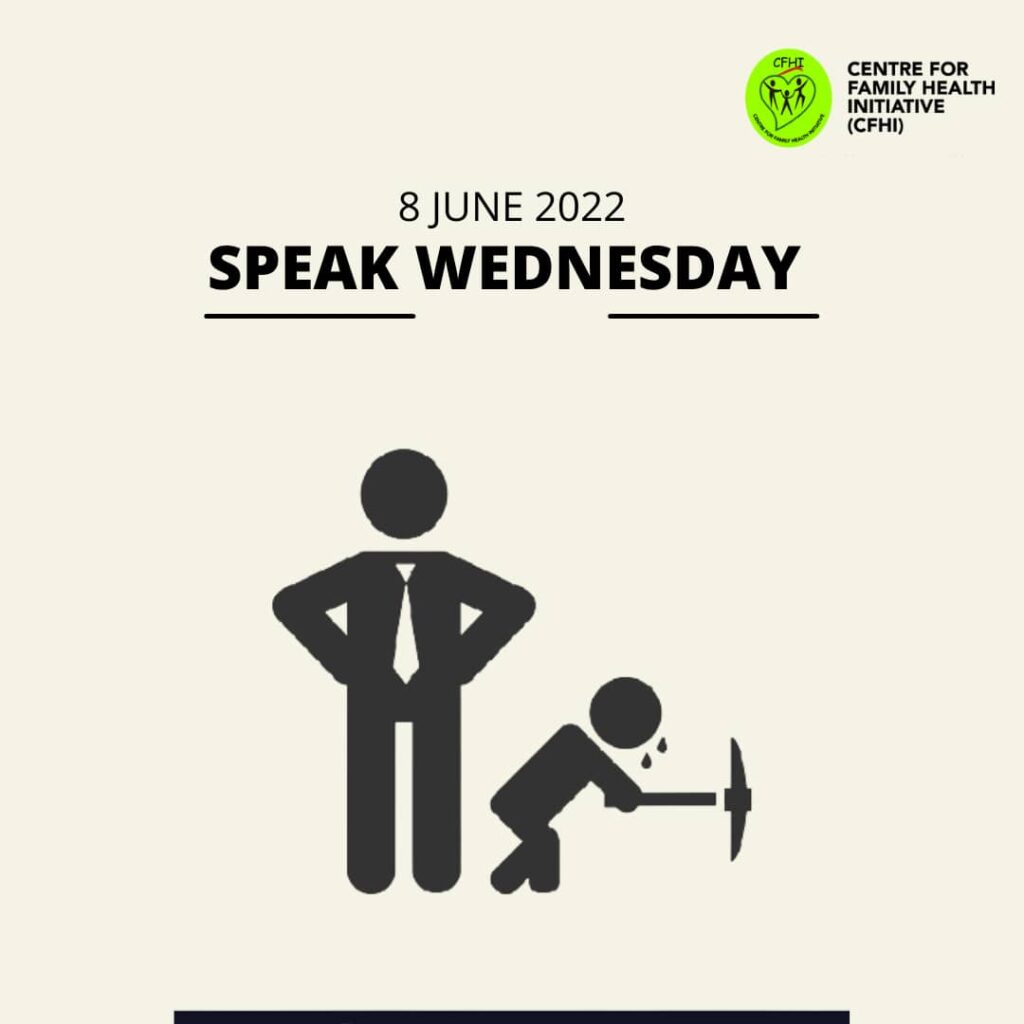
Section 28 of the Child Rights Act provides that no child shall be subjected to any forced or exploitative labour; or employed to work in any capacity where he is employed as a domestic help outside his own home or family environment.

Child labour refers to the permissible and non-permissible work done by children for a third party or an employer, which is sometimes done in hazardous situations. It is, however, important to note that this does not include reasonable household chores carried out by children under supervision in their homes which is a primary part of training children to be responsible adults in the future.

In Nigeria, child labour has persisted due to extreme poverty, lack of access to quality education, poor economic growth and the societal attitude towards child labour. Regardless of the existing laws prohibiting the practice, children are being pushed into domestic work daily just to bring additional income to support the family while facing exposure to sexual exploitation and other hazards associated with child abuse.

According to ILO, estimates determine that the current number of child workers in Nigeria is 15 million, which shows that Nigeria has the highest number of child labour in West Africa. The effects of child labour on children include both bodily and mental harm, poor or zero education, sexual or economic abuse, and other violations of child’s rights.

To eliminate domestic child labour in Nigeria, the problem of poverty should be tackled first by an overhaul of the economy to provide jobs for adult citizens of the country. Education should be made free for children from primary to secondary levels to keep children in school and lessen the financial burden on families. Also, the government should implement laws like the Child Rights Act and the Labour Act to foster the protection of children from exploitation.

Speak Wednesday is an initiative of CFHI to address issues around gender-based violence and gender bias. Join us every Wednesday on our social media platforms for more episodes.

#SpeakWednesday #ChildLabour #DomesticViolence #SDGs #EndChildLabour #PurnishPerpetrators

SPEAK WEDNESDAY-CHILD ABUSE Read More »

World Day Against Child Labour 2021

CHILD ABUSE

Child abuse occurs in different ways and scenarios across the globe with over a 95million children falling victim every year, according to the World Health Organization.  Africa remains the epicentre of this destructive practice which in some cases have been mistaken for discipline and justified by culture. It won’t be too early to mention here that there is a clear-cut difference between child abuse and discipline. Punishment could be essential to instil some set of values in children; however, this sort of punishment is not synonymous with putting the life of a child in danger and any punishment that harm or can harm a child has become an “abuse”.

Also, because sex is related to a temporal anti-depressant and provides relief from stress and pressure, without paying attention to family planning and the use of contraceptives, many children are born out of plan. More often than not, this case is peculiar to indigent families where children become a money-making machine for their parents thereby rendering children’s intellect futile and their emotions of no essence. Oh Yes, Children also have will, intellect and emotions. They are human!

We must consider some type of child abuse, the effect on the child and the effect of this practice on society. Until we come to the acceptance that child abuse is destructive and it happens even when parents are innocently caring for their kids, we may continue to live in the delusion that child abuse is only about sexual molestation and trafficking.

 TYPES OF CHILD ABUSE

  • Physical Abuse: This is often time what many African parents refer to as punishment or discipline. This kind of abuse is characterized by beating and hitting that could be harmful to the child. Contrarily to what parents and guardians think, excessive beating or harming a child has been proven to be counterproductive in the training of a child. “Spanking plants seed of later violent behaviour and spanking doesn’t work”- AskDr.Sears.com
  • Sexual Abuse: This is when an adult has sexual intercourse with a child. Compared to physical abuse, sexual abuse does not usually leave a glaring mark and it is more difficult to identify its victim. Yet, this abuse put children in an extremely traumatized condition.
  • Psychological Abuse: It was earlier mentioned that children also have emotions and would naturally react within them to situations that they perceive as not palatable even though they may not be able to fully express themselves or rebel.

Turning children into money making machine- having them hawk around the street or sending them to a stranger’s house to work for money/food when their mates are in school is abuse that affects children psychologically and can ruin their self-esteem. Children who are quietly forced to live this way may appear unbothered but there’s something in them that yearns for what they are deprived of. All form of neglect and denying children of their basic right, including the opportunity to play may appear negligible but this has a great impact on the well-being and growth of a child.

Also, the kind of names children are called and how they are being addressed as a way of moulding/destroying them. I think I can hear you say what! How?

Shouting at children, calling them bad names and the use of abusive words has been found destructive to the well-being of a child. Even though this might not be measurable, it becomes evident in the lifestyle of a child if not stopped. Signs may include timidity and low self-esteem

EFFECTS OF CHILD ABUSE

The effect of child abuse (of whatever type) on a child is numerous, all of which can result in mental health problem. Mental health problem is a condition yet to be given utmost attention to in Africa and our silence on this is causing us more harm than good. Statistics revealed that 1 out of every 10 children and young people suffer mental health problem as a result of their responses to their daily lives. Facts gathered by Mental Health Foundation from the World Health Organization and various researches show that “20% of adolescents may experience a mental health problem in any given year. 50% of mental health problems are established by age 14. 10% of children and young people (aged 5 -16 years) have a clinically diagnosable mental problem, yet 70% of children and adolescent who experience mental health problems have not had appropriate interventions at a sufficiently early age”.

THE GOODNEWS!

The interesting thing about child abuse is that “it is not an accident, hence, it is controllable”. Here are a few ways:

  • Love – Love is a language everyone understands, including children. Disciplining children in love without harm or bruise is effective in instilling in them moral values that are essential for attaining a beautiful future.
  • Plan for your children – The potency of a man and fertility of a woman is not tested by the number of children. Have the number of children you can cater for. Children rejoice when they have access to basic things and “their joy is not tied to the quantity or the luxury but the access and enjoyment”.
  • Befriend them – Often time adults act like they were never a child or tend to pretend like they were “holy children”. Until children know you will understand their plight, they won’t talk to you/confide in you. Children are not as ignorant as many adults think, they only shrink back out of fear and respect. When they need to talk, you should come to their mind as a parent/guardian.
  • Be Peaceful – Live at peace with your spouse and the people around you. Children learn more from what they see than what they hear. When violence is seeing as a norm around them, they may not be able to tell when they are being abused and/or become abusive. It doesn’t matter what you tell them, they are watching you!

The list cannot be covered in this article but you must be aware of child abuse, the effects and how you can contribute your quota to see that children live and live well. The effect of child abuse on society at large is enormous.

Before a family (and a Nation) can boast of a successful succession plan and an assured posterity, the quality of life and well-being of her adolescent must be evaluated.

World Day Against Child Labour 2021 Read More »

SPEAK WEDNESDAY

GIRL CHILD LABOUR

Girls play multiple roles in the household, society and the economy. They go to school, help with housework, work in factories, make friends, care for elder and younger family members and prepare themselves to take on the responsibilities of adulthood. Upholding the rights of the girl child has seen increased support through the nearly global adoption of the Convention on the Rights of the Child, as well as through the UN Millennium Development Goals target of increasing equality between girls’ and boys’ educational attainment. Though life for the girl child is steadily improving, many are still subjected to horrific practices. While child labour is an infringement of the rights of all children – boys and girls alike – girls often start working at an earlier age than boys, especially in the rural areas where most working children are found.

The International Labor Organization (ILO) defines Child labour as hazardous work, demands too many hours, or is performed by children who are too young. Child labour is one of the most monumental issues in Nigeria, a country with a developing economy, affecting a large portion of the country’s children up to age 17. A joint report issued in February by Nigeria’s National Bureau of Statistics, United Nations Children’s Fund (UNICEF) along with several other organizations opine that more than half of Nigeria’s 79 million children between the ages of 5 and 17 are put to work, including in hazardous conditions and about 30% of child workers do not even receive compensation.

Furthermore, the 2020 International Labor Organisation report states that the main reasons for the emergence of girl child labour in countries like Nigeria are unhealthy family life and economic deprivation. Families strained by financial difficulties cannot cope with the increasing demands of their children and sometimes even fail to provide them with adequate nutrition. This appears to be the reason children look for their sources of income. In socially disadvantaged, alcoholic or morally bankrupt families, pecuniary challenges are often coupled with destructive dynamics in the relationships. These factors combine to spur children into the street, temporarily or permanently, leading them to a vagrant existence, required too early to make independent decisions. Economic hardships and family dysfunction can therefore be named as the main causes of child labour.

For a Girl child, the consequences of child labour are staggering because they oftentimes result in extreme bodily and mental harm, and even death. It can lead to slavery and sexual or economic exploitation. And in nearly every case, it cuts children off from schooling and health care, restricting their fundamental rights and threatening their futures. Trafficked children are often subjected to violence, abuse and other human rights violations. And some may be forced to break the law, while for most girls; the threat of sexual exploitation looms large.

Although there are a lot of social programs and established policies claiming to address child labour in Nigeria yet there are policy gaps that exist that hinder efforts to address child labour and lack of evidence to address all relevant worst forms of child labour (Bureau of International Labour Affairs, 2019). According to ILO (2020), the basis of the elimination of the worst forms of child labour within a relatively short time frame must be legislation, which keeps the total elimination of child labour as the ultimate goal of policy, but which explicitly identifies and prohibits the worst forms of child labour to be eliminated as a matter of priority. Such legislation must also provide adequate sanctions for violators and adequate compensation for victims, and be rigorously and impartially enforced.

For a country which has an alarming number of child labour, a review of the legal framework of child labour which should include pertinent issues surrounding the worst forms of child labour especially those relating to girls be encouraged. Also, mechanisms enforcing existing protections for children be created and strictly enforced with proper coordinating bodies carrying out their mandates as intended.

Speak Wednesday is an initiative of the Centre for Family Health Initiative (CFHI) to address issues around gender-based violence and gender bias. Join us every Wednesday on all our social media platforms for more interesting episodes.

SPEAK WEDNESDAY Read More »

SPEAK WEDNESDAY

SPEAK WEDNESDAY – CHILD TRAFFICKING

Child Trafficking is a form of human trafficking and is defined by the United Nations as recruiting, transporting, transferring, and harboring a child for the purpose of slavery, forced labor and exploitation. Child trafficking occurs when children are taken away from safety and exploited. Children who are trafficked are often forced into some form of work, used for sex or simply sold.

Globally, 21 million people are trapped in forced labor or slavery. Of these, one in four are under the age of 18. Every year, 300,000 children are taken from all around the world and sold by human traffickers as slaves according to International Labor Organization (ILO).

Nigeria is not an exception. The alarming number of children being trafficked on a daily basis in Nigeria is worthy of immediate action. The 2015 re-enacted Trafficking in Persons Law Enforcement and Administration Act, and Nigeria 2003 Child Rights Act criminalize child trafficking, yet, this has not seemed to reduce the rate of child trafficking in Nigeria. Children are still being abducted despite measures that are put in place by necessary agencies.

Collective responsibility should be adopted to curb this silent menace globally. Individuals must support the government and necessary agencies to report suspects and suspected locations. At Centre for family Health Initiative, we totally condemn every form of trafficking and gender based violence. Every child deserves the right to grow and strive in a secured environment.

#SayNoToChildTrafficking #NoToChildAbduction #StopChildLabour #CFHISpeakWednesday

SPEAK WEDNESDAY Read More »