Gender Based Violence

SPEAK WEDNESDAY

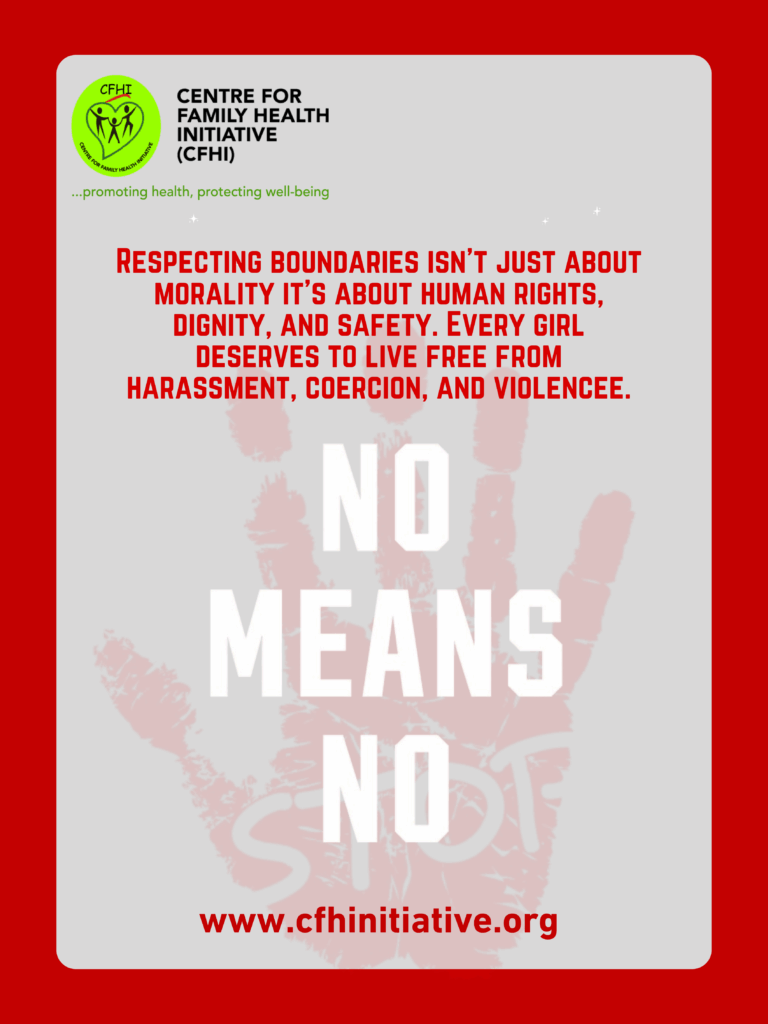
“NO Means NO”

Today, the simple word “No” still struggles to carry the weight it deserves. For many young people, especially girls and young women, saying “no” can come with fear, pressure, or misunderstanding. Yet, “no” should be enough. It is a complete sentence one that should be heard, respected, and never questioned. As we continue to raise awareness around gender equality and safety, understanding the true meaning of consent and personal boundaries becomes essential for building a healthy society.

Consent is more than just permission; it is about respect, autonomy, and communication. It means that every person has the right to decide what happens to their body, their time, and their emotions. Consent must be freely given, not forced, tricked, or coerced. It cannot be assumed from silence or past behaviour, and it can be withdrawn at any time. In relationships, friendships, or social settings, learning to respect a person’s “no” whether spoken or unspoken reflects maturity and integrity.

Unfortunately, the statistics around consent violations remain alarming. According to the World Health Organization (WHO), nearly one in three women globally has experienced physical or sexual violence in her lifetime, most often at the hands of an intimate partner 1. In Nigeria, the National Bureau of Statistics (NBS) reports that many incidents of sexual or domestic violence are never reported, often due to fear of stigma, shame, or disbelief 2. These figures highlight how deeply ingrained gender norms and societal silence can make it difficult for survivors to speak out and for young people to learn what healthy respect truly looks like.

For young girls, learning to say “no” and knowing that it must be respected is an important part of personal development and self-protection. Saying “no” is valid when faced with peer pressure to engage in sexual activity, when uncomfortable with unwanted touching, or when asked to share private information or photos online. “No” is equally powerful in social and emotional spaces: refusing manipulative statements like “If you love me, you’ll do it,” or declining invitations that compromise one’s comfort or safety. Every young person must understand that their voice matters, and their boundaries define who they are.

Equally important is educating boys and young men about consent, empathy, and accountability. True respect means not only hearing “no” but also actively seeking a clear and enthusiastic “yes.” It means understanding that real strength lies in restraint, understanding, and kindness not in control or pressure. When communities, schools, and families foster open conversations about respect and consent, they equip young people with the values needed to build relationships rooted in trust and equality.

Through our gender norms interventions, CFHI empowers young people with knowledge and confidence to challenge and transform harmful gender norms (especially those that disadvantage women and girls) while protecting respect, equality and fairness. Each adolescent club activity, school campaign, and community outreach brings us closer to a society where consent is understood, respected, and upheld where “NO” truly means “NO.

Speak Wednesday is an initiative of CFHI to address issues around gender-base violence and gender-bias.


References

  1. World Health Organization. Violence Against Women: Key Facts. WHO, 2023. Available from: https://www.who.int/news-room/fact-sheets/detail/violence-against-women
  2. National Bureau of Statistics. National Survey on Domestic and Sexual Violence in Nigeria. Abuja: NBS; 2022. Available from: https://nigerianstat.gov.ng/elibrary/read/1241055


SPEAK WEDNESDAY Read More »

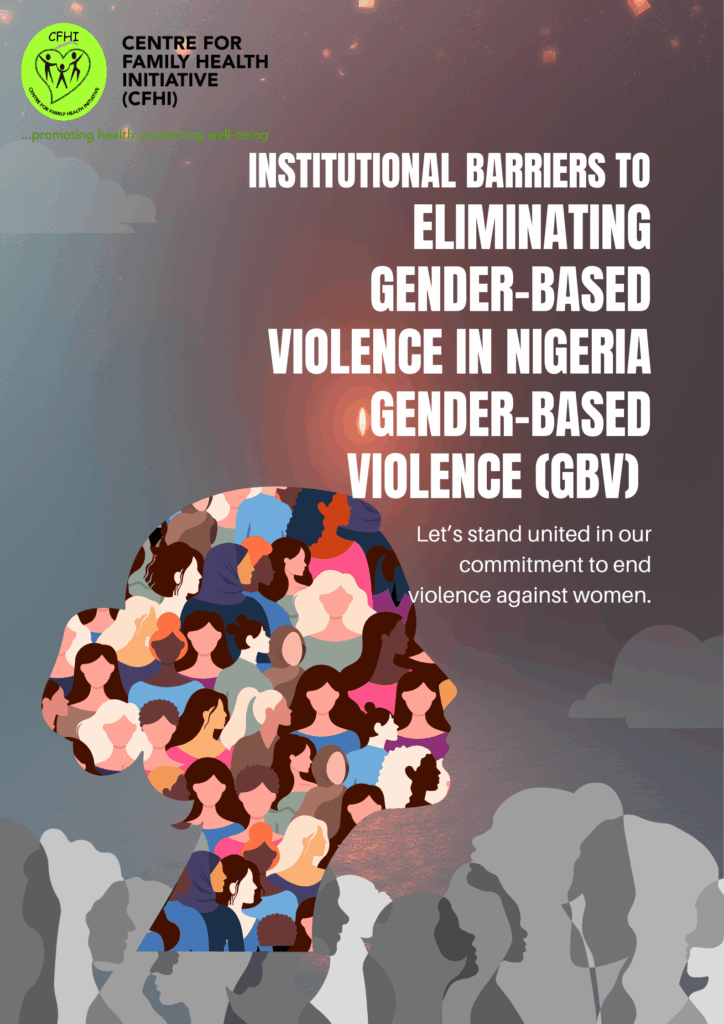
Systemic Barriers to Eliminating GBV in Nigeria

  1. Weak Legal Frameworks and Poor Enforcement

Gender-based violence (GBV) in Nigeria is not only a symptom of individual wrongdoing it is a structural problem rooted in weak laws, uneven adoption of protections, and chronically poor enforcement. To end GBV we must look beyond individual cases and address how laws, institutions and social systems consistently fail survivors.

At the federal level, Nigeria enacted the Violence Against Persons (Prohibition) Act (VAPP), 2015, a comprehensive law criminalizing many forms of GBV. Yet the VAPP is a federal law that must be domesticated (adopted) by state legislatures to take full effect in most states. Domestication has been inconsistent and slow: as recently as 2022–2023 different trackers and reports showed wide variation across states in adoption and implementation of VAPP-style protections. The patchwork adoption means many survivors still lack access to the full.

Even where anti-GBV laws exist, legal gaps remain. Some forms of abuse most notably marital rape are still not uniformly criminalized or enforced across Nigeria. Customary and religious legal systems in many communities treat marital relations as private and beyond criminal law, which results in survivors being denied legal redress. Research and rights reports document how legal definitions, exceptions, and cultural exclusions leave key protections unenforced or unavailable to many women and girls. (Human Rights Watch)

A law on the books means little if enforcement agencies are under-resourced, untrained, or indifferent. Investigations and prosecutions for GBV face multiple obstacles: victims face hostile or dismissive police responses, evidence is poorly collected or stored, and prosecution is slow or lacking. Human rights organizations have repeatedly documented cases in which survivors are shamed, blamed, or pressured to withdraw complaints outcomes that deter reporting and allow perpetrators to act with impunity. (Human Rights Watch)

“Survivors’ experiences show how enforcement failures deepen the harm. Human Rights Watch reported that a lawyer who helped a rape survivor in Enugu was herself assaulted after filing the complaint, exposing hostile treatment by police toward survivors and their advocates. Such incidents discourage reporting and let perpetrators act with near impunity.” (Human Rights Watch, Feb 6, 2020). Human Rights Watch

Effective GBV response requires functioning social services: emergency shelters, forensic and medical support, trauma counselling, and legal aid. In Nigeria these services are often underfunded, unevenly distributed, or run by civil society with precarious support. The result: even survivors who do report rarely receive the wraparound care needed for justice and recovery. Multilateral surveys during the COVID era showed the pandemic worsened women’s safety and access to services an acute example of how weak systems fail under stress.

Official statistics dramatically undercount GBV. Survivors often do not report abuse because they distrust institutions, fear stigma, or lack knowledge of legal options. In turn, poor data collection and fragmented record-keeping between police, health services and civil society hide patterns of violence and make evidence-based policy difficult. The lack of a centralized, trusted data system contributes to weak policy responses. (Human Rights Watch)

Civil society monitoring and journalistic investigations reveal spikes in femicide and intimate partner killings, prompting activists to call for emergency measures. These tragic outcomes are the predictable endgame of weak laws, poor enforcement, and under-resourced prevention and protection systems. Public outrage reflects not only grief but the recognition that structural failures make homes and communities unsafe for many women and girls. (The Guardian)

Reports by national and international organizations converge on several priorities:

  • Full domestication of VAPP-style laws in all states and harmonization with customary/religious systems to ensure survivors’ rights everywhere. (wfd.org)
  • Clear criminalization of all forms of GBV including marital rape and other forms often excluded by law. (Human Rights Watch)
  • Police and judicial reform, including specialized GBV units, survivor-sensitive investigation protocols, and fast-track prosecution for sexual and domestic violence. (Human Rights Watch)
  • Investment in survivor services medical forensic care, psychosocial support, shelters, and legal aid with sustainable public funding and coordination with civil society. (Amnesty International)
  • Robust data systems that unify reporting from police, health facilities and NGOs to produce reliable prevalence and response metrics. (UN Women Data Hub)

Nigeria’s VAPP Act and other legal instruments are important steps, but legal texts without consistent, rights-based enforcement become symbolic rather than transformative.


Bibliography

  • Partners Nigeria — VAPP Tracker (domestication status across states). (partnersnigeria.org)
  • WFD: Impact of the VAPP and related laws in 12 states (2023). (wfd.org)
  • Human Rights Watch — Violence against women pervasive in Nigeria (2019). (Human Rights Watch)
  • UN Women / Measuring the Shadow Pandemic: Violence against women during COVID-19 in Nigeria (2021). (UN Women Data Hub)
  • Amnesty International — Nigeria reports on rights and GBV (2021/2023 reports). (Amnesty International)
  • The Guardian — Activists call for state of emergency over GBV in Nigeria (Feb 2025). (The Guardian)


TO BE CONTINUED…WATCH OUT FOR

NO 2 BARRIER

Systemic Barriers to Eliminating GBV in Nigeria Read More »

SPEAK WEDNESDAY

Safe Spaces, Safe Girls

Every girl deserves to feel safe at home, in school, online, and within her community. Yet, for many adolescent girls, safety is not always guaranteed. From bullying and harassment to harmful gender norms and abuse, too many young girls are forced to grow up in environments that threaten their confidence, education, and dreams.

Safe spaces are not just physical places; they are environments where girls can freely express themselves, learn, share experiences, and access guidance without fear of judgment or harm. They are spaces where girls’ voices are heard, their ideas are valued, and their rights are respected.

When girls feel safe, they thrive, they speak up, lead, innovate. But when fear replaces safety, silence grows and with silence comes vulnerability. According to the United Nations, https://www.un.org/en/observances/ending-violence-against-women-day one in three women worldwide experiences physical or sexual violence in her lifetime, much of which begins during adolescence. Unsafe spaces often normalize this violence, teaching young girls that their safety and dignity can be negotiated; but they cannot.

Why Safe Spaces Matter

Safe spaces help girls:

  • Build self-esteem and confidence through open conversations and mentorship.
  • Access accurate health information, including sexual and reproductive health education.
  • Develop leadership skills that empower them to challenge stereotypes and discrimination.
  • Find support networks to overcome trauma, bullying, and gender-based violence.

Beyond protection from physical harm, girls also need safety in the digital world; shielding them from cyberbullying, online exploitation, and exposure to harmful content. As the digital world becomes a second home for adolescents, creating safe online communities is just as important as protecting physical spaces.

Parents, guardians, teachers, and instructors play a vital role in shaping the safety and confidence of young girls. They must create nurturing environments that make girls feel protected, valued, and always heard.

Adults should provide constant reassurance, letting girls know they are not alone in their challenges. They should encourage them to brace up against the trials of adolescence, reminding them that every challenge is part of growth. Girls should be motivated to stay focused on their goals, believe in their dreams, and never let temporary setbacks define their worth.

When caregivers listen with empathy and guide with love, they give girls the courage to rise above fear, pressure, or self-doubt; building strong, confident women who will lead tomorrow.


Through our gender norms transformation programs, school and community outreaches, and Gender-Based Violence (GBV) prevention campaigns, CFHI continues to educate adolescents and their caregivers on creating supportive, respectful, and inclusive environments. We work to ensure that every girl has access to information, mentorship, and opportunities that build resilience and confidence.

To every adolescent girl reading this: your voice matters. You have the right to safety, respect, and dignity. Speak up when something feels wrong, support your peers, and stand for what is right even when it’s hard.

To parents, teachers, and guardians be the reason a girl feels safe. Create spaces filled with trust, understanding, and love. Encourage her to stay focused, stay brave, and never give up on her dreams.

Because when girls are safe, they are unstoppable. And when girls are unstoppable, communities thrive.

As the African proverb says, “Train a girl, and you train a nation.” This reminds us that creating safe spaces for girls is not only a moral duty but a foundation for building stronger, safer, and more prosperous communities.

Speak Wednesday is an initiative of CFHI to address issues around gender-base violence and gender-bias.


SPEAK WEDNESDAY Read More »

CFHI Participates in 2024 VAPP Act Validation Meeting

CFHI Participates in Validation Meeting on the 2024 Annual Implementation Report of the VAPP Act

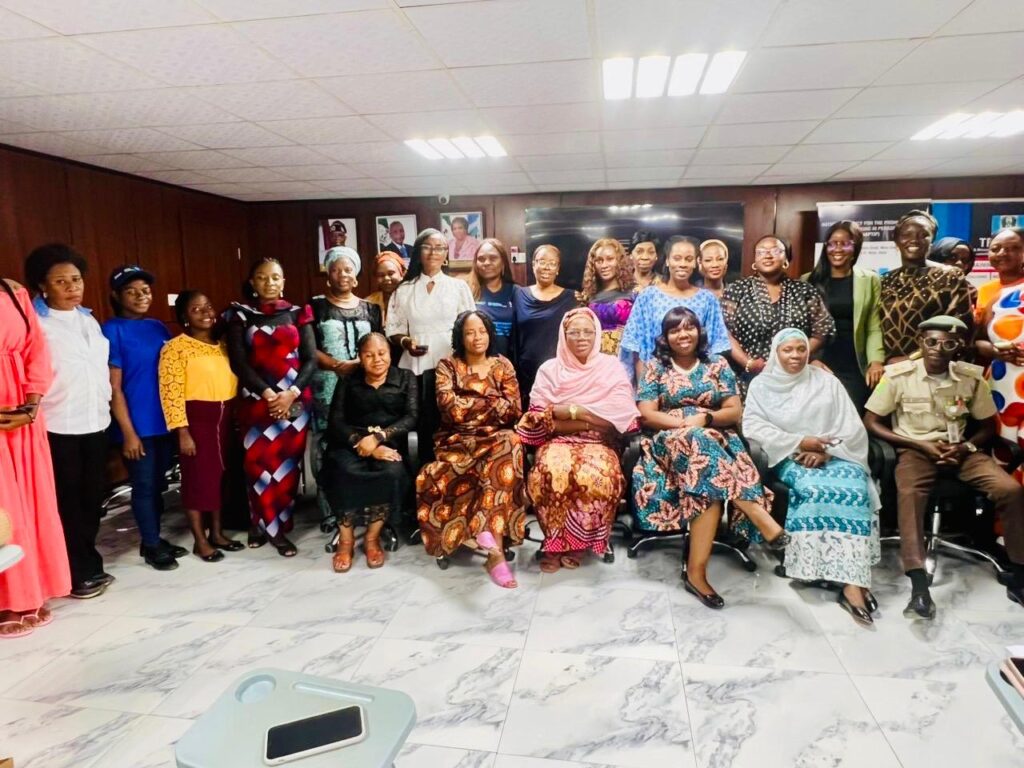
The Centre for Family Health Initiative (CFHI) joined other key stakeholders at the Validation Meeting on the 2024 Annual Implementation Report of the Violence Against Persons (Prohibition) Act, 2015, held today at the NAPTIP Training Resource Centre, Federal Secretariat, Abuja.

The meeting brought together representatives from government agencies, civil society organizations, and development partners to review and validate progress made in implementing the VAPP Act across Nigeria. Discussions centered on strengthening coordination, addressing implementation gaps, and improving service delivery to survivors of gender-based violence.

CFHI’s participation underscores its ongoing commitment to advancing gender equality and promoting a society free from all forms of violence. Through collaboration and evidence-based advocacy, the organization continues to support national efforts in ensuring the effective enforcement of the VAPP Act.

By engaging in such strategic dialogues, CFHI reaffirms its role in driving accountability and fostering partnerships that protect the rights and dignity of all persons, particularly women and vulnerable groups. 

CFHI Participates in 2024 VAPP Act Validation Meeting Read More »

SPEAK WEDNESDAY

Democracy Fails Women When It Ignores Gender Violence

Democracy is more than ballots, parliaments, and courtrooms it is the everyday reality that allows every person to live with dignity and safety. When a democratic system pretends that voting and institutions alone guarantee equality while turning a blind eye to the daily threat of gender-based violence (GBV), it is failing a fundamental promise: protection for all citizens. For millions of women, the “freedoms” democracy claims to protect are hollow if public systems, laws, and practices do not prevent, punish, and deter gendered violence.

The hard numbers refuse to let us look away. Globally, roughly one in three women has experienced physical and/or sexual violence by an intimate partner or sexual violence by a non-partner in her lifetime a staggering indicator that violence is not an exception but a systemic condition that persists across democratic and non-democratic states alike. (World Health Organization)

Nigeria’s statistics reflect this painful truth at home. National data and large-scale studies point to around a third of women experiencing intimate partner violence (IPV), with some surveys showing 31–35% having experienced some form of IPV in recent measures. These are not abstract percentages they translate to millions of women whose bodily autonomy, mental health, economic participation and civic engagement are continuously undermined. (DHS Program)

Worse, the trendlines in some places show an alarming rise in certain forms of violence over time. Comparative analyses of regional data (for example, conflict-affected northeast Nigeria) demonstrate increases in emotional and sexual IPV between survey rounds a decade apart; a signal that crises, weak accountability, and institutional neglect worsen GBV even within states that hold elections. When democratic systems fail to protect women in times of stress, the social contract fractures. (ResearchGate)

 There are three recurring failures because democracy fail in practice:

  1. Visibility without remedy. Democracies can record crimes and produce statistics, but if police, health systems and courts do not follow through, documentation becomes an exercise in moral hygiene rather than justice. Survivors who report violence often encounter blame, delays, unsafe processes, or outright dismissal.
  2. Law without implementation. Nigeria has laws criminalizing domestic and sexual violence, but enforcement is uneven. Where patriarchy is embedded in institutions, legal protections are toothless. Laws on paper become meaningless when budgets, training, and survivor-centered services are absent.
  3. Public indifference normalized as “private matters.” When GBV is repeatedly framed as a private or cultural problem, democratic debate excludes the voices of survivors and diminishes the urgency required for structural change.

These failures matter because gender violence is not merely a private tragedy it is a public, democratic harm. GBV shrinks women’s political voice (fear limits public participation), undermines economic independence (injury, trauma, time away from work), and burdens health systems. Democracies that do not treat GBV as a governance and human-rights priority are sustaining inequality disguised as civility.

It’s not enough to pass new laws; democracies must transform institutions and social norms. That means guaranteeing emergency health and legal services; training and holding police and judiciary accountable; funding safe shelters; integrating GBV prevention in schools and workplaces; and centering survivors in policy design. It also means political leaders must stop treating GBV as a “women’s issue” and recognize it as a democracy and development crisis.

At the Centre for Family Health Initiative (CFHI), we approach this challenge on three complementary fronts: prevention, survivor support, and advocacy. On prevention, we run community dialogues and gender norms activities that challenge the attitudes that normalize violence and silence survivors. For survivors, CFHI facilitates safe referrals and trains Community Health Workers to provide trauma-informed first response and linkages to legal and psychosocial support. On advocacy, we engage local leaders and stakeholders to press for funded, accountable GBV services and to include GBV metrics in local governance performance reviews.

These actions are small in the face of a systemic problem, but democracy is built from local actions. When community-level institutions protect women’s rights and when civic actors demand accountability, national democracy is strengthened. CFHI’s work shows that when communities are empowered to respond and when survivors are listened to, trust grows, and that trust is the living tissue of democratic life.

A call to action

Democracy will keep failing women until citizens and leaders act as if their safety is a public good. If you read this and care about democracy, do three things today:

  • Speak up publicly: challenge the narrative that GBV is a “private” problem.
    • Support survivors and local organizations: fund and volunteer with groups offering direct services.
    • Hold institutions to account: demand transparent budgets for GBV response and regular reporting on prosecutions, service availability, and survivor outcomes.

Democracy isn’t earned through election cycles alone it is preserved by institutions and communities that protect the most vulnerable. Ignoring gender violence is not neutrality; it is complicity. Let us insist that our democracy lives up to its promise not only in rhetoric but in the daily safety and dignity of every woman.

Speak Wednesday is an initiative of CFHI to address issues around gender-base violence and gender-bias.

SPEAK WEDNESDAY Read More »

SPEAK WEDNESDAY

Closing the Gender Wealth Gap to End Violence Against Women

Economic justice is the key to safety, health, and empowerment for women worldwide. Every Wednesday, we raise our voices to challenge injustice, and today we confront one of the most entrenched roots of gender-based violence: economic inequality. The gender wealth gap isn’t just a financial statistic; it’s a silent enabler of abuse, a barrier to freedom, and a public health emergency.

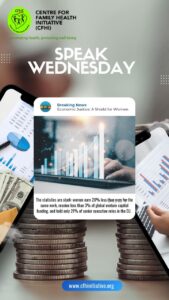
Globally, women earn less than men for the same work3, own less property, have limited access to leadership4 and fewer financial safety nets1. This economic disparity creates a cycle of dependency that heightens exposure to violence and limits the ability to escape abusive environments. In Nigeria, for instance, the Minister of Women Affairs recently emphasized that closing the gender gap could add ₦15 trillion to the country’s GDP annually by 20252, underscoring the economic potential of gender equity.

These issues are persistent and global. In the EU, despite the “Women on Boards” directive aiming for 40% female representation by 2026, progress is slow. Women currently hold only 35% of non-executive roles and 21% of senior executive positions 4. This is despite evidence from a 2025 report showing that companies with greater gender diversity are 25% more likely to be more profitable3. In sectors like tech and finance, women continue to report being passed over for promotions, excluded from decision-making, and subjected to gender-based microaggressions, which stifles their economic advancement4.

Call To Action

To end violence against women, we must invest in their economic power. As outlined in a UN Women 2025 advocacy paper, closing the funding gap in programs that support survivors and prevent violence is critical1. We call on Governments, NGOs, and private sector to collaborate on expanding access to education and vocational training, supporting women-led businesses and financial literacy programs, funding essential services for survivors, including shelters, legal aid, and healthcare, and advocating for and enforcing equal pay and robust workplace protections.

At the Centre for Family Health Initiative (CFHI), we are committed to this work. Through collaborations with partners like the Institute of Human Virology Nigeria (IHVN), Caritas Nigeria, FCT Social Development Secretariat (SDS), TY Danjuma Foundation (TYDF), and Global Philanthropy Alliance (GPA), we have empowered over 2500 women and girls with education, vocational training, business start-up kits, and financial support.

Financial inequality isn’t just unfair; it’s dangerous. It limits women’s choices, increases health risks, and perpetuates cycles of violence and poverty. Empowering women economically is not merely a matter of justice; it is the essential foundation for building safer, healthier societies for all.

Speak Wednesday is an initiative of CFHI to address issues around gender-based violence and gender bias.

References

  1. UN Women. Closing the funding gap to end violence against women and girls [Internet]. 2025 [cited 2025 Oct 21]. Available from: https://knowledge.unwomen.org/sites/default/files/2025-06/closing-the-funding-gap-to-end-violence-against-women-and-girls-en.pdf
  2. The Guardian Nigeria. Closing gender gap will add ₦15tr to Nigeria’s GDP by 2025 [Internet]. 2025 [cited 2025 Oct 21]. Available from: https://guardian.ng/news/closing-gender-gap-will-add-n15tr-to-nigerias-gdp-by-2025/
  3. Women in the workplace 2025: Research and trends [Internet]. 2025 [cited 2025 Oct 21]. Available from: https://www.wellable.co/blog/women-in-the-workplace-2025-research-and-trends
  1. IMD. Gender inequality in the workplace: Why it persists? [Internet]. 2025 [cited 2025 Oct 21]. Available from: https://www.imd.org/research-knowledge/articles/gender-inequality-in-the-workplace-why-it-persists/

SPEAK WEDNESDAY Read More »

SPEAK WEDNESDAY

No Access, No Escape: Why Information is Critical to GBV Survival

When Sheila was nineteen and living in Lagos, the threats began. Her husband told her that if she ever disobeyed him, he would make sure she lost her job and her reputation. One night, terrified, she sent a friend a message begging for help. But she did not know where to go, which law could protect her, or who to call. Information could have saved her. Its absence trapped her.

This is the silent epidemic within gender-based violence (GBV): not only physical harm but the isolation created by ignorance. Without access to timely and accurate information, survivors are left in darkness. Information is not a luxury. It is the first line of defence and the foundation of justice.

Why Information Saves Lives

When a woman understands that violence against her is a crime, she begins to reclaim her power. When she knows where to report, what medical help to seek, and how to preserve evidence, she increases her chances of survival and justice. Without that knowledge, fear becomes her only companion.

Studies from Nigeria show that most women who experience GBV are unaware of available support. In Adamawa State, 60 percent of women knew that services existed, but fewer than 18 percent understood what those services actually offered. A 2025 study found that even educated young women often avoid post-violence health care because they do not know where to go, or they fear stigma and disbelief.

Globally, the United Nations has affirmed through multiple conventions including the Convention on the Elimination of All Forms of Discrimination against Women (CEDAW) and UN Security Council Resolution that access to information is central to ending violence. Without it, laws, services, and resources remain out of reach.


The Barriers That Keep Survivors Silent


Survivors often do not seek help because they believe nobody will believe them. Others live far from formal services. Many lack access to the internet or even a simple phone number they can trust. Information materials are often written in legal or medical language that ordinary people cannot understand. In rural areas, the absence of community-based awareness campaigns means women do not even know that shelters or hotlines exist.


These are not personal failures. They are systemic failures of governments that under fund awareness programmes, of institutions that do not communicate in local languages, and of communities that allow silence to thrive.


What Survivors Can Do When They Need Help

Every survivor deserves a pathway to safety. Here is what that path can look like:


  1. Seek immediate safety: If you are in danger, leave the space if possible. Go to a trusted friend, relative, neighbour, or nearby public place.
  2. Reach out for help: Call the national GBV toll-free line: 0800 033 3333. You can also contact the organisations that provide counselling, medical referrals, and legal support.
  3. Preserve evidence: Avoid bathing or changing clothes if you experienced physical or sexual violence. Seek medical care immediately.
  4. Know your rights: Violence against women is a crime under the Violence Against Persons (Prohibition) Act, 2015. Every survivor has a right to medical treatment, legal assistance, and protection.
  5. Document and speak. Keep copies of threatening messages or photos. Report to a the police or NAPTIP. You are not alone, and help exists.


Call to Action

Governments and institutions must treat access to information as a legal right and embed it firmly within all GBV policies and action plans. Every state should guarantee that survivors know what services exist and how to reach them. Public awareness must go beyond slogans to reach the offline majority through community radio, schools, and local languages that resonate. Survivor-friendly spaces should be standard in every police station, hospital, and local government office, where trained officers and clear contact points offer judgement-free guidance. Finally, investment in ethical data systems and public education is non-negotiable. Reliable data exposes the gaps, directs resources, and saves lives, as demonstrated by the efforts of UNFPA and Nigeria’s GBV Information Management System.


How CFHI Is Closing the Information Gap

At the Centre for Family Health Initiative (CFHI), we believe that information is power and in the fight against GBV, it is protection. CFHI leads nationwide awareness through the 16 Days of Activism, runs community and school groups that teach health, rights, and safety, and provides direct referrals for survivors to medical, psychosocial, and legal services. Our work reaches those often left behind; the woman without a phone, the girl who cannot read, the family with no internet or transport. By breaking information barriers, we give survivors a voice, a pathway, and a plan. Because when women know their rights and how to use them, violence begins to lose its power.


The Global Urgency

Across the world, violence thrives where information is weakest. For the woman in a remote village without a phone or access to the internet, silence becomes her only shelter. For the girl who cannot read, the poster on the clinic wall might as well be blank. For displaced women in camps, and for widows in informal settlements, help often feels like a rumour whispered too far away to reach. In these spaces, information is not abstract,  it is survival. It is the map that leads from danger to safety, from fear to agency. Every hotline number, every awareness programme, every conversation led in a local dialect is more than communication. It is protection. It is the first step toward justice and the quiet revolution that keeps women alive.


Speak Wednesday is an initiative of CFHI to address issues around gender-based violence and gender bias.


#NoAccessNoEscape #InformationSavesLives #EndGBV #RightsAreKnowledge #SpeakWednesday #GenderJustice


SPEAK WEDNESDAY Read More »

SPEAK WEDNESDAY ON WHEN LABOUR BECOMES VIOLENCE

In countless Nigerian homes, young girls often called “housegirls” begin their workdays at sunrise and end them well after sundown. What seems like an innocent gateway to opportunity can quickly morph into a nightmare. What started as helping with domestic duties becomes abuse, neglect, and exploitation. This is not just work. It is a system that too often silences their voices and sabotages their futures.

The Hidden Reality

Recent research shows that in Nigeria, about 50 percent of child domestic workers experience some form of violence. Emotional abuse affects nearly half, while nine percent face physical violence, and others suffer sexual violence in silence. These girls often live in cramped, unfamiliar spaces with no personal freedom or support network. At school, they are either absent due to long work hours, the majority work over 30 hours weekly, or pulled out entirely, with 19 percent reporting disruption in education.

At its worst, this becomes modern slavery where girls are trapped by fear, threats, and the absence of choices. In parts of Southern Nigeria, studies show that underage domestic helpers regularly face psychological, emotional, and physical abuse without any form of redress.

This is not just unethical. It is a crime. Every Nigerian girl has the right to safety, freedom, and education; rights protected under Nigeria’s Violence Against Persons Prohibition (VAPP) Act of 2015. But beyond the law, we are talking about broken childhoods, girls robbed of their innocence, and women who grow up never knowing their worth.

Real Voices Real Harm

Imagine a 14-year-old working from dawn to dusk. She is beaten for small mistakes, denied food until everyone else has eaten, isolated from her peers, and barred from attending school. She wakes up to work, sleeps in fear, and grows into womanhood carrying the weight of a stolen girlhood. This is not fiction. This is her everyday reality.

What We Can Do

  • Recognize and Report

If you suspect abuse, contact the National Agency for the Prohibition of Trafficking in Persons NAPTIP, Child Protection Network, CFHI, or your local police station. These girls need protection, not more silence.

  • Educate Families

Many parents send their daughters to work in cities with the hope of better opportunities. But without information, legal backing, and proper monitoring, what should uplift them becomes a risk. Raising community awareness is vital.

  • Support NGOs Doing the Work

The Centre for Family Health Initiative (CFHI) has remained at the frontline of protecting women and girls. CFHI supports victims of gender-based violence through legal aid, psychosocial support, community education, and survivor-led advocacy. From community outreaches to engaging in policy work, CFHI ensures these girls are seen, heard, and helped.

Now Is the Time to Act!

We have seen the data. We have heard the stories. Now we must act. Let us stop calling abuse employment. Let us stop reducing girls to labour tools. Every girl deserves to dream. Every girl deserves to learn. Every girl deserves a life free from violence.

Speak Wednesday is an initiative of CFHI to address issues around gender-based violence and gender bias.

#SpeakWednesday #ProtectHousegirls #EndChildDomesticViolence #GirlsAreNotServants #CFHI #EndGBV #HumanRightsMatter

SPEAK WEDNESDAY ON WHEN LABOUR BECOMES VIOLENCE Read More »

SPEAK WEDNESDAY ON PROTECTING HER CHILDHOOD: CONFRONTING EARLY MARRIAGE AS GENDER-BASED VIOLENCE

In many communities across Nigeria, a girl’s childhood can end not with graduation or celebration, but with a wedding. Sometimes at 15, sometimes even younger. She doesn’t throw a bouquet; she throws away her dreams. The practice is often justified by culture, tradition, or economic necessity, but beneath these explanations lies a truth that must be acknowledged: early marriage is a form of gender-based violence.

Nigeria ranks third globally in the number of child brides. Over 22 million girls in the country were married before the age of 18, according to UNICEF. In some states in the North-East and North-West, the prevalence is even higher, driven by poverty, insecurity, and deeply entrenched gender inequality. These are not just statistics; they are lives interrupted, girlhoods lost, and futures compromised.

Early marriage is violence because it robs girls of choice, education, health, and safety. Once married, a girl is often forced to drop out of school, denying her the opportunity to learn, grow, and earn. She faces increased risks of sexual violence, early pregnancy complications, and lifelong poverty. These are not isolated consequences; they are systemic outcomes rooted in a society that undervalues girls and normalizes their silence.

In many cases, families see early marriage as a survival strategy. When there is no food on the table and no access to social protection, marrying off a daughter can feel like the only option. Cultural and religious pressures further normalize the practice, and in the absence of strong law enforcement, the rights of girls are often overlooked. Nigeria’s Child Rights Act, passed in 2003, sets the legal age of marriage at 18, but enforcement remains uneven. As of 2024, several states have yet to domesticate the Act, leaving millions of girls unprotected.

Ending early marriage requires more than laws on paper; it demands a shift in narrative and a real investment in girls. We must name early marriage for what it is: a violation of human rights and a gender-based harm. Protecting Nigerian girls means enforcing laws, holding perpetrators accountable, and ensuring every girl has access to safe, quality education and health care. It also means addressing the root causes—poverty, gender inequality, and lack of opportunity that make early marriage appear acceptable or inevitable.

Equally important is the need to amplify the voices of girls themselves. Their insights, hopes, and fears must shape the policies and programs meant to protect them. Girls in Nigeria are not voiceless; they are often unheard. When we listen, we begin to understand not just what is being taken from them, but what is possible when we choose to protect them.

To protect the future of Nigerian girls, we must stop framing early marriage as an issue of culture or custom. It is a crisis of rights, equity, and justice. We must act with urgency, empathy, and resolve.

Because she’s not a bride. She’s a child.

Speak Wednesday is an initiative of CFHI to address issues around gender-based violence and gender bias.

#SpeakWednesday#EndChildMarriage#SheIsNotABride#NigerianGirlsDeserveBetter#ChildNotBride#GenderJusticeNow#ProtectTheGirlChild#GirlsNotWives#StopGBV

SPEAK WEDNESDAY ON PROTECTING HER CHILDHOOD: CONFRONTING EARLY MARRIAGE AS GENDER-BASED VIOLENCE Read More »

SPEAK WEDNESDAY ON STRATEGIES FOR REPORTING GENDER-BASED VIOLENCE IN NIGERIA

Gender-based violence (GBV) is a grave violation of human rights that predominantly affects women and girls. Reporting GBV is crucial for obtaining justice, support, and protection. However, many survivors are often unsure about how to report their experiences or which authorities to approach. This lack of knowledge can hinder access to necessary resources and justice. Understanding the various strategies and resources available for reporting GBV in Nigeria is essential for empowering survivors and ensuring they receive the support they need.

Key Reporting Channels and Resources

Legal Assistance

  • Violence Against Persons (Prohibition) Act (VAPP): This law provides a legal framework for addressing various forms of GBV. Survivors should seek legal assistance to understand their rights under the VAPP Act.
  • NAPTIP (National Agency for the Prohibition of Trafficking in Persons): NAPTIP provides legal and rehabilitative support for survivors of human trafficking and GBV. They have a dedicated helpline (0703 0000 203) for reporting incidents.

Authorities in Charge

  • Nigerian Police Force: Survivors can report GBV incidents to the nearest police station. The police are obligated to investigate and provide protection to survivors. Specialized units, such as the Gender Desk in police stations, are trained to handle GBV cases sensitively.
  • Ministry of Women Affairs: This ministry is crucial in coordinating responses to GBV and supporting survivors. It collaborates with various national and international partners to improve reporting mechanisms and survivor support services.

Helplines and Emergency Services

  • National GBV Helpline: The Federal Ministry of Women Affairs, supported by the EU-UN Spotlight Initiative, has established the ReportGBV.ng platform. This includes a 24/7 helpline (0800 3333 3333) where survivors can report incidents and receive immediate support.
  • Emergency Services: In urgent situations, survivors should contact local police or emergency medical services. It’s crucial to have emergency contacts readily available.

Supportive Organizations

  • Non-Governmental Organizations (NGOs): Numerous NGOs offer legal aid and advocacy for women and girls facing violence. They also conduct awareness programs to educate the public about GBV and its impact. Survivors can approach these organizations for help navigating the legal system, understanding their rights, counselling, and legal assistance.
  • Centre for Family Health Initiative (CFHI) is committed to promoting health and protecting the well-being of families. Through initiatives like “Speak Wednesday,” CFHI addresses issues around gender-based violence and gender bias, providing educational content and support for survivors. The organization has actively assisted victims when necessary, offering counselling and advocacy services to help them navigate their experiences and access justice.

Reporting GBV is essential for accessing justice and support. Survivors in Nigeria have various channels and resources available, from helplines and legal assistance to supportive organizations and online platforms. By leveraging these resources and addressing the barriers to reporting, we can create a safer environment for all and work towards eradicating GBV.

Speak Wednesday is an initiative of CFHI to address issues around gender-based violence and gender bias.

#SpeakWednesday #GBV #StopGBV #ReportGBV #GirlsRights #WomenRights #GenderEquality #GenderBias

SPEAK WEDNESDAY ON STRATEGIES FOR REPORTING GENDER-BASED VIOLENCE IN NIGERIA Read More »