
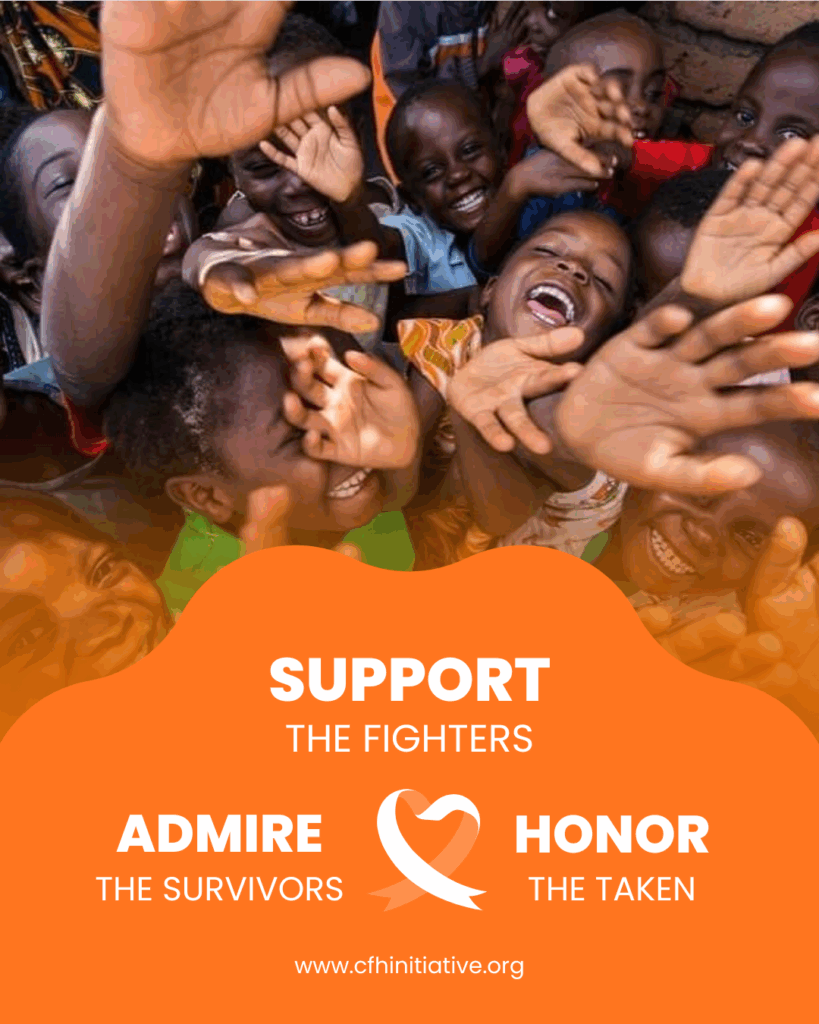
International Day for the Eradication of Poverty

Supporting Survivors Beyond the Statistics: A Call to Action This 16 Days of Activism

Each year, the 16 Days of Activism Against Gender-Based Violence reminds the world that violence against women and girls is not just a crisis it is a daily reality for millions [1]. Reports, data sheets, and global indicators help us understand the magnitude, but behind every statistic is a living, breathing person whose life has been altered by harm. This year, as we observe the campaign, it is crucial that we shift our collective attention from the numbers to the humans behind them. True progress lies in supporting survivors beyond the statistics.

Too often, survivors are reduced to percentages “1 in 3,” “1 in 5,” “35% globally” [2]. While these numbers capture attention, they do not capture the emotional, physical, and economic aftermath that survivors carry. They do not speak to the silence, the stigma, the fear of seeking help, or the systemic barriers that make healing harder than the violence itself. Ending gender-based violence requires more than awareness. It demands empathy, survivor-centered systems, and long-term support [3].

Supporting survivors goes far beyond responding to incidents; it means creating environments where they are believed, protected, and empowered to rebuild. It means ensuring access to justice, psychosocial care, healthcare, safe spaces, and economic opportunities [5]. It also means challenging harmful gender norms, dismantling structures that enable violence, and educating communities to recognize and prevent abuse before it happens.

At the Centre for Family Health Initiative (CFHI), this survivor-centered approach is at the heart of our work. Through our gender norms interventions, community dialogues, capacity-building programs, and youth engagement initiatives, CFHI champions the rights, dignity, and well-being of women, girls, and all survivors. From preventive education to psychosocial support and referral services, we ensure that survivors are not lost in the numbers but seen, heard, and supported through their healing journey.

But CFHI cannot do this alone. Ending violence is a collective responsibility; As we mark this year’s 16 Days of Activism, we call on, communities to break the culture of silence and create safe spaces for survivors, institutions to strengthen reporting systems, legal protections, and survivor-friendly services. Parents and caregivers to model respect and equality within their homes, young people to speak up against online and offline violence and promote positive gender norms. Government and policymakers to invest in prevention, strengthen accountability, and fund survivor services, you, reading this, to challenge harmful behaviours, support survivors around you, and become an advocate for a violence-free world.

Survivors are not statisticsthey are individuals deserving of dignity, justice, and healing. As we stand together during the 16 Days of Activism, let us commit to building a society that supports survivors not just in reports but in real life, every day [4].

CFHI remains steadfast in its mission: promoting health, protection, and empowerment for all. Together, we can end violence one voice, one action, and one survivor supported at a time.


References

[1] UN Women. (2024). Ending Violence Against Women: Facts & Figures.
https://www.unwomen.org/en/what-we-do/ending-violence-against-women/facts-and-figures

[2] World Health Organization. (2021). Violence Against Women Prevalence Estimates 2018.
https://www.who.int/publications/i/item/9789240022256

[3] UN Women. 16 Days of Activism Against Gender-Based Violence Campaign.
https://www.unwomen.org/en/what-we-do/ending-violence-against-women/take-action/16-days-of-activism

[4] United Nations. (2024). International Day for the Elimination of Violence Against Women  Background.
https://www.un.org/en/observances/ending-violence-against-women-day

[5] UNFPA. (2023). Gender-Based Violence: Global Overview and Response Strategies.
https://www.unfpa.org/gender-based-violence


Supporting Survivors Beyond the Statistics: A Call to Action This 16 Days of Activism Read More »
Systemic Barriers to Eliminating GBV in Nigeria

  1. Weak Legal Frameworks and Poor Enforcement

Gender-based violence (GBV) in Nigeria is not only a symptom of individual wrongdoing it is a structural problem rooted in weak laws, uneven adoption of protections, and chronically poor enforcement. To end GBV we must look beyond individual cases and address how laws, institutions and social systems consistently fail survivors.

At the federal level, Nigeria enacted the Violence Against Persons (Prohibition) Act (VAPP), 2015, a comprehensive law criminalizing many forms of GBV. Yet the VAPP is a federal law that must be domesticated (adopted) by state legislatures to take full effect in most states. Domestication has been inconsistent and slow: as recently as 2022–2023 different trackers and reports showed wide variation across states in adoption and implementation of VAPP-style protections. The patchwork adoption means many survivors still lack access to the full.

Even where anti-GBV laws exist, legal gaps remain. Some forms of abuse most notably marital rape are still not uniformly criminalized or enforced across Nigeria. Customary and religious legal systems in many communities treat marital relations as private and beyond criminal law, which results in survivors being denied legal redress. Research and rights reports document how legal definitions, exceptions, and cultural exclusions leave key protections unenforced or unavailable to many women and girls. (Human Rights Watch)

A law on the books means little if enforcement agencies are under-resourced, untrained, or indifferent. Investigations and prosecutions for GBV face multiple obstacles: victims face hostile or dismissive police responses, evidence is poorly collected or stored, and prosecution is slow or lacking. Human rights organizations have repeatedly documented cases in which survivors are shamed, blamed, or pressured to withdraw complaints outcomes that deter reporting and allow perpetrators to act with impunity. (Human Rights Watch)

“Survivors’ experiences show how enforcement failures deepen the harm. Human Rights Watch reported that a lawyer who helped a rape survivor in Enugu was herself assaulted after filing the complaint, exposing hostile treatment by police toward survivors and their advocates. Such incidents discourage reporting and let perpetrators act with near impunity.” (Human Rights Watch, Feb 6, 2020). Human Rights Watch

Effective GBV response requires functioning social services: emergency shelters, forensic and medical support, trauma counselling, and legal aid. In Nigeria these services are often underfunded, unevenly distributed, or run by civil society with precarious support. The result: even survivors who do report rarely receive the wraparound care needed for justice and recovery. Multilateral surveys during the COVID era showed the pandemic worsened women’s safety and access to services an acute example of how weak systems fail under stress.

Official statistics dramatically undercount GBV. Survivors often do not report abuse because they distrust institutions, fear stigma, or lack knowledge of legal options. In turn, poor data collection and fragmented record-keeping between police, health services and civil society hide patterns of violence and make evidence-based policy difficult. The lack of a centralized, trusted data system contributes to weak policy responses. (Human Rights Watch)

Civil society monitoring and journalistic investigations reveal spikes in femicide and intimate partner killings, prompting activists to call for emergency measures. These tragic outcomes are the predictable endgame of weak laws, poor enforcement, and under-resourced prevention and protection systems. Public outrage reflects not only grief but the recognition that structural failures make homes and communities unsafe for many women and girls. (The Guardian)

Reports by national and international organizations converge on several priorities:

  • Full domestication of VAPP-style laws in all states and harmonization with customary/religious systems to ensure survivors’ rights everywhere. (wfd.org)
  • Clear criminalization of all forms of GBV including marital rape and other forms often excluded by law. (Human Rights Watch)
  • Police and judicial reform, including specialized GBV units, survivor-sensitive investigation protocols, and fast-track prosecution for sexual and domestic violence. (Human Rights Watch)
  • Investment in survivor services medical forensic care, psychosocial support, shelters, and legal aid with sustainable public funding and coordination with civil society. (Amnesty International)
  • Robust data systems that unify reporting from police, health facilities and NGOs to produce reliable prevalence and response metrics. (UN Women Data Hub)

Nigeria’s VAPP Act and other legal instruments are important steps, but legal texts without consistent, rights-based enforcement become symbolic rather than transformative.


Bibliography

  • Partners Nigeria — VAPP Tracker (domestication status across states). (partnersnigeria.org)
  • WFD: Impact of the VAPP and related laws in 12 states (2023). (wfd.org)
  • Human Rights Watch — Violence against women pervasive in Nigeria (2019). (Human Rights Watch)
  • UN Women / Measuring the Shadow Pandemic: Violence against women during COVID-19 in Nigeria (2021). (UN Women Data Hub)
  • Amnesty International — Nigeria reports on rights and GBV (2021/2023 reports). (Amnesty International)
  • The Guardian — Activists call for state of emergency over GBV in Nigeria (Feb 2025). (The Guardian)


TO BE CONTINUED…WATCH OUT FOR

NO 2 BARRIER

Systemic Barriers to Eliminating GBV in Nigeria Read More »

SPEAK WEDNESDAY

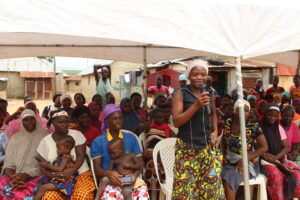
WOMEN DEALING WITH POVERTY IN RURAL AREAS

It is true that a concise and universally accepted definition of poverty has proven elusive because it affects many aspects of human condition. However, different criteria have been used to conceptualize the term “poverty”. Most analysts regard poverty as a function of income levels insufficient for securing basic goods and services.

The 2019 Nigerian Living Standards Survey (NLSS) carried out by the National Bureau of Statistics (NBS) highlights that 40 percent of the total population, or almost 83 million people, live below the country’s poverty line of 137,430 naira ($381.75) per year. The report also shows that 52.1% of rural dwellers in Nigeria are poor, while only 18.04% of urban dwellers are classified as poor. Also, according to data released by NBS, women ranked the highest when it comes to unemployment. The report shows that unemployment hits 12.2 million females as against 9.5 million men.

The fate of Nigerian women living in rural areas is highly appalling considering the patriarchal nature of the Nigerian society and how women are being marginalized in the labor force. The societal disadvantage and inequality they face because they are women shapes their experience of poverty differently from that of men, it increases their vulnerability, and makes it more challenging for them to climb out of poverty. Indeed, more than half of these rural women live below the nationally defined poverty line, lacking access to basic education, decent nutrition, adequate health and social services.  They perform complex multiple roles as mothers, workers and managers of households, taking care of their husbands, children and members of their extended families. They perform the majority of the work in food processing and dominate the rural and urban informal sector activities. Yet an abysmal number of these women own their own farm lands, they have limited access than men to inputs, services, rural organization, agricultural credits, productive infrastructure and technologies to enhance their productivity and incomes.

Women in poor households bear a disproportionate share of the work and responsibility of feeding and caring for family members through unpaid household work. They bear an unequal burden of unpaid, unrecognized, unvalued domestic responsibilities and are overrepresented in informal and risky jobs. Women in poor rural households will often sacrifice their own health and nutrition, or the education of their daughters, by recruiting them to take care of siblings or share in other household tasks.

This lack of investment in the human capital of women propagates a brutal, intergenerational cycle of poverty and hardship that is partly responsible for the persistent nature of poverty. Policies and programs to alleviate poverty must, therefore, take account of gender inequality and gender differences to effectively address the needs and constraints of women. According to the United Nations Women, Women’s economic empowerment is central to realizing women’s rights and gender equality, boosting productivity, increasing economic diversification, and income equality in addition to other positive development outcomes. This economic empowerment could include paid care work (child care, home care, seniors/disabled/palliative care), non-exclusion from inheritance and property ownership, girl child education and scholarships, adult education and scholarships for mothers, continued education during teenage pregnancy, provision of grants,  and many more.

Speak Wednesday is an initiative of Centre for Family Health Initiative to stop the cycle of domestic violence by breaking the silence around gender-based violence and gender bias. Join us every Wednesday on all our social media handles for more episodes.

SPEAK WEDNESDAY Read More »