MONDAY HEALTH BURST
STROKE – CAUSES, PREVENTION AND TREATMENT
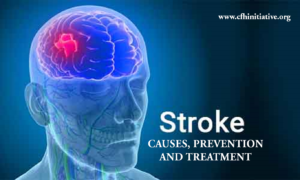
According to the World Health Organization (WHO), stroke is defined as a “rapidly developing clinical signs of focal (or global) disturbance of cerebral function, with symptoms lasting 24 hours or longer or leading to death, with no apparent cause other than of vascular origin”. Stroke occurs when there is a sudden interruption of blood supply to the brain, preventing brain tissue from getting oxygen and nutrients.
World Stroke Organization (WSO) stated that 90 per cent of strokes are associated with 10 risk factors that can easily be identified: hypertension, exercise, diet, weight, smoking, alcohol, cholesterol, diabetes, depression and stress, and atrial fibrillation (AF, or AFib). They further stated that 1 in 4 people will develop stroke globally, and 58 percent of all stroke cases happen between the age of 25 and 70 which can be blamed on “modern lifestyle”. In Nigeria, just like other low and middle-income countries, the primary care services are often limited, leading to high burden of stroke mortality. About 1000 stroke cases are recorded in Nigeria yearly and still counting according to Web Med.
Stroke can be prevented in many ways across all boards, from government and policymakers to healthcare professionals to members of the community. Knowing the signs of stroke is the first step to its prevention. Hence, some of the ways to prevent stroke include increasing awareness, discovering risk factors for stroke and managing them appropriately, implementing population-wide preventive strategies, amongst others.
Over the years, Medical organizations worldwide have been working towards making sure there is improvement in the treatment of stroke. Treatment consists of blood thinners. Early treatment with medication like TPA (clot buster) can minimize brain damage. Other treatments focus on limiting complications and preventing additional strokes like cardiac monitoring (using an electronic device to heart rate and rhythm which can be done at home or in the hospital), carotid endarterectomy (this is a surgical removal of plague built up in the carotid arteries), speech therapy, rehabilitation, physical therapy, the use of natural herbs and supplements, among others.
Early detection will not just save lives but will reduce the effect of stroke. Most people do not check their mental state or relax as they ought to. Adequate medical checkup is essential as it will help to know when rest is needed and when you need to give yourself a break from certain duties.
Monday Health Burst is an initiative of Centre for Family Health Initiative (CFHI) to tackle issues of basic health concerns. Join us every Monday for more health related articles on all our social media platforms.
MONDAY HEALTH BURST Read More »