Mental Health

MONDAY HEALTH BURST

ANXIETY DISORDER – CAUSES, SYMPTOMS AND TREATMENT

Anxiety is a normal reaction to stress and can be beneficial in some situations. It can alert us to dangers and help us prepare and pay attention. However, when a person regularly feels disproportionate levels of anxiety, it might become a medical disorder. Anxiety disorder is a mental health disorder characterized by feelings of worry, anxiety or fear that are strong enough to interfere with one’s daily activities. The excessive anxiety can make you avoid work, school, and other social situations that might trigger or worsen the symptoms.

Anxiety disorders form a category of mental health diagnoses that lead to excessive nervousness, fear, apprehension and worry. These disorders alter how a person processes emotions and behave, also causing physical symptoms. Mild anxiety might be vague and unsettling, while severe anxiety may seriously affect day-to-day living.

The causes of anxiety disorders are not fully understood. Researchers are yet to know exactly what brings on anxiety disorders. A complex mix of things play a role in who does and does not get one. Life experiences such as traumatic events appear to trigger anxiety disorders in people who are already prone to anxiety. Inherited treats can also be a factor. Some causes of anxiety disorders are:

  • Genetics – Anxiety disorders can run in families.
  • Brain chemistry – Research suggests anxiety disorders may be linked to faulty circuits in the brain that control fear and emotions.
  • Environmental stress – This refers to stressful events you have seen or lived through. Life events often linked to anxiety disorders include childhood abuse and neglect, a death of a loved one, being attacked or witnessing violence.
  • Drug withdrawal or misuse – Certain drugs may be used to hide or decrease certain anxiety disorder. Anxiety disorder often goes hand in hand with alcohol and substance use.
  • Medical conditions – Some heart, lung, and thyroid conditions can cause symptoms similar to anxiety disorders or make anxiety symptoms worse. It is important to get a full physical exam to rule out other medical conditions when talking to your doctor about anxiety.

Anxiety disorders are characterized by a variety of symptoms. One of the most common is excessive and intrusive worrying that disrupts daily functioning, other signs include agitation, restlessness, fatigue, difficulty concentrating, irritability, tense muscles and trouble sleeping. Anxiety disorder can be debilitating, but they can be managed with proper help from a medical professional. Recognizing the symptoms is the first step.

Once one is diagnosed with anxiety disorder, it is important to explore treatment options with a doctor. For some people, medical treatment is not necessary. Lifestyle changes may be enough to cope with the symptoms. Treatment for anxiety disorder falls into two categories: psychotherapy and medication. Meeting with a therapist or psychologist can help learn tools to use and strategies to cope with anxiety when it occurs.

Medications typically used to treat anxiety disorder include antidepressants and sedatives. They work to balance brain chemistry, prevent episodes of anxiety, and ward off the most severe symptoms of the disorder.

Monday Health Burst is an initiative of CFHI to address issues of basic health concerns. Join us every Monday for more interesting episodes.


MONDAY HEALTH BURST Read More »

MONDAY HEALTH BURST

DEMENTIA – CAUSES, SYMPTOMS, AND TREATMENT

Dementia, also called neurocognitive disorder, is a collective term used to describe various symptoms of cognitive decline. Dementia is not a single disease in itself, but a general term to describe the loss of cognitive functioning – thinking, remembering and reasoning and behavioral abilities to such an extent that it interferes with a person’s daily life and activities. These functions include memory, language skills, visual perception, problem solving, self-management and the ability to focus and pay attention. Some people with dementia find it difficult to control their emotions, and their personalities may change.

Dementia ranges in severity from the mildest stage, when it is just beginning to affect a person’s functioning, to the most severe stage, when the person must depend completely on others for basic activities for living.

The causes of dementia can vary, depending on the types of brain changes that may be taking place. Alzheimer’s disease is the most common cause of dementia. Alzheimer is characterized by “plaques” between the dying cells in the brain and “tangles” within the cells (both are due to protein abnormalities). The brain tissue in a person with Alzheimer’s has progressively fewer cells and connection and the total brain size shrink. Other causes of dementia include;

  • Vascular disorders. These conditions affect the blood circulation in the brain.
  • Traumatic brain injuries caused by car accidents, falls, concussions etc.
  • Infections of the central nervous system. These include meningitis, HIV
  • Long-time alcohol or drug use

Symptoms of dementia can vary greatly. Many conditions are progressive, which means that the signs of dementia start out slowly and gradually get worse. Possible symptoms of dementia compiled and published by the American Academy of Family Physicians (AAFP) include;

  • Recent memory loss- a sign of this might be asking the same question repeatedly
  • Difficulty completing familiar tasks
  • Problems communicating – difficulty with language; forgetting simple words or using the wrong ones.
  • Disorientation
  • Problems with abstract thinking
  • Misplacing things
  • Mood changes

Treatment of dementia depends on its cause. In the case of most progressive dementias, including Alzheimer’s disease, there is no cure and no treatment that slows or stops its progression. But there are drug treatments that may temporarily improve symptoms. The same medications used to treat Alzheimer’s are among the drugs sometimes prescribed to help with symptoms of other types of dementias. Non-drug therapies can also alleviate some symptoms of dementia.

Monday Health Burst is an initiative of CFHI to address issues of basic health concerns. Join us every Monday for more interesting episodes.


MONDAY HEALTH BURST Read More »

MONDAY HEALTH BURST

EFFECTS OF FEMALE GENITAL MUTILATION (FGM)

According to World Health Organization, more than 200 million girls and women alive today have undergone female genital mutilation (FGM) in 30 countries in Africa, mostly in the Middle East and Asia. All forms of FGM are associated with increased health risk in the short- and long-term. Below are some of the health risks.

Short-term health risks of FGM

Severe pain. Cutting the nerve ends and sensitive genital tissue causes extreme pain. The healing period is also painful.

Shock. Can be caused by pain, infection and/or haemorrhage.

Genital tissue swelling. Due to inflammatory response or local infection.

Infections. May spread after the use of contaminated instruments (e.g. use of same instruments in multiple genital mutilation operations), and during the healing period.

Excessive bleeding (haemorrhage). Can result if the clitoral artery or other blood vessel is cut.

Human immunodeficiency virus (HIV). The direct association between FGM and HIV remains unconfirmed, although the cutting of genital tissues with the same surgical instrument without sterilization could increase the risk for transmission of HIV between girls who undergo female genital mutilation together.

Urination problems. These may include urinary retention and pain passing urine. This may be due to tissue swelling, pain or injury to the urethra.

Impaired wound healing. Can lead to pain, infections and abnormal scarring.

Death. Death can result from infections, including tetanus, as well as haemorrhage that can lead to shock.

Mental health problems. The pain, shock and the use of physical force during the event, as well as a sense of betrayal when family members condone and/or organize the practice, are reasons why many women describe FGM as a traumatic event.


Long-term health risks of FGM

Infections:

  • Chronic genital infections. With consequent chronic pain, and vaginal discharge and itching. Cysts, abscesses and genital ulcers may also appear.
  • Chronic reproductive tract infections. May cause chronic back and pelvic pain.
  • Urinary tract infections. If not treated, such infections can ascend to the kidneys, potentially resulting in renal failure, septicaemia and death. An increased risk of repeated urinary tract infections is well documented in both girls and adult women who have undergone FGM.

Painful urination. Due to obstruction of the urethra and recurrent urinary tract infections.

Vaginal problems. Discharge, itching, bacterial vaginosis and other infections.

Menstrual problems. Obstruction of the vaginal opening may lead to painful menstruation (dysmenorrhea), irregular menses and difficulty in passing menstrual blood, particularly among women with Type III FGM.

Excessive scar tissue (keloids). Excessive scar tissue can form at the site of the cutting.

HIV (Human immunodeficiency virus). Given that the transmission of HIV is facilitated through trauma of the vaginal epithelium which allows the direct introduction of the virus, it is reasonable to presume that the risk of HIV transmission may be increased due to increased risk of bleeding during intercourse, because of FGM.

Sexual health problems. FGM damages anatomic structures that are directly involved in female sexual function and can therefore also influence women’s sexual health and well-being. Removal of, or damage to, highly sensitive genital tissue, especially the clitoris, may affect sexual sensitivity and lead to sexual problems, such as decreased sexual desire and pleasure, pain during sex, difficulty during penetration, decreased lubrication during intercourse, and reduced frequency or absence of orgasm (anorgasmia). Scar formation, pain and traumatic memories associated with the procedure can also lead to such problems.

Childbirth complications (obstetric complications). FGM is associated with an increased risk of caesarean section, postpartum haemorrhage, recourse to episiotomy, difficult labour, obstetric tears/lacerations, instrumental delivery, prolonged labour, and extended maternal hospital stay. The risks increase with the severity of FGM.

Obstetric fistula. A direct association between FGM and obstetric fistula has not been established. However, given the causal relationship between prolonged and obstructed labour and fistula, and the fact that FGM is also associated with prolonged and obstructed labour, it is reasonable to presume that both conditions could be linked in women living with FGM.

Perinatal risks. Obstetric complications can result in a higher incidence of infant resuscitation at delivery and intrapartum stillbirth and neonatal death.

Mental health problems. Studies have shown that girls and women who have undergone FGM are more likely to experience post-traumatic stress disorder (PTSD), anxiety disorders, depression and somatic (physical) complaints (e.g. aches and pains) with no organic cause.

Pain. Due to tissue damage and scarring that may result in trapped or unprotected nerve endings.

Though FGM may be normative and considered to be of cultural significance in some settings, the practice is always a violation of human rights, with the risk of causing trauma and leading to problems related to girls’ and women’s mental health and well-being. (WHO,2020)

MONDAY HEALTH BURST Read More »

MONDAY HEALTH BURST

ATTENTION DEFICIT/HYPERACTIVITY DISORDERS (ADHD) IN CHILDREN

ADHD is one of the most common neurodevelopmental disorders of childhood. It is usually first diagnosed in childhood and often lasts into adulthood. ADHD symptoms can appear as early as between the ages of 3 and 6 and can continue through adolescence and adulthood. Symptoms of ADHD can be mistaken for emotional or disciplinary problems or missed entirely in quiet, well-behaved children. Adults with undiagnosed ADHD may have a history of poor academic performance, problems at work, or difficult or failed relationships.
It is normal for children to have trouble focusing and behaving at one time or another. However, children with ADHD do not just grow out of these behaviors. A child with ADHD might: daydream a lot; forget or lose things a lot; squirm or fidget; talk too much; make careless mistakes or take unnecessary risks; avoid tasks needing extended mental effort; have trouble taking turns or have difficulty getting along with others which can lead to academic failure and judgment by other children and adults; the tendency to have more accidents and injuries of all kinds; the tendency to have low self-esteem; increased risk of alcohol and drug abuse and other delinquent behavior.
There are 3 subtypes of ADHD: Predominantly inattentive (Majority of its symptoms fall under inattention); predominantly hyperactive/impulsive (Majority of its symptoms are hyperactive and impulsive) and combined (This is the combination of inattentive symptoms and hyperactive/impulsive symptoms).
Among the cause(s) and risk factors for ADHD, current research shows that genetics plays an important role. However, other factors include: Brain injury, exposure to environmental toxins during pregnancy, such as high levels of lead found mainly in paint and pipes in older buildings at a young age, premature delivery and low birth weight. Also, studies show that ADHD is more common in males than females. Females with ADHD are more likely to have problems primarily with inattention.
Diagnosis of ADHD requires a comprehensive evaluation by a licensed clinician, such as a pediatrician, psychologist, or psychiatrist with expertise in ADHD. Research shows that, ADHD is best treated with a combination of behavior therapy and medication. For preschool-aged children (4-5 years of age) with ADHD, behavior therapy, particularly training for parents, is recommended as the first line of treatment before medication is tried.
Monday Health Burst is an initiative of CFHI to address issues of basic health concern. Join us every Monday on all our social media platforms for more episodes.

MONDAY HEALTH BURST Read More »

Schizoaffective Disorder

MONDAY HEALTH BURST

Schizoaffective Disorder in Adolescents
Schizoaffective disorder is part of a cluster of diagnoses called the schizophrenia spectrum and other psychotic disorders. Schizoaffective disorder is a neuropsychiatric or mental disorder in which a person experiences a combination of schizophrenia symptoms and mood disorder symptoms (typically either major depressive disorder or bipolar disorder).
The symptoms and behavior of children and adolescents with schizoaffective disorder may be different from those of adults with this illness. The following symptoms and behaviors can occur in children or adolescents with schizoaffective disorder: Changes in weight or appetite, Suicidal thoughts or attempts, agitation, sleeplessness, and paranoia; depressive symptoms, including sadness, fatigue, trouble concentrating, and loss of interest in daily activities; and/or psychotic symptoms, such as hallucinations, delusions, and confused thinking. Without treatment, the disorder may lead to difficulty functioning at work, at school, and in social situations.
Adolescents schizoaffective disorder is very hard to accurately diagnose, as it is difficult to distinguish from schizophrenia, bipolar disorder, and other mood disorders. Many adolescents with schizoaffective disorder are often initially misdiagnosed with bipolar disorder or schizophrenia.
The greatest risk factor for developing a schizoaffective disorder is generally family history of the same illness or other forms of psychosis, there are a few other risks associated with the development of a schizoaffective disorder in Adolescents, which includes but not limited to drug abuse (Overuse of mind-altering substances such as; methamphetamine, cannabis, cocaine, alcohol, amphetamines, and psychedelics. Some drugs, like ecstasy, can produce lasting or persistent psychosis even after single use in certain individuals) and trauma ( An extremely stressful event triggering latent symptoms. Though trauma is entirely subjective. A horrific event witnessed by multiple persons may only leave one or two struggling with traumatic mental health issues afterwards).
There is no effective cure, but symptoms can be managed and reduced to the point where a normal life without dire consequences can be possible. Adolescents are highly adaptive, and with some therapeutic intervention and possibly the use of medication, most adolescents with schizoaffective disorder can find relief. However, the disorder cannot be completely removed from a person’s mind. Managing it is an ongoing process, and there can be setbacks at times.
Monday Health Burst is an initiative of CFHI to address basic health issues. Join us every Monday on all our social media platforms for more health-related articles.

MONDAY HEALTH BURST Read More »

Effects of Teenage Pregnancy

SPEAK WEDNESDAY

EFFECTS OF TEENAGE PREGNANCY

Effects of Teenage Pregnancy

Teenage pregnancy is pregnancy in a woman 19 years of age or younger. A woman can get pregnant if she has vaginal sex with a man at any age after she’s begun having regular monthly periods.

Teenage pregnancies are a global problem that occurs in high, middle, and low income countries. However, there is a higher prevalence in marginalized communities, commonly driven by poverty and lack of education and employment opportunities. According to World Health Organisation (W.H.O), approximately 16 million girls aged 15 to 19 years and 2.5 million girls under 16 years give birth each year in developing regions and the leading cause of mortality for this age group is complication during pregnancy and childbirth. Many girls face considerable pressure to marry early and become mothers at a tender age. Teenage pregnancy increases when girls are denied the right to make decisions about their sexual and reproductive health and well-being.

Studies show that teen mothers face significant levels of stress that can lead to increased mental health concerns. In addition to higher rates of postpartum depression, teenage mothers have higher rates of depression. Pregnant teens also have a higher chance of becoming anemic which is a reduction in the number of red blood cells (RBCs). This can make you feel weak and tired and can affect your baby’s development. They also have higher rates of suicidal ideation than their peers who aren’t mothers. Teen mothers are more likely to experience posttraumatic stress disorder (PTSD) than other teenage women, as well and this is attributed to the fact that they are more likely to have gone through mental and/or physical abuse.

Many pregnant teens drop out of school, and some never complete their education which means that a large proportion of mothers who get pregnant as teenagers live in poverty and are not able to realize their full potential. Their children are not left out also, born to a teenage mother, they have greater risk for lower birth weight and infant mortality; less prepared to enter kindergarten; are more likely to be incarcerated at some time during adolescence; are more likely to drop out of high school; are more likely to be unemployed or underemployed as a young adult.

When teenagers engage in sexual relationships, they do not think about the consequences. That is why it is pertinent to invest much in the issue of reproductive health with more emphasis on adopting the right attitudes about responsible sexual behavior.

Speak Wednesday is an initiative of CFHI to address issues of gender based violence and gender inequality. Join us every Wednesday on all our social media platforms for more episodes.

SPEAK WEDNESDAY Read More »

MONDAY HEALTH BURST

POSTPARTUM DEPRESSION (PPD)

Postpartum depression (PPD) or postnatal depression is a complex mix of physical, emotional, and behavioural changes that happen in some women after giving birth. According to the Diagnostic and Statistical Manual of Mental Disorders, Fifth Edition (DSM-5), PPD is a form of major depression that begins within 4 weeks after delivery.

Symptoms of postpartum depression can be hard to detect. However, many women have these symptoms following childbirth: Difficulty sleeping, change in appetite, excessive fatigue, decreased libido, frequent mood changes, depression, low self-esteem, suicidal thoughts, panic, thoughts of hurting someone else, and obsessive-compulsive disorder (OCD). The OCD obsessions are usually related to concerns about the baby’s health, or irrational fears of harming the baby.

There is no one cause of postpartum depression. A number of factors can increase the chances: A history of depression prior to becoming pregnant, or during pregnancy; Age at time of pregnancy; Ambivalence about the pregnancy; Number of children — the more children, the more likely it is for one to be depressed in a subsequent pregnancy; Having a history of depression or premenstrual dysphoric disorder (PMDD); Limited social support; Loneliness during pregnancy; Marital conflict; Sleeplessness; Anxiety; Hormonal imbalance — The dramatic drop in oestrogen and progesterone after giving birth may play a role. Other hormones produced by the thyroid gland may also drop sharply and make one feel tired, sluggish, and depressed.

The diagnosis of postpartum depression is based not only on the length of time between delivery and onset, but also on the severity of the depression. PPD often keeps one from doing their daily activities. Hence, when the ability to function is affected, it is important to consult a health care provider, such as Obstetrician-gynaecologist or primary care doctor, who will screen for depression symptoms and develop a treatment plan. This is because PDD symptoms worsen when left untreated. Though PPD is a serious condition, it can be treated with medication and counselling.
Postpartum depression is treated differently depending on the type and severity of a woman’s symptoms. Treatment options include anti-anxiety or antidepressant medications, psychotherapy, and participation in a support group for emotional support and education. For severe cases, intravenous infusion of a new medication called brexanolone (Zulresso) may be prescribed.

Monday Health Burst is an initiative of CFHI to address basic health issues. Join us every Monday on all our social media platforms for more health-related articles.

MONDAY HEALTH BURST Read More »

SPEAK WEDNESDAY

WOMEN’S RIGHTS ON DOMESTIC VIOLENCE

The right of women to be free from DOMESTIC VIOLENCE has drawn increasing concern and support since the 1970s. According to Wikipedia, “Domestic violence (also named domestic abuse or family violence) is violence or other abuse in a domestic setting, such as in marriage or cohabitation. It takes a number of forms, including physical, verbal, emotional, economic, religious, reproductive, and sexual abuse, which can range from subtle, coercive forms to marital rape and to physical abuse.

Studies have shown that globally, domestic violence accounts for nearly one quarter of all recorded crimes. The fact that domestic violence prevails across all classes of the Nigerian society is no longer disputable. Despite the boisterous efforts made by the world bodies such as the United Nations (e.g. Universal Declaration of Human Rights, the International Convention on Civil and Political Rights) and Nigeria’s constitutions to eliminate discrimination and violence against women, and promote the idea of equality and justice, the Nigerian woman is often violated.

Domestic violence directed against women by intimate partners is an epidemic of global proportions that has devastating physical, emotional, financial and social effects on women, children, the family and the community. However, it is important to note that domestic violence can also be perpetrated against men.

In Nigeria, women’s rights are largely trampled upon because of many factors. There is the lack of trust in constituted authorities to look into cases of abuse. In fact, the “penal code of the northern Nigeria” do not recognize this as an act worth bringing before the law. It is rather seen as a compulsory disciplinary measure which to some uneducated traditionalists has proven to be very effective. Also, the requirements to prove rape cases in “section 179(5) of the evidence Actform another hurdle.

To promote gender equality and ensure protection of fundamental human rights, perpetrators should be made to face the consequences of their actions. Also, stiffer penalties have to be put in place to discourage prospective abusers like rapists. Over the years, Centre for Family Health Initiative (CFHI) has brought awareness to women in local communities on their rights and created avenues to seek redress in cases of abuse. It has also exposed many women to information about the Violence Against Persons Prohibition(VAPP) Act of 2015, for better understanding of their human rights.

Speak Wednesday is an initiative of Centre for Family Health Initiative to stop the cycle of domestic violence by breaking the silence around gender-based violence and gender bias. Join us every Wednesday on all our social media handles for more episodes.

SPEAK WEDNESDAY Read More »

MONDAY HEALTH BURST

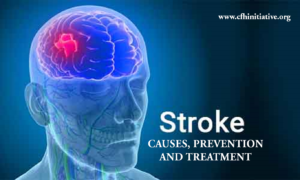
STROKE – CAUSES, PREVENTION AND TREATMENT

According to the World Health Organization (WHO), stroke is defined as a “rapidly developing clinical signs of focal (or global) disturbance of cerebral function, with symptoms lasting 24 hours or longer or leading to death, with no apparent cause other than of vascular origin”. Stroke occurs when there is a sudden interruption of blood supply to the brain, preventing brain tissue from getting oxygen and nutrients.

World Stroke Organization (WSO) stated that 90 per cent of strokes are associated with 10 risk factors that can easily be identified: hypertension, exercise, diet, weight, smoking, alcohol, cholesterol, diabetes, depression and stress, and atrial fibrillation (AF, or AFib). They further stated that 1 in 4 people will develop stroke globally, and 58 percent of all stroke cases happen between the age of 25 and 70 which can be blamed on “modern lifestyle”.  In Nigeria, just like other low and middle-income countries, the primary care services are often limited, leading to high burden of stroke mortality. About 1000 stroke cases are recorded in Nigeria yearly and still counting according to Web Med.

Stroke can be prevented in many ways across all boards, from government and policymakers to healthcare professionals to members of the community. Knowing the signs of stroke is the first step to its prevention. Hence, some of the ways to prevent stroke include increasing awareness, discovering risk factors for stroke and managing them appropriately, implementing population-wide preventive strategies, amongst others.

Over the years, Medical organizations worldwide have been working towards making sure there is improvement in the treatment of stroke. Treatment consists of blood thinners. Early treatment with medication like TPA (clot buster) can minimize brain damage. Other treatments focus on limiting complications and preventing additional strokes like cardiac monitoring (using an electronic device to heart rate and rhythm which can be done at home or in the hospital), carotid endarterectomy (this is a surgical removal of plague built up in the carotid arteries), speech therapy, rehabilitation, physical therapy, the use of natural herbs and supplements, among others.

Early detection will not just save lives but will reduce the effect of stroke. Most people do not check their mental state or relax as they ought to. Adequate medical checkup is essential as it will help to know when rest is needed and when you need to give yourself a break from certain duties.

Monday Health Burst is an initiative of Centre for Family Health Initiative (CFHI) to tackle issues of basic health concerns. Join us every Monday for more health related articles on all our social media platforms.


MONDAY HEALTH BURST Read More »

SPEAK WEDNESDAY

DISRUPTING PATRIARCHY

According to Wikipedia, Patriarchy is a social system in which men hold primary power and predominate in roles of political leadership, moral authority, social privilege and control of property. Some patriarchal societies are also patrilineal, meaning that property and title are inherited by the males only.

Patriarchy influences different areas of the society including culture, family, school, the workplace and relationships. Its presence can translate to inequality and gender-based violence. The idea of patriarchy is not peculiar to a specific group of people, but one that extends and supersedes all borders, socioeconomic class, race, and more.

In Nigeria, it is observed by different researchers including European Scientific Institute that . Hence, there is the commonality of general belief system that the best place for women is in the ‘Kitchen’. This trend has brought about tremendous misrepresentation of women right at the level of the family down to the circular society. Women are therefore discriminated upon from, in most cases, acquiring formal education, accessing proper health care, receiving equal pay, among others.

In so many parts of the world, women are forbidden to own landed properties or inherit any. In cases where the diseased did not have male children, his properties are distributed amongst his male relatives, excluding his widow and daughters who are left to fend for themselves. In these societies, women who are financially stable have to buy properties in the name of their fathers or other male relatives. All these expose women to violence before they are born until they are aged.

Zig Ziglar once said, the first step to finding a solution is to recognize there is a problem. Because of how ingrained patriarchy is in the society, it may be difficult to identify. However, if patriarchy can be learnt, it can be unlearnt. Together we can achieve a society with equal opportunities for all human irrespective of the gender differences.

Speak Wednesday is an initiative of Centre for Family Health Initiative to stop the cycle of domestic violence by breaking the silence around gender based violence and gender bias. Join us every Wednesday on all our social media handles for more episodes.

SPEAK WEDNESDAY Read More »