Monday Health Burst

MONDAY HEALTH BUSRT ON MEN’S HEALTH – CARDIOVASCULAR DISEASES

Cardiovascular disease refers to a class of conditions that affect the heart and blood vessels.

According to WHO in the year 2021, cardiovascular diseases (CVDs) are the leading cause of death globally, taking an estimated 17.9 million lives each year.

Risk Factors:

Men have unique risk factors for cardiovascular disease that may differ from those of women. Some common risk factors for men include:

  • Age: The risk of developing cardiovascular disease increases with age, particularly after the age of 45 for men.
  • High blood pressure: Men are more likely to develop high blood pressure compared to women, especially at a younger age.
  • High cholesterol: Elevated levels of LDL cholesterol (often referred to as “bad” cholesterol) and low levels of HDL cholesterol (often referred to as “good” cholesterol) can increase the risk of cardiovascular disease in men.
  • Obesity: Excess body weight, especially around the waist, increases the risk of developing cardiovascular disease in men.
  • Smoking: Men who smoke or have a history of smoking have a higher risk of heart disease compared to nonsmokers.
  • Diabetes: Men with diabetes are at an increased risk of developing cardiovascular disease, as diabetes can damage blood vessels and contribute to other risk factors such as high blood pressure and high cholesterol.

Symptoms:

The symptoms of cardiovascular disease in men can be similar to those experienced by women. However, men are more likely to experience chest pain or discomfort as the primary symptom of a heart attack. Other symptoms may include shortness of breath, pain radiating to the arm, jaw, or back, nausea, lightheadedness, and cold sweats. It is important to note that some men may experience “silent” heart attacks with minimal or no symptoms.

Prevention:

To reduce the risk of cardiovascular disease, men can take several preventive measures, including:

  • Adopting a healthy lifestyle: Engage in regular physical activity, eat a balanced diet rich in fruits, vegetables, whole grains, lean proteins, and low-fat dairy products, and maintain a healthy weight.
  • Quitting smoking: If you smoke, seek assistance to quit, as this will significantly reduce your risk of developing cardiovascular disease.
  • Managing blood pressure and cholesterol: Regularly monitor your blood pressure and cholesterol levels. If they are elevated, work with your healthcare provider to develop a plan to manage them effectively.
  • Controlling diabetes: If you have diabetes, follow your healthcare provider’s recommendations to manage your blood sugar levels and minimize the risk of cardiovascular complications.
  • Managing stress: Find healthy ways to cope with stress, such as exercising, practicing relaxation techniques, or engaging in hobbies and activities you enjoy.
  • Regular check-ups: Visit your healthcare provider for routine check-ups and screenings to assess your cardiovascular health and identify any potential issues early.

A healthcare expert should be consulted for tailored guidance and to go over any worries you may have about cardiovascular disease or your general health.

Monday Health Burst is an initiative of CFHI to address issues of basic health concern. Join us every Monday on all our social media platforms for more episodes.
MONDAY HEALTH BUSRT ON MEN’S HEALTH – CARDIOVASCULAR DISEASES Read More »

MONDAY HEALTH BURST – COMMON CAUSES AND SYMPTOMS OF ANEMIA

Anemia is a condition characterized by a reduction in the number of red blood cells or hemoglobin in the blood. This can result in a decreased capacity of the blood to transport oxygen to the body’s tissues and organs. Anemia can manifest in different forms and symptoms and can be caused by various factors.

According to a 2023 report from the United Nations Children Fund (UNICEF) report, 55 percent of adolescent girls and women suffer from anemia in Nigeria.

Some common causes of anemia include:

Iron deficiency: This is the most common cause of anemia worldwide. It occurs when the body doesn’t have enough iron to produce adequate amounts of hemoglobin.

Vitamin deficiency: Lack of specific vitamins like vitamin B12 or folate can impair the production of healthy red blood cells.

Chronic diseases: Conditions such as kidney disease, liver disease, cancer, or autoimmune disorders can interfere with the production of red blood cells.

Blood loss: Excessive bleeding from menstruation, trauma, surgery, or gastrointestinal conditions like ulcers or hemorrhoids can lead to anemia.

Inherited disorders: Certain genetic conditions like sickle cell anemia or thalassemia affect the structure or production of red blood cells.

The symptoms of anemia can vary depending on the underlying cause and the severity of the condition. However, common symptoms include:

  • Fatigue and weakness
  • Shortness of breath
  • Pale skin
  • Dizziness or lightheadedness
  • Rapid or irregular heartbeat
  • Cold hands and feet
  • Headaches
  • Chest pain (in severe cases)

It’s important to consult with a healthcare professional for an accurate diagnosis and appropriate treatment plan if you suspect you have anemia or are experiencing related symptoms.

Monday Health Burst is an initiative of CFHI to address issues of basic health concern. Join us every Monday on all our social media platforms for more episodes.


MONDAY HEALTH BURST – COMMON CAUSES AND SYMPTOMS OF ANEMIA Read More »

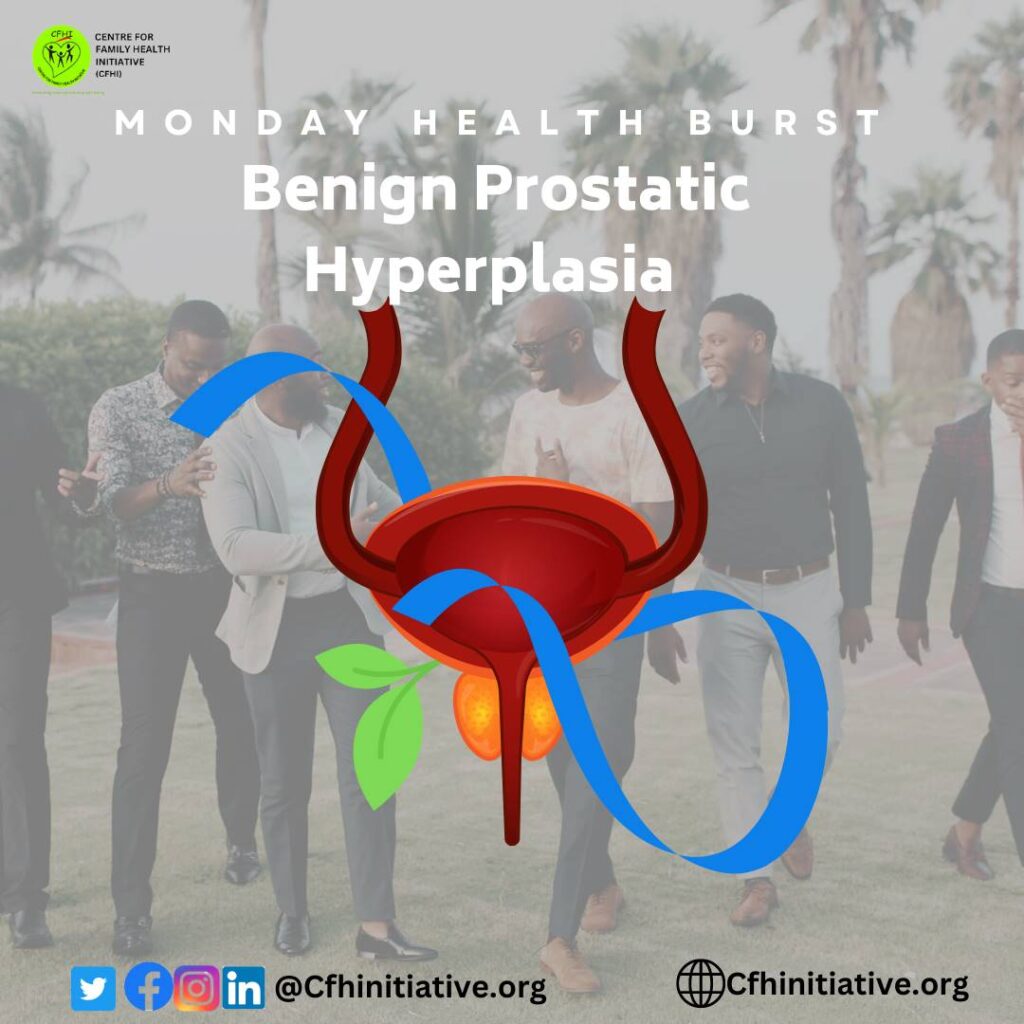
MONDAY HEALTH BURST ON BENIGN PROSTATIC HYPERPLASIA

Did you know that an enlarged prostate, known as Benign Prostatic Hyperplasia (BPH), is common among older men?

As men age, hormonal changes can cause the prostate gland to grow. While the exact cause is not fully understood, factors like age, family history, and hormonal imbalances play a role in the development of BPH.

Studies indicate that BPH affects approximately 12% of men aged 40-49 and around 60% of men aged 70-79, making it more common than you may think.

Recognizing the symptoms is essential for early detection. Keep an eye out for the following:

– Frequent urination, especially at night (nocturia)

– Urgency and a strong urge to urinate

– Weak urine flow and difficulty starting or stopping urination

– Feeling like your bladder isn’t empty

In addition, BPH can increase the risk of urinary tract infections (UTIs) and bladder stones, so seeking timely medical care can help prevent these complications. If you’re experiencing these symptoms or suspect an enlarged prostate, consult a healthcare professional who can evaluate your condition and recommend appropriate treatment options.

Managing an enlarged prostate starts with awareness. By recognizing the symptoms and seeking medical care, you can effectively address BPH and reduce the risk of complications.

Monday Health Burst is an initiative of CFHI to address issues of basic health concern. Join us every Monday on all our social media platforms for more episodes.

MONDAY HEALTH BURST ON BENIGN PROSTATIC HYPERPLASIA Read More »

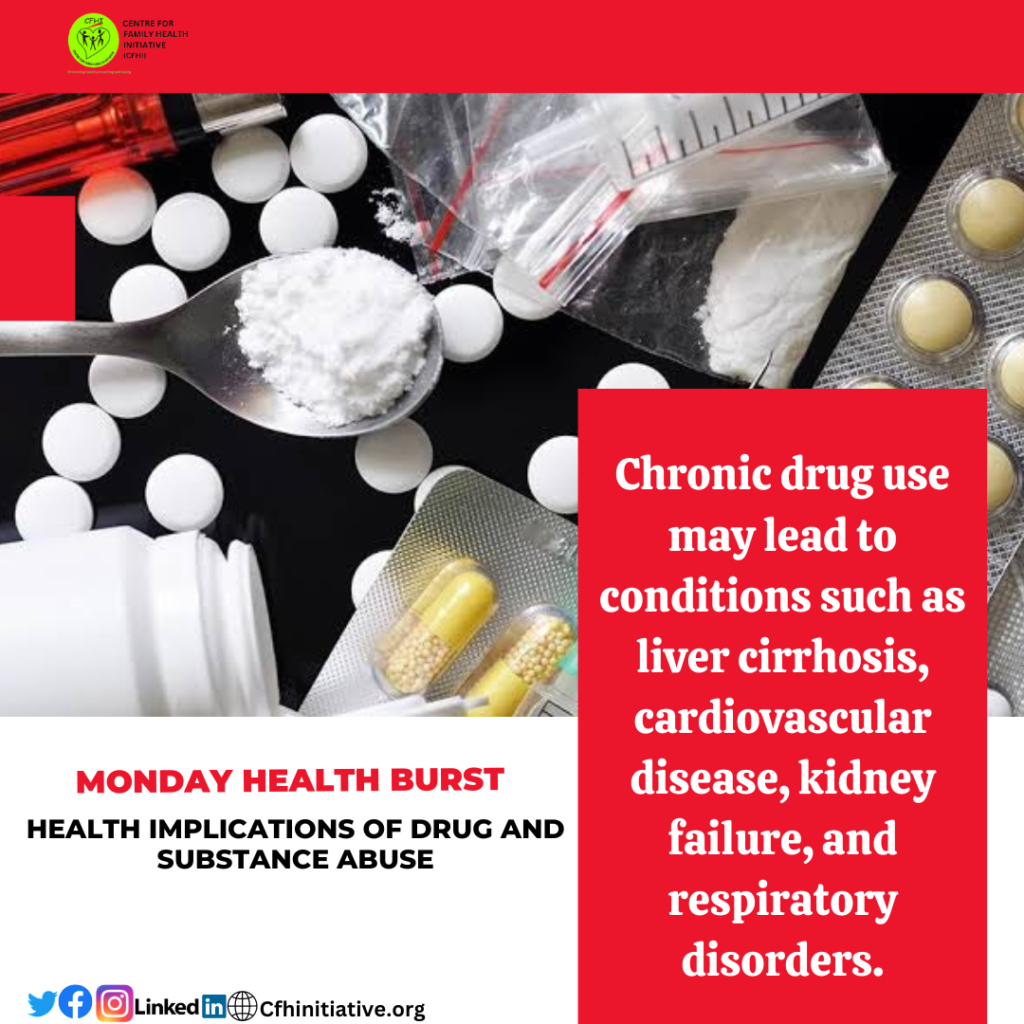
MONDAY HEALTH BURST ON HEALTH IMPLICATIONS OF DRUG AND SUBSTANCE ABUSE

Drug abuse can lead to severe health issues that can be life-threatening. Here are some crucial points to consider:

Addiction: Those with addiction often suffer from health problems associated with lung or heart disease, stroke, cancer, or mental health conditions. (National Institute on Drug Abuse)

Mental health disorders: Drug abuse is linked to mental health issues such as depression, anxiety, psychosis, and an increased risk of suicide. Substance abuse can worsen existing mental health conditions or trigger new ones.

Physical health problems: Different drugs can cause various physical health issues. For instance, inhalants can damage the respiratory system, while stimulants can lead to heart problems and stroke. Additionally, injecting drugs raises the risk of infectious diseases like HIV and hepatitis.

Overdose: Drug abuse significantly increases the risk of overdosing, which can be fatal. This happens when an individual takes a toxic substance, leading to respiratory depression, organ failure, seizures, or coma. Opioids, like heroin or prescription painkillers, are primarily associated with overdose deaths.

Long-term organ damage: Prolonged drug abuse can damage vital organs such as the liver, heart, kidneys, and lungs. Chronic drug use may lead to liver cirrhosis, cardiovascular disease, kidney failure, and respiratory disorders.

Impaired cognitive function: Drug abuse can affect cognitive function, memory, attention, and decision-making abilities. Long-term drug use may cause irreversible damage to the brain’s structure and function.

In collaboration with Leap Africa, CFHI, in February 2023, educated more than 200 young people in Bwari local government, FCT, about drug and substance abuse, civic participation, and political thuggery. This was achieved through the Community Action against Drug Abuse project, funded by the MacArthur Foundation and the Ford Foundation.

It is crucial to seek prompt and appropriate treatment to address drug abuse and minimize its health consequences.

Monday Health Burst is an initiative of CFHI to address issues of basic health concern. Join us every Monday on all our social media platforms for more episodes.


MONDAY HEALTH BURST ON HEALTH IMPLICATIONS OF DRUG AND SUBSTANCE ABUSE Read More »

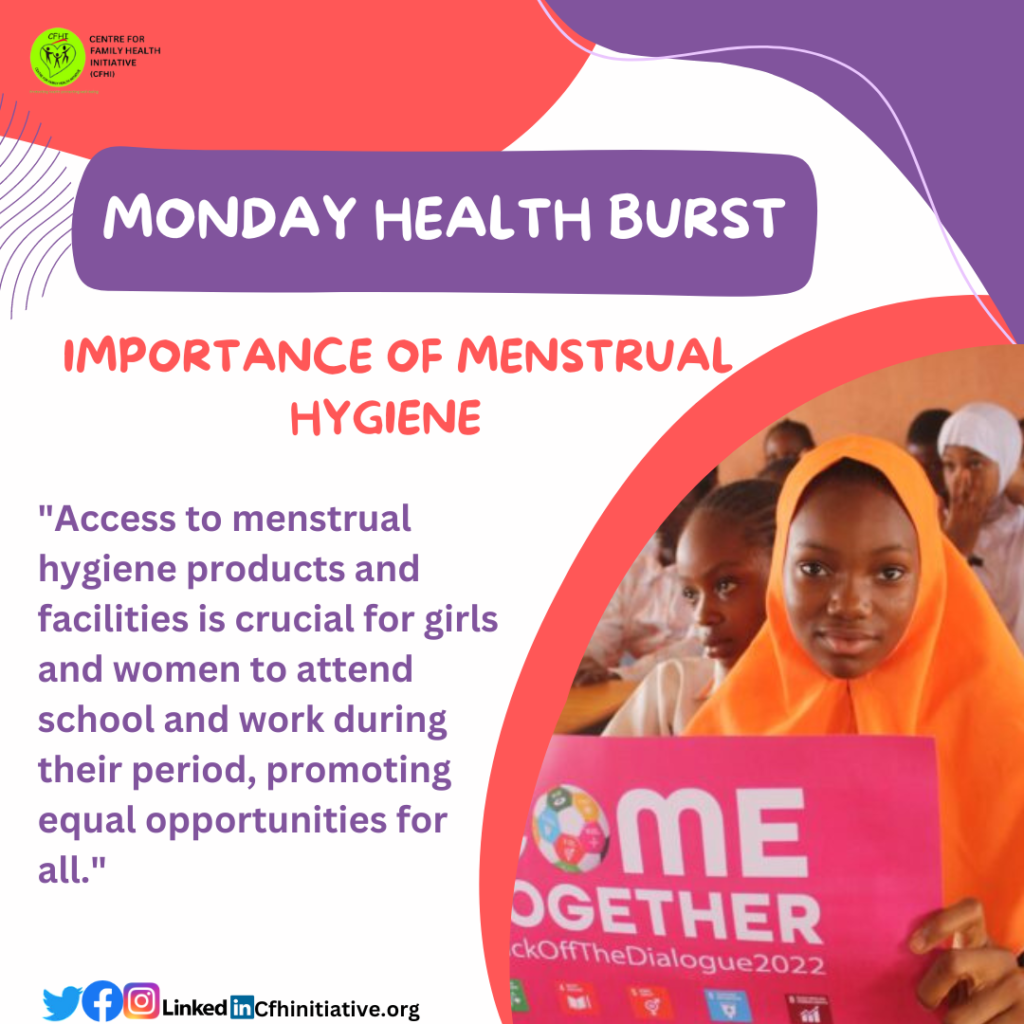
MONDAY HEALTH BURST ON IMPORTANCE OF MENSTRUAL HYGIENE

Menstrual hygiene is of utmost importance for menstruating individuals’ overall well-being and health, and it’s all about maintaining cleanliness during menstruation to prevent infections and promote comfort and dignity. Here are some key reasons why menstrual hygiene is crucial:

Preventing infections: Poor menstrual hygiene can lead to various reproductive tract infections, including urinary tract infections and vaginal infections. Using clean, sanitary products and maintaining proper hygiene reduces the risk of bacterial growth and diseases.

Maintaining health: Menstrual blood provides an ideal environment for bacterial growth. By using hygienic practices such as regularly changing menstrual products and proper cleaning, individuals can minimize health risks associated with menstrual blood and ensure their overall well-being.

Reducing stigma and promoting dignity: Menstruation is still surrounded by social stigma and taboos in many societies, which can lead to adverse psychological and emotional effects on individuals. By practising good menstrual hygiene, individuals can feel more comfortable, confident, and empowered, challenging the stigma associated with menstruation.

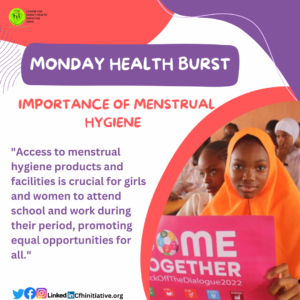
Ensuring access to education: Inadequate access to menstrual hygiene products and facilities can hinder girls’ and women’s ability to attend school or work during their periods. By addressing menstrual hygiene needs, we can help create an enabling environment that ensures equal access to education and opportunities for everyone.

To adequately promote menstrual hygiene, it is essential to ensure access to clean and affordable menstrual products, educate individuals about proper hygiene practices, and challenge the social stigma surrounding menstruation. In addition, governments, organizations, and communities play crucial roles in creating supportive environments prioritizing menstrual health and well-being.

CFHI commemorated Menstrual Hygiene Management (MHM) Day, 2022 in Foma Academy Kubwa,Abuja and also partnered with the Federal Ministry of Women Affairs to educate and provide menstrual materials to girls and women in attendance. In addition to joining the awareness walk to promote policies favourable to women and girls who menstruate, CFHI will continue to provide sustainable solutions to end period poverty through a holistic approach that combines education with infrastructure and products (Safepad) to tackle societal taboos and stigma surrounding menstrual health.

Monday Health Burst is an initiative of CFHI to address issues of basic health concern. Join us every Monday on all our social media platforms for more episodes.

MONDAY HEALTH BURST ON IMPORTANCE OF MENSTRUAL HYGIENE Read More »

MONDAY HEALTH BURST ON MALARIA – CAUSES AND PREVENTION

Malaria is a serious and potentially deadly disease that affects millions of people around the world every year.

In 2022, the World Health Organisation (WHO) in their World Malaria Report, recorded 619,000 Malaria deaths globally. 31% of those deaths (19,890) occurred in Nigeria.

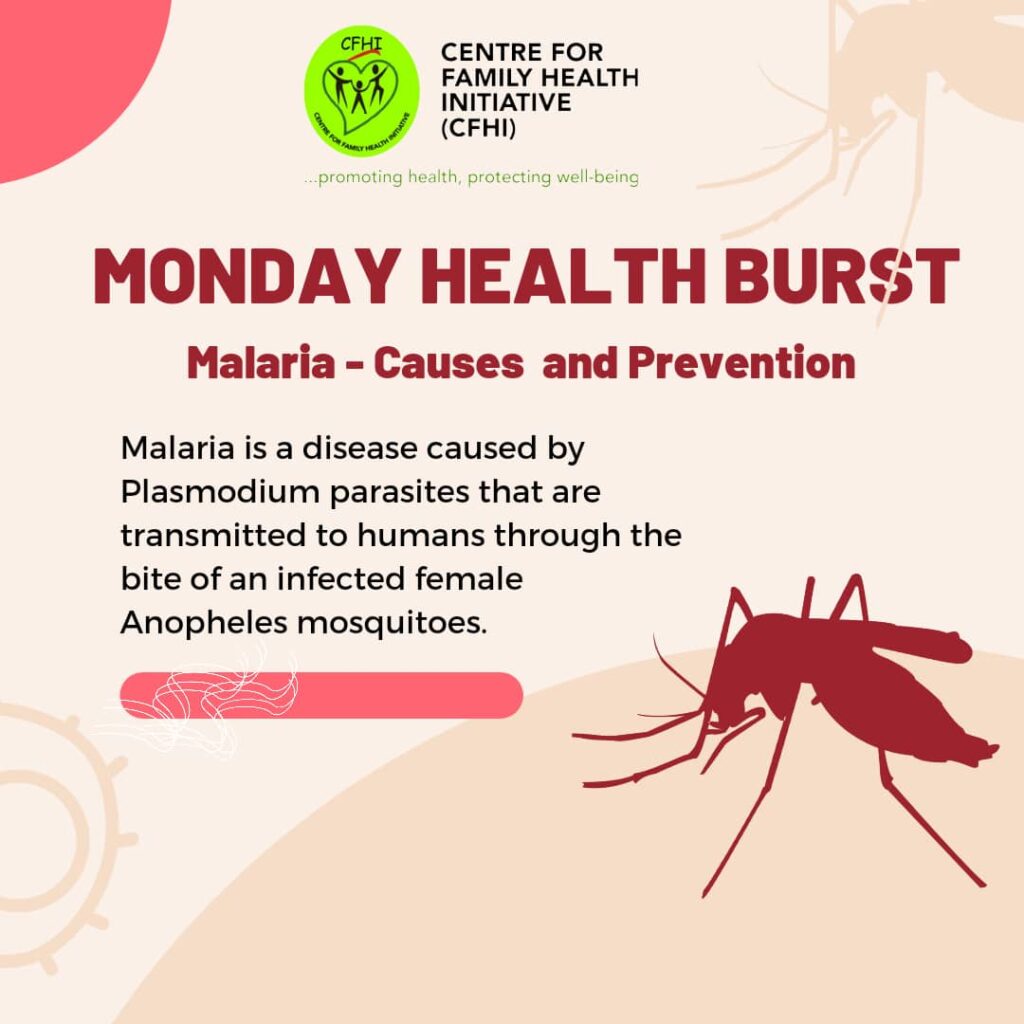
Malaria is a disease caused by a parasite called Plasmodium, which is transmitted to humans through the bites of infected female mosquitoes.
The Plasmodium parasites P. falciparum, P. vivax, P. ovale, and P. malariae are some of the several species that cause malaria and the most prevalent and deadly strain of the illness is P. falciparum.

Some factors that contribute to the risk of malaria transmission include;
High population density, limited access to healthcare, and poor sanitation.

According to WHO, severe infection is more likely to occur in newborns, children under five, pregnant women, travelers, and those with HIV or AIDS.

Malaria can be prevented by;

The use of antimalarial drugs.

The use of insecticide – treated mosquito nets.

Wearing of protective clothing

The use of insect repellent.

Elimination of mosquito breeding sites like stagnant water and dirty environment.

Early diagnosis and treatment can help prevent the disease from becoming severe or even fatal.

Monday Health Burst is an initiative of CFHI to address issues of basic health concern. Join us every Monday on all our social media platforms for more episodes.

#MondayHealthBurst #Malaria #CausesandPrevention

MONDAY HEALTH BURST ON MALARIA – CAUSES AND PREVENTION Read More »

MONDAY HEALTH BURST ON ENDOMETRIAL CANCER

Endometrial cancer is a type of uterine cancer that affects the inner lining of the uterus.

As recorded by the World Cancer Research Fund International, endometrial cancer is the sixth most commonly occurring cancer in women and the fifteenth most common cancer overall, with four hundred and seventeen thousand new cases recorded in 2020.

Approximately 3 in 100 women will be diagnosed with uterine cancer at some point in their lives. More than 80 percent of people with uterine cancer survive for 5 years or longer after receiving the diagnosis according to the National Cancer Institute (NCI).

The symptoms of endometrial cancer include; vaginal bleeding after menopause, change in the length or heaviness of menstrual period, pelvic pain, and vaginal bleeding between periods or spotting.

Mayo clinic stated that doctors do not know the exact cause of endometrial cancer, but it occurs as a result of mutations in the DNA. This mutations lead to the growth of abnormal cells which unlike the healthy cells doesn’t die but accumulate to form tumor and later spread to other parts of the body.

Some of the factors known to increase the risk of having the cancer are; not bearing children, a late natural menopause ( after the age of 55), Tamoxifen- a hormone therapy, obesity, being tall, physical activity, and consumption of coffee (WCRI).

The treatment for endometrial cancer is majorly surgery to remove the uterus, fallopian tubes and ovaries depending on the cancer stage. Other treatment include radiation, hormone therapy and chemotherapy.

Monday Health Burst is an initiative of CFHI to address issues of basic health concern. Join us every Monday on all our social media platforms for more episodes.

#EndometrialCancer #UNFPA #WHO #NCI #MondayHealthBurst


MONDAY HEALTH BURST ON ENDOMETRIAL CANCER Read More »

MONDAY HEALTH BURST ON PSYCHOLOGICAL BENEFITS OF BREASTFEEDING IN CHILDREN


The impact of breast feeding on the growth of a child cannot be overstated. Breastfeeding is responsible for intimacy and bonding between mother and child. This intimacy and bond created during breastfeeding, can provide long lasting physical and psychological benefits. Research has shown that there is a connection between the breastfeeding experience of a child and the cognitive development later in life.

An assessment carried out by Bernard et al (2013), on the cognitive and motor development in 2 and 3 year old children showed that improved problem solving abilities in children were associated with prolonged duration of exclusive breastfeeding. Another study showed that there was a reduced risk of cognitive impairment among children when breastfed immediately after birth (Diepeveen et al., 2017).

According to WebMD, breastfeeding has a deep and lasting effect on the behaviour, mental health, thought and understanding in children. For instance, babies who are breastfed are likely to have stronger critical thinking and reasoning skills, better memory, early language ability, and enhanced motor skills.

Breastfeeding is encouraged to be practiced by every mother as its benefits extend to almost every area of a child’s growth, that is, physical, emotional, social and psychological growth.

Monday Health Burst is an initiative of CFHI to address issues of basic health concern. Join us every Monday on all our social media platforms for more episodes.

#Breastfeeding #UNFPA #WHO #ChildHealth #PsychologicalBenefitsofBreastfeeding #MondayHealthBurst

MONDAY HEALTH BURST ON PSYCHOLOGICAL BENEFITS OF BREASTFEEDING IN CHILDREN Read More »

MONDAY HEALTH BURST ON BREASTFEEDING:A PROTECTIVE FACTOR FOR BREAST CANCER


Breastfeeding lowers the risk of breast cancer, especially if a woman breastfeeds for more than one year.

According to Amy Van Deusen, a large-scale analysis of nearly 150,000 women published in ‘The Lancelot’ in 2002 discovered that among women who breastfed, for every 12 months of breastfeeding (either with one child or spread over multiple children), the risk of breast cancer decreased by 4.3 percent compared to women who didn’t breastfeed at all.

Then a study published in 2014 by the Journal of the National Cancer Institute found that women of African ancestry have a high risk of developing the aggressive and hard – to- treat forms of breast cancer called estrogen receptor-negative and triple-negative, and the risk actually goes up when a woman gives birth, but breastfeeding negates this risk.

There are several reasons why breastfeeding protects health;

*Producing milk 24/7 limits breast cells ability to malfunction.

*Most women have fewer menstrual cycles when they are breastfeeding (added to the 9 missed periods during pregnancy) resulting in lower estrogen levels.

*Many women tend to eat more nutritious foods and follow healthier lifestyles (limit smoking and alcohol use) while breastfeeding.

Women are therefore encouraged to breastfeed their children for up to 1 year at least especially if the family has a record of breast cancer.

Monday Health Burst is an initiative of CFHI to address issues of basic health concern. Join us every Monday on all our social media platforms for more episodes.


#Breastfeeding

#AprotectiveFactorforBreastCancer

#who #unfpa #MondayHealthBurst


MONDAY HEALTH BURST ON BREASTFEEDING:A PROTECTIVE FACTOR FOR BREAST CANCER Read More »