Women

SPEAK WEDNESDAY

SPEAK WEDNESDAY – GENDER THEORIES PART 3

(OBJECT RELATIONS THEORY)
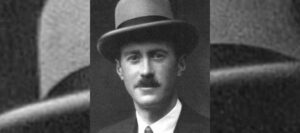
According to Object Relations Theory, humans are birthed with an inbuilt capacity to make and sustain relationships and to socialize in their various environment. Once a baby makes his/her first entry into the world, the innate capacity begins to develop immediately he meets “the object”. The object is usually an interior image of one who constantly cares for the infant. In most cases, the first object is the child’s mother. Other objects are the father or guardian who take up parenting responsibilities.

Sάndor Ferenczi initiated the first idea of the Object Relations Theory, followed by other scholars in the 1930’s, 40’s and 50’s who extended the theory. However, in 1952, Ronald Fairbairn popularized his theory of Object Relations. These scholars who have contributed to the development of the theory are trying to explicate the role of “the object” in the development of a child psyche.

The theory proposes that family incidences as infants grow tend to structure the way people socialize with others in their environment. Experiences in adulthood may alter the individual’s personality but the impact from “the object” during childhood still greatly influences the person even as he/she grows older. Children raised in a home ravaged by Gender Based Violence tend to be aggressive as adults and see violence as normal in every home or develop low self-esteem. These positive and negative incidences shapen their character and behavior consciously or unconsciously.

Ronald Fairbairn believes that the first object (mother) plays a key role in the formation of a child’s character. Therefore, emphasizing the importance of raising children in a healthy environment. A mother takes care of her children and unconsciously her children begin to form character from the things they watch her do and say. Mothers’ Day is celebrated not just because a mother cares for her children but because the society understands that a mother plays a key role in producing either bad or patriotic citizens.
SPEAK WEDNESDAY Read More »

SPEAK WEDNESDAY- GENDER THEORIES PART 2

SPEAK WEDNESDAY- GENDER THEORIES PART 2

(STANDPOINT THEORY BY DOROTHY SMITH)

Through the standpoint theory, Smith argues that notions and beliefs are greatly influenced by location. “We begin from the world as we actually experience it, and what we know of the world and of the other is conditional on that location” (Smith 1987).

At different parts of the world, harboring different kinds of people, beliefs, religions, ideologies and values define who we are and what we believe. To her, as we grow, our values developed from incidences around our environment and this is why the value placed on each gender differs in every society. Then, we begin to take stands (stand point) in our society from what we know through our experiences and the experiences of others.

In Africa, male children are celebrated over their female folks and this has in so many ways contributed to how less important females feel at home, school, social gathering and even at work place. This has affected the mind-set of most female children and as they grow into adulthood, they are made them see themselves as the weaker gender, whose voice should be heard only when asked.

Since we were all born at different locations of the world, we lack the entire knowledge of it. No one knows the entire information of the world. Smith therefore puts a limitation on the knowledge of man.

According to Smith, standpoint is individualistic. This means that no two persons can have the same standpoint irrespective of if they were born and raised in the same environment or society. She therefore encourages us to take our standpoint seriously because it explicates the totality of an individual.

SPEAK WEDNESDAY- GENDER THEORIES PART 2 Read More »

SPEAK WEDNESDAY – GENDER THEORIES (PART ONE)


Simone de Beauvior’s gender theory – One is not born a woman, one becomes one, differentiates sex from gender.  This theory believes that gender is an aspect of identity gradually acquired. Everything we are is as a result of choices and what we build from our own resources and those which society gives us. We don’t only create our own values, we create ourselves.

It is said that sometimes, it is hard to become a woman because of the struggle for human freedom in the apparently disadvantaged female body. De Beauvoir argues that it is not the biological condition of women per se that constitutes a handicap: it is how a woman construes this condition that renders it positive or negative.

Becoming a woman takes conscious efforts and deliberate actions. What feminist philosophers like de Beauvoir aim to achieve is to open the space for that freedom to flourish. To her, gender was decided by the way parents treated and raised their children. Hence, gender identity is decided very early in life. This means that a girl is built up emotionally as the weaker sex, not to have a voice and a decision when she is with her “Male folks”, to always live as an assistant rather than a leader, not to dare or have a dream greater than a male.

This theory from Simone de Beauvior serves as a reminder that we are first human before gender, creating awareness so that we can change certain things about our societies for the better. It also calls attention to the negative effects of the way women are treated differently in the society.

Join us next week on Speak Wednesday for more gender theories.

#Gender #Womeninspire #Genderinequality.

SPEAK WEDNESDAY – GENDER THEORIES (PART ONE) Read More »