Women

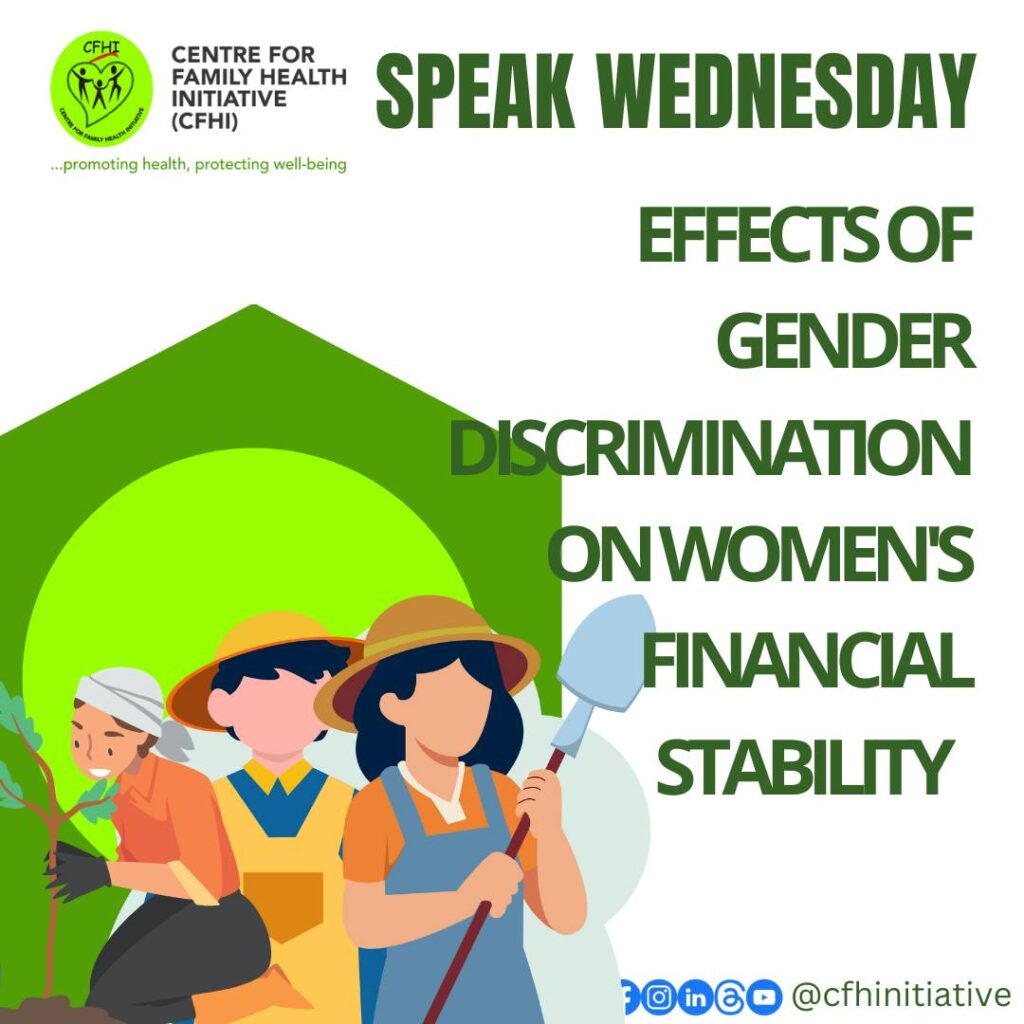
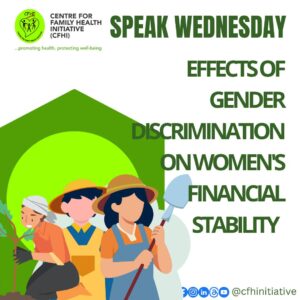
SPEAK WEDNESDAY ON EFFECTS OF GENDER DISCRIMINATION ON WOMEN’S FINANCIAL STABILITY

Article 1 of the Universal Declaration of Human Rights provides that all human beings are born free and equal in dignity and rights. However, women experience gender discrimination in both the public and private spheres, which profoundly impacts their life, including their financial stability and status.
The World Bank reports that Nigeria has one of the highest rates of out-of-school girls worldwide. Without adequate education, women’s chances of securing formal employment and escaping low-wage, informal sectors are severely restricted, leaving them vulnerable to financial instability.
Additionally, the gender wage gap still exists despite the Nigerian Labour Act prohibiting wage discrimination based on gender. The World Bank estimates that women in Nigeria make an average of 30% less money than males. The lack of equal pay makes it more difficult for women to save money, invest it, and ensure their financial future.
In Nigeria, there is a sizable gender difference in account ownership, with fewer women than males having access to formal financial services, according to the World Bank’s Global Findex Database.
The bias against women hinders their potential to establish or expand businesses, engage in politics, save finances, and participate in entrepreneurial activities. This, in turn, sustains the vicious cycle of poverty. Additionally, women’s economic empowerment, safety, and autonomy are hindered by gender discrimination, which impacts the country’s GDP and economy.
The World Bank states that achieving gender equality in financial inclusion can help accomplish eight of the 17 United Nations Sustainable Development Goals. This can be achieved through implementing genuine policies and practices promoting gender equality.
By working together to tear down the barriers of gender discrimination in Nigeria, the government, civil society, international organizations, and individuals can change this narrative.
Speak Wednesday is an initiative of CFHI to address issues around gender-based violence and gender bias.
#SpeakWednesday #GenderEquality #GenderDiscrimination #Women’sFinance

SPEAK WEDNESDAY ON EFFECTS OF GENDER DISCRIMINATION ON WOMEN’S FINANCIAL STABILITY Read More »

SPEAK WEDNESDAY ON THE SIGNIFICANCE OF WOMEN IN POLITICS

The significance of women’s involvement in politics cannot be emphasized enough when it comes to promoting the United Nations Sustainable Development Goals (SDGs). Women have been inadequately represented in politics throughout history due to various cultural factors. On the other hand, recent advances by women in politics have proven the importance of equal representation for women in this sphere. Despite advances in some areas, women in Nigeria face several hurdles when entering politics. Traditional gender roles, patriarchal conventions, and negative stereotypes frequently impede women from seeking active engagement in politics.


In Nigeria, the National Gender Policy (NGP) was created in 2006 to address the gender imbalance. The NGP advocates for a 35% Affirmative Action (AA) to ensure women are adequately represented in all governance processes.


Significantly, women in leadership positions, especially in developing nations, have the obligation and the potential to affect their society through leadership, particularly when empowered. Women who are empowered can aspirate for, achieve, and excel in leadership roles while also playing their roles at home.


Women are empowered when educated, exposed, and given economic freedom. Women in leadership roles have had an excellent social impact throughout history and in every nation. Such women have a long history in human history. Notably, influential figures such as Okonjo Iweala and Dora Akunyili have demonstrated that women can significantly contribute to a country’s political economy.


Speak Wednesday is an initiative of CFHI to address issues around gender-based violence and gender bias.


#SpeakWednesday #WomenInPolitics #Women’sRights #GenderStereotype #GenderBias #GenderInequality


REFERENCES

Emeka, E. O & Monica, E. A. 2015. Women and Leadership in Nigeria: Challenges and Prospects.

SPEAK WEDNESDAY ON THE SIGNIFICANCE OF WOMEN IN POLITICS Read More »

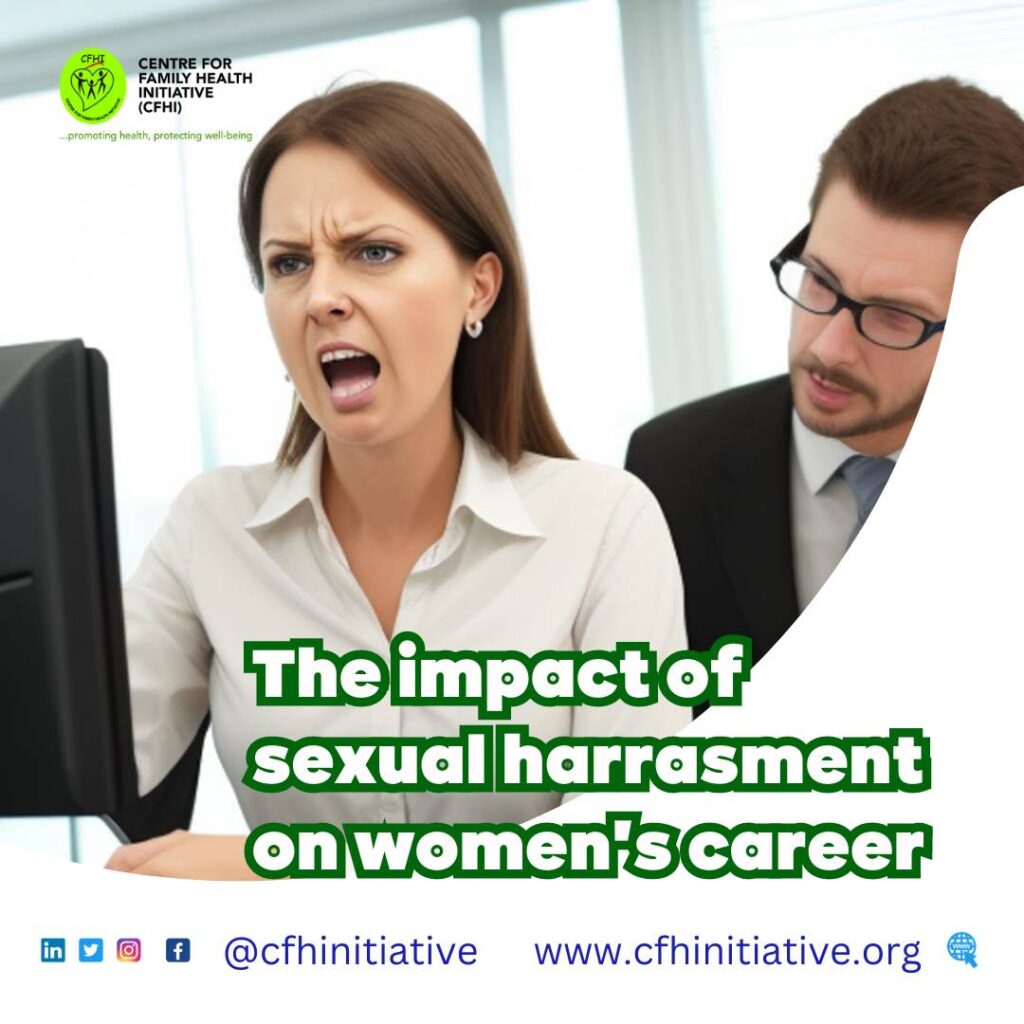
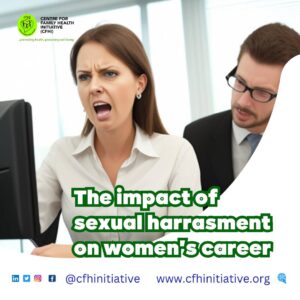
SPEAK WEDNESDAY ON THE IMPACT OF SEXUAL HARRASSMENT ON WOMEN’S CAREERS.


The Impact of Sexual Harassment on Women’s Careers

The International Labour Organization defines sexual harassment as unwelcome and offensive behavior of a sexual nature that targets individuals based on their sex. Sexual harassment is a widespread problem that impacts women’s careers more than any other area of their lives. The prevalence of sexual harassment at work impedes women’s advancement and limits their ability to advance professionally.

According to a study conducted by the International Centre for Research on Women in collaboration with ActionAid Nigeria, approximately 80% of Nigerian women have experienced some form of sexual harassment in their workplaces.

Sexual harassment fosters a toxic workplace culture, which lowers women’s job satisfaction and increases their departure rates. According to the ICRW survey, 45% of Nigerian women who had experienced sexual harassment at work decided to leave their positions, which interfered with their professional trajectories and reduced their possibilities for progress.

Furthermore, women’s careers are severely disrupted by sexual harassment, which results in traumatic events that affect their ability to advance professionally. The research by the Women in Law and Development in Africa (WILDAF) shows that sexual harassment frequently causes affected women to have lower job satisfaction, lower productivity, and higher turnover rates. The trauma brought on by such events can also cause ongoing emotional anguish, impacting one’s self-worth and confidence at work.

In Nigeria, sexual harassment affects women’s careers negatively, impeding their personal and professional advancement. The fact that this problem is so common highlights the urgent need for all-encompassing measures to combat and eliminate sexual harassment in the workplace. Creating inclusive workplaces that promote gender equality and guarantee the unrestricted career advancement of Nigerian women requires strengthening regulatory frameworks, raising awareness, and cultivating a supportive environment that empowers women.

Speak Wednesday is an initiative of CFHI to address issues around gender-based violence and gender bias.

#SpeakWednesday #SexualHarassment #SayNoToSexualHarassment #Women’srights #genderequality #genderbias

SPEAK WEDNESDAY ON THE IMPACT OF SEXUAL HARRASSMENT ON WOMEN’S CAREERS. Read More »

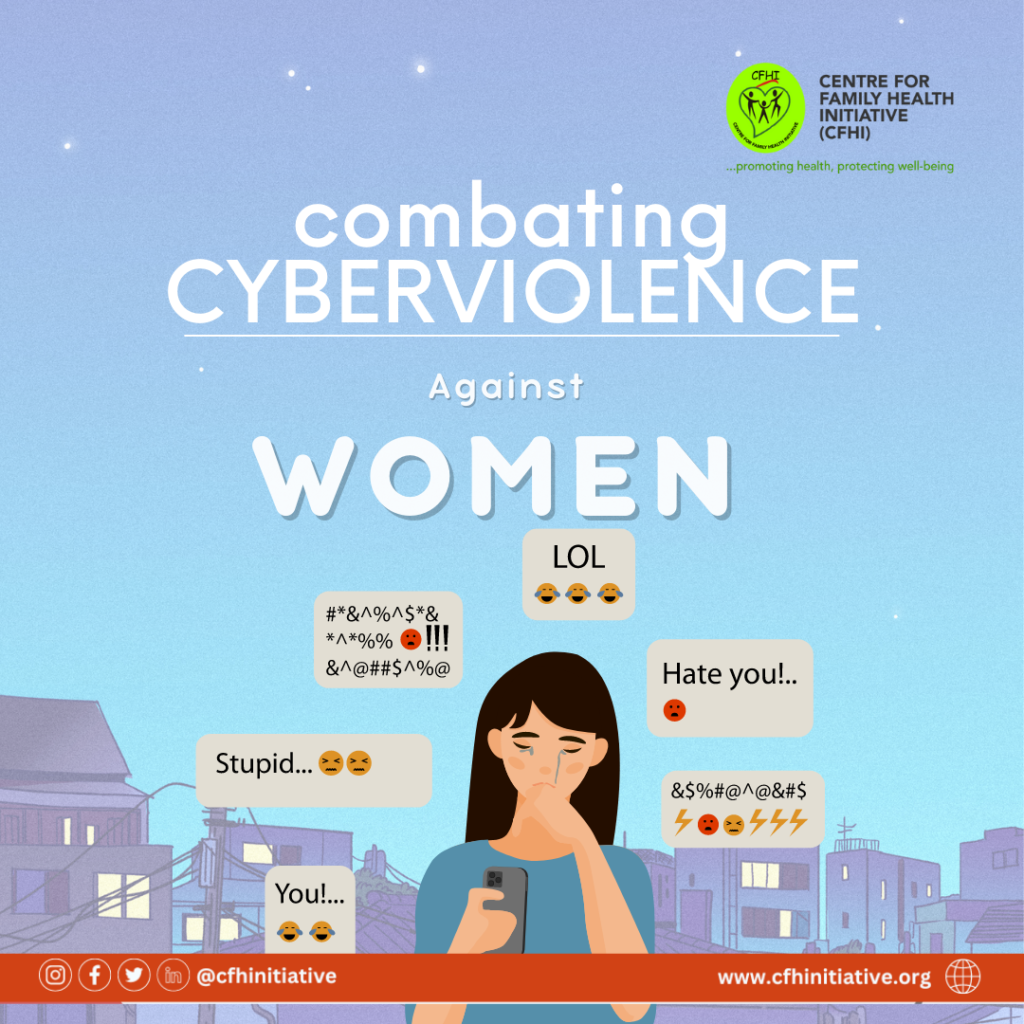
SPEAK WEDNESDAY – Combating Cyberviolence Against Women

The widespread usage of the internet and the quick development of technology have had various positive effects on society. They have, however, also contributed to a worrying development: cyberviolence against women. Women’s safety, privacy, and wellbeing are seriously threatened by this type of online assault. This, the UN identified as a kind of gender-based violence that exacerbates existing inequities.

According to UN Women, cyberviolence against women takes various forms, such as sexual harassment, stalking, intimate image abuse, trolling, doxing, and misogynistic hate speech. Additionally, technology is used to facilitate other forms of violence, including intimate partner or domestic violence and trafficking. These digital tools enable abusers to monitor, track, threaten, and perpetrate violence, while traffickers exploit technology to profile, recruit, control, and exploit their victims. Reports by UN Women and the UN Special Rapporteur on Violence Against Women highlight the adverse impacts of cyberviolence, including psychological and emotional distress, fear, social isolation, and educational and professional consequences faced by victims.

Women at heightened risks of cyberviolence includes young women and girls, women in public life including women’s rights activists, women human rights defenders, women in politics, and women journalists.

Nigeria has taken significant steps to address cyberviolence against women through its legal system. The Cybercrime Act of 2015 criminalizes various forms of cyberviolence, including cyberstalking, cyberbullying, identity theft, and the distribution of sexually explicit materials without consent. This legislation plays a crucial role in protecting women from online abuse and provides a legal framework to prosecute perpetrators. Furthermore, legal frameworks like the Violence Against Persons (Prohibition) Act, and the Convention on the Elimination of All Forms of Discrimination Against Women (CEDAW) recognizes cyberviolence as a form of violence against women. These legislative measures provide a foundation for protecting women from online abuse and prosecuting perpetrators.

Although Nigeria has made strides in addressing cyberviolence against women, stronger enforcement measures are required to guarantee that existing laws are implemented. 

Raising awareness and promoting legislative changes are essential components in the fight against cyberviolence against women, in addition to legal measures. Public campaigns, educational initiatives, and media outreach should emphasize raising awareness of the seriousness of the problem, encouraging appropriate online conduct, and creating an environment where women may feel respected and safe.

Speak Wednesday is an initiative of CFHI to address issues around gender-based violence and gender bias.

#SpeakWednesday #Cyberviolence #GenderBasedViolence #Women’sRights #GenderStereotype #GenderBias #GenderInequality


SPEAK WEDNESDAY – Combating Cyberviolence Against Women Read More »

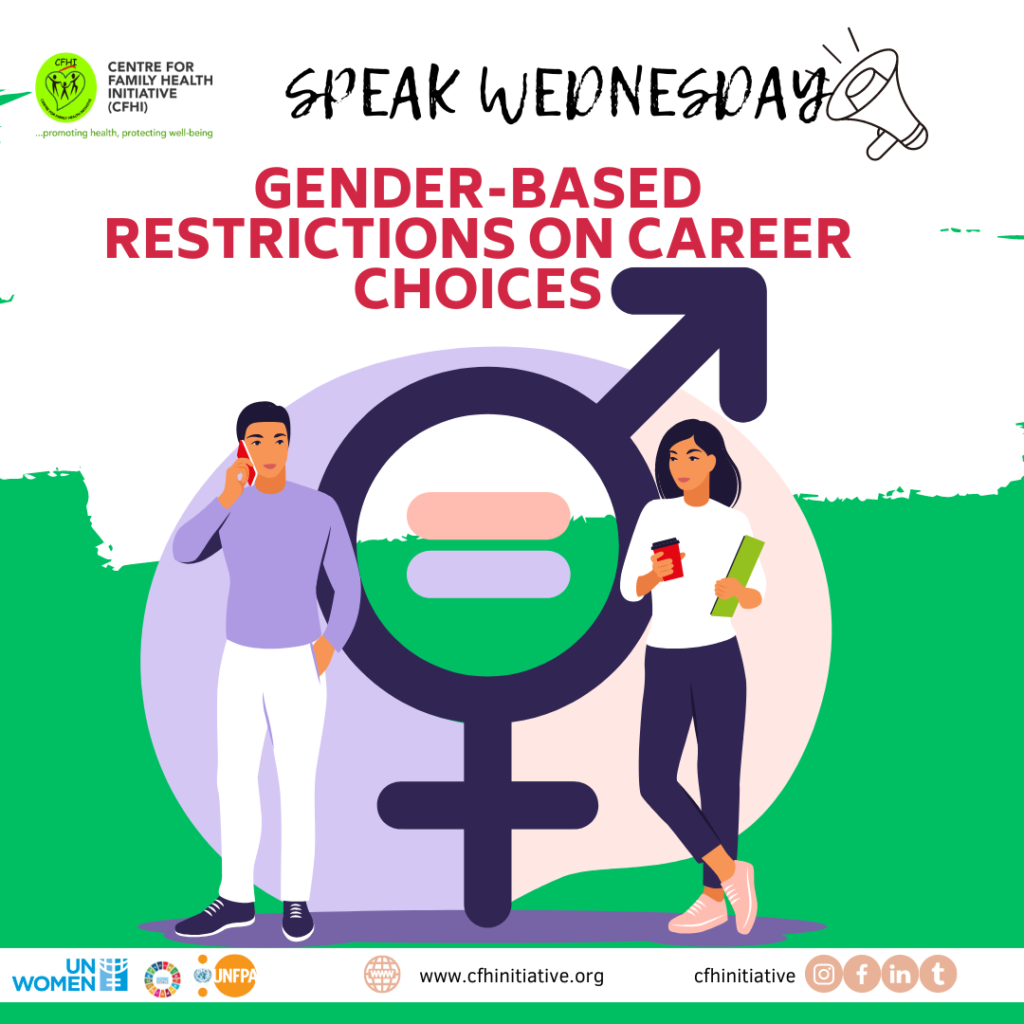
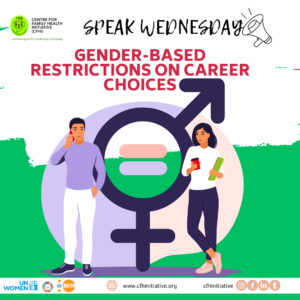
SPEAK WEDNESDAY – Gender-Based Restrictions on Career Choices

Gender-Based Restrictions on Career Choices: Examining the Impact on Female Children in Nigeria


In Nigeria, young girls face significant challenges when choosing their career paths due to gender-based limitations. Despite progress in women’s rights and gender equality, traditional views, cultural norms, and socioeconomic factors still limit the career options available to girls. These biases have contributed to a significant gender gap in many professions. Unfortunately, like many others, Nigerian society continues to adhere to gender norms that restrict the career opportunities available to female children. Cultural factors like patriarchal standards and expectations of women’s domestic responsibilities have perpetuated the belief that certain professions are better suited for men.


According to the World Bank’s report on gender disparities in Nigeria, cultural biases discourage girls from pursuing careers in fields like science, technology, engineering, and mathematics (STEM), often considered male-dominated. This leads to a persistent gender gap in these fields and limits educational and employment opportunities for girls. Factors such as limited access to quality education, early marriage, poverty, inadequate educational infrastructure, and cultural norms favoring boys’ education further restrict girls’ career choices in Nigeria.


The limitations placed on female students’ career options based on gender in Nigeria profoundly impact both the individual and the larger society. Limiting girls’ goals undermines their personal growth, perpetuates gender inequality, and obstructs the nation’s progress towards achieving gender equality and socioeconomic development.


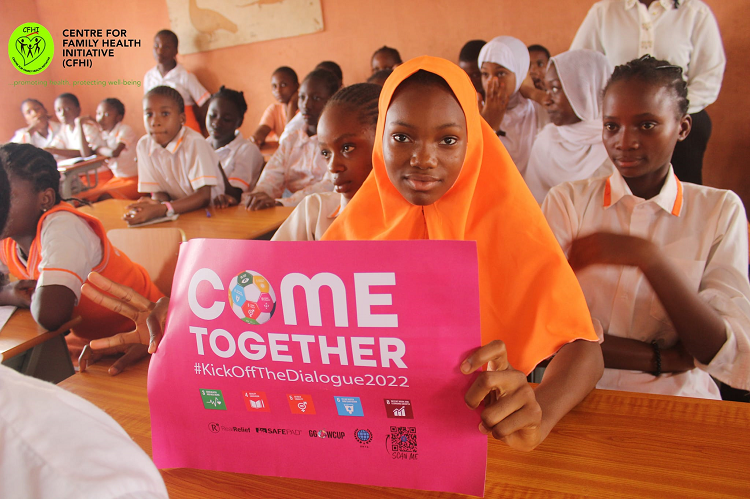
In 2022, the Centre for Family Health Initiative (CFHI) celebrated the International Day of the Girl Child by educating over 40 students and teachers from Junior Secondary School Gosa – Abuja about the negative impacts of gender-based violence and encouraging students to pursue their preferred fields, including STEM-related ones, regardless of gender.


Addressing gender-based restrictions on career choices for female children in Nigeria requires a holistic approach encompassing education, awareness, and equal opportunities. By challenging traditional gender roles, providing role models, ensuring access to quality education, and promoting options in male-dominated fields, we can empower girls to pursue their dreams and contribute to the nation’s progress. Through these concerted efforts, Nigeria can build a more inclusive and equitable society where all children have the freedom to choose their desired career paths, irrespective of gender.


Speak Wednesday is an initiative of CFHI to address issues around gender-based violence and gender bias.


#SpeakWednesday #Career #Girl’sRights #Women’sRights #GenderStereotype #GenderBias #GenderInequality #Nigeria #Progress


SPEAK WEDNESDAY – Gender-Based Restrictions on Career Choices Read More »

MONDAY HEALTH BURST ON ENDOMETRIAL CANCER

Endometrial cancer is a type of uterine cancer that affects the inner lining of the uterus.

As recorded by the World Cancer Research Fund International, endometrial cancer is the sixth most commonly occurring cancer in women and the fifteenth most common cancer overall, with four hundred and seventeen thousand new cases recorded in 2020.

Approximately 3 in 100 women will be diagnosed with uterine cancer at some point in their lives. More than 80 percent of people with uterine cancer survive for 5 years or longer after receiving the diagnosis according to the National Cancer Institute (NCI).

The symptoms of endometrial cancer include; vaginal bleeding after menopause, change in the length or heaviness of menstrual period, pelvic pain, and vaginal bleeding between periods or spotting.

Mayo clinic stated that doctors do not know the exact cause of endometrial cancer, but it occurs as a result of mutations in the DNA. This mutations lead to the growth of abnormal cells which unlike the healthy cells doesn’t die but accumulate to form tumor and later spread to other parts of the body.

Some of the factors known to increase the risk of having the cancer are; not bearing children, a late natural menopause ( after the age of 55), Tamoxifen- a hormone therapy, obesity, being tall, physical activity, and consumption of coffee (WCRI).

The treatment for endometrial cancer is majorly surgery to remove the uterus, fallopian tubes and ovaries depending on the cancer stage. Other treatment include radiation, hormone therapy and chemotherapy.

Monday Health Burst is an initiative of CFHI to address issues of basic health concern. Join us every Monday on all our social media platforms for more episodes.

#EndometrialCancer #UNFPA #WHO #NCI #MondayHealthBurst


MONDAY HEALTH BURST ON ENDOMETRIAL CANCER Read More »

Period Poverty_MHM

SPEAK WEDNESDAY – PERIOD POVERTY AND POOR EDUCATION

The backdrop in girls’ education due to lack of menstrual hygiene in Nigeria should no longer be gender issue, but of national concern.

The National Democracy and Health Survey in 2013 has shown that girls make up 60 per cent of the 110.5 million out-of-school children in Nigeria, and 1 in 10 African girls misses school due to their period, according to UNICEF. In order words, they could miss school for four days or more during which the period lasts, and since they cannot manage their period safely without a good sanitary product, such children are most likely to drop out of school in the long run. Moreso, the hike in menstrual products has left most Nigerian girls and young women with no choice but to use unclean napkins, tissue, leaves, newspapers, or nothing at all, during their menstruation.

The old African proverb says “educate a girl, educate a nation”. To curb this damaging menace caused by period poverty, the Nigerian government should borrow a Leaf from Kenya’s policy which introduced the right to free, sufficient and quality sanitary towels, and basic sanitation facilities for schoolgirls; treating access to sanitary pads as a basic human right. This and the total removal of tax on menstrual products will help to make the girl child stay in school during their monthly flow.

Like Michelle Obama rightly said, when girls are educated, their countries become stronger and more prosperous. It is time to embrace this fact and work towards creating a world where everyone irrespective of gender can thrive without limitations.

Speak Wednesday is an initiative of CFHI to address issues of gender-based violence and gender bias. Join us every Wednesday on all our social media platforms for more episodes.

#SpeakWednesday #MenstrualRightsAwareness #MenstrualHygiene #MenstrualEquality #GirlsInSchool #EquityAndJustice #MHDay2022 #WeAreCommitted
#reusablesanitarypad

SPEAK WEDNESDAY – PERIOD POVERTY AND POOR EDUCATION Read More »

The Financial/Economic Challenges of Widowhood

Widowhood, the death of a spouse is often considered one of the stressful events that can take place in a person’s life. Widowhood has been found to have a negative association with the financial well-being of women. When a woman loses their partner the burden of catering for the home becomes unbearable most especially in cases where the woman was a full-time housewife, comes from a cultural background where the properties of her husband are confiscated by the in-laws or where the woman is quite aged.

According to Sevak et al in the paper “The Economic Consequences of a Husband’s Death”, In the 1970s, 37 per cent of new widows became poor after widowhood. By the 1990s, this rate had fallen to between 12 per cent and 15 per cent. Nevertheless, widowhood remains an important risk factor for transition into poverty. Faced with the loss of resources in widowhood, women have only a few options available to improve their economic status”. This excerpt shows that indeed there is a financial burden associated with the loss of a partner.

According to the World Bank Organization, one in ten African women above the age of 14 is widowed, and six per cent are divorced. In Nigeria, about 1 per cent of all Nigerian men are widowers while 9 per cent of women are widows. Strikingly, while the share of widowers among men aged 75 and older is about 11 per cent, it is 77 per cent for women of the same age. In Nigeria, the socio-economic status of widows is incomparably stressful due to certain traditional barriers to assessing the land, capital, credit, employment, housing, and other means of livelihood. In other words, Widowhood, therefore, deprives women of homes, agricultural land and other assets. This often limits the ability of widows to become economically secure.

The poverty level of widows is exacerbated by factors of illiteracy and lack of education and training. Long-drawn out and rigid and expensive burial rites further compound the economic condition of widows (Research on Humanities and Social Sciences, 2013). In certain parts of the country, it is observed that during the mourning period a widow is unable to engage in any economic venture nor carry out any personal work to earn an income. However, she is expected to bear the financial burden expected of widows to make an elaborate party for the outing ceremony after her mourning. These women often times are made to spend all they have left in shouldering this responsibility. This inevitably marks the beginning of a terrible financial crisis for the widow and her children.

For many widows in Nigeria, the implications of poverty include withdrawal of children from school and the adoption of coping strategies such as engaging in exploitative informal work, engaging the children in child labour and hawking, begging and sex work (Research on Humanities and Social Sciences, 2013).

As a society, we need to be more intentional about alleviating the hardships of widows. This could range from advocating for policies that address systemic inequalities which enable women to support themselves in the face of marital dissolution. This could include reforms to credit markets, where women are particularly disadvantaged; ensuring equal ownership and inheritance rights for women. (World Bank Organization, 2018), encouraging qualitative female education at an early stage, enhancing women economic empowerment through enlightenment programs and vocational skills acquisition, particularly widows, for them to become self-reliant and cater for the needs of their immediate families.

Also, through advocacy and public health awareness campaigns, the enlightenment of the public about the plight of the widows should be intensified in order to eliminate the dehumanizing traditional practices to which Nigerian widows are often subjected.

Speak Wednesday is an initiative of Centre for Family Health Initiative (CFHI) to address issues around gender-based violence and gender bias. Join us every Wednesday on all our social media platforms for more interesting episodes.

The Financial/Economic Challenges of Widowhood Read More »

Speak Wednesday

WOMEN AND GIRLS, HIV/AIDS

WOMEN AND GIRLS, HIV/AIDS

HIV (Human Immunodeficiency Virus) is a sexually transmitted infection (STI) which can be transmitted through contact with infected blood, semen or vaginal fluids.

According to AVERT (2020), since the start of the global HIV epidemic, women in many regions have been disproportionately affected by HIV. Today, women constitute more than half of all people living with HIV, and AIDS-related illnesses remain the leading cause of death for women aged between 15 and 49. Young women (aged 15-24), and adolescent girls (aged 10-19) in particular, account for a disproportionate number of new HIV infections. In 2017, 7,000 adolescent girls and young women became HIV-positive. This is a far higher rate than new infections among young men, with young women twice as likely to acquire HIV as their male peers.

Also AVERT (2020) states that in sub-Saharan Africa, despite making up just 10% of the population, one out of every five new HIV infections happens among adolescent girls and young women. In the worse-affected countries, 80% of new HIV infections among adolescents are among girls, who are up to eight times more likely to be living with HIV than adolescent boys. It is estimated that around 50 adolescent girls die every day from AIDS-related illnesses. Nigeria has the second largest HIV epidemic in the world. Although HIV prevalence among adults is much less (1.3%) than other sub-Saharan African countries such as South Africa (19%) and Zambia (11.5%), the size of Nigeria’s population means 1.8 million people were living with HIV in 2019. According to United Nations AIDS (UNAIDS), Nigeria has the second largest HIV epidemic in the world and one of the highest rates of new infection in sub-Saharan Africa.

In the article “How does HIV/AIDS affect women” by the National Institute of Child Health and Human Development (2017), HIV disproportionately affects women and girls because of their unequal cultural, social and economic status in society. HIV is most often spread through sex. Women may be at greater risk of being infected with HIV during sexual contact than men are. This is because the fragile tissues of the female ex organ can tear slightly during sex and let the virus enter the body. (This is especially likely among girls under age 18.) Studies show that the female sex organ due its large surface is easily exposed to the virus, thus increasing risk of infection and most women around the world who have HIV were mostly infected through sex with a man.

Furthermore, unaccommodating attitudes towards sex outside of marriage and the restricted social autonomy of women and young girls can reduce their ability to access sexual health and HIV services. Other factors as opined by AVERT (2020) which have contributed to this disparity include; poverty, lack of access to education, gender-based violence, “sugar-daddy culture” and transactional sex, child marriage, etc. Intimate partner violence, inequitable laws and harmful traditional practices reinforce unequal power dynamics between men and women, with young women particularly disadvantaged. HIV is not only driven by gender inequality, but it also entrenches gender inequality, leaving women more vulnerable to its impact.

A call for new approaches to reducing HIV rates among women is highly encouraged at this stage. Firstly, more efforts should be geared towards a universal access to sexual and reproductive health for women and girls. Secondly, increased public awareness campaigns for gender equality that stigmatize violence and discrimination against women and girls and the use of female-controlled prevention methods should be encouraged.

However, CFHI through her HIV/AIDS based programs and its social media platforms has continually advocated and still continues to advocate for the Sexual and Reproductive Health and Rights (SRHRs) of women and girls whilst providing and catering to the special needs of women and girls with HIV/AIDS and Orphans and Vulnerable Children in the society.


Speak Wednesday is an initiative of Centre for Family Health Initiative (CFHI) to address issues around gender-based violence and gender bias. Join us every Wednesday on all our social media platforms for more interesting episodes.

Speak Wednesday Read More »

SPEAK WEDNESDAY

WOMEN’S RIGHT TO FULL AND EFFECTIVE POLITICAL PARTICIPATION

According to provisions of the Convention on the Elimination of all Forms of Discrimination against Women (CEDAW), the protocol to the African Charter on the Rights of Women in Africa, and the National Gender Policy, women have the right to participate in political processes that affect them, their families, and societies. Countries like Rwanda, Cuba, Bolivia, and United Arab Emirates with increased women’s participation and leadership in civil societies and political parties tend to be more inclusive, responsive and democratic. Truth is, when women significantly participate in peace processes, they meaningfully help to expand the scope of agreements and improve the prospects for lasting peace.

Historically, Women around the world at every socio-political level find themselves under-represented in parliament and far removed from decision-making levels. Despite representing half the global population, women comprise less than 20 percent of the world’s legislators according to United States Agency for International Development (USAID).

Women in Nigeria face many challenges and discriminatory practices under some existing laws and customs. Political life in Nigeria is based on male norms and values, and men determine the standards for political participation and the rules that govern the electoral process, greatly limiting women’s participation in politics. For example, intending female candidates for political offices are often disadvantaged, and even disqualified, by rules and cultural norms surrounding marriage and indigeneship. In some cases, parties actively exclude women from standing for office and most often than not, female political candidates are often subject to hate speech, threats or violence. Nevertheless, Women are known to be resilient family and society builders and are naturally imbued with salient and sterling leadership qualities. Over time in history, a few women who have been entrusted with leadership roles have more often than not proved that when given adequate backing, women can perform creditably – a case study of Dr. Ngozi Okonjo-Iweala and Margaret Ekpo in managing human and material resources.

In conclusion, women’s full and effective political participation births gender equality, inclusive growth, and sustainable development. The active participation of women, on equal terms with men, at all levels of decision-making and political involvement provides a balance that more accurately reflects the composition of society and may as such enhance the legitimacy of political processes by making them more democratic and responsive to the concerns and perspectives of all segments of society. Research shows that as more women are elected to office, there is a corollary increase in policy making that emphasizes quality of life and reflects the priorities of families, women, ethnic and racial minorities.

Speak Wednesday is an initiative of Centre for Family Health Initiative (CFHI) to address issues around gender-based violence and gender bias. Join us every Wednesday on all our social media platforms for more interesting episodes.

SPEAK WEDNESDAY Read More »