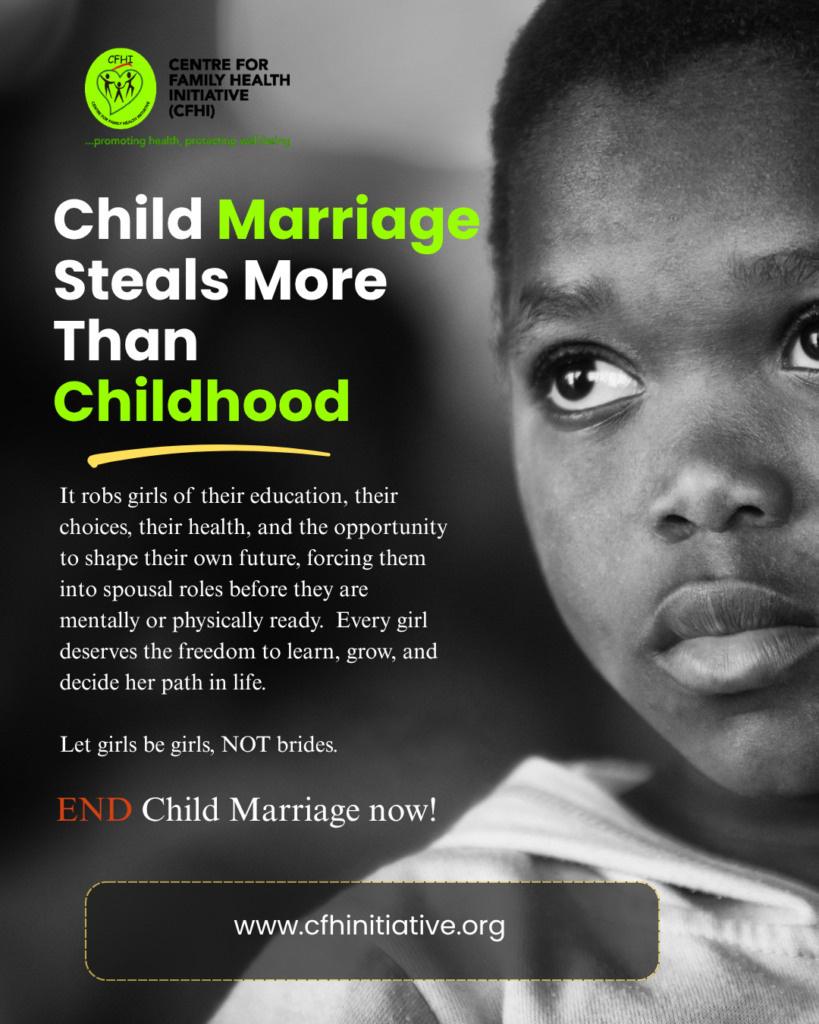
Childhood should be a time for girls to learn, grow, discover themselves and imagine the future they want. Yet for millions of girls, childhood ends too soon when they are pushed into marriage. This year’s International Day of the Girl Child theme, “End child marriage and invest in girls’ rights,” draws attention to a practice that continues to deny girls the opportunity to determine the course of their own lives. [1]
Child marriage refers to a formal marriage or informal union involving a child below the age of 18. Globally, about one in five girls is married before turning 18, with more than 12 million girls entering marriage each year. [2] In sub-Saharan Africa, where the burden remains particularly high, approximately 31 per cent of girls are married before adulthood. [1]
The consequences go far beyond losing the freedom to simply be a child. Marriage often forces girls out of school, limiting their education, skills, and future employment opportunities. Girls who marry in childhood are less likely to complete their education and more likely to experience poverty and economic dependence later in life. [2][3]
Child marriage also places girls at greater risk of early pregnancy and its associated health complications. Adolescent mothers face increased risks during pregnancy and childbirth, including complications such as eclampsia, infections, and obstetric fistula. [4] Early pregnancy can also interrupt education and reduce a girl’s opportunities to build an independent livelihood.
There are serious implications for safety and mental well-being as well. Girls married at a young age are more vulnerable to domestic and intimate partner violence, while isolation from friends, family and support networks can contribute to emotional distress and poor mental health. [2] Marriage at such an early age can also place girls in adult responsibilities before they have the maturity, resources, or power to make decisions for themselves.
Nigeria continues to face a significant child-marriage burden. UNICEF reports that two in five girls in Nigeria are married before the age of 18, while the country has about 23 million women and girls who were married as children. [5][6] Poverty, limited access to education, harmful social norms and insecurity can all increase a girl’s vulnerability to early marriage.
Ending child marriage therefore requires more than telling families not to marry off their daughters. Girls need access to quality education, healthcare, protection from violence, economic opportunities and the confidence and freedom to participate in decisions about their own futures. Evidence shows that keeping girls in school and strengthening social, economic, and legal protections can help prevent child marriage. [1][3]
Every girl deserves the opportunity to complete her education, make informed choices, build a career, and decide when and whom she wants to marry. Child marriage does not simply take away childhood; it can take away opportunities that may never return.
Ending child marriage is not just about changing when girls marry it is about giving girls the chance to become everything, they can become.
Speak Wednesday is an initiative of CFHI to address issues of gender-based violence and gender bias.
REFERENCES
[1] UNICEF. Child Marriage.
https://www.unicef.org/protection/child-marriage
[2] UNICEF. Child Marriage and Education.
https://data.unicef.org/resources/child-marriage-and-education-data-brief/
[3] UNICEF Data. Early Childbearing.
https://data.unicef.org/topic/child-health/early-childbearing/
[4] UNICEF Nigeria. Situation of Women and Children in Nigeria.
https://www.unicef.org/nigeria/situation-women-and-children-nigeria
[5] United Nations. International Day of the Girl Child.