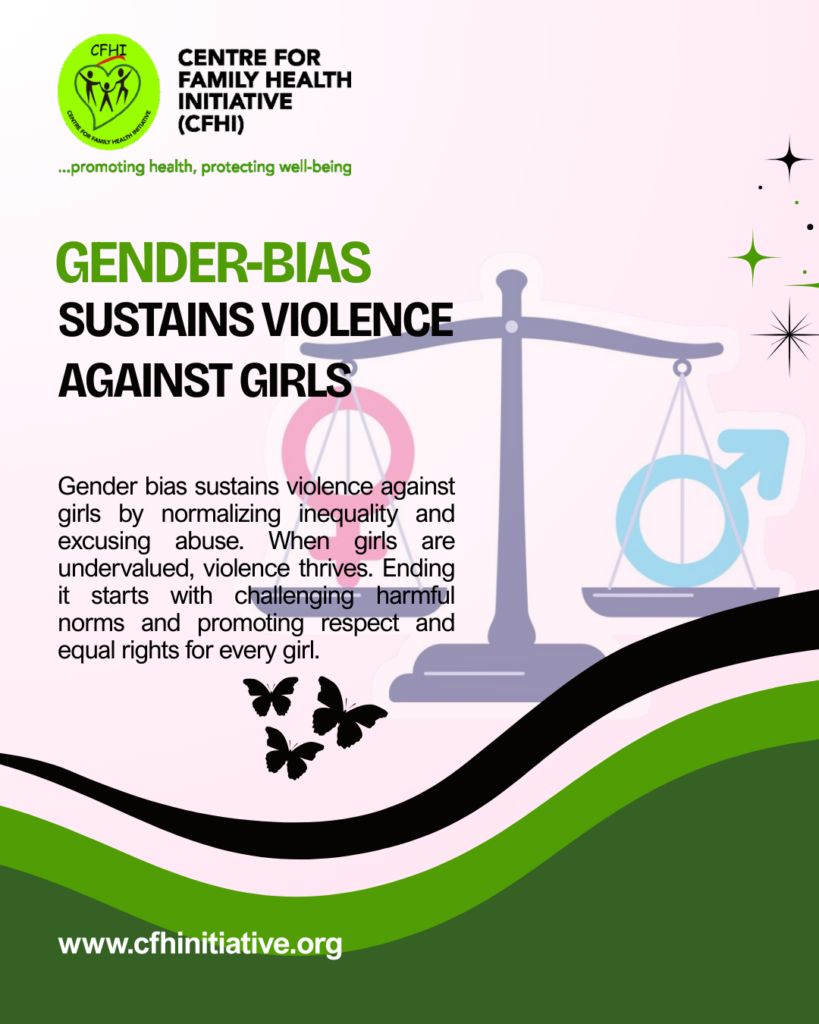
Across the globe, gender bias fuels and sustains violence against girls, shaping social norms that devalue their rights, safety, and dignity. Gender bias refers to the systemic prejudice that privileges one gender over another, embedding harmful beliefs about power, control, and worth. These biases are not abstract they manifest in everyday interactions, institutional policies, cultural practices, and legal frameworks that indirectly condone or fail to protect girls from violence and discrimination. Gender bias is a root cause of many forms of gender-based violence, contributing to a world where nearly 1 in 3 women and girls experience physical or sexual violence in their lifetime, most often from intimate partners or family members. This stark reality reflects deep-seated inequalities and underscores how societal norms around gender perpetuate violence rather than prevent it. (UN Women Knowledge hub)
Gender bias does not only drive overt acts of violence; it also grows through socialization and cultural messaging that position girls as subordinate or less valuable. In many communities, girls are more likely to face early marriage with 1 in 5 women aged 20–24 first married before age 18 a practice rooted in beliefs that girls need male guardianship and are better suited to domestic roles than education or economic participation. These harmful norms create environments where violence against girls is tolerated or overlooked, and where girls themselves may internalize messages that diminish their sense of self-worth and agency. (violenceagainstchildren.un.org)
The consequences of violence sustained by gender bias are severe and far-reaching. Beyond physical injuries, girls and young women who experience violence are at greater risk of anxiety, depression, post-traumatic stress, unintended pregnancy, and sexually transmitted infections. The psychological impact can hinder education, employment, and social participation, trapping survivors in cycles of marginalization. When legal systems, communities, and institutions fail to protect girls or address the bias that underpins violence, they perpetuate impunity and signal that girls’ safety is negotiable rather than a human right. (UN Women Knowledge hub)
Efforts to combat gender-based violence must therefore confront the gender bias that sustains it. This means challenging societal norms that excuse controlling behaviour, silence survivors, or blame victims for the harm inflicted upon them. It requires that governments strengthen legal protections, enforce laws that criminalize domestic and sexual violence, and ensure survivors have access to justice and support services. It also means investing in community education that promotes gender equality, respectful relationships, and non-violent conflict resolution. Addressing gender bias is central to dismantling the conditions that allow violence against girls to persist. (UN Women Knowledge hub)
True change demands collective action from families, teachers, health workers, policymakers, and young people themselves to build cultures that respect girls’ autonomy, voices, and contributions. Eliminating violence against girls is not simply a matter of responding to individual incidents; it is a long-term effort to transform the biases that place girls at risk in the first place. Communities that challenge harmful gender norms and promote equality create safer, healthier, and more just environments for all children and future generations.
Call to action: Governments, civil society, community leaders, educators, and individuals must work together to replace harmful gender stereotypes with norms that respect human rights and dignity. Strengthening legal frameworks, investing in prevention programmes, supporting survivors, and promoting gender-equal education are essential steps toward a future where girls can live free from violence and realize their full potential.
References
- UN Women: Facts and figures: Ending violence against women
https://knowledge.unwomen.org/en/articles/facts-and-figures-ending-violence-against-women-and-girls (UN Women Knowledge hub) - Concern Worldwide: Gender-based violence, explained
https://www.concern.net/news/gender-based-violence-facts (Concern Worldwide)
• UN Special Representative on Violence Against Children: Girls
https://violenceagainstchildren.un.org/content/girls (violenceagainstchildren.un.org