
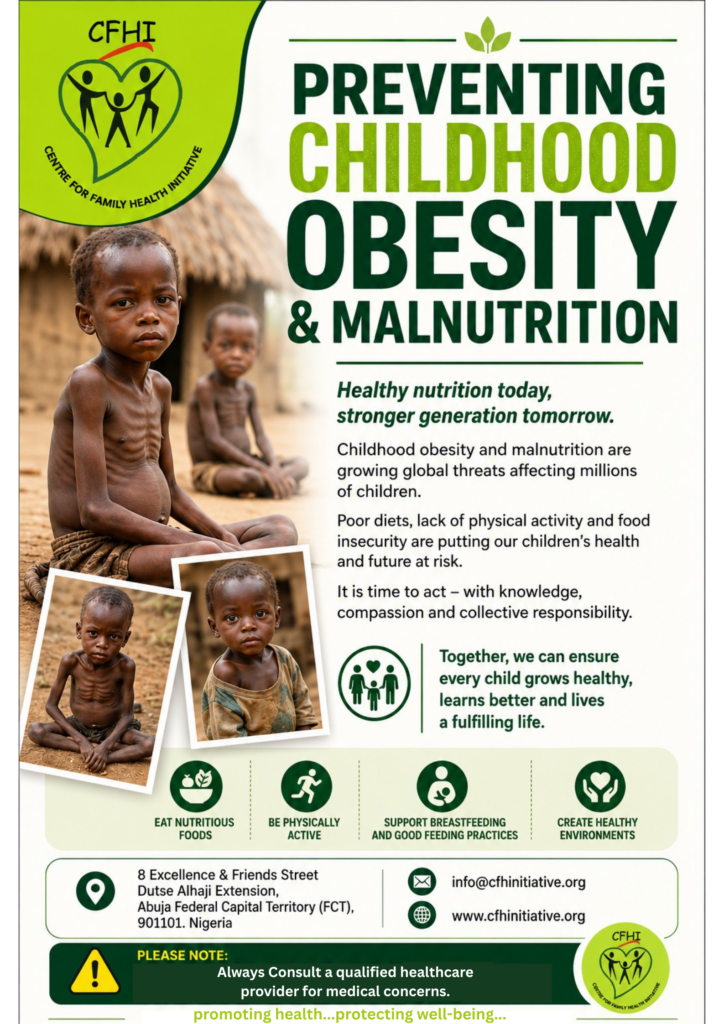
In many homes today, parents worry about whether their children are eating enough. In others, the concern is whether children are eating too much of the wrong foods. What is often overlooked is that these seemingly opposite problems are closely connected. Across the globe, childhood obesity and malnutrition have emerged as two faces of the same nutrition crisis, threatening the health, development, and future productivity of millions of children (1,2). While one child may suffer from stunted growth due to inadequate nutrition, another may struggle with excessive weight caused by diets high in sugar, unhealthy fats, and processed foods. Both children face serious health risks, and both require urgent attention.
The image of malnutrition has long been associated with hunger, thinness, and poverty. However, public health experts now emphasize that malnutrition encompasses more than a lack of food. It includes deficiencies in essential nutrients as well as overweight and obesity (1). This broader understanding has transformed the global conversation on child health. Today, countries around the world are confronting what experts call the “double burden of malnutrition” a situation where undernutrition and obesity coexist within the same communities, households, and sometimes even within the same individual at different stages of life (1,2).
Recent data reveal the magnitude of the challenge. According to the 2025 Joint Child Malnutrition Estimates released by the World Health Organization (WHO), UNICEF, and the World Bank, approximately 150.2 million children under five years of age were stunted in 2024, meaning they were too short for their age due to chronic undernutrition. At the same time, an estimated 35.5 million children in the same age group were overweight, while 42.8 million suffered from wasting, a life-threatening form of acute malnutrition characterized by dangerously low weight for height (3). These figures highlight a troubling reality: despite decades of progress in nutrition interventions, millions of children continue to be denied the opportunity to achieve healthy growth and development (2,3).
Research published in 2025 found that global rates of hypertension among children and adolescents have nearly doubled over the past two decades, with obesity identified as one of the primary drivers of this trend (4,5). Such findings underscore the long-term implications of poor nutrition during childhood.
Yet obesity is only one side of the story. Malnutrition in its traditional form continues to exact a heavy toll, particularly in developing countries. Children who do not receive adequate nutrients during critical periods of growth are more susceptible to infections, impaired cognitive development, reduced school performance, and lower earning potential in adulthood (2,6). The first 1,000 days of life from conception through a child’s second birthday are especially crucial (7). Nutritional deficiencies during this period can cause irreversible damage to physical growth and brain development (7,8). Even when food is available, diets lacking essential vitamins, minerals, and proteins can leave children vulnerable to a range of health complications (1,7).
Maternal nutrition during pregnancy plays a critical role in shaping a child’s future health outcomes (9). Breastfeeding provides optimal nutrition, strengthens immunity, and has been associated with a reduced risk of obesity later in life (10). After six months, children require safe and nutritious complementary foods while continuing to receive breast milk as recommended by health authorities (7,10).
Childhood obesity and malnutrition may present different faces, but they share a common solution: ensuring that all children have access to the nutritious foods, supportive environments, and healthy lifestyles they need to reach their full potential (1,2).
Parents, caregivers, educators, health professionals, policymakers, and community leaders all have a role to play in safeguarding children’s nutritional well-being. Let us commit to promoting healthy eating habits, encouraging physical activity, supporting breastfeeding, improving school nutrition programs, and advocating for policies that make nutritious foods accessible and affordable for all. The fight against childhood obesity and malnutrition is not simply about preventing disease it is about protecting the future of our children and investing in the prosperity of generations to come (1,2,6).
References
- World Health Organization (WHO). Malnutrition Fact Sheet.
https://www.who.int/news-room/fact-sheets/detail/malnutrition - UNICEF. The State of the World’s Children 2024: Child Nutrition Report.
https://www.unicef.org/reports/state-of-worlds-children - World Health Organization (WHO), UNICEF & World Bank Group. Levels and Trends in Child Malnutrition: Key Findings of the 2025 Edition.
https://www.who.int/publications/i/item/9789240112308 - The Lancet Child & Adolescent Health. Global Trends in Hypertension Among Children and Adolescents (2025).
https://www.thelancet.com/journals/lanchi - World Obesity Federation. World Obesity Atlas 2024.
https://www.worldobesity.org/resources/resource-library/world-obesity-atlas-2024 - World Bank. Investing in Nutrition: The Foundation of Human Capital.
https://www.worldbank.org/en/topic/nutrition - World Health Organization (WHO). Infant and Young Child Feeding Fact Sheet.
https://www.who.int/news-room/fact-sheets/detail/infant-and-young-child-feeding - The Lancet. Maternal and Child Nutrition Series.
https://www.thelancet.com/series/maternal-and-child-nutrition - World Health Organization (WHO). WHO Recommendations on Maternal Nutrition.
https://www.who.int/health-topics/maternal-health - World Health Organization (WHO). Breastfeeding Fact Sheet.
https://www.who.int/health-topics/breastfeeding