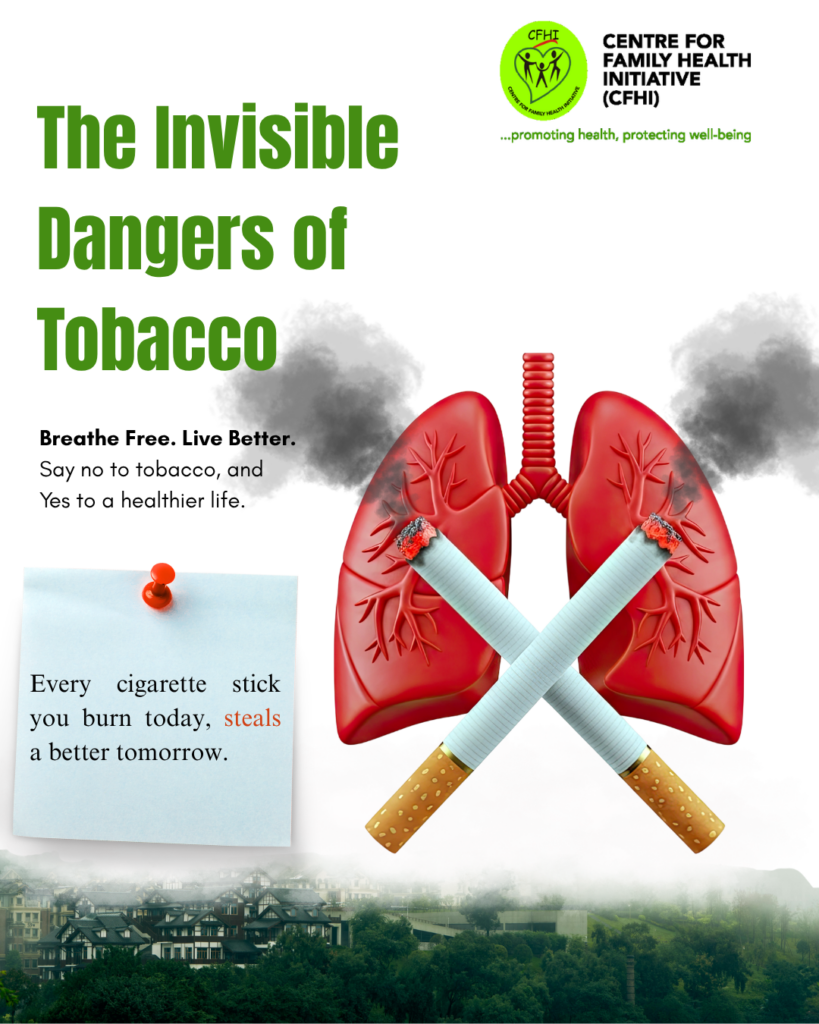
Tobacco use remains one of the greatest yet preventable public health threats globally. While many people associate tobacco only with smoking, its harmful effects extend beyond the smoker, affecting families, workplaces, schools, and entire communities through second-hand smoke exposure. As the world marks World, No Tobacco Day 31st May, it is important to raise awareness about the hidden dangers of tobacco and why communities must take collective action to protect health.
According to the World Health Organization (WHO), tobacco kills more than seven million people annually, including approximately 1.6 million non-smokers who die from exposure to second-hand smoke [1]. Research further shows that tobacco kills up to half of its users who do not quit, making it one of the leading causes of preventable disease and death globally. Around 80% of the world’s 1.3 billion tobacco users live in low- and middle-income countries, where healthcare systems often struggle to manage the growing burden of tobacco-related diseases.
Tobacco contains thousands of harmful chemicals that damage nearly every organ in the body. Evidence from the Centers for Disease Control and Prevention (CDC) shows that tobacco smoke contains more than 7,000 chemicals, hundreds of which are toxic and about 70 are known to cause cancer [2]. This means smoking is not only harmful to the lungs; it also damages the heart, brain, blood vessels, reproductive system, and immune system.
One of the invisible dangers of tobacco is second-hand smoke, the smoke inhaled by people who do not smoke but are exposed to smoke from cigarettes, cigars, or other tobacco products. Many people believe smoking only harms the person holding the cigarette, but science shows otherwise. There is no safe level of exposure to second-hand smoke, and even brief exposure can cause immediate harm [3]. Children, pregnant women, older adults, and people with underlying illnesses are especially vulnerable. Exposure in homes, vehicles, markets, and workplaces can lead to serious health consequences.
Health hazards linked to tobacco use are severe and life-threatening. Tobacco significantly increases the risk of lung cancer, throat and mouth cancer, chronic respiratory illnesses, heart disease, stroke, and high blood pressure. Studies indicate that smoking contributes to approximately 85% of lung cancer deaths globally [4]. Smokers are also more likely to experience weakened immunity, fertility problems, pregnancy complications, and delayed wound healing. Tobacco exposure increases risks for chronic illnesses that place enormous pressure on families and healthcare systems.
The impact of second-hand smoke on non-smokers is equally alarming. Research from the CDC shows that people who do not smoke but regularly breathe second-hand smoke at home or work have a 25–30% higher risk of developing heart disease and a 20–30% increased risk of stroke [5]. Among children, second-hand smoke exposure is linked to respiratory infections, ear infections, worsening asthma, poor lung development, and increased illness frequency [6]. Since 1964, an estimated 2.5 million people who did not smoke have died due to health conditions caused by second-hand smoke exposure.
Beyond health, tobacco has social and economic consequences. In many households, money spent on tobacco products competes with essential needs such as food, school fees, medicines, and shelter. WHO reports that tobacco addiction can contribute to poverty by diverting limited family resources away from necessities [1]. Communities also suffer productivity losses due to illness, disability, and premature deaths caused by tobacco-related diseases.
Public health experts recommend stronger tobacco control measures to reduce these risks. WHO promotes strategies such as smoke-free public spaces, stronger public education, restrictions on tobacco advertising, support for quitting tobacco, and increased taxation on tobacco products [7]. Evidence suggests that increasing tobacco prices reduces tobacco use, especially among young people and low-income populations. Health education and early prevention are equally important in discouraging tobacco initiation among adolescents and young adults.
Communities and families also have a role to play. Parents and caregivers should avoid smoking around children, establish smoke-free homes, and openly discuss the dangers of tobacco use. Schools, faith-based organizations, youth groups, and community leaders can support awareness campaigns that encourage healthier lifestyles and reduce stigma around seeking help to quit tobacco.
Tobacco-related diseases are largely preventable. Protecting ourselves and others begins with informed choices. Saying no to tobacco, supporting smoke-free environments, and encouraging those struggling with tobacco dependence to seek help can save lives. As we reflect on the dangers of tobacco this May, let us remember that healthy communities begin with healthy habits, informed decisions, and collective responsibility.
References
- https://www.who.int/news-room/fact-sheets/detail/tobacco
- https://www.cdc.gov/tobacco/secondhand-smoke/index.html
- https://www.cdc.gov/tobacco/secondhand-smoke/health.html
- https://www.cdc.gov/tobacco/secondhand-smoke/home.html
- https://www.cdc.gov/niosh/reproductive-health/prevention/secondhand-smoke.html
- https://www.who.int/health-topics/tobacco