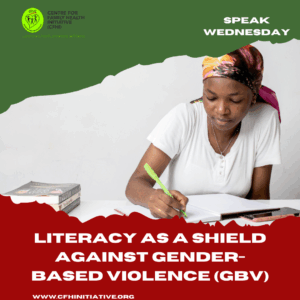
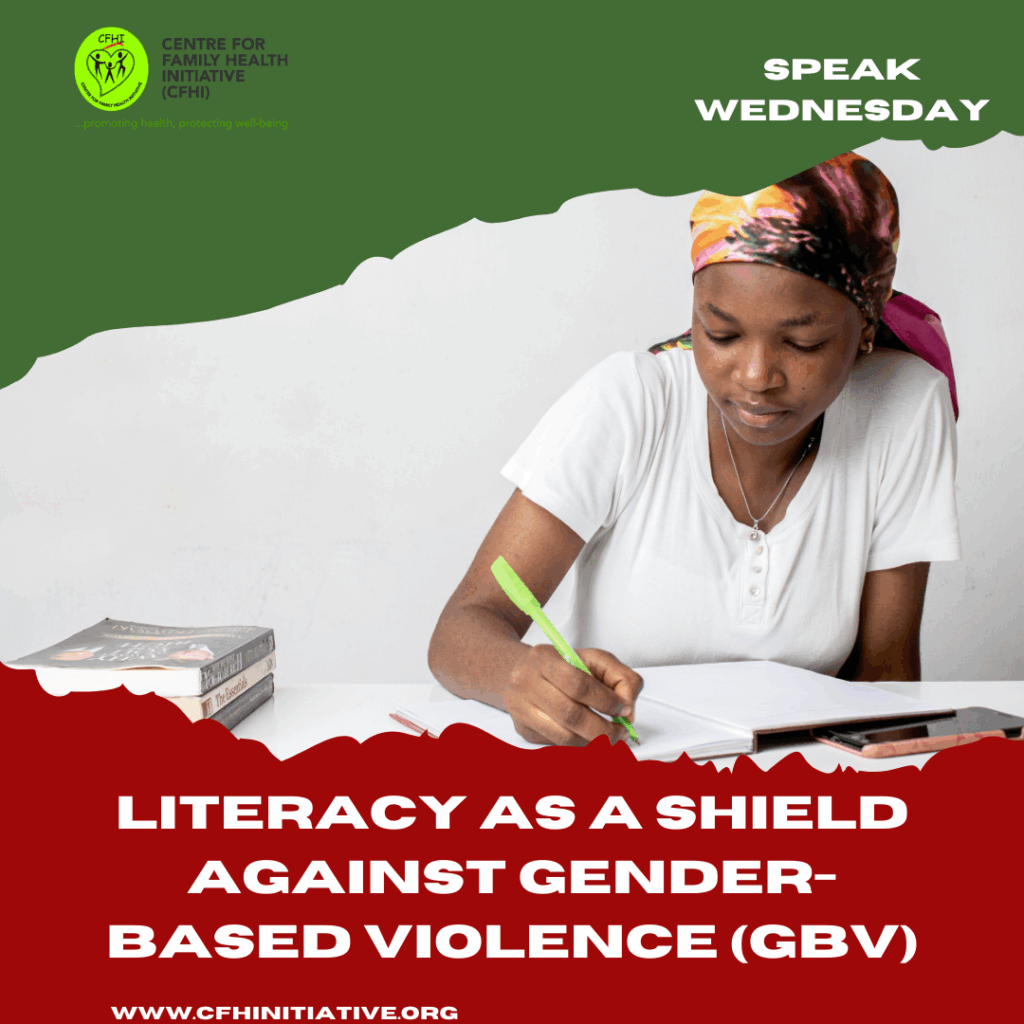
In a crowded community classroom in Gwagwalada, Aisha sat hunched over her exercise book. She was thirty-five, a mother of four, and had never finished primary school. The day she finally read a passage out loud, she broke down in tears. For the first time, she could read a hospital form without begging for help. She could text her sister to say, “I am not safe.” That is the quiet revolution of literacy.
In Nigeria, the literacy gap tells its own story of urgency and survival. Only about 52 percent of Nigerian women aged fifteen and above are literate, compared to 70 percent of men. Adult literacy enrolment for women still hovers under 50 percent. At the same time, one in three Nigerian women has experienced physical violence since age 15, most often by intimate partners.
These statistics are not unrelated. Literacy is a shield. A literate woman can read her rights, understand legal processes, and demand justice. She is better able to secure paid work, making her less dependent on an abuser. She can read health brochures, helpline numbers, and contracts. She can mobilize her peers. Without literacy, too many Nigerian women remain silent targets, unable to navigate systems that were already stacked against them.
Research consistently shows that literacy reduces women’s vulnerability to violence. In Nigeria, scholars confirm literacy is a “preventative force” against gender-based violence This is not just theory, it is lived reality in rural villages, IDP camps, and bustling cities.
What Must Change
The global fight against GBV cannot succeed if literacy is treated as an afterthought. Governments and international partners must deliberately embed literacy into GBV prevention and response frameworks. That means funding second-chance learning for women who were forced out of school. It means designing shelters, clinics, and police stations to provide information in simple, accessible formats. It means collecting and publishing disaggregated data that shows how literacy gaps map onto vulnerability to violence.
Equally important, literacy must be framed as a cultural and social good, not just an individual skill. Traditional leaders, faith communities, and grassroots organizers across Nigeria and beyond can reshape norms so that women’s literacy is understood as dignity itself.
A Call to Action
This agenda is at the heart of Sustainable Development Goal 4 (Quality Education) and Goal 5 (Gender Equality). But it also strengthens progress on Goal 16 (Peace, Justice, and Strong Institutions) because literate women are better positioned to engage with governance and justice systems. Literacy is not a side project; it is a front-line intervention in the fight against gender inequality and violence.
When women can read, they resist silence, dependency, and abuse. They resist systems designed to keep them small. They resist by teaching their daughters to read and by demanding that their communities do better.
The stories may begin in Gwagwalada, but the message is universal: when she can read, she can resist. Literacy is liberation. Literacy is justice.
Speak Wednesday is an initiative of CFHI to address issues around gender-based violence and gender bias
#SpeakWednesday #WhenSheReadsSheResists #LiteracyIsJustice #EndGBV #EducationForHer #CFHI
References
UNESCO: Female literacy rate in Nigeria (unesco.org)
NBS: Literacy statistics for women and men in Nigeria (nigerianstat.gov.ng)
UNFPA: GBV prevalence in Nigeria (nigeria.unfpa.org)
PMC: Literacy and domestic violence reduction (pmc.ncbi.nlm.nih.gov)
ResearchGate: Literacy as prevention of GBV in Nigeria (researchgate.net)