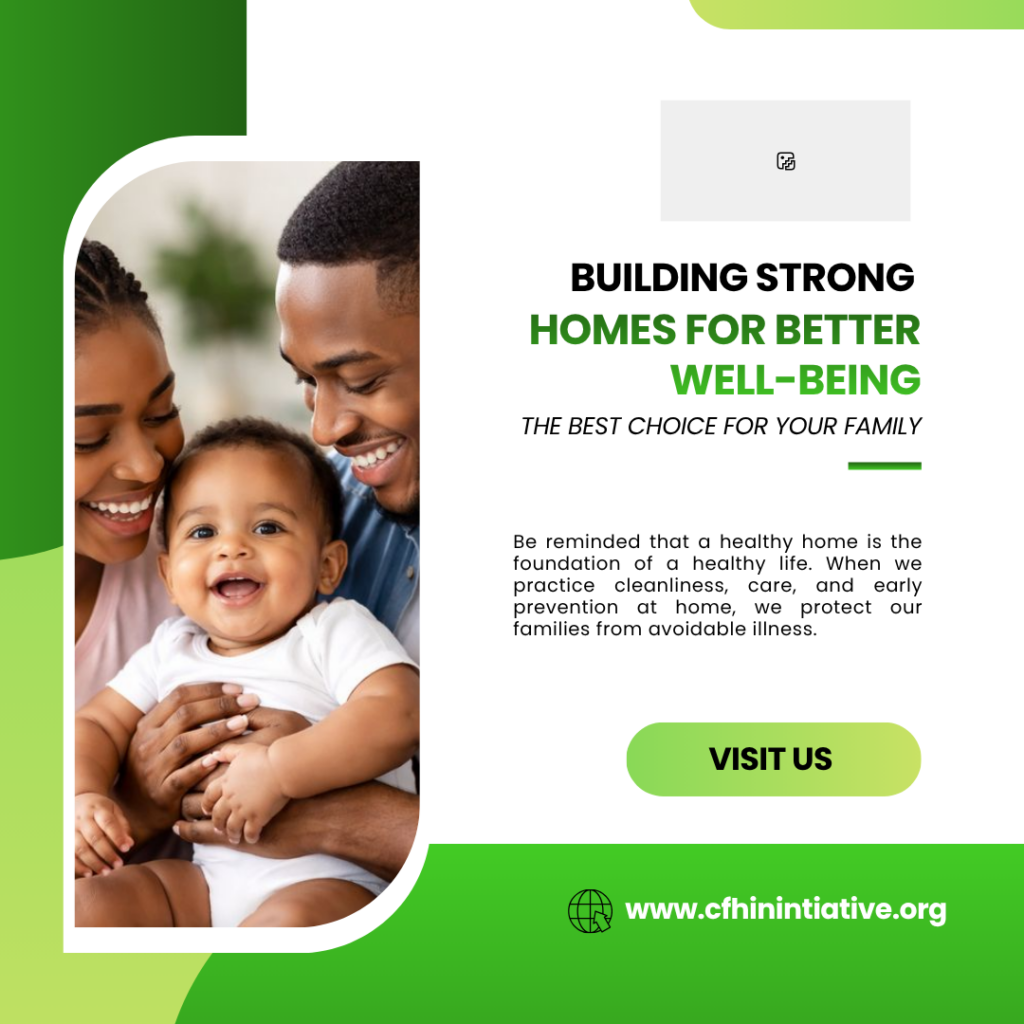
Good health does not begin in the hospital it begins at home. While healthcare facilities remain essential for treatment, the home is the first and most effective line of defense against illness. A well-informed family that practices prevention, safety, and early detection creates a protective environment where diseases are less likely to thrive. Research shows that many common illnesses can be prevented through simple household practices, making the home a critical space for safeguarding health and well-being [1].
Creating a healthy home starts with basic hygiene and sanitation practices. Proper handwashing, safe disposal of waste, access to clean water, and maintaining a clean environment significantly reduce the spread of infections. According to global health evidence, about 88% of diarrhoeal diseases are linked to unsafe water, sanitation, and hygiene practices [1]. These simple but consistent practices help families prevent diseases before they begin and create a healthier living environment for everyone.
Early prevention and detection are equally important in building strong homes. Families that are attentive to early symptoms, seek timely medical care, and participate in routine health checks are more likely to prevent complications. Evidence from community health interventions in Nigeria shows that poor health-seeking behaviour and lack of early detection contribute significantly to disease burden, while community engagement improves outcomes [2]. This reinforces the importance of making prevention a daily habit within households.
The Centre for Family Health Initiative (CFHI) has, over the years, played a critical role in strengthening vulnerable families and communities through prevention-focused interventions with support from our funders and community stakeholders. [3].
Ultimately, building strong homes is essential for creating healthier communities. When families take responsibility for prevention through hygiene, proper nutrition, safety practices, and early healthcare seeking they reduce the spread of disease and improve overall well-being. The impact goes beyond individual households, contributing to stronger, healthier, and more resilient communities.
The call to action is clear let every home become a center of prevention, protection, and care. By adopting simple health practices and supporting community-based interventions, we can collectively build a future where illness is reduced, and well-being thrives.
References
- World Health Organization – Hygiene and health
https://www.emro.who.int/child-health/community-family/key-family-practices-on-child-health-care/Hygiene.html - Community health systems in Nigeria – Read study on community health systems
- CFHI Malaria & Community Health Intervention – Read CFHI malaria outreach report
- CFHI Programs Overview – https://www.cfhinitiative.org/health-is-more-than-treating-illness/