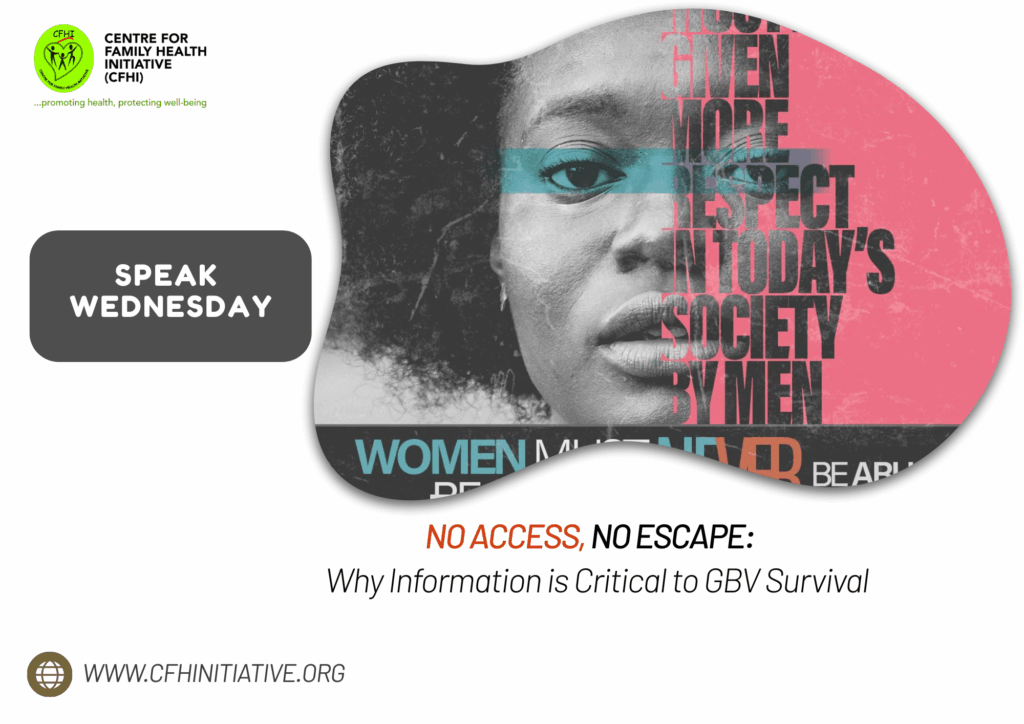
SPEAK WEDNESDAY
Democracy Fails Women When It Ignores Gender Violence
Democracy is more than ballots, parliaments, and courtrooms it is the everyday reality that allows every person to live with dignity and safety. When a democratic system pretends that voting and institutions alone guarantee equality while turning a blind eye to the daily threat of gender-based violence (GBV), it is failing a fundamental promise: protection for all citizens. For millions of women, the “freedoms” democracy claims to protect are hollow if public systems, laws, and practices do not prevent, punish, and deter gendered violence.
The hard numbers refuse to let us look away. Globally, roughly one in three women has experienced physical and/or sexual violence by an intimate partner or sexual violence by a non-partner in her lifetime a staggering indicator that violence is not an exception but a systemic condition that persists across democratic and non-democratic states alike. (World Health Organization)
Nigeria’s statistics reflect this painful truth at home. National data and large-scale studies point to around a third of women experiencing intimate partner violence (IPV), with some surveys showing 31–35% having experienced some form of IPV in recent measures. These are not abstract percentages they translate to millions of women whose bodily autonomy, mental health, economic participation and civic engagement are continuously undermined. (DHS Program)
Worse, the trendlines in some places show an alarming rise in certain forms of violence over time. Comparative analyses of regional data (for example, conflict-affected northeast Nigeria) demonstrate increases in emotional and sexual IPV between survey rounds a decade apart; a signal that crises, weak accountability, and institutional neglect worsen GBV even within states that hold elections. When democratic systems fail to protect women in times of stress, the social contract fractures. (ResearchGate)
There are three recurring failures because democracy fail in practice:
- Visibility without remedy. Democracies can record crimes and produce statistics, but if police, health systems and courts do not follow through, documentation becomes an exercise in moral hygiene rather than justice. Survivors who report violence often encounter blame, delays, unsafe processes, or outright dismissal.
- Law without implementation. Nigeria has laws criminalizing domestic and sexual violence, but enforcement is uneven. Where patriarchy is embedded in institutions, legal protections are toothless. Laws on paper become meaningless when budgets, training, and survivor-centered services are absent.
- Public indifference normalized as “private matters.” When GBV is repeatedly framed as a private or cultural problem, democratic debate excludes the voices of survivors and diminishes the urgency required for structural change.
These failures matter because gender violence is not merely a private tragedy it is a public, democratic harm. GBV shrinks women’s political voice (fear limits public participation), undermines economic independence (injury, trauma, time away from work), and burdens health systems. Democracies that do not treat GBV as a governance and human-rights priority are sustaining inequality disguised as civility.
It’s not enough to pass new laws; democracies must transform institutions and social norms. That means guaranteeing emergency health and legal services; training and holding police and judiciary accountable; funding safe shelters; integrating GBV prevention in schools and workplaces; and centering survivors in policy design. It also means political leaders must stop treating GBV as a “women’s issue” and recognize it as a democracy and development crisis.
At the Centre for Family Health Initiative (CFHI), we approach this challenge on three complementary fronts: prevention, survivor support, and advocacy. On prevention, we run community dialogues and gender norms activities that challenge the attitudes that normalize violence and silence survivors. For survivors, CFHI facilitates safe referrals and trains Community Health Workers to provide trauma-informed first response and linkages to legal and psychosocial support. On advocacy, we engage local leaders and stakeholders to press for funded, accountable GBV services and to include GBV metrics in local governance performance reviews.
These actions are small in the face of a systemic problem, but democracy is built from local actions. When community-level institutions protect women’s rights and when civic actors demand accountability, national democracy is strengthened. CFHI’s work shows that when communities are empowered to respond and when survivors are listened to, trust grows, and that trust is the living tissue of democratic life.
A call to action
Democracy will keep failing women until citizens and leaders act as if their safety is a public good. If you read this and care about democracy, do three things today:
- Speak up publicly: challenge the narrative that GBV is a “private” problem.
• Support survivors and local organizations: fund and volunteer with groups offering direct services.
• Hold institutions to account: demand transparent budgets for GBV response and regular reporting on prosecutions, service availability, and survivor outcomes.
Democracy isn’t earned through election cycles alone it is preserved by institutions and communities that protect the most vulnerable. Ignoring gender violence is not neutrality; it is complicity. Let us insist that our democracy lives up to its promise not only in rhetoric but in the daily safety and dignity of every woman.
Speak Wednesday is an initiative of CFHI to address issues around gender-base violence and gender-bias.