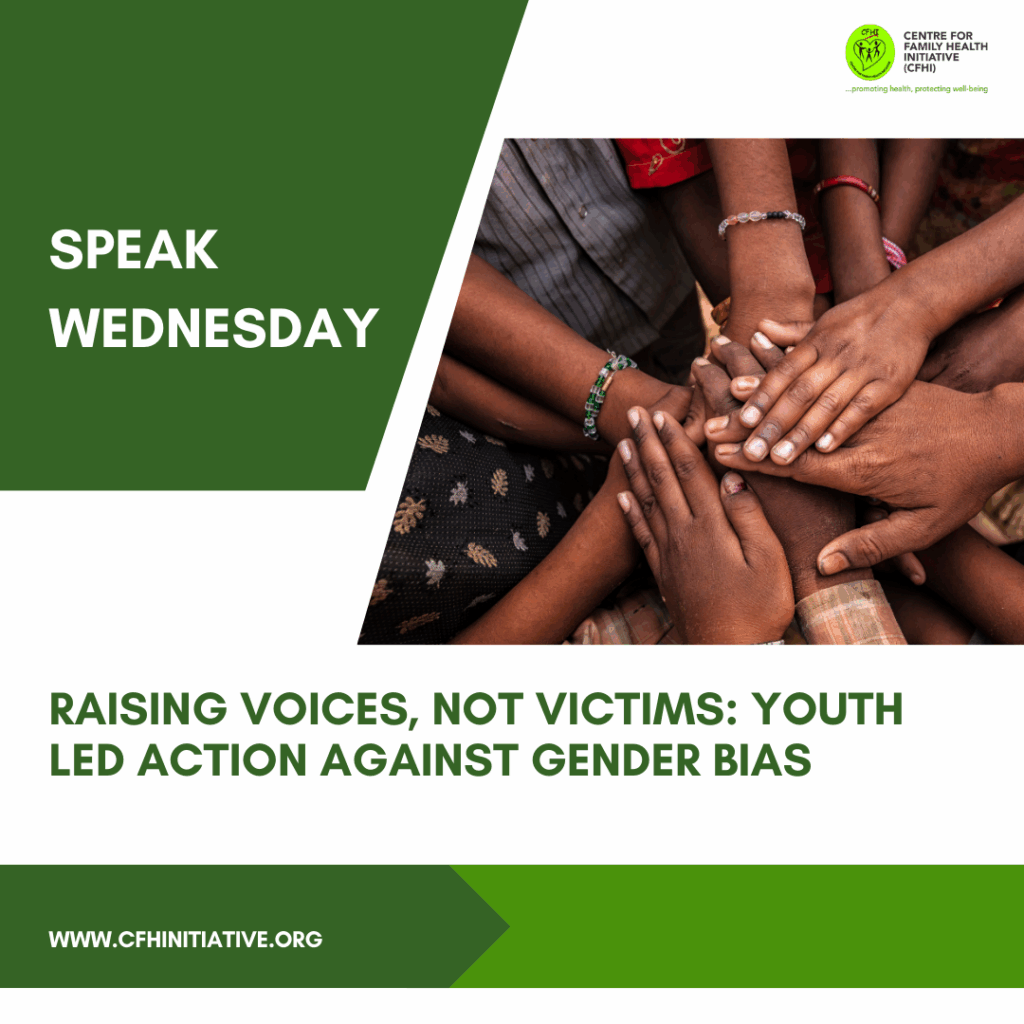
SPEAK WEDNESDAY ON RAISING VOICES, NOT VICTIMS: YOUTH LED ACTION AGAINST GENDER BIAS

Gender bias is not an abstract issue. It is lived. It is spoken. It is enforced in homes, schools, workplaces, and policies. It silences girls. It restricts women. It excuses harm. And too often, it goes unchallenged.
But young people are challenging it. Boldly. Locally. Collectively.
Across communities, youth are stepping forward to lead work that others have delayed for too long. They are not waiting for perfect systems. They are building new ones. With peer education, advocacy, safe spaces, campaigns, and community engagement, they are confronting bias at its roots.

What Does Youth Led Action Look Like?
It looks like CFHI’s student-led D.R.E.A.M.S Clubs in JSS Jiwa, Kabusa, and Gosa, where adolescent girls learn about sexual and reproductive health, build confidence, and develop soft skills. Led by trained peer mentors, these clubs use drama, storytelling, and discussion to unpack gender stereotypes and empower girls to speak up, stay in school, and make informed choices about their futures.
It looks like a team of university students creating anonymous reporting tools for survivors of harassment on campus, tools that led their school to set up a proper response mechanism for the first time.
It looks like a grassroots initiative where young volunteers go door to door talking to families about early child marriage, using personal stories and translated flyers to challenge harmful norms in their own communities.
It looks like youth panels demanding accountability from state officials, calling out the lack of funding for gender-based violence shelters, and proposing policy alternatives based on what survivors need.
It looks like menstrual hygiene outreach in Abuja schools, where CFHI leads education sessions, distributes reusable sanitary pads, and breaks stigma, empowering girls to manage their health with dignity and confidence.
These are not theoretical solutions. They are working solutions. Led by young people. Adapted to their context. And rooted in both lived experience and collective action.

Why It Matters
Youth are not waiting for permission. They are stepping in where systems have failed, educating where schools stay silent, advocating where laws fall short, and creating safe spaces where none existed.
This is not charity. It is justice.
At CFHI, we believe youth-led action deserves more than applause. It demands funding, policy backing, and long-term investment.
Raising voices means listening. It means resourcing. It means seeing young people not as victims of gender bias but as frontline leaders in the fight to end it.

Speak Wednesday is an initiative of CFHI to address issues around gender-based violence and gender bias.

SPEAK WEDNESDAY ON RAISING VOICES, NOT VICTIMS: YOUTH LED ACTION AGAINST GENDER BIAS Read More »

MONDAY HEALTH BURST ON BREASTFEEDING AND MATERNAL MENTAL HEALTH: NURTURING BOTH MOTHER AND CHILD

Breastfeeding is often described as the most natural way to feed a baby, providing essential nutrients and antibodies that protect infants from illness. Beyond its physical health benefits, breastfeeding is an emotional process that can significantly influence a mother’s mental well-being. However, while breastfeeding can be a source of comfort and connection, it can also present emotional challenges that affect a mother’s psychological health.

The Emotional Connection

Breastfeeding stimulates the release of hormones like oxytocin and prolactin, which promote relaxation, bonding, and a sense of fulfillment. Many mothers describe feeding time as a period of closeness that strengthens their connection with their babies. This hormonal and emotional bond can contribute to reduced stress levels and enhanced maternal confidence.

Challenges and Emotional Strain

Not every breastfeeding journey is smooth. Difficulties such as poor latching, low milk supply, engorgement, or mastitis can cause physical discomfort and emotional distress. Some mothers may feel guilt, shame, or inadequacy if they cannot breastfeed as planned. These feelings can be amplified by societal expectations, cultural pressures, and conflicting advice from healthcare providers or family members.

For mothers already at risk of postpartum depression or anxiety, breastfeeding difficulties can intensify symptoms. Lack of sleep, hormonal changes, and the overwhelming demands of caring for a newborn can create a perfect storm for mental health struggles.

Postpartum Depression and Breastfeeding

The relationship between breastfeeding and postpartum depression is complex. For some women, successful breastfeeding is linked to a lower risk of depression due to increased oxytocin and emotional satisfaction. For others, persistent breastfeeding challenges can become a source of stress, increasing feelings of hopelessness and isolation. Recognizing these different experiences is essential to providing the right kind of support.

The Role of Support Systems

Maternal mental health during breastfeeding is best protected when mothers have strong support networks. Partners can share responsibilities such as burping, diaper changes, and household tasks, allowing the mother to rest. Family and friends can offer encouragement rather than criticism, while healthcare providers can provide evidence-based guidance tailored to the mother’s unique needs.

Peer support groups  both in-person and online also give mothers a safe space to share experiences, learn practical tips, and feel understood.

Empowering Informed Choices

One of the most important steps in protecting maternal mental health is removing the pressure to breastfeed at all costs. While exclusive breastfeeding is highly recommended for the first six months, mothers who cannot or choose not to breastfeed should be supported without judgment. The ultimate goal is a healthy, thriving mother and baby and that can be achieved through different feeding approaches.

Breastfeeding is a journey that intertwines physical nourishment with emotional well-being. By acknowledging the mental health dimension of breastfeeding, society can move away from guilt-driven narratives and toward a culture of understanding and support. When a mother’s mental health is prioritized, she is better equipped to care for herself and her child fostering a healthier start to life for both.

Monday Health Burst is an initiative of Centre for Family Health Initiative (CFHI) to tackle issues of basic health concerns. Join us every Monday for more health-related articles on all our social media platforms.

References

  1. Weaning and Maternal Mental Health
  2. 5 common breastfeeding problems | UNICEF Parenting

MONDAY HEALTH BURST ON BREASTFEEDING AND MATERNAL MENTAL HEALTH: NURTURING BOTH MOTHER AND CHILD Read More »

SPEAK WEDNESDAY ON FEEDING THROUGH FEAR: HOW GENDER-BASED VIOLENCE UNDERMINES INFANT HEALTH

“You can’t nourish from an empty cup, and you definitely can’t breastfeed through trauma.”
The right to nourishment is a fundamental human right. Yet, for millions of infants in Nigeria and around the world, that right is compromised from birth, not by poverty alone, but by violence inflicted on the very individuals tasked with nurturing them. As the world marks World Breastfeeding Week, it is imperative to confront a rarely addressed but devastating intersection: the relationship between gender-based violence (GBV) and infant health, particularly breastfeeding outcomes.

Breastfeeding is globally recognized as a cornerstone of infant survival and development. According to the World Health Organization (WHO), optimal breastfeeding could prevent over 823,000 child deaths annually across the globe. However, in households where women face psychological, physical, or sexual violence, the act of breastfeeding becomes compromised, interrupted, or entirely abandoned, placing infants at heightened risk of disease, malnutrition, and death.

Understanding Gender-Based Violence in Nigeria
In Nigeria, gender-based violence is a pervasive issue. According to the National Demographic and Health Survey (NDHS), 30% of Nigerian women aged 15–49 have experienced physical violence since age 15, and 9% experienced sexual violence. The figures are even higher in certain rural communities and internally displaced persons (IDP) camps, where systemic poverty, displacement, and insecurity magnify the risks.

This violence is not limited to isolated acts of cruelty. It is embedded in socio-cultural systems that normalize women’s suffering and silence, even during vulnerable periods such as pregnancy and postpartum. These environments profoundly impact maternal mental health and consequently, infant care practices.
How Gender-Based Violence Impacts Breastfeeding
Numerous peer-reviewed studies affirm that women who experience GBV, especially during or immediately after pregnancy, are significantly less likely to initiate or continue breastfeeding.
1. Physiological Disruption of Lactation
The stress caused by violence increases cortisol levels, which can inhibit the production of oxytocin, a hormone essential for milk let-down. In essence, a mother’s body under chronic threat cannot perform its nurturing functions efficiently.
2. Mental Health Consequences
Women exposed to intimate partner violence (IPV) are at increased risk of postpartum depression, anxiety, and post-traumatic stress disorder (PTSD). These conditions are linked to early cessation of exclusive breastfeeding.
3. Limited Access to Healthcare
GBV survivors are often restricted in their mobility and decision-making, making them less likely to access maternal health services. This further reduces opportunities for lactation counseling or timely postnatal care, which are vital for breastfeeding success.
4. Physical Trauma
Injuries to the breasts or upper body from physical abuse can make breastfeeding painful or physically impossible. Moreover, repeated violence erodes a mother’s sense of bodily autonomy, which may deter her from engaging in breastfeeding altogether.
Impact on Infant Health
When mothers are unable to breastfeed exclusively for the first six months, a practice strongly endorsed by WHO and UNICEF, the consequences for infants are profound:
• Increased risk of diarrhea, respiratory infections, and undernutrition.
• Higher likelihood of stunted growth and developmental delays.
• Elevated infant mortality, particularly in settings with limited access to safe alternatives.

In Nigeria, where 44% of children under five are stunted, the added burden of disrupted breastfeeding due to GBV further deepens a national child health crisis.
Sociocultural and Structural Drivers

In many Nigerian communities, cultural norms that promote male dominance and female submissiveness inhibit women’s ability to seek help or resist abuse. Violence is often dismissed as “discipline” or a private family affair. These norms are reinforced by:
• Patriarchal interpretations of religion
• Bride price systems that commodify women
• The stigmatization of divorced or single mothers
• Poor legal enforcement of existing protective laws, such as the Violence Against Persons (Prohibition) Act (VAPP Act) of 2015, which remains unadopted in several Nigerian states.
As a result, maternal silence becomes survival, even when that silence compromises infant health.
Recommendations: Multisectoral Action is Imperative
Addressing the impact of GBV on breastfeeding and infant health requires coordinated efforts across health, legal, and community systems. The following actions are recommended:

1. Integrate GBV Screening into Maternal and Child Health Services
Health workers at antenatal, delivery, and postnatal care points must be trained to screen for and respond to GBV sensitively and confidentially.
2. Strengthen Legal Protection and Enforcement
Full domestication and enforcement of the VAPP Act in all 36 states is non-negotiable. Legal systems must prioritize survivor protection, not the preservation of abusive family structures.
3. Community Education and Norms Change
Religious and traditional leaders must be engaged as advocates for safe motherhood. Community dialogues can play a key role in dismantling harmful gender norms.
4. Expand Access to Psychosocial Support
Psychological care, trauma counseling, and peer-support networks for survivors should be embedded within maternal health programs.
5. Data Collection and Research
More localized data is needed to map the intersection of GBV and breastfeeding outcomes in Nigeria. Without robust data, interventions risk being misaligned or underfunded.

Conclusion
Breastfeeding is not only a health practice; it is an act of nurturing, safety, and trust. When a mother is forced to feed through fear, we undermine not just her health but the health of the next generation. Ending GBV is not a side issue in public health; it is central to child survival, gender equity, and national development.
This week, as we celebrate World Breastfeeding Week, we must reaffirm that the ability of Nigerian women to breastfeed in safety and dignity is a national imperative. Silence and cultural complicity can no longer be tolerated. The future of our children, indeed, of our nation, depends on it.
Speak Wednesday is an initiative of CFHI to address issues around gender-based violence and gender bias.
#WorldBreastfeedingWeek #EndGBV #InfantHealth #MaternalHealth #BreastfeedingMatters #SafeMotherhood #SupportSurvivors #NutritionJustice #HealthEquity #VAPPAct #WomensRights
References
• World Health Organization (2017). Protecting, promoting and supporting breastfeeding in facilities providing maternity and newborn services. https://www.who.int
• National Population Commission (NPC) [Nigeria] and ICF. (2019). Nigeria Demographic and Health Survey 2018. Abuja, Nigeria, and Rockville, Maryland, USA.
• UNICEF (2019). Programming Guidance: Infant and Young Child Feeding in Emergencies. https://www.unicef.org
• Kendall-Tackett, K. A. (2007). Violence against women and the perinatal period: The impact of lifetime violence and abuse on pregnancy, birth, and breastfeeding. Trauma, Violence, & Abuse, 8(3), 344–353.
• Silverman, J.G., Decker, M.R., Reed, E., & Raj, A. (2006). Intimate partner violence around the time of pregnancy: Association with breastfeeding behavior. Journal of Women’s Health, 15(8), 934–940.
• Kumar, M., Huang, K., Othman, S., Rahman, M., & Lee, S. (2017). Effect of intimate partner violence on breastfeeding behavior: A systematic review. BMJ Open, 7:e014439.
• UNHCR (2021). Nigeria Factsheet – Gender-Based Violence. https://www.unhcr.org/ng
• World Health Organization (2021). Infant and Young Child Feeding. https://www.who.int/news-room/fact-sheets/detail/infant-and-young-child-feeding

SPEAK WEDNESDAY ON FEEDING THROUGH FEAR: HOW GENDER-BASED VIOLENCE UNDERMINES INFANT HEALTH Read More »

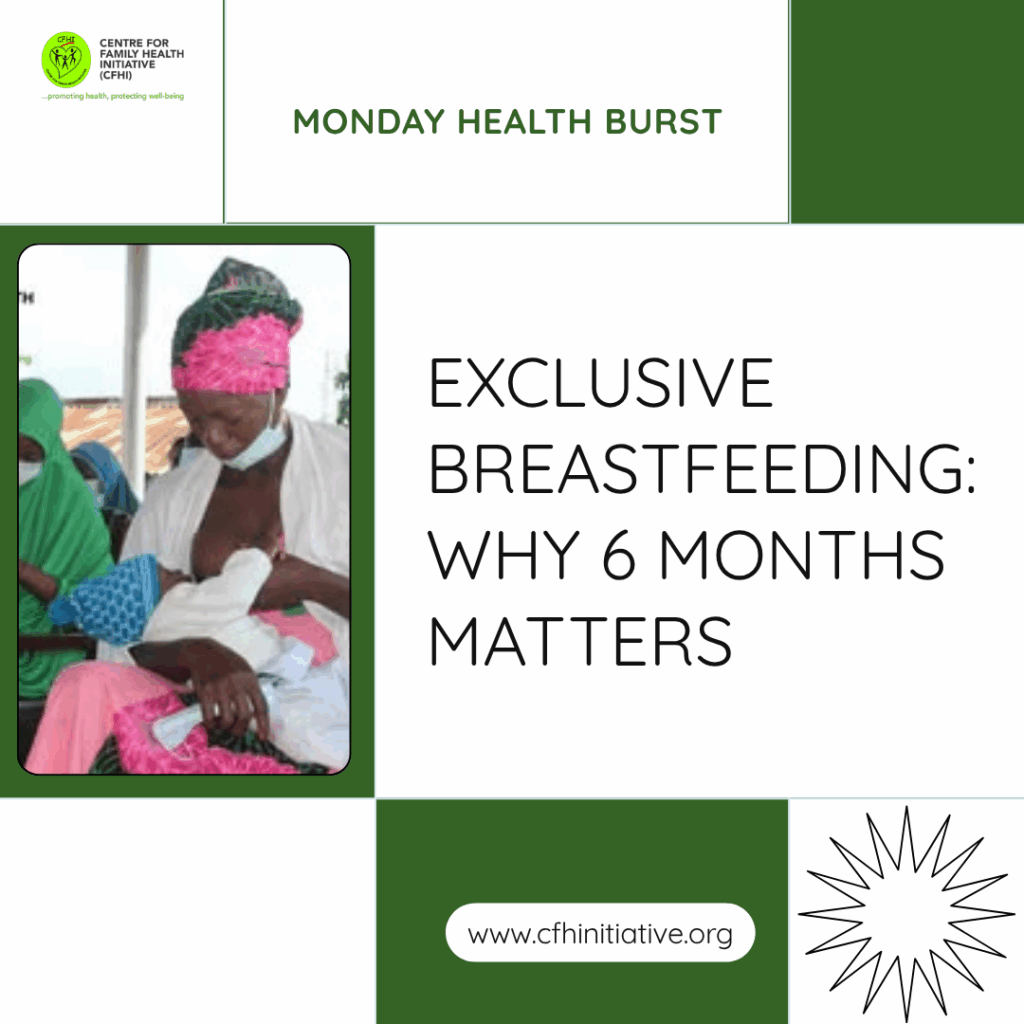
MONDAY HEALTH BURST ON EXCLUSIVE BREASTFEEDING: WHY 6 MONTHS MATTERS.

Breastfeeding is more than just a feeding method it’s a powerful tool for nurturing healthy babies and building stronger communities. According to the World Health Organization (WHO) and UNICEF, “infants should be exclusively breastfed for the first six months of life to achieve optimal growth, development and health” (WHO & UNICEF, 2003)1. But why is this six-month period so crucial?

What is Exclusive Breastfeeding?

Exclusive breastfeeding means giving a baby only breast milk, no water,2formula, or solid food for the first six months of life. The only exceptions are oral rehydration salts (ORS), drops, and syrups (vitamins, minerals, or medicines) when medically necessary.

Why the First 6 Months?

  1. Optimal Nutrition
    Breast milk contains the perfect mix of nutrients, antibodies, and enzymes tailored to meet a baby’s developmental needs. It changes in composition over time to keep up with the baby’s growing body. (UNICEF). 2
  2. Strong Immunity
    Breast milk acts as a baby’s first vaccine, packed with antibodies that help fight off infections like diarrhea, pneumonia, and ear infections conditions that are among the leading causes of child mortality in low- and middle-income countries. (UNICEF USA). 3
  3. Gut Health and Growth
    Babies’ digestive systems are still developing. Breast milk is gentle and easily digestible. Introducing other foods too early can disrupt gut development and lead to food allergies or malnutrition. ((PAHO). 4
  4. Protection Against Malnutrition and Obesity
    Exclusive breastfeeding helps establish healthy growth patterns and reduces the risk of undernutrition, overweight, and obesity later in life.(WHO) 5
  5. Bonding and Emotional Development
    The close skin-to-skin contact during breastfeeding enhances bonding, fosters emotional security, and supports brain development. (UNICEF Ghana). 6

Achieving six months of exclusive breastfeeding requires community support, including:

  • Maternity leave and breastfeeding-friendly workplaces
  • Support from health workers and peer counsellors.
  • Encouraging messages from family and communities
  • Access to skilled lactation counselling.

Exclusive breastfeeding for six months is not just a recommendation, it’s a lifesaving practice. It gives babies the healthiest start in life and strengthens maternal health.7 By supporting and empowering mothers to breastfeed exclusively, we invest in the health of the next generation.

The Centre for Family Health Initiative (CFHI) consistently promoted exclusive breastfeeding through several targeted interventions. As part of its maternal and child health outreach, CFHI conducted antenatal and postnatal health education sessions in primary healthcare centers and communities, where pregnant and nursing mothers were sensitized on the benefits of exclusive breastfeeding for six months. During its Safe Motherhood campaigns, breastfeeding demonstrations and Q&A sessions were held to address common misconceptions, particularly in rural areas. In collaboration with traditional birth attendants and community volunteers, CFHI also distributed visual educational materials on infant feeding practices and supported breastfeeding mothers through home visits under its OVC program. These activities ensured that women received the encouragement and accurate information needed to exclusively breastfeed their infants, even in resource-limited settings.

References

  1. https://www.who.int/publications/i/item/9241562218
  2. https://www.unicefusa.org/what-unicef-does/childrens-health/breastfeeding
  3. https://www.unicef.cn/en/parenting-site/8-facts-on-breastfeeding
  4. https://www.paho.org/en/enlace/exclusive-breastfeeding-infant-under-six-months-age
  5. https://www.who.int/news-room/fact-sheets/detail/infant-and-young-child-feeding
  6. https://www.unicef.org/ghana/stories/6-ways-breastfeeding-boosts-childrens-future
  7. https://www.unicef.org/nutrition/why-breastfeeding-best-babies

MONDAY HEALTH BURST ON EXCLUSIVE BREASTFEEDING: WHY 6 MONTHS MATTERS. Read More »

MONDAY HEALTH BURST ON HEPATITIS B: SYMPTOMS, AND CAUSES

Hepatitis B is a viral infection that attacks the liver and can cause both acute and chronic diseases. Having chronic hepatitis B raises your risk of getting liver cancer, liver failure, or cirrhosis, which permanently scars the liver.
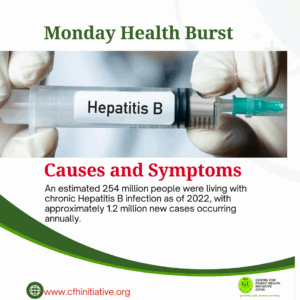
According to the World Health Organization (WHO), an estimated 254 million people were living with chronic Hepatitis B infection as of 2022, with approximately 1.2 million new cases occurring annually.

SYMPTOMS
Hepatitis B may occasionally go undetected without any obvious signs. This is common among children.Acute hepatitis B symptoms can start to show about 1 to 4 months after contact with the virus. Some of these symptoms include:
• Weakness and exhaustion
• Appetite loss
• Vomiting
• Jaundice
• Clay-colored stool
• The aching in one’s joints

CAUSES:
According to MayoClinic, the causes of Hepatitis B include:
• Sexual contact: It is possible to contract hepatitis B if one engages in unprotected sexual activity with an infected individual. The virus can be transmitted through bodily fluids such as blood, saliva, semen, or vaginal secretions.
• Sharing of needles/Accidental needle sticks: HBV easily spreads through needles and syringes contaminated with infected blood. Sharing IV drug paraphernalia puts one at high risk of hepatitis B.
• Mother to child: Pregnant women infected with HBV can pass the virus to their babies during childbirth. However, the newborn can be vaccinated to avoid getting infected in almost all cases. It is advisable to discuss with a healthcare provider the option of getting tested for hepatitis B if you are pregnant or planning to conceive.

Monday Health Burst is an initiative of CFHI to address issues of basic health concern. Join us every Monday on all our social media platforms for more episodes.

References:

  1. https://www.who.int/news-room/fact-sheets/detail/hepatitis-b
  2. https://www.mayoclinic.org/diseases-conditions/hepatitis-b/symptoms-causes/syc-20366802

MONDAY HEALTH BURST ON HEPATITIS B: SYMPTOMS, AND CAUSES Read More »

MONDAY HEALTH BURST ON OVERVIEW OF HEPATITIS- DEFINITION, TYPES, AND CAUSES OF HEPATITIS

Your liver is one of your body’s hardest-working organs, filtering toxins, processing nutrients, and supporting overall health. Yet, hepatitis an inflammation of the liver threatens its function and often progresses without early warning signs.

The Main Types of Hepatitis:

  • Hepatitis A: Spread through contaminated food or water. Usually short-term and preventable with a vaccine.
  • Hepatitis B: Passed through blood, sexual contact, or from mother to child at birth. Can become chronic and cause serious liver disease. A safe vaccine offers strong protection.
  • Hepatitis C: Often silent at first, it spreads mainly through blood and can lead to chronic liver damage. No vaccine exists yet, but effective treatments can cure it.
  • Hepatitis D: Only occurs alongside hepatitis B and makes the disease more severe. Preventable through hepatitis B vaccination.
  • Hepatitis E: Typically found in areas with poor sanitation, spread through contaminated water. Usually resolves on its own but can be risky during pregnancy.

Other Causes of Hepatitis Include:

  • Excessive alcohol consumption
  • Certain medications or toxins
  • Autoimmune conditions

Hepatitis often goes unnoticed until significant liver damage has occurred. Early testing, safe lifestyle choices, and vaccination where available are vital for prevention and protection.

Protect your liver, stay informed, practice good hygiene, avoid risky behaviors, and seek medical advice for screening or vaccination. Your liver deserves the best care.

..

MONDAY HEALTH BURST ON OVERVIEW OF HEPATITIS- DEFINITION, TYPES, AND CAUSES OF HEPATITIS Read More »

SPEAK WEDNESDAY ON BREAKING THE SILENCE: MEN’S MENTAL HEALTH MATTERS TOO

At CFHI, we recognize that mental health is just as important as physical health. As part of our commitment to holistic well-being, this week’s Monday Health Burst shines a light on an often-neglected issue – men’s mental health. For generations, society has woven a narrative around masculinity that leaves little room for vulnerability. Men are expected to be strong, stoic, and impervious to emotional struggle. Yet behind many quiet smiles or firm handshakes lies a hidden truth: men suffer from mental health challenges too and often in silence.

The Hidden Crisis

The stigma attached to mental health, coupled with societal expectations of masculinity, pushes many men to bottle up their emotions, fearing they will be seen as weak or “less manly.”

But silence can be deadly. Unaddressed mental health issues can manifest in substance abuse, violence, risky behavior, chronic stress, and even premature death.

Several myths fuel this crisis:

  • Real men don’t cry. Tears are a human response to emotion, not a sign of weakness.
  • Talking about problems won’t change anything. In truth, talking is often the first step toward healing.
  • Mental health issues are a sign of failure. Mental illness is not a character flaw; it’s a health condition deserving care like any physical illness.

These misconceptions keep men locked in isolation, denying them the support and resources that could save lives.

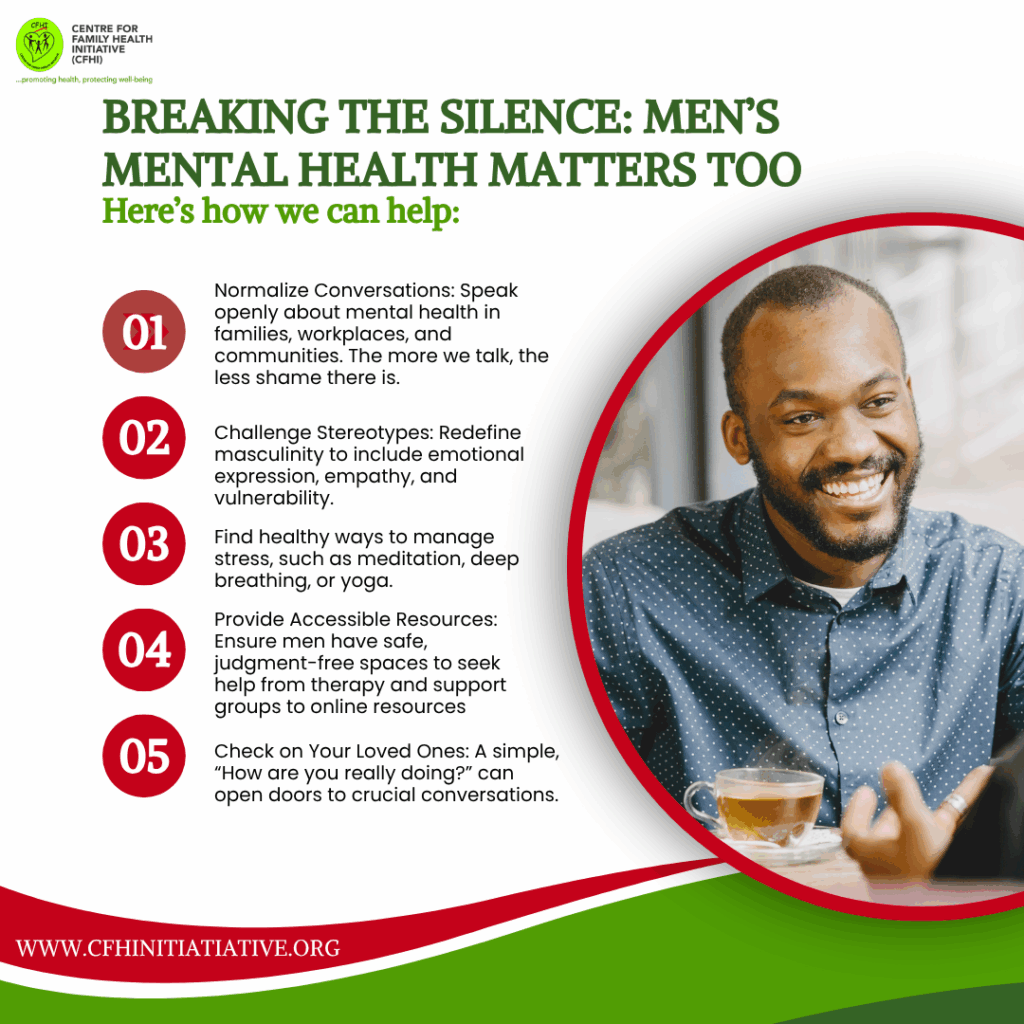
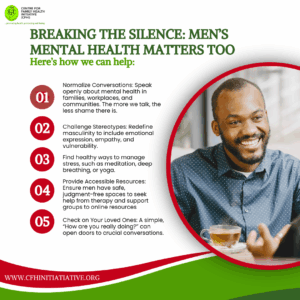
Breaking the silence around men’s mental health is essential. Here’s how we can help:

  • Normalize Conversations: Speak openly about mental health in families, workplaces, and communities. The more we talk, the less shame there is.
  • Challenge Stereotypes: Redefine masculinity to include emotional expression, empathy, and vulnerability.
  • Provide Accessible Resources: Ensure men have safe, judgment-free spaces to seek help from therapy and support groups to online resources.
  • Check on Your Loved Ones: A simple, “How are you really doing?” can open doors to crucial conversations.
  • Promote Self-Care: Encourage men to prioritize activities that support mental well-being, from exercise to meditation to creative outlets.

To all men reading this: your feelings are valid. Seeking help is not weakness; it’s courage. You deserve support, understanding, and the chance to thrive mentally and emotionally.

SPEAK WEDNESDAY ON BREAKING THE SILENCE: MEN’S MENTAL HEALTH MATTERS TOO Read More »

SPEAK WEDNESDAY ON WHEN LABOUR BECOMES VIOLENCE

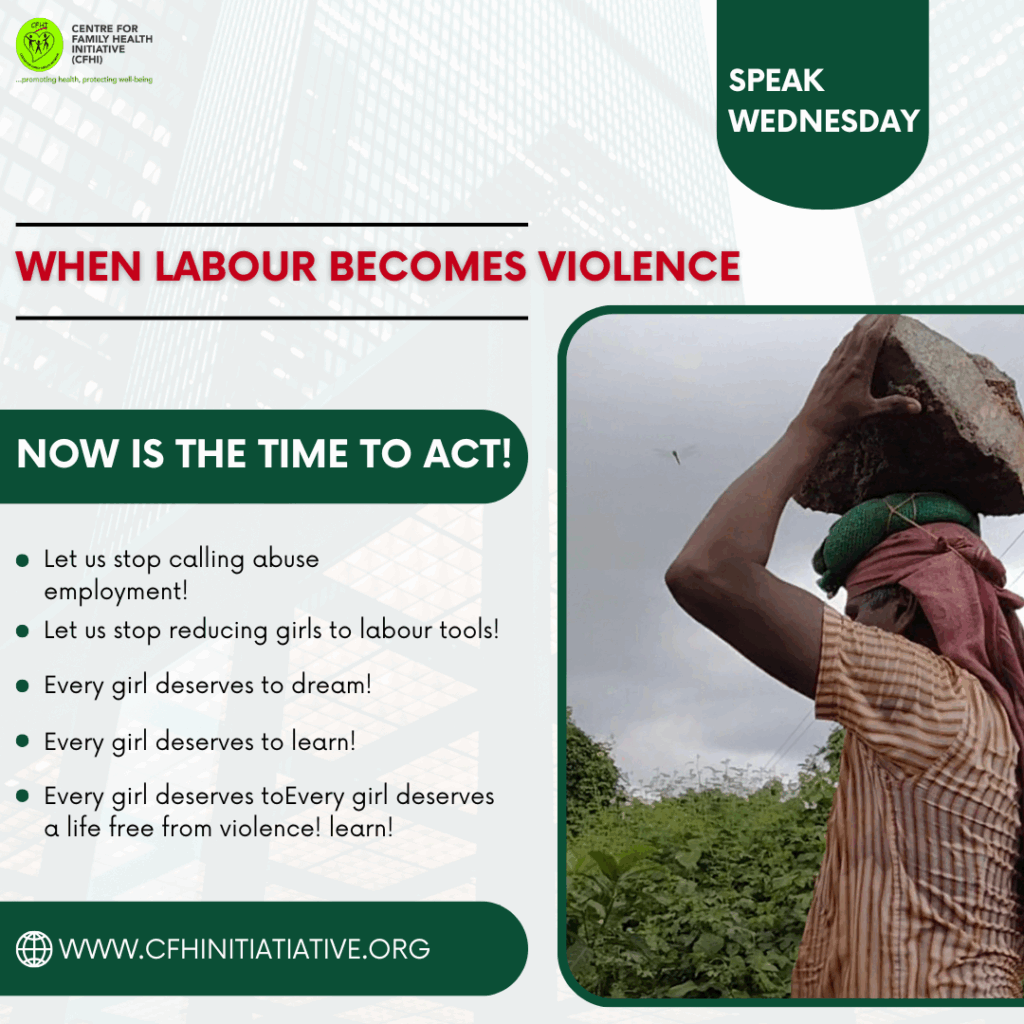
In countless Nigerian homes, young girls often called “housegirls” begin their workdays at sunrise and end them well after sundown. What seems like an innocent gateway to opportunity can quickly morph into a nightmare. What started as helping with domestic duties becomes abuse, neglect, and exploitation. This is not just work. It is a system that too often silences their voices and sabotages their futures.

The Hidden Reality

Recent research shows that in Nigeria, about 50 percent of child domestic workers experience some form of violence. Emotional abuse affects nearly half, while nine percent face physical violence, and others suffer sexual violence in silence. These girls often live in cramped, unfamiliar spaces with no personal freedom or support network. At school, they are either absent due to long work hours, the majority work over 30 hours weekly, or pulled out entirely, with 19 percent reporting disruption in education.

At its worst, this becomes modern slavery where girls are trapped by fear, threats, and the absence of choices. In parts of Southern Nigeria, studies show that underage domestic helpers regularly face psychological, emotional, and physical abuse without any form of redress.

This is not just unethical. It is a crime. Every Nigerian girl has the right to safety, freedom, and education; rights protected under Nigeria’s Violence Against Persons Prohibition (VAPP) Act of 2015. But beyond the law, we are talking about broken childhoods, girls robbed of their innocence, and women who grow up never knowing their worth.

Real Voices Real Harm

Imagine a 14-year-old working from dawn to dusk. She is beaten for small mistakes, denied food until everyone else has eaten, isolated from her peers, and barred from attending school. She wakes up to work, sleeps in fear, and grows into womanhood carrying the weight of a stolen girlhood. This is not fiction. This is her everyday reality.

What We Can Do

  • Recognize and Report

If you suspect abuse, contact the National Agency for the Prohibition of Trafficking in Persons NAPTIP, Child Protection Network, CFHI, or your local police station. These girls need protection, not more silence.

  • Educate Families

Many parents send their daughters to work in cities with the hope of better opportunities. But without information, legal backing, and proper monitoring, what should uplift them becomes a risk. Raising community awareness is vital.

  • Support NGOs Doing the Work

The Centre for Family Health Initiative (CFHI) has remained at the frontline of protecting women and girls. CFHI supports victims of gender-based violence through legal aid, psychosocial support, community education, and survivor-led advocacy. From community outreaches to engaging in policy work, CFHI ensures these girls are seen, heard, and helped.

Now Is the Time to Act!

We have seen the data. We have heard the stories. Now we must act. Let us stop calling abuse employment. Let us stop reducing girls to labour tools. Every girl deserves to dream. Every girl deserves to learn. Every girl deserves a life free from violence.

Speak Wednesday is an initiative of CFHI to address issues around gender-based violence and gender bias.

#SpeakWednesday #ProtectHousegirls #EndChildDomesticViolence #GirlsAreNotServants #CFHI #EndGBV #HumanRightsMatter

SPEAK WEDNESDAY ON WHEN LABOUR BECOMES VIOLENCE Read More »

MONDAY HEALTH BURST ON BENIGN PROSTATIC HYPERPLASIA (BPH)

The prostate is a small guardian stationed just below the bladder. When you are young, it’s no bigger than a walnut. But as you age, the prostate can grow and that is where Benign Prostatic Hyperplasia (BPH) comes in.

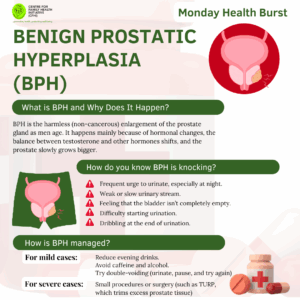
Benign Prostatic Hyperplasia simply means your prostate is enlarging. It is not cancer; it’s just your prostate showing signs of age.

Why does it grow?

BPH is the body’s natural response to aging, especially after 50. Changing hormone levels such as lower testosterone and relatively more estrogen signal the prostate to grow bigger.

The trouble begins when this larger prostate starts pressing on the urethra (the tube that carries urine out), making urination harder.

How do you know BPH is knocking?

Common signs include:

  • You just urinated but feel the need to go again.
  • You wake up at night to urinate (nocturia)
  • Difficulty starting urination or weak flow.
  • Feeling your bladder isn’t fully empty.
  • Dribbling at the end of urination

Who gets BPH?

BPH is common in:

  • Men over 50
  • Men with a family history of BPH
  • Those with conditions like diabetes or obesity

How is BPH managed?

For mild cases:

  • Reduce evening drinks.
  • Avoid caffeine and alcohol.
  • Try double-voiding (urinate, pause, and try again)

For moderate cases:

  • Medications to relax or shrink the prostate.

For severe cases:

  • Small procedures or surgery (such as TURP, which trims excess prostate tissue)

Your prostate is part of your aging journey. When it causes trouble, don’t suffer in silence. Talk to your doctor. Early help leads to a better quality of life.

Monday Health Burst is an initiative of Centre for Family Health Initiative (CFHI) to tackle issues of basic health concerns. Join us every Monday for more health-related articles on all our social media platforms.

MONDAY HEALTH BURST ON BENIGN PROSTATIC HYPERPLASIA (BPH) Read More »

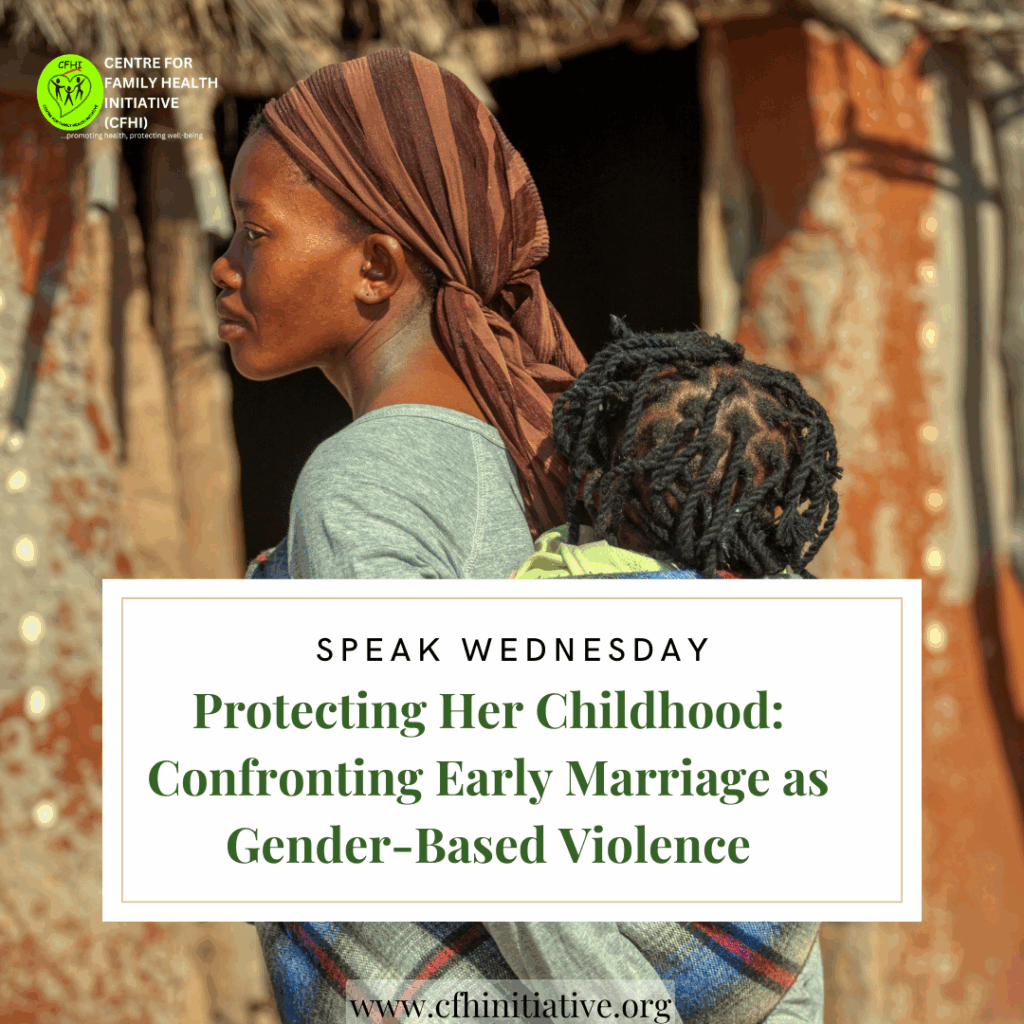
SPEAK WEDNESDAY ON PROTECTING HER CHILDHOOD: CONFRONTING EARLY MARRIAGE AS GENDER-BASED VIOLENCE

In many communities across Nigeria, a girl’s childhood can end not with graduation or celebration, but with a wedding. Sometimes at 15, sometimes even younger. She doesn’t throw a bouquet; she throws away her dreams. The practice is often justified by culture, tradition, or economic necessity, but beneath these explanations lies a truth that must be acknowledged: early marriage is a form of gender-based violence.

Nigeria ranks third globally in the number of child brides. Over 22 million girls in the country were married before the age of 18, according to UNICEF. In some states in the North-East and North-West, the prevalence is even higher, driven by poverty, insecurity, and deeply entrenched gender inequality. These are not just statistics; they are lives interrupted, girlhoods lost, and futures compromised.

Early marriage is violence because it robs girls of choice, education, health, and safety. Once married, a girl is often forced to drop out of school, denying her the opportunity to learn, grow, and earn. She faces increased risks of sexual violence, early pregnancy complications, and lifelong poverty. These are not isolated consequences; they are systemic outcomes rooted in a society that undervalues girls and normalizes their silence.

In many cases, families see early marriage as a survival strategy. When there is no food on the table and no access to social protection, marrying off a daughter can feel like the only option. Cultural and religious pressures further normalize the practice, and in the absence of strong law enforcement, the rights of girls are often overlooked. Nigeria’s Child Rights Act, passed in 2003, sets the legal age of marriage at 18, but enforcement remains uneven. As of 2024, several states have yet to domesticate the Act, leaving millions of girls unprotected.

Ending early marriage requires more than laws on paper; it demands a shift in narrative and a real investment in girls. We must name early marriage for what it is: a violation of human rights and a gender-based harm. Protecting Nigerian girls means enforcing laws, holding perpetrators accountable, and ensuring every girl has access to safe, quality education and health care. It also means addressing the root causes—poverty, gender inequality, and lack of opportunity that make early marriage appear acceptable or inevitable.

Equally important is the need to amplify the voices of girls themselves. Their insights, hopes, and fears must shape the policies and programs meant to protect them. Girls in Nigeria are not voiceless; they are often unheard. When we listen, we begin to understand not just what is being taken from them, but what is possible when we choose to protect them.

To protect the future of Nigerian girls, we must stop framing early marriage as an issue of culture or custom. It is a crisis of rights, equity, and justice. We must act with urgency, empathy, and resolve.

Because she’s not a bride. She’s a child.

Speak Wednesday is an initiative of CFHI to address issues around gender-based violence and gender bias.

#SpeakWednesday#EndChildMarriage#SheIsNotABride#NigerianGirlsDeserveBetter#ChildNotBride#GenderJusticeNow#ProtectTheGirlChild#GirlsNotWives#StopGBV

SPEAK WEDNESDAY ON PROTECTING HER CHILDHOOD: CONFRONTING EARLY MARRIAGE AS GENDER-BASED VIOLENCE Read More »