Health

MONDAY HEALTH BURST ON HIV AND AIDS: ADVANCES IN TREATMENT AND REDUCING STIGMA

Antiretroviral therapy, also known as ART, is a treatment for HIV. Thanks to advancements in medical research, the therapy has become more efficient with fewer adverse effects. ART therapy has allowed those infected with HIV to live healthier and longer lives. Also, pre-exposure prophylaxis (PrEP) is available for people at high risk of contracting HIV.

According to the Joint United Nations Programme on HIV/AIDS (UNAIDS), there are 23.3 million people globally on HIV treatment currently. An individual who is living with HIV and starts taking antiretroviral therapy today can expect to have the same life expectancy as someone who is HIV-negative and of the same age. (UNAIDS)

HIV medication comes in two forms: Pills and Shots.

Several FDA-approved medications are available for HIV treatment, which can be taken either as a single pill or a combination therapy. If you have recently started HIV treatment, taking drugs is recommended. However, you may consider getting shots if you have been virally suppressed for at least three months or have an undetectable viral load. Shots are long-acting injections used to treat HIV. Your doctor must schedule routine office appointments to administer the doses. Depending on your treatment plan, you may receive an HIV therapy shot once a month or once every other month.

Although there are HIV treatments available, stigma and discrimination remain significant barriers to HIV prevention, treatment, care, and support. Research has demonstrated that stigma and prejudice, in particular, impair HIV prevention efforts by causing people to be unwilling to seek HIV information, services, and therapies to lower their risk of infection and to adopt safer behaviours for fear that doing so may raise questions about their HIV status. (UNAIDS). Research has also indicated that people living with HIV are discouraged from disclosing their status, even to family members and romantic partners, and that this hinders their ability and motivation to seek and adhere to treatment. This fear of stigma and discrimination is also linked to a fear of violence. (UNAIDS).

Over the years, CFHI, in collaboration with the Institute of Human Virology Nigeria (IHVN), Catholic Caritas Foundation Nigeria (CCFN), and other funders, provides community-based interventions to more than 20,000 vulnerable children and their caregivers. These interventions include but are not limited to, healthcare services, nutritional support, education and vocational training, psychosocial support, and household economic strengthening.

It is important to note that HIV cannot be cured, but it can be managed with the help of HIV medication. Within six months, the majority of people can control the infection. (UNAIDS)

Monday Health Burst is an initiative of CFHI to address issues of basic health concern. Join us every Monday on all our social media platforms for more episodes


MONDAY HEALTH BURST ON HIV AND AIDS: ADVANCES IN TREATMENT AND REDUCING STIGMA Read More »

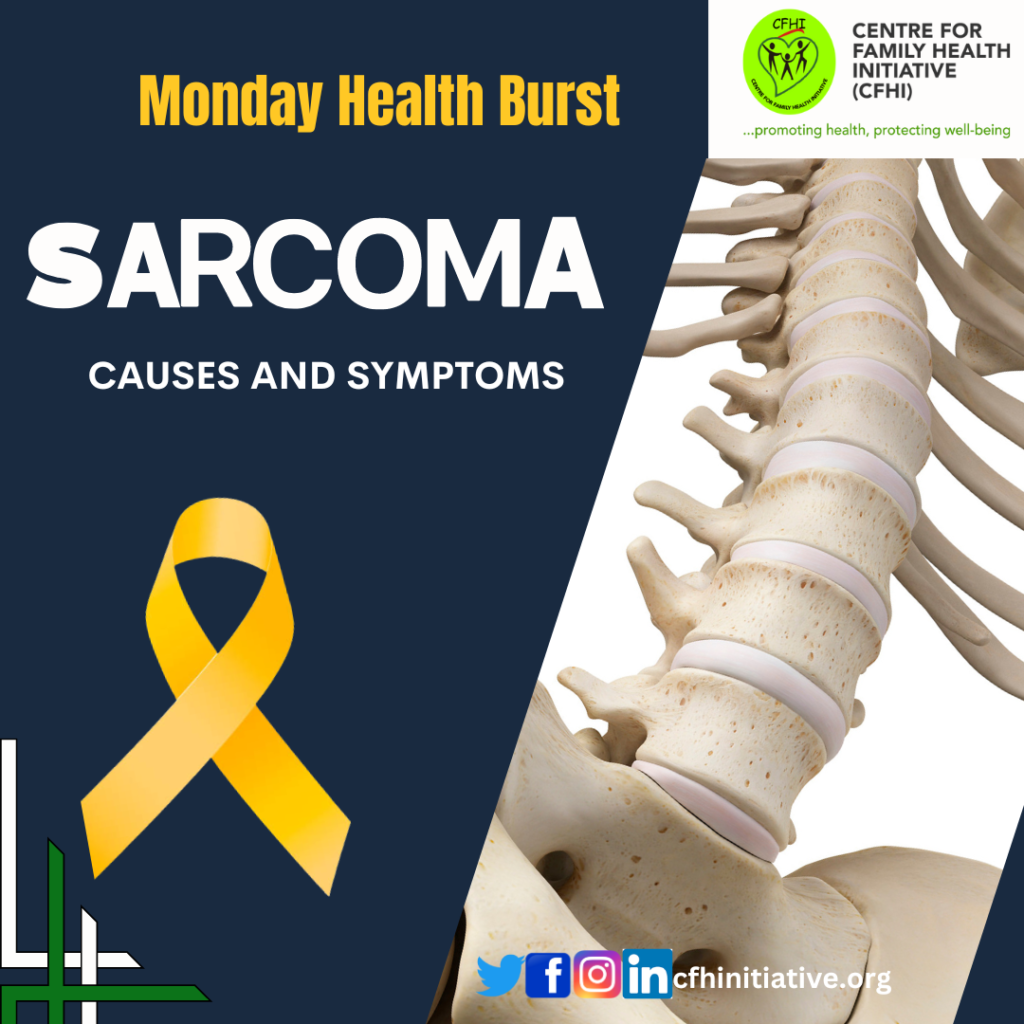
MONDAY HEALTH BURST ON SARCOMA – CAUSES AND TREATMENT

Sarcoma, a rare form of cancer, encompasses a variety of malignancies that arise in the body’s connective tissues, such as bones, muscles, tendons, blood vessels, and soft tissues. Commonly observed symptoms are as follows:

  • Painless lump
  • Weight loss
  • Trouble in breathing
  • Pain in the affected bones
  • Swelling
  • Fatigue
  • A limp when the sarcoma is in your leg.

While the precise causes of sarcoma remain unclear, several factors can contribute to its development. Here are some potential causes and risk factors associated with sarcoma:

  1. Genetic factors: Genetic mutations or inherited conditions can increase the likelihood of developing sarcoma in certain cases.


  1. Radiation exposure: Previous exposure to high levels of ionizing radiation, particularly during cancer treatment or nuclear accidents, has been linked to an elevated risk of sarcoma. This is more common among individuals who have undergone radiation therapy for other types of cancer.


        3. Environmental factors: Certain environmental elements, such as exposure to specific chemicals or toxins, may contribute to sarcoma development. For example, exposure to vinyl chloride, a chemical used in plastics manufacturing, has been associated with an increased risk of a specific type of sarcoma called angiosarcoma.


  1. Chronic lymphedema: Prolonged swelling of the limbs caused by damage or removal of the lymphatic system, often resulting from cancer treatment or surgery, can elevate the risk of developing lymphangiosarcoma, a type of sarcoma.


Treatment:

According to Mayo Clinic’s Publication in December, 2022; Surgery is commonly employed as the primary treatment for sarcoma, aiming to remove the cancerous cells. Additional treatments may be administered before or after surgery, depending on the type and location of the sarcoma, the aggressiveness of the cells, and the presence of metastasis in other parts of the body. The optimal therapy for each individual is determined based on these factors.


Monday Health Burst is an initiative of CFHI to address issues of basic health concern. Join us every Monday on all our social media platforms for more episodes.


MONDAY HEALTH BURST ON SARCOMA – CAUSES AND TREATMENT Read More »

MONDAY HEALTH BURST ON SCHIZOPHRENIA – SYMPTOMS AND CAUSES

Schizophrenia is a chronic and severe mental disorder that affects how a person thinks, feels, and behaves. It is characterized by a range of symptoms that can significantly impact a person’s daily functioning and quality of life.

Around 24 million people, or 1 in 300 persons (0.32%) globally, suffer from schizophrenia. Adults (2) had a rate of 1 in 222 (0.4%). It is not as prevalent as many other mental illnesses. The most common time for onset is in the late teens and twenties, and it often occurs earlier in males than in women. (World Health Organization)

Symptoms:

Delusions: Delusions are false beliefs that are not based on reality. An example of a delusion is when a person believes that they are being watched or that someone is trying to harm them.

Hallucinations: Sensations that are not real but are experienced by the person with schizophrenia. These can include hearing voices, seeing things that are not there, or feeling sensations in the body.

Disorganized thinking and speech: A person with schizophrenia may have difficulty organizing and expressing their thoughts. Their speech may be illogical or unrelated to the topic being discussed.

Abnormal motor behaviour: This can manifest as unusual movements or repetitive behaviours that serve no apparent purpose.

Negative symptoms: These refer to a decrease or absence of normal functioning. Examples include a lack of motivation, social withdrawal, reduced emotional expression, and decreased speech.

Schizophrenia does not have a single identifiable cause, according to the World Health Organization (WHO). The condition is believed to result from genetic and environmental factors. Exposure to viruses or malnutrition before birth and complications during pregnancy or birth may contribute to its development. Additionally, psychosocial stress can play a role in the onset and progression of schizophrenia. Heavy cannabis use is also linked to an increased risk of the disorder.

It is crucial to take decisive action on schizophrenia, and it demands the active cooperation of governments, healthcare systems, communities, and individuals alike.


Monday Health Burst is an initiative of CFHI to address issues of basic health concern. Join us every Monday on all our social media platforms for more episodes.


MONDAY HEALTH BURST ON SCHIZOPHRENIA – SYMPTOMS AND CAUSES Read More »

MONDAY HEALTH BUSRT ON MEN’S HEALTH – CARDIOVASCULAR DISEASES

Cardiovascular disease refers to a class of conditions that affect the heart and blood vessels.

According to WHO in the year 2021, cardiovascular diseases (CVDs) are the leading cause of death globally, taking an estimated 17.9 million lives each year.

Risk Factors:

Men have unique risk factors for cardiovascular disease that may differ from those of women. Some common risk factors for men include:

  • Age: The risk of developing cardiovascular disease increases with age, particularly after the age of 45 for men.
  • High blood pressure: Men are more likely to develop high blood pressure compared to women, especially at a younger age.
  • High cholesterol: Elevated levels of LDL cholesterol (often referred to as “bad” cholesterol) and low levels of HDL cholesterol (often referred to as “good” cholesterol) can increase the risk of cardiovascular disease in men.
  • Obesity: Excess body weight, especially around the waist, increases the risk of developing cardiovascular disease in men.
  • Smoking: Men who smoke or have a history of smoking have a higher risk of heart disease compared to nonsmokers.
  • Diabetes: Men with diabetes are at an increased risk of developing cardiovascular disease, as diabetes can damage blood vessels and contribute to other risk factors such as high blood pressure and high cholesterol.

Symptoms:

The symptoms of cardiovascular disease in men can be similar to those experienced by women. However, men are more likely to experience chest pain or discomfort as the primary symptom of a heart attack. Other symptoms may include shortness of breath, pain radiating to the arm, jaw, or back, nausea, lightheadedness, and cold sweats. It is important to note that some men may experience “silent” heart attacks with minimal or no symptoms.

Prevention:

To reduce the risk of cardiovascular disease, men can take several preventive measures, including:

  • Adopting a healthy lifestyle: Engage in regular physical activity, eat a balanced diet rich in fruits, vegetables, whole grains, lean proteins, and low-fat dairy products, and maintain a healthy weight.
  • Quitting smoking: If you smoke, seek assistance to quit, as this will significantly reduce your risk of developing cardiovascular disease.
  • Managing blood pressure and cholesterol: Regularly monitor your blood pressure and cholesterol levels. If they are elevated, work with your healthcare provider to develop a plan to manage them effectively.
  • Controlling diabetes: If you have diabetes, follow your healthcare provider’s recommendations to manage your blood sugar levels and minimize the risk of cardiovascular complications.
  • Managing stress: Find healthy ways to cope with stress, such as exercising, practicing relaxation techniques, or engaging in hobbies and activities you enjoy.
  • Regular check-ups: Visit your healthcare provider for routine check-ups and screenings to assess your cardiovascular health and identify any potential issues early.

A healthcare expert should be consulted for tailored guidance and to go over any worries you may have about cardiovascular disease or your general health.

Monday Health Burst is an initiative of CFHI to address issues of basic health concern. Join us every Monday on all our social media platforms for more episodes.

MONDAY HEALTH BUSRT ON MEN’S HEALTH – CARDIOVASCULAR DISEASES Read More »

MONDAY HEALTH BURST – COMMON CAUSES AND SYMPTOMS OF ANEMIA

Anemia is a condition characterized by a reduction in the number of red blood cells or hemoglobin in the blood. This can result in a decreased capacity of the blood to transport oxygen to the body’s tissues and organs. Anemia can manifest in different forms and symptoms and can be caused by various factors.

According to a 2023 report from the United Nations Children Fund (UNICEF) report, 55 percent of adolescent girls and women suffer from anemia in Nigeria.

Some common causes of anemia include:

Iron deficiency: This is the most common cause of anemia worldwide. It occurs when the body doesn’t have enough iron to produce adequate amounts of hemoglobin.

Vitamin deficiency: Lack of specific vitamins like vitamin B12 or folate can impair the production of healthy red blood cells.

Chronic diseases: Conditions such as kidney disease, liver disease, cancer, or autoimmune disorders can interfere with the production of red blood cells.

Blood loss: Excessive bleeding from menstruation, trauma, surgery, or gastrointestinal conditions like ulcers or hemorrhoids can lead to anemia.

Inherited disorders: Certain genetic conditions like sickle cell anemia or thalassemia affect the structure or production of red blood cells.

The symptoms of anemia can vary depending on the underlying cause and the severity of the condition. However, common symptoms include:

  • Fatigue and weakness
  • Shortness of breath
  • Pale skin
  • Dizziness or lightheadedness
  • Rapid or irregular heartbeat
  • Cold hands and feet
  • Headaches
  • Chest pain (in severe cases)

It’s important to consult with a healthcare professional for an accurate diagnosis and appropriate treatment plan if you suspect you have anemia or are experiencing related symptoms.

Monday Health Burst is an initiative of CFHI to address issues of basic health concern. Join us every Monday on all our social media platforms for more episodes.


MONDAY HEALTH BURST – COMMON CAUSES AND SYMPTOMS OF ANEMIA Read More »

BENEFITS OF DONATING BLOOD

Why should you donate blood?
Donating blood is a selfless act that can have numerous benefits, not just to save the lives of the recipients, but for the donors themselves. Here are some of the key benefits of donating blood.

1. Lower Risk of Heart Attack: Studies have shown that regular blood donation can significantly reduce the risk of heart attacks by up to 88%. By maintaining healthy iron levels and reducing oxidative stress, blood donation promotes cardiovascular health and helps safeguard against heart disease.

2. Decreased Risk of Cancer and Hemochromatosis: Donating blood not only benefits your heart but also lowers the risk of certain types of cancer. Moreover, individuals with hereditary hemochromatosis, a condition characterized by excessive iron absorption, can benefit from blood donation as it helps reduce iron overload and associated complications.

3. Calorie Burn: Did you know that donating a pint of blood, approximately 450ml, can burn around 650 calories? This unexpected benefit makes blood donation a unique way to contribute to your fitness goals while saving lives.

4. Stimulation of Blood Cell Production: One of the remarkable benefits of donating blood is that it stimulates your body to produce fresh blood cells. This process enhances blood circulation, improves oxygen transport, and promotes overall health by supporting the production of new red blood cells, white blood cells, and platelets.

5. Fulfillment and Emotional Well-being: Donating blood goes beyond physical health benefits; it also provides a profound sense of fulfillment and emotional well-being. Knowing that your selfless act has potentially saved lives and made a positive impact on others can be immensely rewarding and uplifting.

Consider donating blood as a way to improve your own health while making a significant difference in the lives of others. Contact us to learn more about eligibility and how you can participate in this life-saving act.

#DonateBlood #HealthBenefits #SaveLives

BENEFITS OF DONATING BLOOD Read More »

MONDAY HEALTH BURST ON MALARIA – CAUSES AND PREVENTION

Malaria is a serious and potentially deadly disease that affects millions of people around the world every year.

In 2022, the World Health Organisation (WHO) in their World Malaria Report, recorded 619,000 Malaria deaths globally. 31% of those deaths (19,890) occurred in Nigeria.

Malaria is a disease caused by a parasite called Plasmodium, which is transmitted to humans through the bites of infected female mosquitoes.
The Plasmodium parasites P. falciparum, P. vivax, P. ovale, and P. malariae are some of the several species that cause malaria and the most prevalent and deadly strain of the illness is P. falciparum.

Some factors that contribute to the risk of malaria transmission include;
High population density, limited access to healthcare, and poor sanitation.

According to WHO, severe infection is more likely to occur in newborns, children under five, pregnant women, travelers, and those with HIV or AIDS.

Malaria can be prevented by;

The use of antimalarial drugs.

The use of insecticide – treated mosquito nets.

Wearing of protective clothing

The use of insect repellent.

Elimination of mosquito breeding sites like stagnant water and dirty environment.

Early diagnosis and treatment can help prevent the disease from becoming severe or even fatal.

Monday Health Burst is an initiative of CFHI to address issues of basic health concern. Join us every Monday on all our social media platforms for more episodes.

#MondayHealthBurst #Malaria #CausesandPrevention

MONDAY HEALTH BURST ON MALARIA – CAUSES AND PREVENTION Read More »

MONDAY HEALTH BURST ON ENDOMETRIAL CANCER

Endometrial cancer is a type of uterine cancer that affects the inner lining of the uterus.

As recorded by the World Cancer Research Fund International, endometrial cancer is the sixth most commonly occurring cancer in women and the fifteenth most common cancer overall, with four hundred and seventeen thousand new cases recorded in 2020.

Approximately 3 in 100 women will be diagnosed with uterine cancer at some point in their lives. More than 80 percent of people with uterine cancer survive for 5 years or longer after receiving the diagnosis according to the National Cancer Institute (NCI).

The symptoms of endometrial cancer include; vaginal bleeding after menopause, change in the length or heaviness of menstrual period, pelvic pain, and vaginal bleeding between periods or spotting.

Mayo clinic stated that doctors do not know the exact cause of endometrial cancer, but it occurs as a result of mutations in the DNA. This mutations lead to the growth of abnormal cells which unlike the healthy cells doesn’t die but accumulate to form tumor and later spread to other parts of the body.

Some of the factors known to increase the risk of having the cancer are; not bearing children, a late natural menopause ( after the age of 55), Tamoxifen- a hormone therapy, obesity, being tall, physical activity, and consumption of coffee (WCRI).

The treatment for endometrial cancer is majorly surgery to remove the uterus, fallopian tubes and ovaries depending on the cancer stage. Other treatment include radiation, hormone therapy and chemotherapy.

Monday Health Burst is an initiative of CFHI to address issues of basic health concern. Join us every Monday on all our social media platforms for more episodes.

#EndometrialCancer #UNFPA #WHO #NCI #MondayHealthBurst


MONDAY HEALTH BURST ON ENDOMETRIAL CANCER Read More »

MONDAY HEALTH BURST – VIRAL HEPATITIS IN NIGERIA

Viral hepatitis is one of the most communicable diseases in the world. It is spread through contaminated blood, intravenous drug abuse and sexual contact with an infected person. In highly endemic areas like sub-Saharan Africa and Asia, hepatitis B is most commonly spread from mother to child at birth (perinatal transmission). In addition, infection can occur during medical, surgical and dental procedures, tattooing, or through the use of razors and similar objects that are contaminated with infected blood. Annually, viral hepatitis affects 400 million people worldwide, causing acute and chronic liver diseases and killing about 1.5 million people (4,000 people daily), mostly from hepatitis B and C. Yet, it is entirely preventable.

Infection with hepatitis B virus (HBV) or hepatitis C virus (HCV) is the main cause of liver cancer. According to Centre for Disease Control (CDC), viral hepatitis causes 80% of all liver cancer deaths. In Nigeria, liver cancer is the second leading cause of cancer deaths, accounting for over 11,000 deaths yearly and 32 deaths every day. Liver cancer is less common among children and teenagers and more common with adults. The average age of occurrence in Nigeria is about 46 years compared to the developed world where the average age of occurrence is in the mid-60s. Also, liver cancer is more common in men with a male: female ratio of about 2 in 1 according to National Center for Biotechnology Information (NCBI). Liver cancer is rare in children and teenagers.

Every year, July 28 is marked as World Hepatitis Day (WHD). It is a day dedicated to increase the global awareness and understanding of viral hepatitis and the diseases that it causes. This is because research shows that with better awareness and application of its preventive measures, this life-threatening disease could be eliminated, and 4,000 lives could be saved daily.

Centre for Family Health Initiative (CFHI) takes advantage of this special event annually to work towards eliminating viral hepatitis across different states in Nigeria. Aside awareness creation in communities by CFHI, other successful ways employed to curb this menace is to reach out to key populations in Abuja, Nasarawa and Imo states with sensitization programs, vaccination and referrals. These key populations include female sex workers, drug addicts, inmates in correctional centres, worship centres, and people living in hard-to-reach communities. CFHI also carries out street interviews to know the level of awareness of people towards hepatitis and has over the years reached out to over 1000 people.

During the sensitization campaigns, participants are shown different ways of preventing the transmission of viral hepatitis, which include avoiding sharing of needles and other items such as toothbrushes, razors or nail scissors, avoiding tattoos or body piercings from unlicensed facilities and screening of blood donation products, practicing safe sex by minimizing the number of partners and using barrier protective measures (condoms), reducing alcohol intake, obesity, and avoiding aflatoxin prone foods like tree nuts (almonds, cashews, and walnuts), peanut, rice, corn, dried fruits, cereals, among others.

During the street interviews by CFHI, about 40% of the respondents were unaware of what hepatitis really is, neither do they know the means of transmission and preventive measures; 30% agreed to have heard about hepatitis, but never cared much about it; 20% were either infected or affected by HBV or HCV; and 10% had proper knowledge of viral hepatitis and were vaccinated.

To significantly reduce the current hepatitis epidemic, screening and early diagnosis still remains a major tool in preventing transmission of viral hepatitis and other health problems that may result from viral hepatitis infection. There is need for massive awareness and widespread availability of these interventions. With CFHI already facilitating health education, screening as well as vaccination against hepatitis at the grassroots and among key populations, a larger number of persons in Nigeria will be reached with more support.

Follow us on all our social media handles for updates on the commemoration of World Hepatitis Day, 2022.

MONDAY HEALTH BURST – VIRAL HEPATITIS IN NIGERIA Read More »