Health

MONDAY HEALTH BURST

HEALTHY DIETING

According to the Dietary Guidelines for Americans 2015–2020, a healthy eating plan includes eating of fruits, vegetables, whole grains and fat free or low-fat milk and milk products. They are low in saturated fats, trans fats, cholesterol, salt (sodium), and added sugars. While unhealthy diet includes overeating of fatty and greasy food, and of milky products, sweet foods, highly flavoured food, too pungent food, as well as drinking too much alcohol, leading to the formation of Damp-Heat.

Increased production of processed foods, rapid urbanization and changing lifestyles have led to a shift in dietary patterns. People are now consuming more foods high in energy, fats, free sugars and salt/sodium, and many people do not eat enough fruits, vegetables and other dietary fibre such as whole grains. Healthy eating is all about balance. Hence, it is possible to enjoy ones favorite meals, but the key point is eating them less often and balancing them with healthier foods with more physical activities.

Some general tips for healthy dieting include less intake of high-calorie foods and intentionally replace them with lower-calorie versions. Consuming a healthy diet throughout the life-course helps to prevent malnutrition in all its forms as well as a range of non-communicable diseases and conditions.

Monday Health Burst is an initiative of Centre for Family Health Initiative (CFHI) to tackle issues of basic health concerns. Join us every Monday for more health-related articles on all our social media platforms.

MONDAY HEALTH BURST Read More »

SPEAK WEDNESDAY

WOMEN DEALING WITH POVERTY IN RURAL AREAS

It is true that a concise and universally accepted definition of poverty has proven elusive because it affects many aspects of human condition. However, different criteria have been used to conceptualize the term “poverty”. Most analysts regard poverty as a function of income levels insufficient for securing basic goods and services.

The 2019 Nigerian Living Standards Survey (NLSS) carried out by the National Bureau of Statistics (NBS) highlights that 40 percent of the total population, or almost 83 million people, live below the country’s poverty line of 137,430 naira ($381.75) per year. The report also shows that 52.1% of rural dwellers in Nigeria are poor, while only 18.04% of urban dwellers are classified as poor. Also, according to data released by NBS, women ranked the highest when it comes to unemployment. The report shows that unemployment hits 12.2 million females as against 9.5 million men.

The fate of Nigerian women living in rural areas is highly appalling considering the patriarchal nature of the Nigerian society and how women are being marginalized in the labor force. The societal disadvantage and inequality they face because they are women shapes their experience of poverty differently from that of men, it increases their vulnerability, and makes it more challenging for them to climb out of poverty. Indeed, more than half of these rural women live below the nationally defined poverty line, lacking access to basic education, decent nutrition, adequate health and social services.  They perform complex multiple roles as mothers, workers and managers of households, taking care of their husbands, children and members of their extended families. They perform the majority of the work in food processing and dominate the rural and urban informal sector activities. Yet an abysmal number of these women own their own farm lands, they have limited access than men to inputs, services, rural organization, agricultural credits, productive infrastructure and technologies to enhance their productivity and incomes.

Women in poor households bear a disproportionate share of the work and responsibility of feeding and caring for family members through unpaid household work. They bear an unequal burden of unpaid, unrecognized, unvalued domestic responsibilities and are overrepresented in informal and risky jobs. Women in poor rural households will often sacrifice their own health and nutrition, or the education of their daughters, by recruiting them to take care of siblings or share in other household tasks.

This lack of investment in the human capital of women propagates a brutal, intergenerational cycle of poverty and hardship that is partly responsible for the persistent nature of poverty. Policies and programs to alleviate poverty must, therefore, take account of gender inequality and gender differences to effectively address the needs and constraints of women. According to the United Nations Women, Women’s economic empowerment is central to realizing women’s rights and gender equality, boosting productivity, increasing economic diversification, and income equality in addition to other positive development outcomes. This economic empowerment could include paid care work (child care, home care, seniors/disabled/palliative care), non-exclusion from inheritance and property ownership, girl child education and scholarships, adult education and scholarships for mothers, continued education during teenage pregnancy, provision of grants,  and many more.

Speak Wednesday is an initiative of Centre for Family Health Initiative to stop the cycle of domestic violence by breaking the silence around gender-based violence and gender bias. Join us every Wednesday on all our social media handles for more episodes.

SPEAK WEDNESDAY Read More »

MONDAY HEALTH BURST

MONDAY HEALTH BURST – BLINDNESS AND VISUAL IMPAIRMENT

Blindness is a complete or partial loss of vision. It is presenting visual acuity of 3/60 or less. Visual impairment on the other hand is often defined as a best corrected visual acuity of worse than 20/40 or 20/60. These could be cataracts, the infectious river blindness, trachoma, glaucoma, diabetic retinopathy, uncorrected refractive errors, and some cases of childhood blindness.

There are variations in the causes of visual impairment across countries. For example, the proportion of visual impairment attributable to cataract is higher in low- and middle-income countries than high-income countries. In high income countries, diabetic retinopathy, glaucoma and age-related macular degeneration are more common. Also, the leading cause of vision impairment among children in low-income countries is congenital cataract, whereas in middle-income countries it is more likely to be retinopathy of prematurity.

The categories of people at risk for blindness include people with eye diseases, such as macular degeneration and glaucoma, people with diabetes, stroke, people undergoing eye surgery, people who work with or near sharp objects or toxic chemicals, and premature babies. However, according to World Health Organization (WHO), more than 1 billion people worldwide are living with vision impairment because they do not get the care they need for conditions like short and far sightedness, glaucoma, cataract in time. This World report on vision by WHO estimates that 80% of visual impairment is either preventable or curable with treatment.

Many people with significant visual impairment benefit from vision rehabilitation, changes in their environment, and assistive devices. In some cases of vision impairment, use of eyeglasses, contact lenses, surgery, and medication may help restore vision, but in the case of irreversible partial or complete blindness, rehabilitation is recommended. Children using glasses are advised to go for medical checkups annually, glaucoma patients for monthly checkups, and people without any confirmed eye problem to go for eye check-up atleast once in 6months.

Monday Health Burst is an initiative of Centre for Family Health Initiative (CFHI) to tackle issues of basic health concerns. Join us every Monday for more health-related articles on all our social media platforms.

MONDAY HEALTH BURST Read More »

SPEAK WEDNESDAY

DISRUPTING PATRIARCHY

According to Wikipedia, Patriarchy is a social system in which men hold primary power and predominate in roles of political leadership, moral authority, social privilege and control of property. Some patriarchal societies are also patrilineal, meaning that property and title are inherited by the males only.

Patriarchy influences different areas of the society including culture, family, school, the workplace and relationships. Its presence can translate to inequality and gender-based violence. The idea of patriarchy is not peculiar to a specific group of people, but one that extends and supersedes all borders, socioeconomic class, race, and more.

In Nigeria, it is observed by different researchers including European Scientific Institute that . Hence, there is the commonality of general belief system that the best place for women is in the ‘Kitchen’. This trend has brought about tremendous misrepresentation of women right at the level of the family down to the circular society. Women are therefore discriminated upon from, in most cases, acquiring formal education, accessing proper health care, receiving equal pay, among others.

In so many parts of the world, women are forbidden to own landed properties or inherit any. In cases where the diseased did not have male children, his properties are distributed amongst his male relatives, excluding his widow and daughters who are left to fend for themselves. In these societies, women who are financially stable have to buy properties in the name of their fathers or other male relatives. All these expose women to violence before they are born until they are aged.

Zig Ziglar once said, the first step to finding a solution is to recognize there is a problem. Because of how ingrained patriarchy is in the society, it may be difficult to identify. However, if patriarchy can be learnt, it can be unlearnt. Together we can achieve a society with equal opportunities for all human irrespective of the gender differences.

Speak Wednesday is an initiative of Centre for Family Health Initiative to stop the cycle of domestic violence by breaking the silence around gender based violence and gender bias. Join us every Wednesday on all our social media handles for more episodes.

SPEAK WEDNESDAY Read More »

MONDAY HEALTH BURST

MONDAY HEALTH BURST – MENTAL HEALTH

Mental health according to Oxford Dictionary refers to “a person’s condition with regard to their psychological and emotional well-being.” Wikipedia also defines mental health as “The level of psychological well-being or an absence of mental illness”.

According to World Health Organization (WHO), one in four Nigerians (about 50 million people) are suffering from some sort of mental illness, and as the seventh largest country in the world, Nigeria has Africa’s highest caseload of depression, and ranks 15th in the world in the frequency of suicide. Also, WHO stated in December 2016 that less than 10% of mentally ill Nigerians have access to psychiatrists or health workers.

Mental health issues include and are not limited to mood disorders, psychotic disorder, suicidal thoughts and behaviours, anxiety disorder, post traumatic stress disorder, autism, attention deficit and hyperactivity disorder, eating disorders, personality disorders and many more. Factors that affect mental health can be grouped into biological factors (genetic or heredity factors, injury to the brain, deficits of the brain cause during development in pregnancy and during birth, infection, substance abuse and poor nutrition), psychological factors (emotional and physical trauma, neglect and abandonment) and social factors (poor social interaction, verbal abuse, severe stress or being overworked). These and more are root causes of mental illness according to several reports.

There are some important signs of mental illness that can be observed like prolonged periods of grief, sadness or irritability, extreme highs or low mood swings, increased level of fear, anxiety or worry, withdrawal from society, dramatic changes in daily life habits like eating, exercising, sleeping, and more. When these signs occur, it is important to seek help from a health worker or a psychiatrist because early diagnosis and treatment are essential to speedy recovery.

Maintaining a positive mental health can also be achieved by regular exercise, eating balanced and healthy meals, opening up to people when in tough situations, taking a break when needed, reflecting on beautiful memories or something you are grateful for, and sound sleep. These can help reduce drastically the burden of mental illness in the society.

Monday Health Burst is an initiative of Centre for Family Health Initiative (CFHI) to tackle issues of basic health concerns. Join us every Monday for more health related articles on all our social media platforms.

MONDAY HEALTH BURST Read More »

MONDAY HEALTH BURST

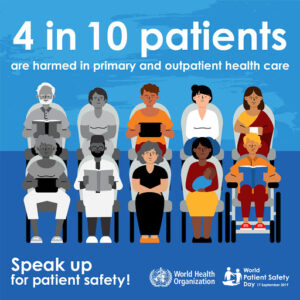
PATIENT SAFETY

The simplest definition of patient safety according to World Health Organization, is the prevention of errors and adverse effects to patients associated with health care.

Unhealthy conditions of the body or mind displace people from the normal state of health thereby deterring their physical or mental wellbeing. It is expected for such individuals to seek out solutions to their health challenges through different means available and accessible to them. Nowadays, people utilize the health services of trained medical practitioners to recuperate and expect that they will be cared for in a safe manner. Unfortunately, there are so many recorded cases of medical negligence resulting in injury or death of patients.

Thomas Agan, the Chief Medical Director (CMD), University of Calabar Teaching Hospital (UCTH), once said during an interaction with journalists in 2017 that over 90 per cent of deaths recorded in Nigerian hospitals are due to poor attitude of health workers. He also mentioned that until healthcare providers are held accountable for every challenge they create, things will not go down well.

Trained medical professionals legally owe a duty of care to their patients. Universally, Medical practitioners are governed by the Hippocratic Oath pledged at serving humanity with optimum capacity. One of the several laws governing medical practice in Nigeria is Medical and Dental Practitioner Act (CAP M8), structured to regulate medical ethics and rules of professional conduct. Infringement of this duty through medical malpractices such as wrong diagnosis and treatment, polypharmacy, defective medical products, and other illegal practices resulting to some form of damage to the patient qualifies as medical negligence. It is pertinent to understand that medical negligence is not exclusive to medical doctors but includes nurses, technicians, pharmacists and other health care providers.

It is no news that a lot of progress needs to be made as a nation in providing an enabling environment with modern and innovative equipment to aid medical practitioners in carrying out their duties. Doctors in government hospitals constantly have to demand adequate remuneration, but some health care providers now use this as facades masking so many cases of medical negligence.

Maintaining patient safety and care requires cooperative effort from all health care providers responsible for patient care. Team work not only provides the safest care but improves medical management especially in diagnosis and treatment of patients. It may not be totally possible to eradicate crisis emanating from medical negligence but, with quality health care work force, the right hospital leadership and management, and the right health care facility and infrastructure, it can be controlled.

Developing active networks of patients and providers, sharing experiences, learning from failure and pro-active risk assessment, facilitating effective evidence-based care, monitoring improvement, empowering and educating patients and the public as partners in the process of care are some of the key factors to consider in achieving a quality agenda.

Monday Health Burst is an initiative of Centre for Family Health Initiative (CFHI) to tackle issues of basic health concerns. Join us every Monday for more health-related articles on all our social media platforms.

MONDAY HEALTH BURST Read More »

MONDAY HEALTH BURST

SUICIDE PREVENTION

Suicide is the act of intentionally causing one’s own death. According to World Health Organization (WHO), close to 800,000 people die by suicide every year and for each suicide, there are more than 20 suicide attempts. The WHO report also states that suicide is the third leading cause of death between the age of 15-19 globally. However, about 79% of suicides occur in low- and middle-income countries.

Nigeria is ranked “15th in the world” and “top in Africa” for its suicide rate, according to Global Health Equity (GHE). Due to the stigma associated with suicide in Nigeria, most cases are not reported. However, some of the widely reported suicide cases include that of a 100-level student of Kogi State University, Ayingba, who ended her life because her boyfriend left her, a student of Chemical Engineering at the University of Port Harcourt, Rivers State, who committed suicide by drinking two bottles of the deadly pesticide, the University of Ibadan lecturer, who took his life on April 6, 2019, after an unfulfilled dream of completing his PhD programme, a worker in Kogi State over alleged nonpayment of salary, among others.

The link of suicide and mental disorder (depression and alcohol abuse) is well established especially in high income countries but many suicides happen impulsively in moments of crisis with a breakdown in the ability to deal with life stresses, such as financial problems, relationship break-up or chronic pain and illness. Experiencing conflict, disaster, violence, abuse, or loss and a sense of isolation are strongly associated with suicidal behaviour. Suicide rates are also high amongst vulnerable groups who experience discrimination, such as refugees and migrants, lesbians, gays, bisexuals, transgenders, intersex (LGBTI) persons, and prisoners. The strongest risk factor for suicide according to WHO report is a previous suicide attempt.

It is estimated by WHO that around 20% of global suicides are due to pesticide self-poisoning, most of which occur in rural agricultural areas in low- and middle-income countries. Other common methods of suicide are hanging and firearms. Knowledge of the most used suicide methods is important to devise prevention strategies which have shown to be effective, such as restriction of access to means of suicide.

Suicides are preventable with timely, evidence-based, and often low-cost interventions. There are several measures that can be taken at population, sub-population, and individual levels to prevent suicide and suicide attempts. These include: Reducing access to the means of suicide (e.g. pesticides, firearms, certain medications), introducing alcohol policies to reduce the harmful use of alcohol, early identification, treatment and care of people with mental and substance use disorders, chronic pain and acute emotional distress, training of non-specialized health workers in the assessment and management of suicidal behaviour, follow-up care for people who attempted suicide and provision of community support, improving coping strategies of people who are at risk, reducing risk factors for suicide, such as poverty, and giving hope for a better life after current problems are resolved.

In conclusion, Suicide is a complex issue and therefore suicide prevention efforts require coordination and collaboration among multiple sectors of society, including the health sector and other sectors such as education, labour, agriculture, business, justice, law, defence, politics, and the media.

Monday Health Burst is an initiative of Centre for Family Health Initiative (CFHI) to tackle issues of basic health concerns. Join us every Monday for more health-related articles on all our social media platforms.

MONDAY HEALTH BURST Read More »

SPEAK WEDNESDAY

FEMALE ROLES IN POLICY MAKING

Policies are deliberate systems enacted by those in positions of authority to define the rules, standards, regulations, and procedures that affect almost every aspect of human life such as education, health, agriculture, migration, aviation, finance, defence, environment, trade, justice, transportation, science and technology.

Valentina Tereshkova quotes, a bird cannot fly with one wing only. Human space flight cannot develop any further without the active participation of women. Yet, for several decades, the society encouraged male dominance and totally excluded women from occupying positions that influence key decision making processes. Forgetting that making policies without the contribution of women may not adequately reflect the needs and preferences of women, youths, and children.

Ngozi Okonjo-Iweala is a Nigerian-born economist and international development expert who during her tenor as the Minister of Finance for Nigeria, helped the country’s economy grow an average of 6% (per annum) over three years. She is credited with developing reform programs that helped improve governmental transparency and stabilizing the economy. Another example is Angela Merkel, who transformed German politics since being voted into office in 2005. Her numerous achievements at home and abroad have seen her top Forbes’ most powerful women list eight times.

A Member of Parliament in Rwanda, Thacienne Dusabeyezu once said, “The more women in the parliament, the better it is for children”. This is because women are generally more attached to children than men and they understand the needs of children. Hence, are more likely to enact child-friendly policies.

The role of women in policy making and implementation is essential in every society to help advance gender equality. Most women elected to be in the parliament will place women concerns and rights at the forefront of their agendas, suggesting policies that would promote women and speaking against policies that abuse women rights and deter their development.

Senator Kirsten Gillibrand of New York said that to fix the gridlock in Congress, more women should be involved. This is because women are more focused on finding common ground and collaborating. Women are characterized by tenderness, love, care, creativity, innovation, reliability, and if more women are key decision makers, perhaps organizations could respond effectively to challenges before the challenges are escalated to bigger problems.

It is inappropriate to ignore the intellectual capital resource of over half the population of the world.  To address global injustice and advocate for compassionate policies, both men and women must recognize the value of a balance in government. Women should not simply emulate the male role model, but should bring their own principles to every negotiating table.

Speak Wednesday is an initiative of Centre for Family Health Initiative to stop the cycle of domestic violence by breaking the silence around gender based violence and gender bias. Join us every Wednesday on all our social media handles for more episodes.

SPEAK WEDNESDAY Read More »

MONDAY HEALTH BURST

IMPACT OF CLIMATE CHANGE ON HUMAN HEALTH

Changes in the overall climate of the planet cannot be over-emphasized. Continuous rise in temperature of the planet is becoming alarming and the root cause is Global warming. Fossil fuels are being continuously used to produce electricity. The burning of these fuels produces gases like carbon dioxide, methane and nitrous oxides which lead to global warming. Also, deforestation leads to warmer temperatures, hence, the hazard of global warming is continuously causing major damage to the Earth’s environment.

According to the Intergovernmental Panel on Climate Change (IPCC) Fifth Assessment Report (AR5) in 2014, the net warming from 1850 to the end of the 20th century was equivalent to nearly 2.5 W/m2 with carbon dioxide contribution about 60% to this figure, methane about 25%, with nitrous oxides and halo-carbons providing the remainder. The major cause of global warming is the greenhouse gases. They include carbon dioxide, methane, nitrous oxides and in some cases chlorine and bromine containing compounds. The build-up of these gases in the atmosphere changes the radiative equilibrium in the atmosphere. The overall effect is to warm the Earth’s surface and the lower atmosphere because greenhouse gases absorb some of the outgoing radiation of Earth and re-radiate it back towards the surface.

Another major cause of global warming is the depletion of ozone layer. This happens mainly due to the presence of chlorine-containing source gases. When ultraviolet light is present, these gases dissociate releasing chlorine atoms which then catalyzes ozone destruction. Many industrial processes produce a wide diversity of aerosols depending on what is being burned or generated in the manufacturing process. These aerosols in the atmosphere also cause global warming by changing the climate in two ways. Firstly, they scatter and absorb solar and infrared radiation and hereby warming the air directly. Secondly, they may alter the micro-physical and chemical properties of clouds and perhaps affect their lifetime and extent.

Effects of climate changes could be very hazardous to human health. Some effects includes; Air pollution and airborne allergens to likely increase, worsening allergy and asthma conditions; climate change including rising temperatures and changes in weather extremes. This will increase health risks and require greater vigilance in food safety practices and regulation because of the exposure of food to certain pathogens and toxins; extreme weather and other events related to climate change will impact health by exacerbating underlying medical conditions like food-borne and waterborne illnesses, and disrupting infrastructures that are essential to maintaining access to health care and emergency response services. Also, climate-related exposures may lead to adverse pregnancy and newborn health outcomes, including low birth weight, preterm birth, dehydration and associated renal failure, diarrhea, and respiratory disease.

Climate action meaning stepped-up efforts to reduce greenhouse gas emissions and strengthen resilience and adaptive capacity to climate-induced impacts is necessary to combat climate change. The most significant solution to put an end to this disaster is the use of alternative energy sources. They include wind, solar, bio mass, geothermal and hydro. The most noteworthy point in using these sources is their clean nature. These sources do not produce any sort of pollution or toxic gases that can lead to global warming. They are friendly to the environment and pose no threat to ecological balance.

Monday Health Burst is an initiative of Centre for Family Health Initiative (CFHI) to tackle issues of basic health concerns. Join us every Monday for more health related articles on all our social media platforms.

MONDAY HEALTH BURST Read More »
MONDAY HEALTH BURST

MOTHER TO CHILD TRANSMISSION OF HIV DURING BREASTFEEDING

Human Immunodeficiency Virus (HIV) is a virus that attacks the body’s immune system and is spread through the blood and certain body fluids, including breast milk. Mother-to-child transmission of HIV is the primary mode of HIV infection in infants. If neither the mother nor baby is on consistent HIV treatment, there is a high chance that the baby will be infected through breastfeeding.

Several factors can increase the risk of perinatal transmission. Having a high viral load implies that the white blood cells (CD4) which provides immunity to the body is low. A viral load indicates how much of the HIV is present in the body of an infected person. A high viral load may mean a recent HIV transmission, an untreated or uncontrolled HIV. Positive pregnant women and breastfeeding mothers with a CD4 count lower than 200 are at a greater risk of transmitting the virus to their infants.

HIV screening is essential during antenatal appointments at any health centre to ascertain the HIV status because the earlier the virus is detected the better the chances of living longer and enjoying a normal life. Test should also be repeated every three months and a Post Exposure Prophylaxis (PEP) should be received if exposed to an infected blood within forty eight hours.

Accumulating evidence has also shown that giving antiretroviral medicines to the mother or the infant can significantly reduce the risk of HIV transmission through breastfeeding. Antiretroviral prophylaxis should be made available to HIV infected mothers and mothers-to-be in all health settings and should be administered to HIV exposed infants immediately after birth. The duration for antiretroviral care and treatment for the infant is dependent on the mothers’ choice of feeding either exclusive breast feeding or replacement feeding. However, World Health Organisation recommends HIV infected mothers to only do exclusive breastfeeding except replacement feeding is acceptable, feasible, affordable, sustainable, and safe. Mixed feeding on the other hand is strongly discouraged as a breastfeeding option for reactive mothers.

All exposed infants should be tested for HIV at birth, at six (6) weeks and eighteen (18) months. This is done to monitor the HIV status of the newborn.

Monday Health Burst is an initiative of Centre for Family Health Initiative (CFHI) to tackle issues of basic health concerns. Join us every Monday for more health related articles on all our social media platforms.


MONDAY HEALTH BURST Read More »