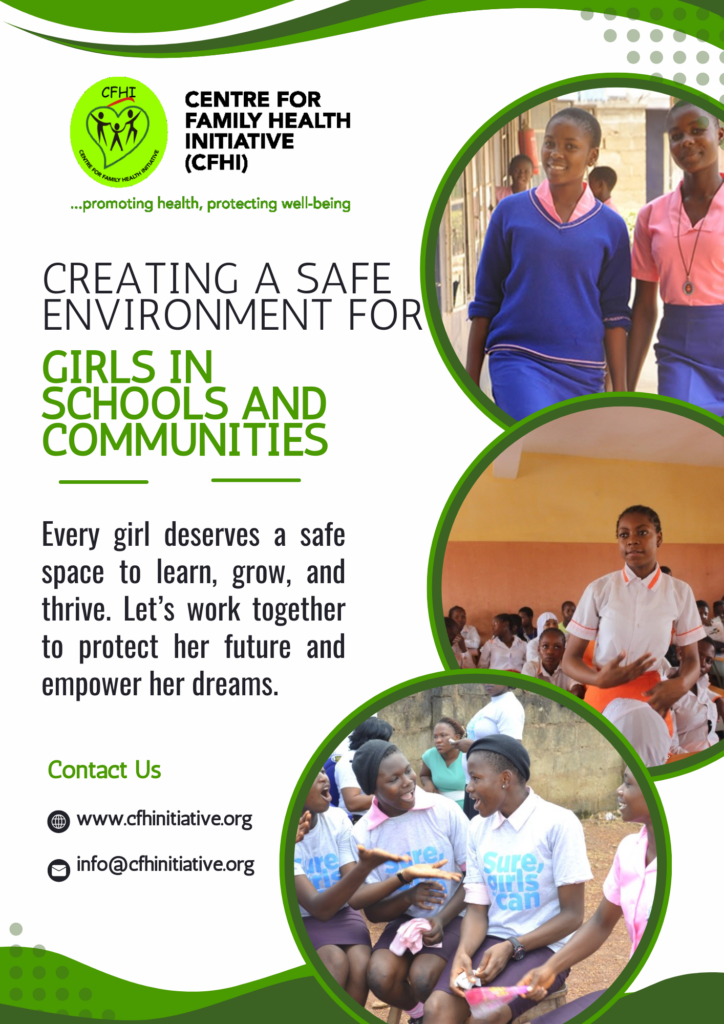
Creating a Safe Environment for Girls in Schools and Communities.
Creating a safe environment for girls in schools and communities is not a luxury; it is a necessity for national growth, justice, and human dignity. When a girl walks into a classroom, she should be thinking about her lessons and dreams not about fear. Yet for millions of girls around the world, safety is not guaranteed. According to the Malala Fund State of Girls’ Education Report, more than 120 million girls globally are out of school, with insecurity, poverty, and gender discrimination among the leading causes (Malala Fund, 2023). Behind these numbers are real girls whose futures are delayed or permanently disrupted.
Nigeria reflects this global crisis in painful ways. Data from UNICEF shows that Nigeria has one of the highest numbers of out-of-school children in the world estimated at over 18 million with girls disproportionately affected in conflict-affected regions (UNICEF Nigeria, 2023). The abduction of schoolgirls from Chibok in 2014 drew global outrage, yet attacks on schools have continued in parts of Kaduna, Niger, Zamfara, and Sokoto States. Recent education security reporting highlights ongoing threats and forced withdrawals of girls from school due to fear of violence. (See UNICEF Press Release on education safety.)
Violence is not only external. Research by Plan International shows that many girls experience harassment, bullying, or sexual violence within school environments, often from peers or authority figures. Such incidents frequently go unreported due to stigma and weak reporting mechanisms (Plan International, 2022). When girls feel unsafe in school, attendance drops and dropout rates increase. According to UNESCO Global Education Monitoring Report, school-related gender-based violence significantly affects learning outcomes and contributes to early school leaving (UNESCO, 2023).
Infrastructure gaps also contribute to insecurity. Thousands of schools in Nigeria lack perimeter fencing, security personnel, and adequate lighting, making them vulnerable to intrusion, theft, and attacks (Nigeria Security and Civil Defence Corps Report, 2024). Beyond physical security, access to water, sanitation, and hygiene (WASH) facilities is essential. The WHO/UNICEF Joint Monitoring Programme reports that inadequate sanitation disproportionately affects adolescent girls, especially during menstruation, leading to absenteeism and reduced participation (WHO/UNICEF JMP Report, 2023).
Community norms further shape girls’ vulnerability. According to UN Women, harmful gender norms, early marriage, and tolerance of violence increase girls’ risk of dropping out and experiencing abuse. In areas with high gender inequality, girls face restricted mobility and limited decision-making power, undermining their educational continuity and safety (UN Women, 2023).
Creating safer environments therefore requires coordinated action. Governments must strengthen school security architecture, implement early warning systems, and enforce child protection policies. Schools should adopt safeguarding frameworks and confidential reporting systems. Communities must challenge harmful norms and actively support girls’ education. Civil society organizations should be supported to expand advocacy, mentorship, and survivor support services.
Ensuring safety for girls is not simply about protection it is about possibility. When girls learn in secure environments, they are more likely to complete their education, participate in the workforce, delay early marriage, and contribute to economic growth. Safety forms the bedrock of confidence and achievement. If development is truly our goal, then protecting girls in schools and communities must be our shared responsibility.
Speak Wednesday is an initiative of CFHI to address issues around gender-base violence and gender-bias.
References
- Malala Fund – State of Girls’ Education Report: https://malala.org
- UNICEF Nigeria – Child Protection & Education Data: https://www.unicef.org/nigeria/education
- UNICEF Press Release on Securing Children’s Education: https://www.unicef.org/press-releases/10-year-mark-chibok-abductions-unicef-urges-action-secure-childrens-education
- Plan International – Unsafe Schools Report: https://plan-international.org/publications
- UNESCO Global Education Monitoring Report: https://www.unesco.org/gem-report
- UN Women – Gender Equality & Education: https://www.unwomen.org/en/what-we-do/education
- WHO/UNICEF Joint Monitoring Programme (WASH in Schools): https://washdata.org
Creating a Safe Environment for Girls in Schools and Communities. Read More »