Speak Wednesday

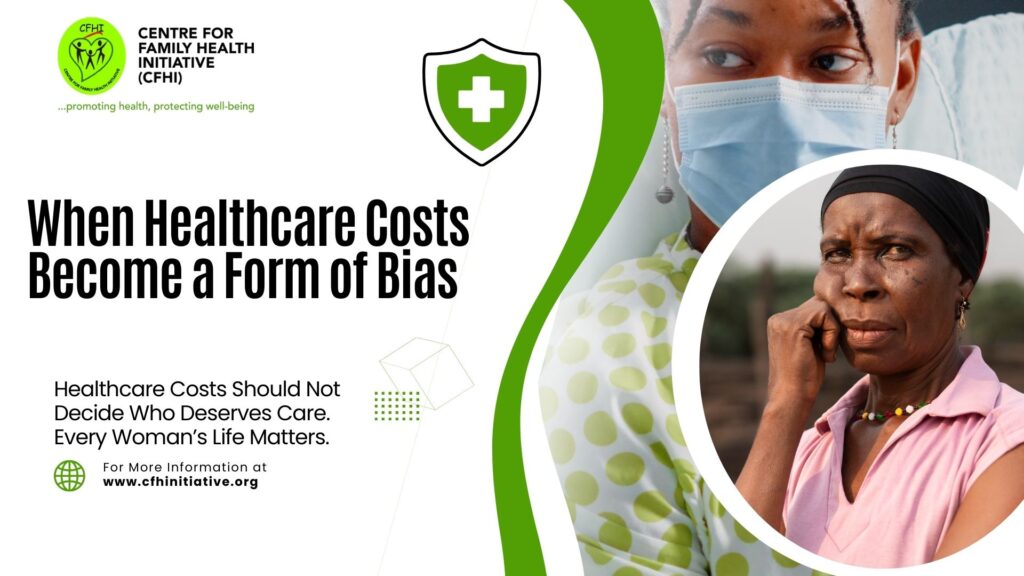
When Healthcare Costs Become a Form of Bias

When healthcare costs rise beyond the reach of ordinary people, they silently become a form of bias one that decides who lives, who suffers, and who is forced to endure preventable pain. In Nigeria today, access to quality healthcare is increasingly determined not by need, but by ability to pay. For millions of women and girls, especially in low-income and underserved communities, the cost of care has become a cruel barrier that denies them their most basic right: the right to health. This hidden injustice affects lives, futures, and communities.

The impact of this bias is devastating. Pregnant women delay antenatal care because consultation fees are unaffordable, adolescent girls are denied reproductive health services, and survivors of gender-based violence cannot access timely medical attention due to cost. These barriers fuel inequality, worsen health outcomes, and perpetuate cycles of suffering. When healthcare becomes a privilege instead of a right, women and girls bear the heaviest burden, trapped in a system that marginalizes them and ignores their dignity.

The financial strain of out-of-pocket spending is crushing. Families are forced to choose between food, education, and medical care, often at the expense of women and girls. This reality exposes a health system that has failed to protect those most vulnerable, leaving them at risk of illness, neglect, and further gender-based harm. A functional, responsive healthcare system should uplift women and girls, not push them into vulnerability. Every woman and girl deserve care, respect, and protection regardless of income.

The Nigerian government must act decisively. Investing in maternal, reproductive, and gender-sensitive health services, strengthening primary healthcare, implementing effective insurance schemes, and ensuring accountability at every level are not optional, they are urgent obligations. Health must be treated as a national priority, because no society can prosper while its women and girls remain unwell, unprotected, and underserved. A fair and just society is one where access to healthcare is based on need, not income. Ending cost-driven bias in healthcare requires collective action from policymakers prioritizing women’s health financing, to institutions delivering quality care, to communities demanding equitable systems.

The call to action is clear: the government, stakeholders, and citizens must commit to ensuring healthcare is affordable, accessible, and equitable for all. Healthcare should heal, protect, and empower women and girls, and not discriminate against them. Until costs no longer determine who can access care, gender-based bias will continue to persist quietly, unfairly, and at an unacceptable human cost.

Speak Wednesday is an initiative of CFHI to address issues around gender-base violence and gender-bias.

When Healthcare Costs Become a Form of Bias Read More »

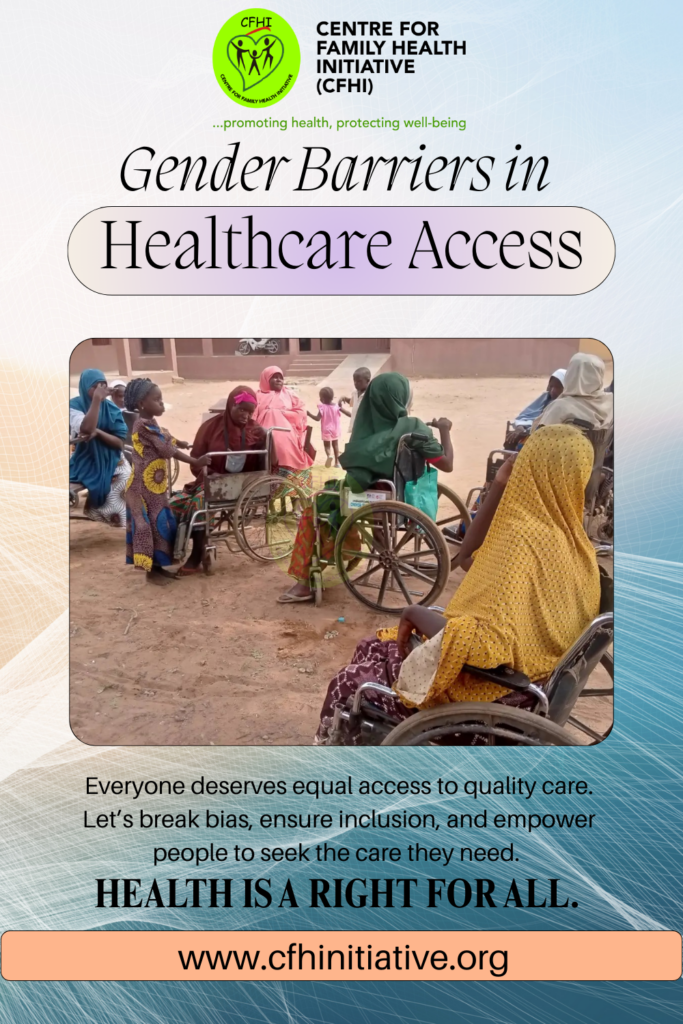
Removing Gender Barriers in Healthcare Access

Removing gender barriers to healthcare is not only a matter of equity it is a moral and practical necessity if societies are to survive and thrive. Women and girls face layered obstacles to care: constrained mobility, financial dependence, harmful social norms, and health systems that are under-resourced and sometimes discriminatory. The World Health Organization highlights that gender norms and discrimination systematically limit access to services for women and girls, reducing their ability to obtain timely information, preventive care, and lifesaving treatment (1). These barriers are compounded by grim facility gaps: recent WHO/UNICEF data show billions are treated in health settings that lack basic water, sanitation, hygiene, and reliable electricity conditions that make safe maternal care and emergency treatment precarious (2). At the same time, progress toward universal health coverage (UHC) has slowed, leaving significant groups especially women in rural and low-income communities exposed to out-of-pocket costs and unmet needs (3).

The consequences are measurable and stark. Nigeria, for example, continues to bear a disproportionate share of global maternal deaths, a reality linked to regional inequalities in access, weak infrastructure, and funding shortfalls (4). Globally, analyses of health inclusivity reveal that refugees, displaced women, women with disabilities and other marginalized groups are far more likely to be denied or excluded from care in some cases by more than twenty percentage points compared with non-marginalized groups (5). These are not abstract injustices: they translate into delayed antenatal visits, unattended deliveries, untreated complications, and endless cycles of preventable suffering. Removing gender barriers means addressing the social drivers that prevent women from seeking care as urgently as fixing the physical gaps in facilities.

Civil society organisations and local actors are essential partners in closing these gaps. The Centre for Family Health Initiative (CFHI) works at the community level to confront both practical and cultural barriers to care: we run health education and rights-awareness campaigns that equip women and families with knowledge about available services and how to claim them; we strengthen linkages between households and primary health centres through referrals and case management; we support WASH and menstrual hygiene programmes so women can access services with dignity; and we provide capacity building for community health workers and facility staff so that care is both accessible and respectful (6). Where infrastructure is missing, CFHI has partnered with donors and initiatives to deliver pragmatic solutions for example installing solar birth kits in underserved PHCs to ensure safe night-time deliveries while simultaneously training Healthcare Professionals and Community Health Extension Workers (CHEWs) to enhance their competencies in clinical care, documentation, counselling, and emergency response, ensuring that PHCs can deliver reliable and respectful services across all essential health areas

To remove gender barriers at scale, governments, donors, and health systems must act on several fronts. First, finance primary health care adequately and ensure that essential services are free or financially protected at the point of use, so women are not forced to choose between care and survival. Second, invest in facility infrastructure WASH, electricity, cold chain and privacy provisions because dignity and safety are prerequisites for access. Third, embed gender-responsive policies across health programming: mandate respectful maternity care, train providers on implicit bias and discrimination, involve women and adolescent girls in service design, and expand targeted outreach for marginalized groups. Fourth, strengthen data systems to capture gender-disaggregated indicators and unmet needs so resource allocation can follow the evidence. Finally, create accountability mechanisms community scorecards, patient charters and independent oversight so promises become measurable action.

Change requires more than policy papers; it requires citizens, health workers, NGOs and governments to demand it and to act. We call on policymakers to prioritise gender responsive UHC financing and facility upgrades, on donors to fund long-term health system strengthening rather than short-term projects, on facility managers to adopt respectful care protocols today, and on community leaders to champion women’s right to health. If we truly value half our population, we will remove the gender barriers that deny women the healthcare they are owed.

References

  1. World Health Organization. Gender and health. Available from: https://www.who.int/health-topics/gender.
  2. World Health Organization; UNICEF. Countries making unprecedented efforts but billions still lack basic services in health-care facilities — WHO-UNICEF report warns. WHO website. 24 Sep 2025. Available from: https://www.who.int/news/item/24-09-2025-countries-making-unprecedented-efforts-but-billions-still-lack-basic-services-in-health-care-facilities—who-unicef-new-report-warns.
  3. World Health Organization. Universal health coverage (UHC) fact sheet. Available from: https://www.who.int/news-room/fact-sheets/detail/universal-health-coverage-(uhc).
  4. The Guardian. ‘Difficult choices’: aid cuts threaten effort to reduce maternal deaths in Nigeria. 21 May 2025. Available from: https://www.theguardian.com/world/2025/may/21/aid-cuts-threaten-effort-reduce-maternal-deaths-nigeria.
  5. Economist Impact. Understanding health inclusivity for women. Available from: https://impact.economist.com/projects/health-inclusivity-index/inclusivity-topics/articles/understanding-health-inclusivity-for-women.
  6. Centre for Family Health Initiative (CFHI). Who we are / What we do. Available from: https://www.cfhinitiative.org.


Removing Gender Barriers in Healthcare Access Read More »

Beyond Stigma: Community-Led Support for Women and Girls Living with HIV

Stigma remains one of the greatest obstacles to ending HIV: globally, according to the latest UNAIDS estimates, about 40.8 million people were living with HIV as of the end of 2024, with women and girls accounting for approximately 53% of all infections [1]. Despite progress in expanding treatment access bringing lifesaving antiretroviral therapy to over 31 million people worldwide millions still face stigma, discrimination, and social exclusion, which continue to limit their ability to seek testing, care, and long-term support [1].

Evidence shows that stigma discourages people from testing, delays linkage to treatment, and undermines adherence; pooled analyses across African surveys and facility studies find that people who experience stigma are significantly less likely to know their status or remain engaged in care, which in turn reduces chances of viral suppression and worsens health outcomes [2,3]. The scientific consensus that “U=U” (Undetectable = Untransmittable) underscores why ending stigma is also a prevention strategy: people on effective antiretroviral therapy (ART) who achieve and maintain an undetectable viral load do not sexually transmit HIV [4]. Despite these advances, gaps remain UNAIDS reports that while millions are on treatment, about 31.6 million people were accessing ART in 2024, leaving a substantial number still unreached by life-saving services [1].

Community-led support is central to bridging those gaps for women and girls. Practical, evidence-based community interventions peer support groups, community health worker follow-up, safe disclosure spaces, integrated mental-health services, and targeted outreach to adolescents have been shown to increase testing uptake, improve retention on ART, and reduce internalized stigma [5,6]. In Nigeria and other countries, facility-level and community studies link stigma with lower adherence and higher loss to follow up, highlighting the need for local, culturally sensitive responses that engage families, faith leaders, youth networks, and women’s groups [3,7]. Gender-sensitive programming is particularly important: women and girls face intersectional stigma driven by gender norms, economic dependence, and the risk of gender-based violence barriers that require combined social protection, livelihood support, and confidential clinical services to overcome [5].

At the Centre for Family Health Initiative (CFHI), community-led support is operationalized through sustained activities that go beyond one-day events. CFHI provides community HIV testing and counselling, adolescent-friendly education, psychosocial support, and peer navigation to link women and girls to care and keep them on treatment [8]. The organization integrates stigma-reduction messaging into gender-norms dialogues, trains community health volunteers in respectful care, and runs livelihood and empowerment sessions that reduce economic vulnerability an important factor that often forces women to remain in situations where disclosure is dangerous. CFHI’s community outreach also emphasizes U=U messaging to demystify treatment and encourage adherence and last year’s community testing and sensitization activities in Imo State reached hundreds with counselling and referrals, reinforcing the role of sustained local engagement in improving outcomes [8].

Ending HIV stigma requires action across sectors. Health facilities must adopt anti-discrimination policies and provide confidential, quality services; community leaders and faith institutions must publicly reject harmful narratives; schools and youth groups must deliver age-appropriate HIV education; and social protection programmes should prioritize women and girls so economic dependence does not block access to care. Donors and governments must sustain funding for community-led responses, which evidence shows are cost-effective and essential for reaching the UN targets to end AIDS as a public health threat [5,6].

Now is the time for communities to move from awareness to durable action. Support people living with HIV by learning and sharing accurate facts, joining, or starting peer support groups, encouraging friends and family to test, demanding respectful care at clinics, and supporting empowerment programmes that reduce vulnerability. CFHI and partners stand ready to work with communities, faith groups, schools, and health services to build safe, supportive environments where women and girls living with HIV can thrive. Together we can make stigma a thing of the past because when communities lead, lives change.


References

  1. Global HIV & AIDS statistics — Fact sheet. Geneva: Joint United Nations Programme on HIV/AIDS; 2025.
    Available from: https://www.unaids.org/en/resources/fact-sheet
  2. Doyle CM, Kuchukhidze S, Stannah J, Flores Anato JL, Xia Y, Logie CH, et al. The impact of HIV stigma and discrimination on HIV testing, antiretroviral treatment, and viral suppression in Africa: a pooled analysis of population-based surveys.
    Available from: https://www.researchgate.net/publication/391079137_The_Impact_of_HIV_Stigma_and_Discrimination_on_HIV_Testing_Antiretroviral_Treatment_and_Viral_Suppression_in_Africa_A_Pooled_Analysis_of_Population-Based_Surveys
  3. Mahlalela NB, et al. The association between HIV-related stigma and health-seeking behaviour, testing and adherence: a systematic review. J Public Health. 2024.
    Available from: https://www.ncbi.nlm.nih.gov/pmc/articles/PMC10896802/
  4. UNAIDS / IAS / Prevention Access Campaign. Undetectable = Untransmittable (U=U) consensus and evidence. Geneva: UNAIDS; 2018–2024.
    Available from: https://www.unaids.org/en/resources/presscentre/featurestories/2018/july/undetectable-untransmittable
  5. World Health Organization. Eliminating stigma and discrimination in HIV responses: evidence and interventions. Geneva: WHO; 2022.
    Available from: https://www.who.int/teams/global-hiv-hepatitis-and-stis-programmes/hiv/strategic-information/hiv-data-and-statistics
  6. Community-led monitoring / Community-led responses — evidence and good practice. Geneva: UNAIDS; 2023.
    Available from: https://www.unaids.org/en/resources/documents/2023/community-led-monitoring-in-action
  7. Okunola A, et al. The impact of stigma on ART adherence in Ondo State clinics: cross-sectional evidence. Int J Res Innov Social Sci. 2025.
    Available from: https://rsisinternational.org/journals/ijriss/articles/the-impact-of-stigma-and-discrimination-on-adherence-levels-in-hiv-positive-patients-evidence-from-ondo-state-clinics/
  8. Centre for Family Health Initiative (CFHI). Community HIV services, stigma reduction and outreach report. Owerri: CFHI; 2024–2025.
    Available from: https://www.cfhinitiative.org


Beyond Stigma: Community-Led Support for Women and Girls Living with HIV Read More »

Supporting Survivors Beyond the Statistics: A Call to Action This 16 Days of Activism

Each year, the 16 Days of Activism Against Gender-Based Violence reminds the world that violence against women and girls is not just a crisis it is a daily reality for millions [1]. Reports, data sheets, and global indicators help us understand the magnitude, but behind every statistic is a living, breathing person whose life has been altered by harm. This year, as we observe the campaign, it is crucial that we shift our collective attention from the numbers to the humans behind them. True progress lies in supporting survivors beyond the statistics.

Too often, survivors are reduced to percentages “1 in 3,” “1 in 5,” “35% globally” [2]. While these numbers capture attention, they do not capture the emotional, physical, and economic aftermath that survivors carry. They do not speak to the silence, the stigma, the fear of seeking help, or the systemic barriers that make healing harder than the violence itself. Ending gender-based violence requires more than awareness. It demands empathy, survivor-centered systems, and long-term support [3].

Supporting survivors goes far beyond responding to incidents; it means creating environments where they are believed, protected, and empowered to rebuild. It means ensuring access to justice, psychosocial care, healthcare, safe spaces, and economic opportunities [5]. It also means challenging harmful gender norms, dismantling structures that enable violence, and educating communities to recognize and prevent abuse before it happens.

At the Centre for Family Health Initiative (CFHI), this survivor-centered approach is at the heart of our work. Through our gender norms interventions, community dialogues, capacity-building programs, and youth engagement initiatives, CFHI champions the rights, dignity, and well-being of women, girls, and all survivors. From preventive education to psychosocial support and referral services, we ensure that survivors are not lost in the numbers but seen, heard, and supported through their healing journey.

But CFHI cannot do this alone. Ending violence is a collective responsibility; As we mark this year’s 16 Days of Activism, we call on, communities to break the culture of silence and create safe spaces for survivors, institutions to strengthen reporting systems, legal protections, and survivor-friendly services. Parents and caregivers to model respect and equality within their homes, young people to speak up against online and offline violence and promote positive gender norms. Government and policymakers to invest in prevention, strengthen accountability, and fund survivor services, you, reading this, to challenge harmful behaviours, support survivors around you, and become an advocate for a violence-free world.

Survivors are not statisticsthey are individuals deserving of dignity, justice, and healing. As we stand together during the 16 Days of Activism, let us commit to building a society that supports survivors not just in reports but in real life, every day [4].

CFHI remains steadfast in its mission: promoting health, protection, and empowerment for all. Together, we can end violence one voice, one action, and one survivor supported at a time.


References

[1] UN Women. (2024). Ending Violence Against Women: Facts & Figures.
https://www.unwomen.org/en/what-we-do/ending-violence-against-women/facts-and-figures

[2] World Health Organization. (2021). Violence Against Women Prevalence Estimates 2018.
https://www.who.int/publications/i/item/9789240022256

[3] UN Women. 16 Days of Activism Against Gender-Based Violence Campaign.
https://www.unwomen.org/en/what-we-do/ending-violence-against-women/take-action/16-days-of-activism

[4] United Nations. (2024). International Day for the Elimination of Violence Against Women  Background.
https://www.un.org/en/observances/ending-violence-against-women-day

[5] UNFPA. (2023). Gender-Based Violence: Global Overview and Response Strategies.
https://www.unfpa.org/gender-based-violence


Supporting Survivors Beyond the Statistics: A Call to Action This 16 Days of Activism Read More »

SPEAK WEDNESDAY

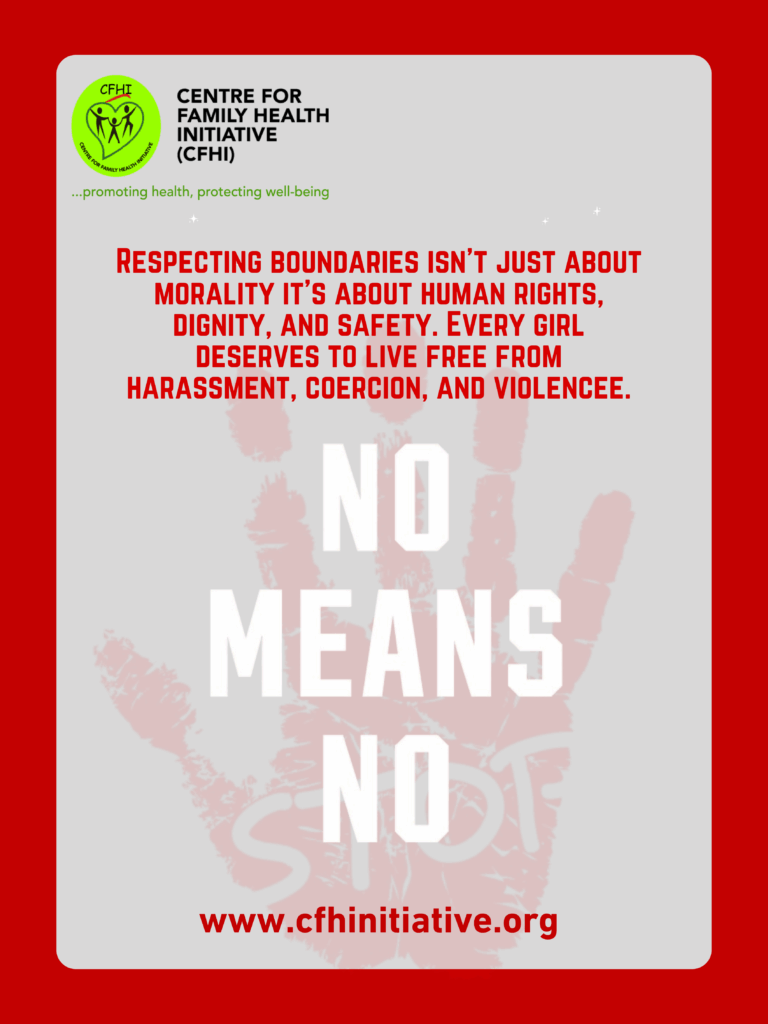
“NO Means NO”

Today, the simple word “No” still struggles to carry the weight it deserves. For many young people, especially girls and young women, saying “no” can come with fear, pressure, or misunderstanding. Yet, “no” should be enough. It is a complete sentence one that should be heard, respected, and never questioned. As we continue to raise awareness around gender equality and safety, understanding the true meaning of consent and personal boundaries becomes essential for building a healthy society.

Consent is more than just permission; it is about respect, autonomy, and communication. It means that every person has the right to decide what happens to their body, their time, and their emotions. Consent must be freely given, not forced, tricked, or coerced. It cannot be assumed from silence or past behaviour, and it can be withdrawn at any time. In relationships, friendships, or social settings, learning to respect a person’s “no” whether spoken or unspoken reflects maturity and integrity.

Unfortunately, the statistics around consent violations remain alarming. According to the World Health Organization (WHO), nearly one in three women globally has experienced physical or sexual violence in her lifetime, most often at the hands of an intimate partner 1. In Nigeria, the National Bureau of Statistics (NBS) reports that many incidents of sexual or domestic violence are never reported, often due to fear of stigma, shame, or disbelief 2. These figures highlight how deeply ingrained gender norms and societal silence can make it difficult for survivors to speak out and for young people to learn what healthy respect truly looks like.

For young girls, learning to say “no” and knowing that it must be respected is an important part of personal development and self-protection. Saying “no” is valid when faced with peer pressure to engage in sexual activity, when uncomfortable with unwanted touching, or when asked to share private information or photos online. “No” is equally powerful in social and emotional spaces: refusing manipulative statements like “If you love me, you’ll do it,” or declining invitations that compromise one’s comfort or safety. Every young person must understand that their voice matters, and their boundaries define who they are.

Equally important is educating boys and young men about consent, empathy, and accountability. True respect means not only hearing “no” but also actively seeking a clear and enthusiastic “yes.” It means understanding that real strength lies in restraint, understanding, and kindness not in control or pressure. When communities, schools, and families foster open conversations about respect and consent, they equip young people with the values needed to build relationships rooted in trust and equality.

Through our gender norms interventions, CFHI empowers young people with knowledge and confidence to challenge and transform harmful gender norms (especially those that disadvantage women and girls) while protecting respect, equality and fairness. Each adolescent club activity, school campaign, and community outreach brings us closer to a society where consent is understood, respected, and upheld where “NO” truly means “NO.

Speak Wednesday is an initiative of CFHI to address issues around gender-base violence and gender-bias.


References

  1. World Health Organization. Violence Against Women: Key Facts. WHO, 2023. Available from: https://www.who.int/news-room/fact-sheets/detail/violence-against-women
  2. National Bureau of Statistics. National Survey on Domestic and Sexual Violence in Nigeria. Abuja: NBS; 2022. Available from: https://nigerianstat.gov.ng/elibrary/read/1241055


SPEAK WEDNESDAY Read More »

SPEAK WEDNESDAY

Safe Spaces, Safe Girls

Every girl deserves to feel safe at home, in school, online, and within her community. Yet, for many adolescent girls, safety is not always guaranteed. From bullying and harassment to harmful gender norms and abuse, too many young girls are forced to grow up in environments that threaten their confidence, education, and dreams.

Safe spaces are not just physical places; they are environments where girls can freely express themselves, learn, share experiences, and access guidance without fear of judgment or harm. They are spaces where girls’ voices are heard, their ideas are valued, and their rights are respected.

When girls feel safe, they thrive, they speak up, lead, innovate. But when fear replaces safety, silence grows and with silence comes vulnerability. According to the United Nations, https://www.un.org/en/observances/ending-violence-against-women-day one in three women worldwide experiences physical or sexual violence in her lifetime, much of which begins during adolescence. Unsafe spaces often normalize this violence, teaching young girls that their safety and dignity can be negotiated; but they cannot.

Why Safe Spaces Matter

Safe spaces help girls:

  • Build self-esteem and confidence through open conversations and mentorship.
  • Access accurate health information, including sexual and reproductive health education.
  • Develop leadership skills that empower them to challenge stereotypes and discrimination.
  • Find support networks to overcome trauma, bullying, and gender-based violence.

Beyond protection from physical harm, girls also need safety in the digital world; shielding them from cyberbullying, online exploitation, and exposure to harmful content. As the digital world becomes a second home for adolescents, creating safe online communities is just as important as protecting physical spaces.

Parents, guardians, teachers, and instructors play a vital role in shaping the safety and confidence of young girls. They must create nurturing environments that make girls feel protected, valued, and always heard.

Adults should provide constant reassurance, letting girls know they are not alone in their challenges. They should encourage them to brace up against the trials of adolescence, reminding them that every challenge is part of growth. Girls should be motivated to stay focused on their goals, believe in their dreams, and never let temporary setbacks define their worth.

When caregivers listen with empathy and guide with love, they give girls the courage to rise above fear, pressure, or self-doubt; building strong, confident women who will lead tomorrow.


Through our gender norms transformation programs, school and community outreaches, and Gender-Based Violence (GBV) prevention campaigns, CFHI continues to educate adolescents and their caregivers on creating supportive, respectful, and inclusive environments. We work to ensure that every girl has access to information, mentorship, and opportunities that build resilience and confidence.

To every adolescent girl reading this: your voice matters. You have the right to safety, respect, and dignity. Speak up when something feels wrong, support your peers, and stand for what is right even when it’s hard.

To parents, teachers, and guardians be the reason a girl feels safe. Create spaces filled with trust, understanding, and love. Encourage her to stay focused, stay brave, and never give up on her dreams.

Because when girls are safe, they are unstoppable. And when girls are unstoppable, communities thrive.

As the African proverb says, “Train a girl, and you train a nation.” This reminds us that creating safe spaces for girls is not only a moral duty but a foundation for building stronger, safer, and more prosperous communities.

Speak Wednesday is an initiative of CFHI to address issues around gender-base violence and gender-bias.


SPEAK WEDNESDAY Read More »

SPEAK WEDNESDAY

Democracy Fails Women When It Ignores Gender Violence

Democracy is more than ballots, parliaments, and courtrooms it is the everyday reality that allows every person to live with dignity and safety. When a democratic system pretends that voting and institutions alone guarantee equality while turning a blind eye to the daily threat of gender-based violence (GBV), it is failing a fundamental promise: protection for all citizens. For millions of women, the “freedoms” democracy claims to protect are hollow if public systems, laws, and practices do not prevent, punish, and deter gendered violence.

The hard numbers refuse to let us look away. Globally, roughly one in three women has experienced physical and/or sexual violence by an intimate partner or sexual violence by a non-partner in her lifetime a staggering indicator that violence is not an exception but a systemic condition that persists across democratic and non-democratic states alike. (World Health Organization)

Nigeria’s statistics reflect this painful truth at home. National data and large-scale studies point to around a third of women experiencing intimate partner violence (IPV), with some surveys showing 31–35% having experienced some form of IPV in recent measures. These are not abstract percentages they translate to millions of women whose bodily autonomy, mental health, economic participation and civic engagement are continuously undermined. (DHS Program)

Worse, the trendlines in some places show an alarming rise in certain forms of violence over time. Comparative analyses of regional data (for example, conflict-affected northeast Nigeria) demonstrate increases in emotional and sexual IPV between survey rounds a decade apart; a signal that crises, weak accountability, and institutional neglect worsen GBV even within states that hold elections. When democratic systems fail to protect women in times of stress, the social contract fractures. (ResearchGate)

 There are three recurring failures because democracy fail in practice:

  1. Visibility without remedy. Democracies can record crimes and produce statistics, but if police, health systems and courts do not follow through, documentation becomes an exercise in moral hygiene rather than justice. Survivors who report violence often encounter blame, delays, unsafe processes, or outright dismissal.
  2. Law without implementation. Nigeria has laws criminalizing domestic and sexual violence, but enforcement is uneven. Where patriarchy is embedded in institutions, legal protections are toothless. Laws on paper become meaningless when budgets, training, and survivor-centered services are absent.
  3. Public indifference normalized as “private matters.” When GBV is repeatedly framed as a private or cultural problem, democratic debate excludes the voices of survivors and diminishes the urgency required for structural change.

These failures matter because gender violence is not merely a private tragedy it is a public, democratic harm. GBV shrinks women’s political voice (fear limits public participation), undermines economic independence (injury, trauma, time away from work), and burdens health systems. Democracies that do not treat GBV as a governance and human-rights priority are sustaining inequality disguised as civility.

It’s not enough to pass new laws; democracies must transform institutions and social norms. That means guaranteeing emergency health and legal services; training and holding police and judiciary accountable; funding safe shelters; integrating GBV prevention in schools and workplaces; and centering survivors in policy design. It also means political leaders must stop treating GBV as a “women’s issue” and recognize it as a democracy and development crisis.

At the Centre for Family Health Initiative (CFHI), we approach this challenge on three complementary fronts: prevention, survivor support, and advocacy. On prevention, we run community dialogues and gender norms activities that challenge the attitudes that normalize violence and silence survivors. For survivors, CFHI facilitates safe referrals and trains Community Health Workers to provide trauma-informed first response and linkages to legal and psychosocial support. On advocacy, we engage local leaders and stakeholders to press for funded, accountable GBV services and to include GBV metrics in local governance performance reviews.

These actions are small in the face of a systemic problem, but democracy is built from local actions. When community-level institutions protect women’s rights and when civic actors demand accountability, national democracy is strengthened. CFHI’s work shows that when communities are empowered to respond and when survivors are listened to, trust grows, and that trust is the living tissue of democratic life.

A call to action

Democracy will keep failing women until citizens and leaders act as if their safety is a public good. If you read this and care about democracy, do three things today:

  • Speak up publicly: challenge the narrative that GBV is a “private” problem.
    • Support survivors and local organizations: fund and volunteer with groups offering direct services.
    • Hold institutions to account: demand transparent budgets for GBV response and regular reporting on prosecutions, service availability, and survivor outcomes.

Democracy isn’t earned through election cycles alone it is preserved by institutions and communities that protect the most vulnerable. Ignoring gender violence is not neutrality; it is complicity. Let us insist that our democracy lives up to its promise not only in rhetoric but in the daily safety and dignity of every woman.

Speak Wednesday is an initiative of CFHI to address issues around gender-base violence and gender-bias.

SPEAK WEDNESDAY Read More »

SPEAK WEDNESDAY

Closing the Gender Wealth Gap to End Violence Against Women

Economic justice is the key to safety, health, and empowerment for women worldwide. Every Wednesday, we raise our voices to challenge injustice, and today we confront one of the most entrenched roots of gender-based violence: economic inequality. The gender wealth gap isn’t just a financial statistic; it’s a silent enabler of abuse, a barrier to freedom, and a public health emergency.

Globally, women earn less than men for the same work3, own less property, have limited access to leadership4 and fewer financial safety nets1. This economic disparity creates a cycle of dependency that heightens exposure to violence and limits the ability to escape abusive environments. In Nigeria, for instance, the Minister of Women Affairs recently emphasized that closing the gender gap could add ₦15 trillion to the country’s GDP annually by 20252, underscoring the economic potential of gender equity.

These issues are persistent and global. In the EU, despite the “Women on Boards” directive aiming for 40% female representation by 2026, progress is slow. Women currently hold only 35% of non-executive roles and 21% of senior executive positions 4. This is despite evidence from a 2025 report showing that companies with greater gender diversity are 25% more likely to be more profitable3. In sectors like tech and finance, women continue to report being passed over for promotions, excluded from decision-making, and subjected to gender-based microaggressions, which stifles their economic advancement4.

Call To Action

To end violence against women, we must invest in their economic power. As outlined in a UN Women 2025 advocacy paper, closing the funding gap in programs that support survivors and prevent violence is critical1. We call on Governments, NGOs, and private sector to collaborate on expanding access to education and vocational training, supporting women-led businesses and financial literacy programs, funding essential services for survivors, including shelters, legal aid, and healthcare, and advocating for and enforcing equal pay and robust workplace protections.

At the Centre for Family Health Initiative (CFHI), we are committed to this work. Through collaborations with partners like the Institute of Human Virology Nigeria (IHVN), Caritas Nigeria, FCT Social Development Secretariat (SDS), TY Danjuma Foundation (TYDF), and Global Philanthropy Alliance (GPA), we have empowered over 2500 women and girls with education, vocational training, business start-up kits, and financial support.

Financial inequality isn’t just unfair; it’s dangerous. It limits women’s choices, increases health risks, and perpetuates cycles of violence and poverty. Empowering women economically is not merely a matter of justice; it is the essential foundation for building safer, healthier societies for all.

Speak Wednesday is an initiative of CFHI to address issues around gender-based violence and gender bias.

References

  1. UN Women. Closing the funding gap to end violence against women and girls [Internet]. 2025 [cited 2025 Oct 21]. Available from: https://knowledge.unwomen.org/sites/default/files/2025-06/closing-the-funding-gap-to-end-violence-against-women-and-girls-en.pdf
  2. The Guardian Nigeria. Closing gender gap will add ₦15tr to Nigeria’s GDP by 2025 [Internet]. 2025 [cited 2025 Oct 21]. Available from: https://guardian.ng/news/closing-gender-gap-will-add-n15tr-to-nigerias-gdp-by-2025/
  3. Women in the workplace 2025: Research and trends [Internet]. 2025 [cited 2025 Oct 21]. Available from: https://www.wellable.co/blog/women-in-the-workplace-2025-research-and-trends
  1. IMD. Gender inequality in the workplace: Why it persists? [Internet]. 2025 [cited 2025 Oct 21]. Available from: https://www.imd.org/research-knowledge/articles/gender-inequality-in-the-workplace-why-it-persists/

SPEAK WEDNESDAY Read More »

SPEAK WEDNESDAY

No Access, No Escape: Why Information is Critical to GBV Survival

When Sheila was nineteen and living in Lagos, the threats began. Her husband told her that if she ever disobeyed him, he would make sure she lost her job and her reputation. One night, terrified, she sent a friend a message begging for help. But she did not know where to go, which law could protect her, or who to call. Information could have saved her. Its absence trapped her.

This is the silent epidemic within gender-based violence (GBV): not only physical harm but the isolation created by ignorance. Without access to timely and accurate information, survivors are left in darkness. Information is not a luxury. It is the first line of defence and the foundation of justice.

Why Information Saves Lives

When a woman understands that violence against her is a crime, she begins to reclaim her power. When she knows where to report, what medical help to seek, and how to preserve evidence, she increases her chances of survival and justice. Without that knowledge, fear becomes her only companion.

Studies from Nigeria show that most women who experience GBV are unaware of available support. In Adamawa State, 60 percent of women knew that services existed, but fewer than 18 percent understood what those services actually offered. A 2025 study found that even educated young women often avoid post-violence health care because they do not know where to go, or they fear stigma and disbelief.

Globally, the United Nations has affirmed through multiple conventions including the Convention on the Elimination of All Forms of Discrimination against Women (CEDAW) and UN Security Council Resolution that access to information is central to ending violence. Without it, laws, services, and resources remain out of reach.


The Barriers That Keep Survivors Silent


Survivors often do not seek help because they believe nobody will believe them. Others live far from formal services. Many lack access to the internet or even a simple phone number they can trust. Information materials are often written in legal or medical language that ordinary people cannot understand. In rural areas, the absence of community-based awareness campaigns means women do not even know that shelters or hotlines exist.


These are not personal failures. They are systemic failures of governments that under fund awareness programmes, of institutions that do not communicate in local languages, and of communities that allow silence to thrive.


What Survivors Can Do When They Need Help

Every survivor deserves a pathway to safety. Here is what that path can look like:


  1. Seek immediate safety: If you are in danger, leave the space if possible. Go to a trusted friend, relative, neighbour, or nearby public place.
  2. Reach out for help: Call the national GBV toll-free line: 0800 033 3333. You can also contact the organisations that provide counselling, medical referrals, and legal support.
  3. Preserve evidence: Avoid bathing or changing clothes if you experienced physical or sexual violence. Seek medical care immediately.
  4. Know your rights: Violence against women is a crime under the Violence Against Persons (Prohibition) Act, 2015. Every survivor has a right to medical treatment, legal assistance, and protection.
  5. Document and speak. Keep copies of threatening messages or photos. Report to a the police or NAPTIP. You are not alone, and help exists.


Call to Action

Governments and institutions must treat access to information as a legal right and embed it firmly within all GBV policies and action plans. Every state should guarantee that survivors know what services exist and how to reach them. Public awareness must go beyond slogans to reach the offline majority through community radio, schools, and local languages that resonate. Survivor-friendly spaces should be standard in every police station, hospital, and local government office, where trained officers and clear contact points offer judgement-free guidance. Finally, investment in ethical data systems and public education is non-negotiable. Reliable data exposes the gaps, directs resources, and saves lives, as demonstrated by the efforts of UNFPA and Nigeria’s GBV Information Management System.


How CFHI Is Closing the Information Gap

At the Centre for Family Health Initiative (CFHI), we believe that information is power and in the fight against GBV, it is protection. CFHI leads nationwide awareness through the 16 Days of Activism, runs community and school groups that teach health, rights, and safety, and provides direct referrals for survivors to medical, psychosocial, and legal services. Our work reaches those often left behind; the woman without a phone, the girl who cannot read, the family with no internet or transport. By breaking information barriers, we give survivors a voice, a pathway, and a plan. Because when women know their rights and how to use them, violence begins to lose its power.


The Global Urgency

Across the world, violence thrives where information is weakest. For the woman in a remote village without a phone or access to the internet, silence becomes her only shelter. For the girl who cannot read, the poster on the clinic wall might as well be blank. For displaced women in camps, and for widows in informal settlements, help often feels like a rumour whispered too far away to reach. In these spaces, information is not abstract,  it is survival. It is the map that leads from danger to safety, from fear to agency. Every hotline number, every awareness programme, every conversation led in a local dialect is more than communication. It is protection. It is the first step toward justice and the quiet revolution that keeps women alive.


Speak Wednesday is an initiative of CFHI to address issues around gender-based violence and gender bias.


#NoAccessNoEscape #InformationSavesLives #EndGBV #RightsAreKnowledge #SpeakWednesday #GenderJustice


SPEAK WEDNESDAY Read More »

SPEAK WEDNESDAY ON LITERACY AS A SHIELD AGAINST GENDER-BASED VIOLENCE (GBV)

In a crowded community classroom in Gwagwalada, Aisha sat hunched over her exercise book. She was thirty-five, a mother of four, and had never finished primary school. The day she finally read a passage out loud, she broke down in tears. For the first time, she could read a hospital form without begging for help. She could text her sister to say, “I am not safe.” That is the quiet revolution of literacy.

In Nigeria, the literacy gap tells its own story of urgency and survival. Only about 52 percent of Nigerian women aged fifteen and above are literate, compared to 70 percent of men.  Adult literacy enrolment for women still hovers under 50 percent. At the same time, one in three Nigerian women has experienced physical violence since age 15, most often by intimate partners.

These statistics are not unrelated. Literacy is a shield. A literate woman can read her rights, understand legal processes, and demand justice. She is better able to secure paid work, making her less dependent on an abuser. She can read health brochures, helpline numbers, and contracts. She can mobilize her peers. Without literacy, too many Nigerian women remain silent targets, unable to navigate systems that were already stacked against them.

Research consistently shows that literacy reduces women’s vulnerability to violence. In Nigeria, scholars confirm literacy is a “preventative force” against gender-based violence This is not just theory, it is lived reality in rural villages, IDP camps, and bustling cities.

What Must Change

The global fight against GBV cannot succeed if literacy is treated as an afterthought. Governments and international partners must deliberately embed literacy into GBV prevention and response frameworks. That means funding second-chance learning for women who were forced out of school. It means designing shelters, clinics, and police stations to provide information in simple, accessible formats. It means collecting and publishing disaggregated data that shows how literacy gaps map onto vulnerability to violence.

Equally important, literacy must be framed as a cultural and social good, not just an individual skill. Traditional leaders, faith communities, and grassroots organizers across Nigeria and beyond can reshape norms so that women’s literacy is understood as dignity itself.

A Call to Action

This agenda is at the heart of Sustainable Development Goal 4 (Quality Education) and Goal 5 (Gender Equality). But it also strengthens progress on Goal 16 (Peace, Justice, and Strong Institutions) because literate women are better positioned to engage with governance and justice systems. Literacy is not a side project; it is a front-line intervention in the fight against gender inequality and violence.

When women can read, they resist silence, dependency, and abuse. They resist systems designed to keep them small. They resist by teaching their daughters to read and by demanding that their communities do better.

The stories may begin in Gwagwalada, but the message is universal: when she can read, she can resist. Literacy is liberation. Literacy is justice.

Speak Wednesday is an initiative of CFHI to address issues around gender-based violence and gender bias

#SpeakWednesday #WhenSheReadsSheResists #LiteracyIsJustice #EndGBV #EducationForHer #CFHI

References
UNESCO: Female literacy rate in Nigeria (unesco.org)
NBS: Literacy statistics for women and men in Nigeria (nigerianstat.gov.ng)
UNFPA: GBV prevalence in Nigeria (nigeria.unfpa.org)
PMC: Literacy and domestic violence reduction (pmc.ncbi.nlm.nih.gov)
ResearchGate: Literacy as prevention of GBV in Nigeria (researchgate.net)


SPEAK WEDNESDAY ON LITERACY AS A SHIELD AGAINST GENDER-BASED VIOLENCE (GBV) Read More »