Speak Wednesday

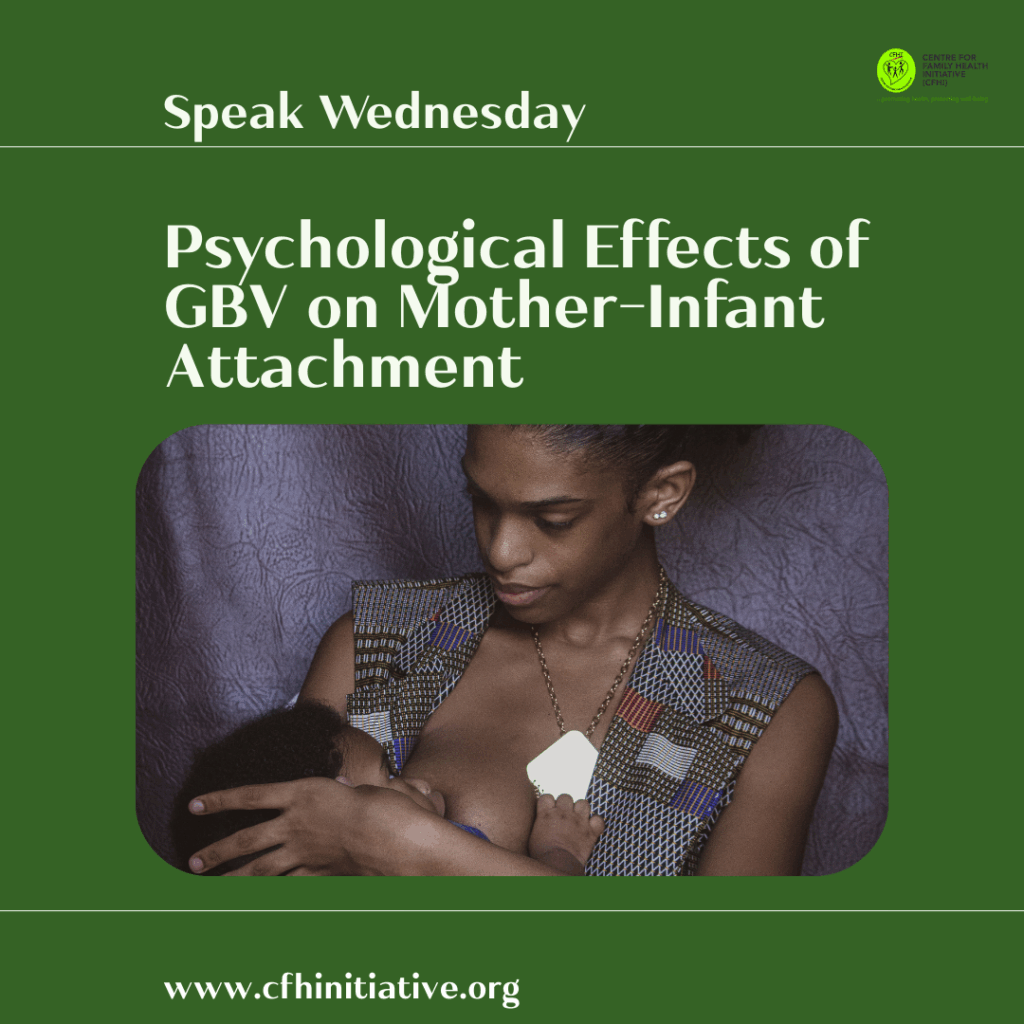
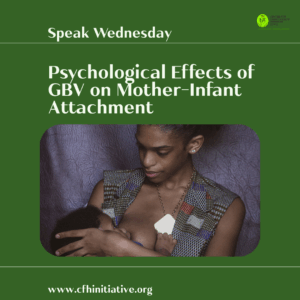
SPEAK WEDNESDAY ON PSYCHOLOGICAL EFFECTS OF GBV ON MOTHER-INFANT ATTACHMENT

She held her baby with trembling hands. Not from fear of motherhood, but from fear of a man. A man she once trusted. A man who turned her body into a battlefield.
This is not fiction. This is the everyday, hushed reality of thousands of Nigerian women living with the trauma of gender-based violence (GBV) and the invisible heartbreak it causes their children before they even learn how to speak.

When Violence Enters the Womb
In many Nigerian cultures, a pregnant woman is treated with care and reverence. But behind closed doors, some women are being battered while their unborn babies kick helplessly in the womb. According to the World Health Organization, 1 in 3 women globally experience physical or sexual violence in their lifetime and many of them are pregnant when it happens.
What happens when a baby’s first experience of the world is stress? What happens when a mother carries both her child and her trauma?
Research shows that when a pregnant woman is abused, her body floods with stress hormones like cortisol. These chemicals don’t stay with her, they cross the placenta and reach the baby, altering the way the child’s brain develops. That child may be born with a heightened sensitivity to stress, and a brain wired for fear.

The Silent Wound: Attachment and Survival
In healthy conditions, a mother and her infant develop a secure attachment, a bond of trust and comfort that shapes the child’s emotional foundation for life. But when a mother is surviving GBV, her own emotional resources are depleted. She may be physically present but emotionally unreachable. She’s in survival mode.
This isn’t a question of love. These mothers love their babies with every fibre of their being. But trauma changes the brain. A woman dealing with Post-traumatic stress disorder (PTSD) or depression caused by abuse may struggle to read her baby’s cues. She might flinch at a cry. She might freeze during breastfeeding. Her touch may lack the warmth she desperately wants to give.
This emotional disconnect is called disrupted attachment, and it’s not the mother’s fault. It’s the consequence of living in fear. UNICEF link GBV to insecure mother-infant attachments, which increase the risk of behavioural problems, anxiety, and poor emotional regulation in children.

Breaking the Silence, Healing the Bond
This is not just a woman’s issue. This is a society issue. A society where women are unsafe is a society where childhoods are fractured before they begin. It is time to protect mothers so they can nurture, not just survive.

What We Must Do:
• Create safe reporting systems for pregnant women and mothers experiencing GBV.
• Train healthcare workers to screen for abuse during prenatal visits and provide trauma-informed care.
• Educate communities to stop victim-blaming and start protecting.
• Support shelters and psychosocial support services for survivors and their children.
• Involve men. This is not a woman’s fight alone. The cycle can’t break without male accountability.
Break the silence. Protect the mother. Save the child.
Speak Wednesday is an initiative of CFHI to address issues around gender-based violence and gender bias
#SpeakWednesday #EndGBV #CFHI #MotherhoodInNigeria #MentalHealthMatters #BreakTheCycle #ProtectMothers #TraumaHealing #AttachmentMatters #SayNoToViolence
References
• WHO: Violence Against Women
• APA: How Maternal Stress Affects Babies
• UNICEF: Why Secure Attachment Matters

SPEAK WEDNESDAY ON PSYCHOLOGICAL EFFECTS OF GBV ON MOTHER-INFANT ATTACHMENT Read More »

SPEAK WEDNESDAY ON RAISING VOICES, NOT VICTIMS: YOUTH LED ACTION AGAINST GENDER BIAS

Gender bias is not an abstract issue. It is lived. It is spoken. It is enforced in homes, schools, workplaces, and policies. It silences girls. It restricts women. It excuses harm. And too often, it goes unchallenged.
But young people are challenging it. Boldly. Locally. Collectively.
Across communities, youth are stepping forward to lead work that others have delayed for too long. They are not waiting for perfect systems. They are building new ones. With peer education, advocacy, safe spaces, campaigns, and community engagement, they are confronting bias at its roots.

What Does Youth Led Action Look Like?
It looks like CFHI’s student-led D.R.E.A.M.S Clubs in JSS Jiwa, Kabusa, and Gosa, where adolescent girls learn about sexual and reproductive health, build confidence, and develop soft skills. Led by trained peer mentors, these clubs use drama, storytelling, and discussion to unpack gender stereotypes and empower girls to speak up, stay in school, and make informed choices about their futures.
It looks like a team of university students creating anonymous reporting tools for survivors of harassment on campus, tools that led their school to set up a proper response mechanism for the first time.
It looks like a grassroots initiative where young volunteers go door to door talking to families about early child marriage, using personal stories and translated flyers to challenge harmful norms in their own communities.
It looks like youth panels demanding accountability from state officials, calling out the lack of funding for gender-based violence shelters, and proposing policy alternatives based on what survivors need.
It looks like menstrual hygiene outreach in Abuja schools, where CFHI leads education sessions, distributes reusable sanitary pads, and breaks stigma, empowering girls to manage their health with dignity and confidence.
These are not theoretical solutions. They are working solutions. Led by young people. Adapted to their context. And rooted in both lived experience and collective action.

Why It Matters
Youth are not waiting for permission. They are stepping in where systems have failed, educating where schools stay silent, advocating where laws fall short, and creating safe spaces where none existed.
This is not charity. It is justice.
At CFHI, we believe youth-led action deserves more than applause. It demands funding, policy backing, and long-term investment.
Raising voices means listening. It means resourcing. It means seeing young people not as victims of gender bias but as frontline leaders in the fight to end it.

Speak Wednesday is an initiative of CFHI to address issues around gender-based violence and gender bias.

SPEAK WEDNESDAY ON RAISING VOICES, NOT VICTIMS: YOUTH LED ACTION AGAINST GENDER BIAS Read More »

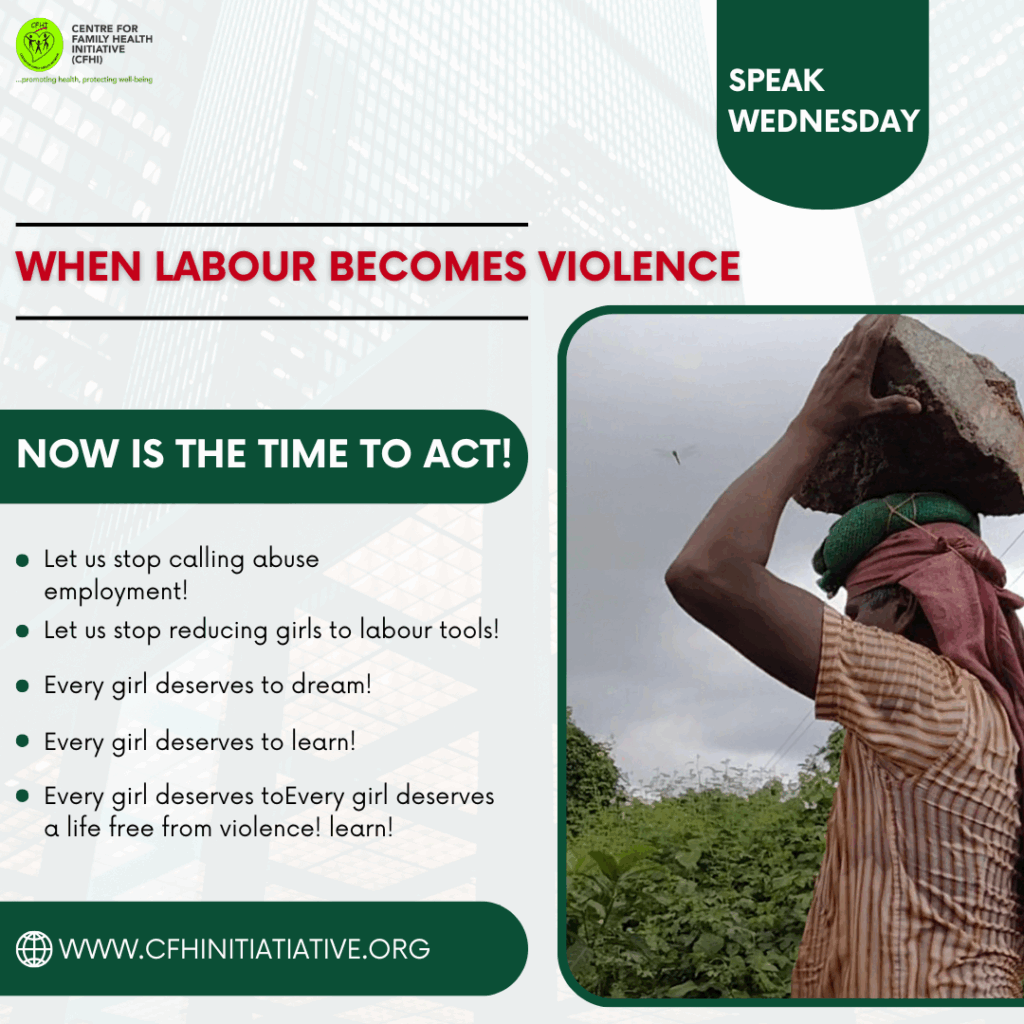
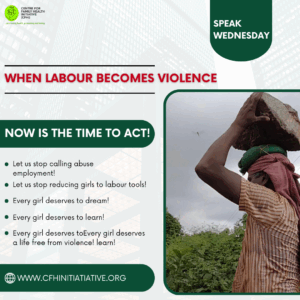
SPEAK WEDNESDAY ON WHEN LABOUR BECOMES VIOLENCE

In countless Nigerian homes, young girls often called “housegirls” begin their workdays at sunrise and end them well after sundown. What seems like an innocent gateway to opportunity can quickly morph into a nightmare. What started as helping with domestic duties becomes abuse, neglect, and exploitation. This is not just work. It is a system that too often silences their voices and sabotages their futures.

The Hidden Reality

Recent research shows that in Nigeria, about 50 percent of child domestic workers experience some form of violence. Emotional abuse affects nearly half, while nine percent face physical violence, and others suffer sexual violence in silence. These girls often live in cramped, unfamiliar spaces with no personal freedom or support network. At school, they are either absent due to long work hours, the majority work over 30 hours weekly, or pulled out entirely, with 19 percent reporting disruption in education.

At its worst, this becomes modern slavery where girls are trapped by fear, threats, and the absence of choices. In parts of Southern Nigeria, studies show that underage domestic helpers regularly face psychological, emotional, and physical abuse without any form of redress.

This is not just unethical. It is a crime. Every Nigerian girl has the right to safety, freedom, and education; rights protected under Nigeria’s Violence Against Persons Prohibition (VAPP) Act of 2015. But beyond the law, we are talking about broken childhoods, girls robbed of their innocence, and women who grow up never knowing their worth.

Real Voices Real Harm

Imagine a 14-year-old working from dawn to dusk. She is beaten for small mistakes, denied food until everyone else has eaten, isolated from her peers, and barred from attending school. She wakes up to work, sleeps in fear, and grows into womanhood carrying the weight of a stolen girlhood. This is not fiction. This is her everyday reality.

What We Can Do

  • Recognize and Report

If you suspect abuse, contact the National Agency for the Prohibition of Trafficking in Persons NAPTIP, Child Protection Network, CFHI, or your local police station. These girls need protection, not more silence.

  • Educate Families

Many parents send their daughters to work in cities with the hope of better opportunities. But without information, legal backing, and proper monitoring, what should uplift them becomes a risk. Raising community awareness is vital.

  • Support NGOs Doing the Work

The Centre for Family Health Initiative (CFHI) has remained at the frontline of protecting women and girls. CFHI supports victims of gender-based violence through legal aid, psychosocial support, community education, and survivor-led advocacy. From community outreaches to engaging in policy work, CFHI ensures these girls are seen, heard, and helped.

Now Is the Time to Act!

We have seen the data. We have heard the stories. Now we must act. Let us stop calling abuse employment. Let us stop reducing girls to labour tools. Every girl deserves to dream. Every girl deserves to learn. Every girl deserves a life free from violence.

Speak Wednesday is an initiative of CFHI to address issues around gender-based violence and gender bias.

#SpeakWednesday #ProtectHousegirls #EndChildDomesticViolence #GirlsAreNotServants #CFHI #EndGBV #HumanRightsMatter

SPEAK WEDNESDAY ON WHEN LABOUR BECOMES VIOLENCE Read More »

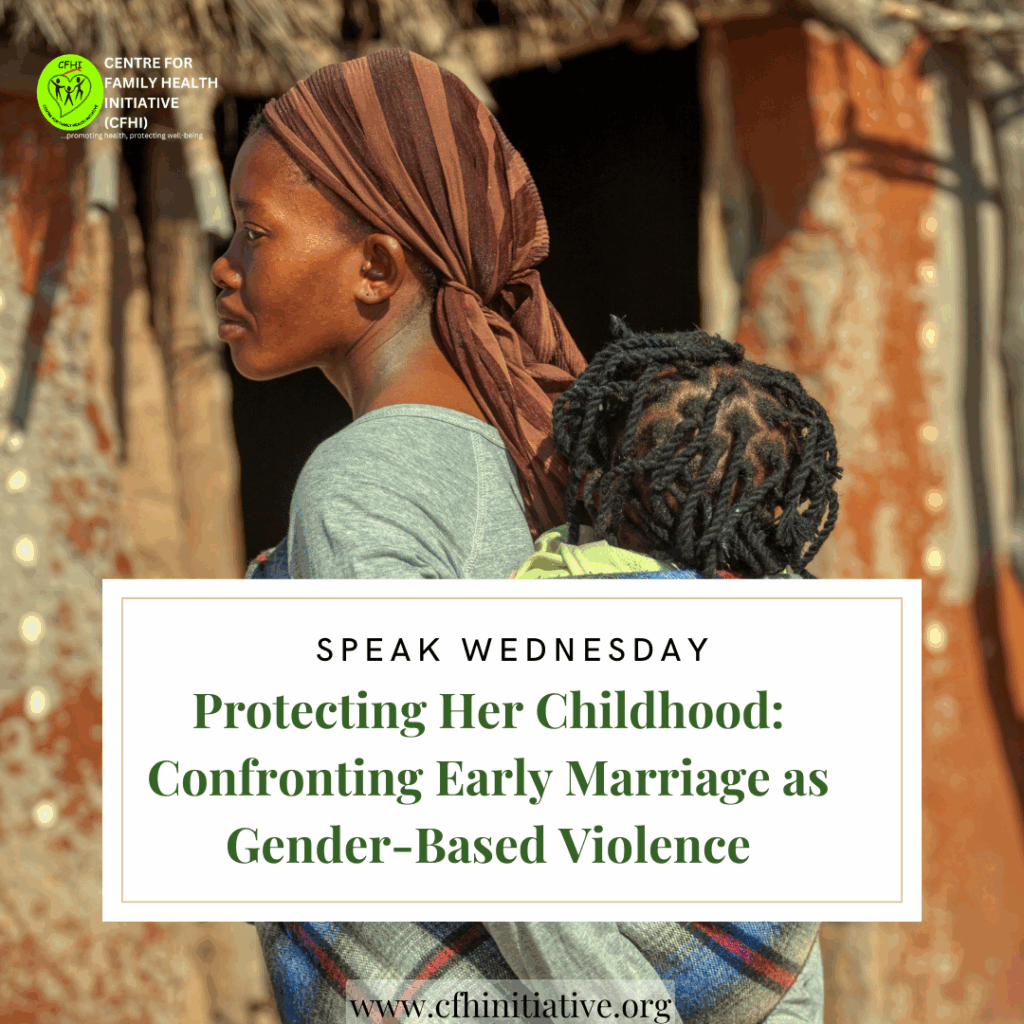
SPEAK WEDNESDAY ON PROTECTING HER CHILDHOOD: CONFRONTING EARLY MARRIAGE AS GENDER-BASED VIOLENCE

In many communities across Nigeria, a girl’s childhood can end not with graduation or celebration, but with a wedding. Sometimes at 15, sometimes even younger. She doesn’t throw a bouquet; she throws away her dreams. The practice is often justified by culture, tradition, or economic necessity, but beneath these explanations lies a truth that must be acknowledged: early marriage is a form of gender-based violence.

Nigeria ranks third globally in the number of child brides. Over 22 million girls in the country were married before the age of 18, according to UNICEF. In some states in the North-East and North-West, the prevalence is even higher, driven by poverty, insecurity, and deeply entrenched gender inequality. These are not just statistics; they are lives interrupted, girlhoods lost, and futures compromised.

Early marriage is violence because it robs girls of choice, education, health, and safety. Once married, a girl is often forced to drop out of school, denying her the opportunity to learn, grow, and earn. She faces increased risks of sexual violence, early pregnancy complications, and lifelong poverty. These are not isolated consequences; they are systemic outcomes rooted in a society that undervalues girls and normalizes their silence.

In many cases, families see early marriage as a survival strategy. When there is no food on the table and no access to social protection, marrying off a daughter can feel like the only option. Cultural and religious pressures further normalize the practice, and in the absence of strong law enforcement, the rights of girls are often overlooked. Nigeria’s Child Rights Act, passed in 2003, sets the legal age of marriage at 18, but enforcement remains uneven. As of 2024, several states have yet to domesticate the Act, leaving millions of girls unprotected.

Ending early marriage requires more than laws on paper; it demands a shift in narrative and a real investment in girls. We must name early marriage for what it is: a violation of human rights and a gender-based harm. Protecting Nigerian girls means enforcing laws, holding perpetrators accountable, and ensuring every girl has access to safe, quality education and health care. It also means addressing the root causes—poverty, gender inequality, and lack of opportunity that make early marriage appear acceptable or inevitable.

Equally important is the need to amplify the voices of girls themselves. Their insights, hopes, and fears must shape the policies and programs meant to protect them. Girls in Nigeria are not voiceless; they are often unheard. When we listen, we begin to understand not just what is being taken from them, but what is possible when we choose to protect them.

To protect the future of Nigerian girls, we must stop framing early marriage as an issue of culture or custom. It is a crisis of rights, equity, and justice. We must act with urgency, empathy, and resolve.

Because she’s not a bride. She’s a child.

Speak Wednesday is an initiative of CFHI to address issues around gender-based violence and gender bias.

#SpeakWednesday#EndChildMarriage#SheIsNotABride#NigerianGirlsDeserveBetter#ChildNotBride#GenderJusticeNow#ProtectTheGirlChild#GirlsNotWives#StopGBV

SPEAK WEDNESDAY ON PROTECTING HER CHILDHOOD: CONFRONTING EARLY MARRIAGE AS GENDER-BASED VIOLENCE Read More »

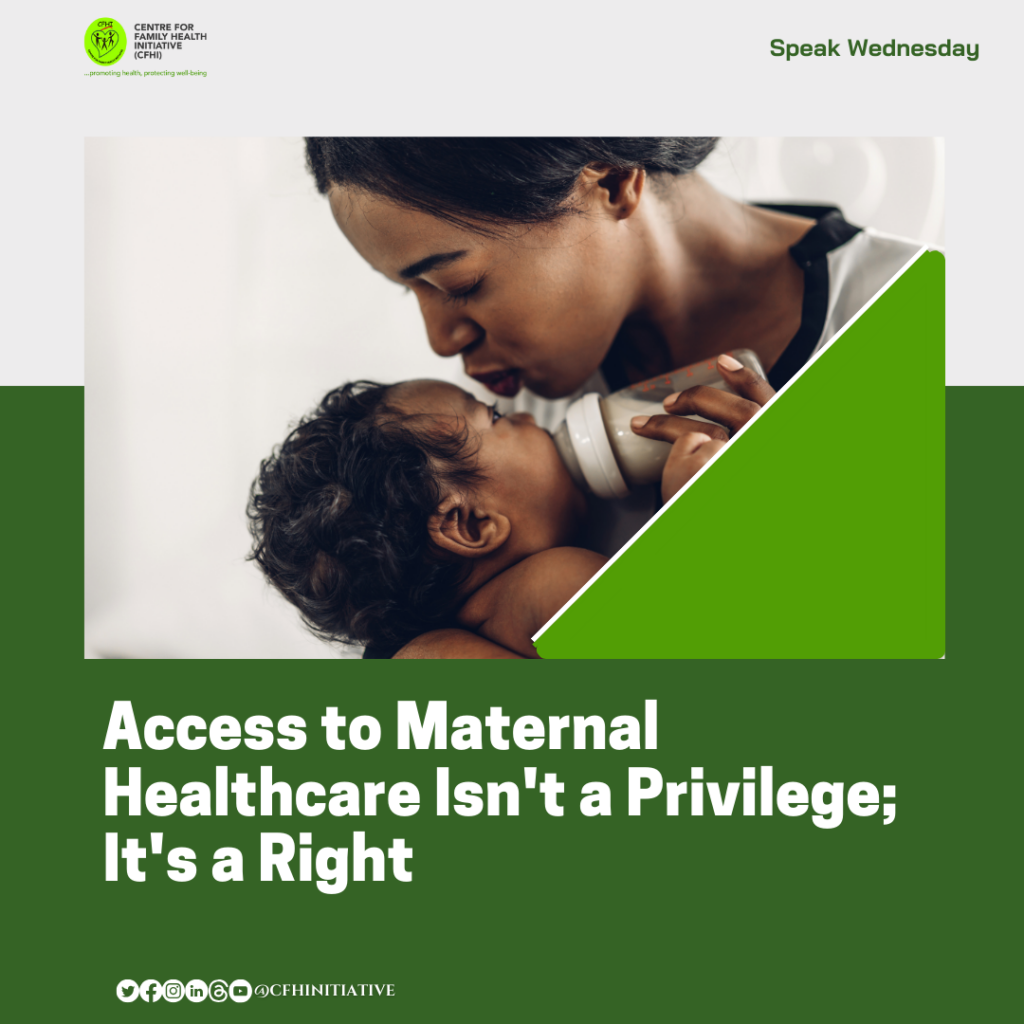
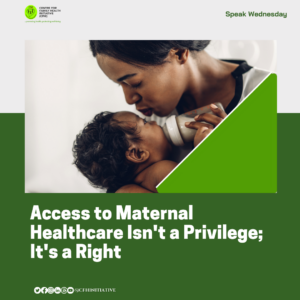
SPEAK WEDNESDAY ON ACCESS TO MATERNAL HEALTHCARE ISN’T A PRIVILEGE; IT’S A RIGHT.

Imagine a young woman in rural Nigeria, miles away from the nearest health facility. She is expecting a child, but the journey to antenatal care is long, costly, and fraught with challenges. This scenario is a daily reality for countless Nigerian women, and it is a situation that demands immediate attention.
The Stark Reality
According to the World Health Organization, Nigeria’s maternal mortality rate was estimated at 917 per 100,000 live births in 2017, increasing by nearly 14% to reach 1,047 deaths per 100,000 live births in 2020. This alarming statistic underscores the urgent need for improved maternal healthcare services in the country
Barriers to Care
Several obstacles impede Nigerian women’s access to essential maternal healthcare:
• Financial Constraints: The high costs associated with prenatal and delivery services deter many from seeking care. A significant portion of the population lives below the poverty line, making even subsidized healthcare services unaffordable for many.
• Geographical Challenges: Inadequate infrastructure renders health facilities inaccessible, particularly in rural regions. Many communities lack nearby healthcare centres, forcing expectant mothers to travel long distances, often in precarious conditions, to access maternal care.
• Cultural Beliefs: Deep-seated traditions and misconceptions discourage women from pursuing professional medical assistance. In some communities, there is a preference for traditional birth attendants over trained healthcare professionals, leading to increased risks during childbirth.
• Gender Discrimination: Systemic gender biases limit women’s autonomy in making health-related decisions. In certain regions, women’s healthcare needs are deprioritized, and their voices are marginalized in decision-making processes.
The Domino Effect
When mothers lack access to proper healthcare, the repercussions are profound. High maternal mortality rates lead to increased infant mortality and leave families vulnerable. It is a cycle that perpetuates poverty and hinders national development. Families often face financial ruin due to medical expenses, and communities bear the emotional and social toll of losing mothers and children.
Success Stories: A Glimmer of Hope
Despite these challenges, there are beacons of hope. Centre For Family Health Initiative has been instrumental in advancing Maternal, Newborn, and Child Health (MNCH). Partnering with the Clinton Health Access Initiative (CHAI), CFHI led a community activation project in 10 Local Government Areas in Kaduna State, focusing on increasing awareness of Family Planning (FP) and Post-Partum Family Planning (PPFP) services. CFHI reached over 921 Traditional Birth Attendants, 513 leaders, 285 Islamiyah teachers, and 594 community women, organizing multiple sensitization events.
During MNCH Week, CFHI provided services like free HIV screening, immunization, family planning, and malnutrition screenings. The initiative also addressed key barriers to maternal care, including HIV testing, Prevention of Mother-to-Child Transmission (PMTCT), and male involvement in antenatal care, through community engagement and partnerships with government and NGOs. These initiatives demonstrate CFHI’s unwavering commitment to improving healthcare access and outcomes for mothers and children across the country.

Time for Action
Maternal healthcare is a fundamental right. To bridge the gap, we must:
• Invest in Healthcare Infrastructure: Enhance and equip facilities in underserved areas. Building more healthcare centres and ensuring they are well-stocked with essential medicines and equipment can reduce the distance and cost barriers for expectant mothers.
• Subsidize Maternal Services: Ensure prenatal and delivery care are affordable for all. Implementing policies that cover the costs of maternal health services can alleviate the financial burden on families and encourage more women to seek care.
• Educate Communities: Promote awareness about the significance of professional maternal healthcare. Community-based education programs can dispel myths, address cultural misconceptions, and empower women with knowledge about their health rights.
• Address Gender Bias: Implement policies that empower women in healthcare decisions. Ensuring women’s participation in health-related decision-making processes at both household and community levels can lead to more equitable and effective healthcare outcomes.
Join the Movement
Every woman deserves a safe pregnancy and childbirth experience. Let us advocate for policies and practices that prioritize maternal health. Share this message, support local initiatives, and demand change. Together, we can build a future where maternal health is a right enjoyed by all, not a privilege for the few.
Speak. Every. Wednesday. Speak Every Day Until We Act right.
Speak Wednesday is an initiative of CFHI to address issues around gender-based violence and gender bias.
#MaternalHealth4All #EndMaternalMortality #GenderEquality #GenderBias #WomenRights #SafeMotherhoodNow #HealthcareForEveryWoman #SpeakWednesday
References
• World Health Organization. (2015). “Trends in Maternal Mortality: 1990 to 2015.” WHO Report
• Federal Ministry of Health, Nigeria. (2018). “National Health Policy.” FMOH Policy
• United Nations Population Fund. (2020). “State of the World Population Report.” UNFPA Report
• Nigerian Health Watch. (2019). “Bridging the Gap in Maternal Healthcare Access.” NHW Article
• International Journal of Gynecology & Obstetrics. (2017). “Maternal Health in Nigeria: A Review.” IJGO Study

SPEAK WEDNESDAY ON ACCESS TO MATERNAL HEALTHCARE ISN’T A PRIVILEGE; IT’S A RIGHT. Read More »

SPEAK WEDNESDAY ON CLEAN WATER SHOULDN’T BE A LUXURY

Access to clean water in Nigeria shouldn’t be a luxury, yet for millions, it is. In a country with a growing population and vast natural resources, it’s hard to believe that so many people still struggle to get something as basic as clean water. But this isn’t just about staying hydrated. Clean water is about survival, dignity, and equality, and it’s high time we all recognize that.
In Nigeria, millions of women and girls spend hours each day walking long distances to fetch water. This isn’t just physically draining. It’s dangerous. Women face risks of violence, while girls miss out on education because their time is consumed by this daily chore. This means that while clean water is a necessity for health, it also directly impacts gender equality and the chances for women and girls to pursue their dreams.
Why does this continue to happen?
It’s a failure of our systems. Water should never be a luxury, yet it remains out of reach for too many. This scarcity doesn’t just affect health. It keeps people trapped in poverty. It prevents communities from growing, and it burdens women and girls in ways that hold back society as a whole.
But it doesn’t have to be this way.
We need to change how we see water access in Nigeria. Water scarcity shouldn’t be an accepted reality. We must demand clean water for all. It’s a right, not a privilege. From solar-powered water pumps to community-led water management, there are solutions available that can make a real difference. What’s missing is the will to ensure that every Nigerian has access to clean, safe water.

The facts are clear. According to UNICEF, over 60 million Nigerians still don’t have access to clean water. And women and girls are hit hardest. It’s time to change that.

No one in Nigeria should have to choose between water and survival. No girl should miss school because she’s walking for hours to fetch water. It’s time to ensure that clean water is a right for everyone.
Centre for Family Health Initiative (CFHI) is taking action! Over the years, we have worked with partners to improve clean water access. One such initiative was the installation of a borehole in Kagini, Abuja
Together, we can make this happen.
Speak Wednesday is an initiative of CFHI to address issues around gender-based violence and gender bias.
#SpeakWednesday #CleanWaterForAll #WaterIsLife #GenderEquality #ProtectWomenAndGirls #AccessToWater #WaterIsARight #EndWaterScarcity #Nigeria #EveryGirlDeservesWater

SPEAK WEDNESDAY ON CLEAN WATER SHOULDN’T BE A LUXURY Read More »

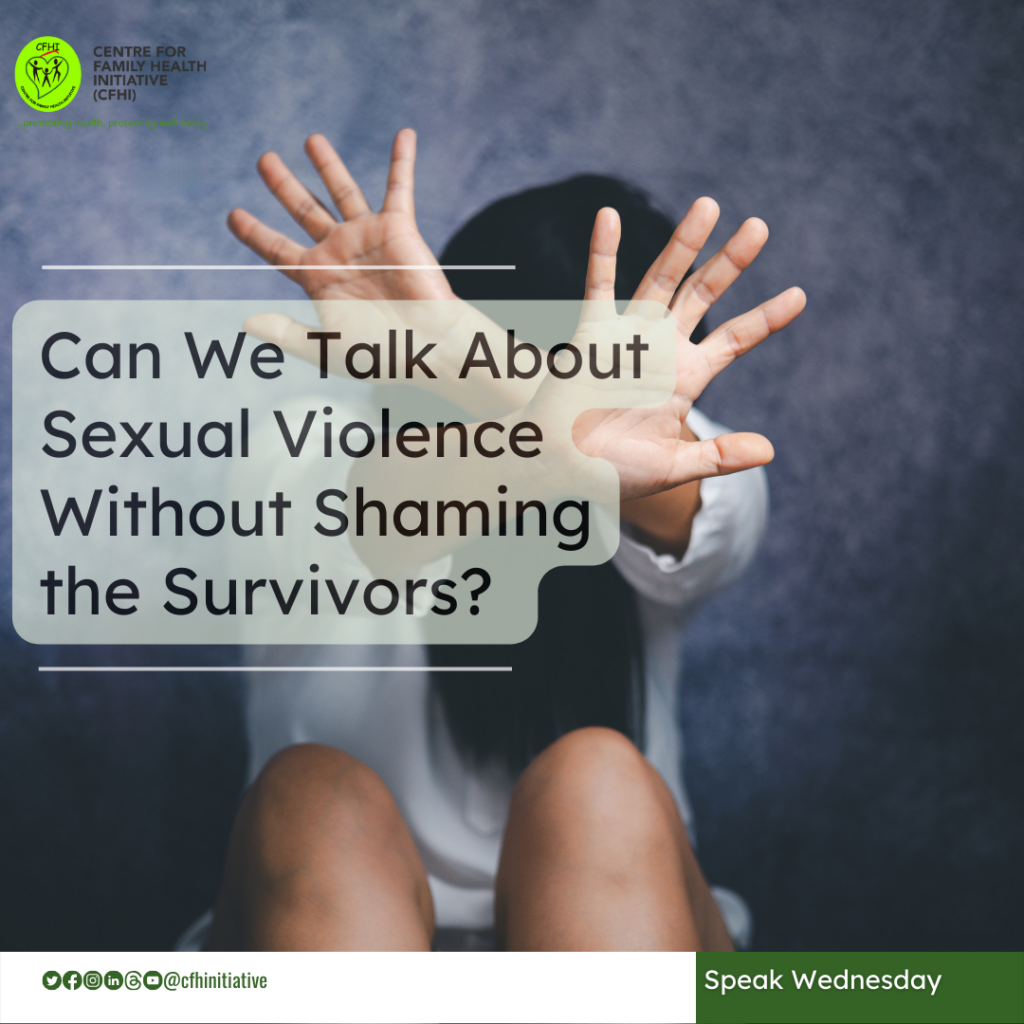
SPEAK WEDNESDAY ON CAN WE TALK ABOUT SEXUAL VIOLENCE WITHOUT SHAMING THE SURVIVORS

Let’s take a moment to reflect on a harsh reality: sexual violence is all around us. Whether we are scrolling through social media, watching the news, or even just walking through the streets, it is something that affects many lives. Yet, when we discuss it, the conversation often focuses on the wrong things—like blaming the victim. This issue is not just a global one; it deeply affects us here in Nigeria, where silence, shaming, and victim-blaming are common. But the time has come to change the narrative. Let’s talk about it, and let’s talk about it right.

Sexual Violence: A More Widespread Problem Than We Think
According to the World Health Organization (WHO), nearly 1 in 3 women and girls will experience physical or sexual violence at some point in their lives (WHO, 2021). This statistic doesn’t even account for the boys and men who face similar experiences. In Nigeria, the culture of silence and stigma makes these statistics even more striking, as many survivors feel too ashamed or afraid to speak out (National Population Commission, 2018).

Unfortunately, when we do talk about sexual violence, we often place the blame on the wrong people. Too often, the question becomes: What was she wearing? or Why did they go there alone? Instead of focusing on the person who committed the violence, society tends to scrutinize the survivor. This blame game must stop.

Blaming the Victim Achieves Nothing
We’ve all heard the harmful phrases: “She asked for it, “He must have done something to provoke it,” or “Why didn’t they report it sooner?”These comments are not just unhelpful, they perpetuate harmful myths and undermine the very people who need support. In doing so, society discourages survivors from coming forward, isolates them, and places an unjust burden of guilt on them.

Victims of sexual violence already face the heavy weight of trauma; the last thing they need is further harm in the form of blame or judgment. This cycle of victim-blaming serves no one and, in fact, only makes it harder for other survivors to speak out and seek help.

Breaking the Silence
The first step is simple: we must talk. Nigerian society often prefers to sweep uncomfortable topics like sexual violence under the rug, but silence only benefits the perpetrators.

Imagine a Nigeria where survivors could go to the police, to healthcare facilities, or even speak with a friend without fear of being questioned or blamed. Imagine a world where people feel safe to speak out and demand justice. That’s the world we must strive for and we have the power to make it a reality.

Let’s start now: Let’s end the culture of shame. Let’s end the silence. Let’s begin by truly listening to survivors and offering them the care and support they deserve. Together, we can shift the narrative and build a culture rooted in respect, empathy, and justice.

The fight against sexual violence is not just about legal reforms. It’s about changing the way we think, act, and support those affected. We all have a role to play. Let’s make sure survivors know: it was never your fault.

SPEAK WEDNESDAY ON CAN WE TALK ABOUT SEXUAL VIOLENCE WITHOUT SHAMING THE SURVIVORS Read More »

SPEAK WEDNESDAY ON EMPATHY IN ACTION: MENS’S ROLE IN ENDING VIOLENCE AGAINST WOMEN

On the occasion of International Men’s Day yesterday, we are reminded of the transformative power men hold in eliminating violence against women. This issue impacts one in three women globally, according to UN Women, and addressing it requires an inclusive, empathetic approach.

Violence is Not Inherent—It’s Learned

Research by World Health Organization (WHO) shows that violence is often learned during childhood, and men who grow up in violent environments are statistically more likely to perpetuate such behavior later in life.WHO emphasises that children exposed to abuse are at a greater risk of becoming perpetrators of violence in adulthood.

Anthony Keedi, from the ABAAD Resource Centre for Gender Equality, emphasizes that violence is not a natural trait in men but a learned behavior shaped by societal expectations. Transforming this requires teaching men that masculinity includes caregiving and emotional expression, fostering respect instead of dominance.

Pathway to Change

According to the MenEngage Alliance, embracing positive masculinity is a crucial step. Men must reject harmful stereotypes that equate strength with control and instead model behaviors rooted in empathy and equality. When men publicly advocate for these changes, they inspire others in their communities to shift perspectives.

Also, silence is complicity. Men have the privilege to challenge misogynistic behaviors and advocate for change in their communities. From workplaces to social circles, speaking up fosters new norms where violence is intolerable.

Ending violence against women isn’t just about protecting women; it’s about building a society where everyone thrives. When men actively participate in this cause, they not only support gender equality but also unlock greater emotional freedom for themselves. A world free of violence benefits all genders, fostering healthier families and communities.

Men have the power to redefine their roles in relationships and society at large. By leading with empathy, they can bridge the gap between acknowledging the issue and being part of the solution.

Speak Wednesday is an initiative of CFHI to address issues around gender-based violence and gender bias.

#SpeakWednesday #EmpathyInAction #EndViolence #InternationalMensDay #GenderEquality

References:

  1. MenEngage Alliance
  2. OHCHR
  3. UN Women
  4. World Health Organization (WHO)

SPEAK WEDNESDAY ON EMPATHY IN ACTION: MENS’S ROLE IN ENDING VIOLENCE AGAINST WOMEN Read More »

SPEAK WEDNESDAY ON IMPACT OF DOMESTIC VIOLENCE ON CHILDREN’S MENTAL HEALTH AND DEVELOPMENT

Domestic violence is a shadow that reaches far beyond the immediate victims. When violence seeps into a home, it affects everyone, especially children, who often become silent witnesses to trauma and suffering. The impact of domestic violence on children’s mental health and development is a pressing concern that many may overlook. The psychological toll of exposure to violence in childhood can have lasting effects on a child’s mental well-being, social skills, and overall development.

The World Health Organization (WHO) reports that children exposed to violence are at greater risk of developing mental health disorders like post-traumatic stress disorder (PTSD), depression, and anxiety, sometimes beginning as early as in childhood and potentially lasting a lifetime​. This exposure can lead to significant emotional turmoil, with many children experiencing constant fear, self-doubt, and an inability to trust, making it difficult for them to form stable, healthy relationships later in life

The stress and trauma associated with domestic violence can impair a child’s cognitive development, impacting their ability to concentrate, learn, and socialize. Studies from the National Institute of Mental Health show that children growing up in violent households are more likely to struggle academically and have difficulty processing emotions and handling conflict in constructive ways​. This may manifest in behavioural issues, aggressive responses, or social withdrawal.

Additionally, these children are at higher risk of substance abuse and other forms of self-destructive behaviour as they attempt to cope with unresolved trauma​. ~ American Psychological Association.

Breaking the cycle of domestic violence requires comprehensive approaches that involve not only supporting survivors but also recognizing and addressing the needs of children affected by this trauma. Educational programs that promote awareness, early intervention efforts, and accessible counselling services for children are essential to helping young people recover and build healthy lives. By investing in resources that support children’s mental health, communities can help mitigate the impacts of domestic violence on future generations. Through collective efforts, we can create safe environments that foster resilience and healing, ensuring a brighter, healthier future for all children.

Speak Wednesday is an initiative of CFHI to address issues around gender-based violence and gender bias.

#SpeakWednesday #EndDomesticViolence #ProtectOurChildren #BreakTheCycle #SupportMentalHealth #FutureWithoutViolence

References

  • World Health Organization. (2021). Violence against children. Retrieved from WHO.
  • National Institute of Mental Health. (2020). Children’s exposure to violence and mental health. Retrieved from NIMH.
  • American Psychological Association. (2020). Impact of childhood trauma on mental health. Retrieved from APA.
  • Centers for Disease Control and Prevention. (2021). Childhood trauma and public health. Retrieved from CDC.
  • (2022). Supporting children affected by domestic violence. Retrieved from UNICEF.

SPEAK WEDNESDAY ON IMPACT OF DOMESTIC VIOLENCE ON CHILDREN’S MENTAL HEALTH AND DEVELOPMENT Read More »

SPEAK WEDNESDASY ON PROTECTING OUR FUTURE: COMBATING GENDER-BASED VIOLENCE IN CHILDHOOD AND ADOLESCENCE

Gender-based violence (GBV) leaves lifelong scars, particularly when it affects young people. Children and adolescents worldwide experience violence in environments meant to be safe—homes, schools, and communities. Addressing this problem early in life is essential, as GBV in childhood not only affects immediate well-being but also shapes a young person’s future.

Adolescent girls are especially vulnerable to forms of GBV like early marriage and sexual violence. The World Health Organization (WHO) highlights that one in four girls will experience sexual violence before reaching adulthood, often in environments where cultural norms uphold gender inequalities and prioritize male dominance. UNICEF adds that boys also experience GBV in unique ways, facing pressures to adopt aggressive behaviour in alignment with rigid views of masculinity. These pressures often lead boys to both experience and perpetuate violence later in life, continuing a cycle that affects future generations.

Protecting children from GBV is an ongoing effort that requires commitment from everyone—parents, educators, community leaders, and policymakers. Addressing gender-based violence (GBV) in children and adolescents requires a combination of education, community support, and legal protections. Education in schools and communities about respect, equality, and personal rights is crucial. By raising awareness on GBV prevention and empowering young people to understand their rights, communities can help prevent violence before it begins. Together, we can build a future where young people are free to grow up in safety and pursue their potential. Ending GBV among youth is not just about safety; it’s about creating a foundation of respect and equality that will shape the generations to come.

Speak Wednesday is an initiative of CFHI to address issues around gender-based violence and gender bias.

#SpeakWednesday #EndChildViolence #ProtectOurFuture #StopGBV #YouthSafety #BreakTheCycle #GenderEquality ##GenderJustice


References

  1. World Health Organization (WHO). Preventing Violence Against Children and Adolescents, WHO, 2023
  2. UNICEF. Safe to Learn: Protecting Children in Schools, UNICEF, 2023
  3. UNICEF Nigeria. Child Protection Programs and Gender-Based Violence, UNICEF Nigeria, 2023

SPEAK WEDNESDASY ON PROTECTING OUR FUTURE: COMBATING GENDER-BASED VIOLENCE IN CHILDHOOD AND ADOLESCENCE Read More »