Women’s Rights

SPEAK WEDNESDAY

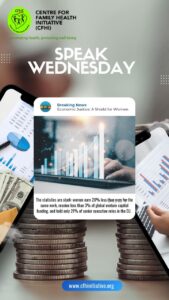
Closing the Gender Wealth Gap to End Violence Against Women

Economic justice is the key to safety, health, and empowerment for women worldwide. Every Wednesday, we raise our voices to challenge injustice, and today we confront one of the most entrenched roots of gender-based violence: economic inequality. The gender wealth gap isn’t just a financial statistic; it’s a silent enabler of abuse, a barrier to freedom, and a public health emergency.

Globally, women earn less than men for the same work3, own less property, have limited access to leadership4 and fewer financial safety nets1. This economic disparity creates a cycle of dependency that heightens exposure to violence and limits the ability to escape abusive environments. In Nigeria, for instance, the Minister of Women Affairs recently emphasized that closing the gender gap could add ₦15 trillion to the country’s GDP annually by 20252, underscoring the economic potential of gender equity.

These issues are persistent and global. In the EU, despite the “Women on Boards” directive aiming for 40% female representation by 2026, progress is slow. Women currently hold only 35% of non-executive roles and 21% of senior executive positions 4. This is despite evidence from a 2025 report showing that companies with greater gender diversity are 25% more likely to be more profitable3. In sectors like tech and finance, women continue to report being passed over for promotions, excluded from decision-making, and subjected to gender-based microaggressions, which stifles their economic advancement4.

Call To Action

To end violence against women, we must invest in their economic power. As outlined in a UN Women 2025 advocacy paper, closing the funding gap in programs that support survivors and prevent violence is critical1. We call on Governments, NGOs, and private sector to collaborate on expanding access to education and vocational training, supporting women-led businesses and financial literacy programs, funding essential services for survivors, including shelters, legal aid, and healthcare, and advocating for and enforcing equal pay and robust workplace protections.

At the Centre for Family Health Initiative (CFHI), we are committed to this work. Through collaborations with partners like the Institute of Human Virology Nigeria (IHVN), Caritas Nigeria, FCT Social Development Secretariat (SDS), TY Danjuma Foundation (TYDF), and Global Philanthropy Alliance (GPA), we have empowered over 2500 women and girls with education, vocational training, business start-up kits, and financial support.

Financial inequality isn’t just unfair; it’s dangerous. It limits women’s choices, increases health risks, and perpetuates cycles of violence and poverty. Empowering women economically is not merely a matter of justice; it is the essential foundation for building safer, healthier societies for all.

Speak Wednesday is an initiative of CFHI to address issues around gender-based violence and gender bias.

References

  1. UN Women. Closing the funding gap to end violence against women and girls [Internet]. 2025 [cited 2025 Oct 21]. Available from: https://knowledge.unwomen.org/sites/default/files/2025-06/closing-the-funding-gap-to-end-violence-against-women-and-girls-en.pdf
  2. The Guardian Nigeria. Closing gender gap will add ₦15tr to Nigeria’s GDP by 2025 [Internet]. 2025 [cited 2025 Oct 21]. Available from: https://guardian.ng/news/closing-gender-gap-will-add-n15tr-to-nigerias-gdp-by-2025/
  3. Women in the workplace 2025: Research and trends [Internet]. 2025 [cited 2025 Oct 21]. Available from: https://www.wellable.co/blog/women-in-the-workplace-2025-research-and-trends
  1. IMD. Gender inequality in the workplace: Why it persists? [Internet]. 2025 [cited 2025 Oct 21]. Available from: https://www.imd.org/research-knowledge/articles/gender-inequality-in-the-workplace-why-it-persists/

SPEAK WEDNESDAY Read More »

SPEAK WEDNESDAY

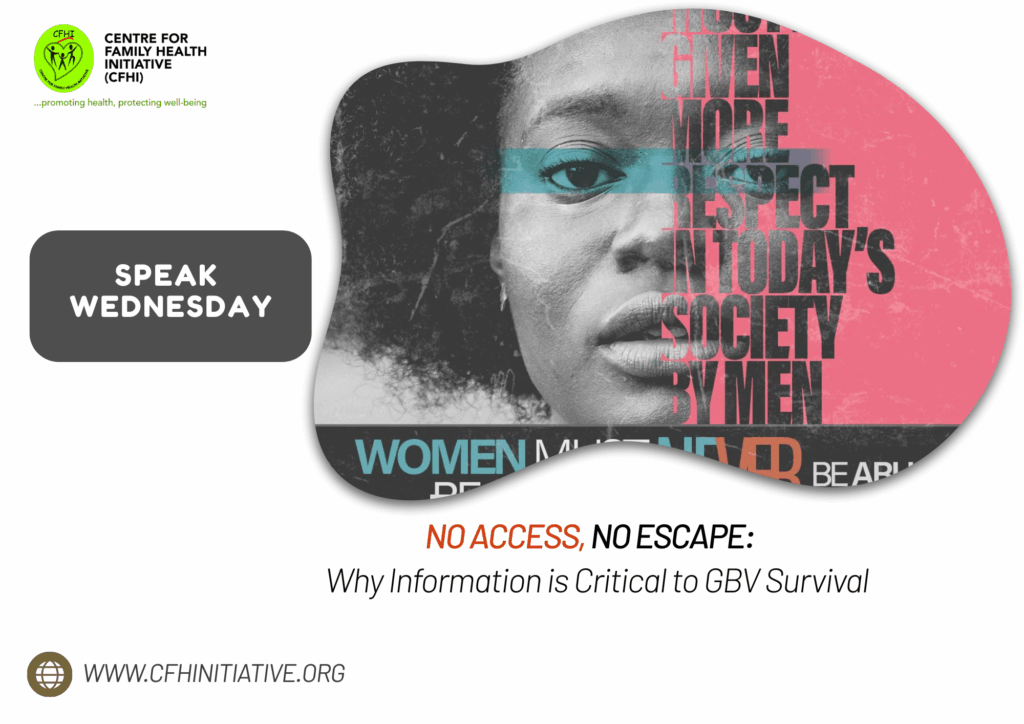
No Access, No Escape: Why Information is Critical to GBV Survival

When Sheila was nineteen and living in Lagos, the threats began. Her husband told her that if she ever disobeyed him, he would make sure she lost her job and her reputation. One night, terrified, she sent a friend a message begging for help. But she did not know where to go, which law could protect her, or who to call. Information could have saved her. Its absence trapped her.

This is the silent epidemic within gender-based violence (GBV): not only physical harm but the isolation created by ignorance. Without access to timely and accurate information, survivors are left in darkness. Information is not a luxury. It is the first line of defence and the foundation of justice.

Why Information Saves Lives

When a woman understands that violence against her is a crime, she begins to reclaim her power. When she knows where to report, what medical help to seek, and how to preserve evidence, she increases her chances of survival and justice. Without that knowledge, fear becomes her only companion.

Studies from Nigeria show that most women who experience GBV are unaware of available support. In Adamawa State, 60 percent of women knew that services existed, but fewer than 18 percent understood what those services actually offered. A 2025 study found that even educated young women often avoid post-violence health care because they do not know where to go, or they fear stigma and disbelief.

Globally, the United Nations has affirmed through multiple conventions including the Convention on the Elimination of All Forms of Discrimination against Women (CEDAW) and UN Security Council Resolution that access to information is central to ending violence. Without it, laws, services, and resources remain out of reach.


The Barriers That Keep Survivors Silent


Survivors often do not seek help because they believe nobody will believe them. Others live far from formal services. Many lack access to the internet or even a simple phone number they can trust. Information materials are often written in legal or medical language that ordinary people cannot understand. In rural areas, the absence of community-based awareness campaigns means women do not even know that shelters or hotlines exist.


These are not personal failures. They are systemic failures of governments that under fund awareness programmes, of institutions that do not communicate in local languages, and of communities that allow silence to thrive.


What Survivors Can Do When They Need Help

Every survivor deserves a pathway to safety. Here is what that path can look like:


  1. Seek immediate safety: If you are in danger, leave the space if possible. Go to a trusted friend, relative, neighbour, or nearby public place.
  2. Reach out for help: Call the national GBV toll-free line: 0800 033 3333. You can also contact the organisations that provide counselling, medical referrals, and legal support.
  3. Preserve evidence: Avoid bathing or changing clothes if you experienced physical or sexual violence. Seek medical care immediately.
  4. Know your rights: Violence against women is a crime under the Violence Against Persons (Prohibition) Act, 2015. Every survivor has a right to medical treatment, legal assistance, and protection.
  5. Document and speak. Keep copies of threatening messages or photos. Report to a the police or NAPTIP. You are not alone, and help exists.


Call to Action

Governments and institutions must treat access to information as a legal right and embed it firmly within all GBV policies and action plans. Every state should guarantee that survivors know what services exist and how to reach them. Public awareness must go beyond slogans to reach the offline majority through community radio, schools, and local languages that resonate. Survivor-friendly spaces should be standard in every police station, hospital, and local government office, where trained officers and clear contact points offer judgement-free guidance. Finally, investment in ethical data systems and public education is non-negotiable. Reliable data exposes the gaps, directs resources, and saves lives, as demonstrated by the efforts of UNFPA and Nigeria’s GBV Information Management System.


How CFHI Is Closing the Information Gap

At the Centre for Family Health Initiative (CFHI), we believe that information is power and in the fight against GBV, it is protection. CFHI leads nationwide awareness through the 16 Days of Activism, runs community and school groups that teach health, rights, and safety, and provides direct referrals for survivors to medical, psychosocial, and legal services. Our work reaches those often left behind; the woman without a phone, the girl who cannot read, the family with no internet or transport. By breaking information barriers, we give survivors a voice, a pathway, and a plan. Because when women know their rights and how to use them, violence begins to lose its power.


The Global Urgency

Across the world, violence thrives where information is weakest. For the woman in a remote village without a phone or access to the internet, silence becomes her only shelter. For the girl who cannot read, the poster on the clinic wall might as well be blank. For displaced women in camps, and for widows in informal settlements, help often feels like a rumour whispered too far away to reach. In these spaces, information is not abstract,  it is survival. It is the map that leads from danger to safety, from fear to agency. Every hotline number, every awareness programme, every conversation led in a local dialect is more than communication. It is protection. It is the first step toward justice and the quiet revolution that keeps women alive.


Speak Wednesday is an initiative of CFHI to address issues around gender-based violence and gender bias.


#NoAccessNoEscape #InformationSavesLives #EndGBV #RightsAreKnowledge #SpeakWednesday #GenderJustice


SPEAK WEDNESDAY Read More »

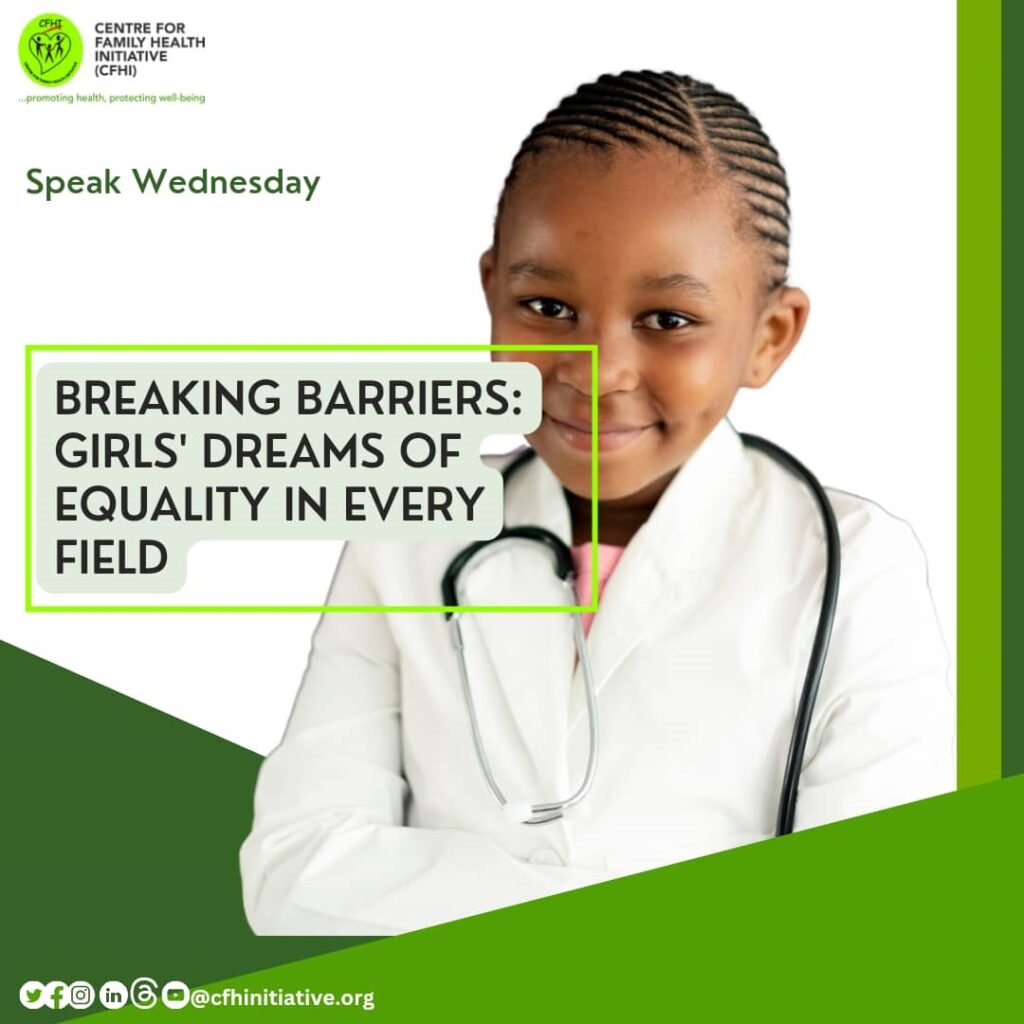
SPEAK WEDNESDAY ON BREAKING BARRIERS: GILRS’ DREAMS OF EQUALITY IN EVERY FIELD

Imagine a world where every girl, regardless of her background, has the freedom to dream of being anything she wants to be—whether a doctor, an engineer, or a leader. Sadly, for many girls around the globe, these dreams remain out of reach due to entrenched gender-based violence and bias. Yet, despite the challenges, girls are rising to claim their rightful place in every field, fighting for equality in spaces where they were once invisible.

Gender bias often begins at an early age, limiting girls’ access to education and career opportunities. According to data from UNICEF, girls are still more likely to be excluded from primary and secondary education than boys. Even when they do receive an education, societal expectations often funnel them into traditional roles, discouraging their participation in STEM fields, leadership positions, and other high-impact careers. These biases follow them into adulthood, where they face wage gaps, workplace discrimination, and even physical violence.

Through policy reforms, educational programs, and advocacy, global efforts are beginning to turn the tide. Empowerment means more than survival; it means creating environments where girls are encouraged and supported to dream big.

As we provide safe spaces for girls, enforce protective laws, and promote gender-sensitive policies, we are actively enabling them to take charge of their future. The dream of equality is not just a dream for girls—it is a collective dream that holds the promise of a better world for everyone. For every girl who is allowed to thrive, the world gains an advocate for change, a leader, and a force for good.

Speak Wednesday is an initiative of CFHI to address issues around gender-based violence and gender bias.

#SpeakWednesday #GirlsInSTEM #GenderEquality #WomenEmpowerment #LiteracyForAll #BreakTheSilence #EducationMatters #GenderJustice #EmpowerWomen

References:

  • UNICEF. “Education for Every Child.” UNICEF
  • United Nations. “HeForShe Campaign.” UN

SPEAK WEDNESDAY ON BREAKING BARRIERS: GILRS’ DREAMS OF EQUALITY IN EVERY FIELD Read More »

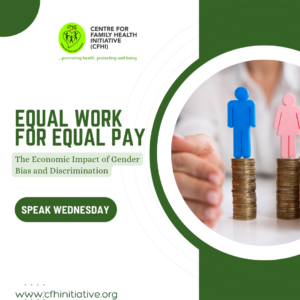
EQUAL PAY FOR EQUAL WORK: THE ECONOMIC IMPACT OF GENDER BIAS AND DISCRIMINATION

Gender bias and discrimination are deep-rooted issues in many workplaces around the world. One of the most visible ways these problems show up is through the gender pay gap. This means that women often earn less than men for doing the same work. Despite growing awareness and advocacy, women in Nigeria, like in many other parts of the world, still face significant pay disparities. These differences in pay have wide-reaching effects, not just on individuals but on businesses and the broader economy.

Women frequently occupy lower-paying roles in fields like services and education, while men dominate higher-paying positions in areas such as engineering and finance. The impact of this pay gap goes beyond individual earnings. When women feel they are being treated unfairly, their job satisfaction and productivity can suffer. If they are not getting paid equally for their work, they might feel less motivated and engaged. Research has shown that when companies address these pay gaps and ensure fairness, employees are more satisfied and work harder, which can boost overall business performance.

Moreover, the economic impact extends to families and the nation. Many women in Nigeria are heads of households, and lower wages mean they face greater financial challenges, affecting their access to essential services like healthcare and education. According to the International Labour Organization (ILO), the gender pay gap worsens poverty levels and limits access to crucial resources such as education and healthcare for women and their families. Research from McKinsey & Company also indicates that closing the gender pay gap could significantly reduce poverty and improve living standards.

On a larger scale, addressing the pay gap could benefit the economy. Equal pay would enable women to contribute more effectively, boosting consumer spending and economic productivity. Companies with equitable pay practices also perform better financially, showcasing the broader benefits of addressing gender bias.

Nigeria has laws aimed at promoting equal pay, but enforcement remains a challenge due to cultural biases and systemic barriers. To make real progress, organisations need to regularly review pay practices, promote transparency, and support women’s career advancement. Offering flexible work options and encouraging fair salary negotiations can also help mitigate biases related to caregiving responsibilities.

In conclusion, tackling the gender pay gap is crucial for a nation’s economic and social progress. Ensuring equal pay for equal work benefits everyone—individuals, businesses, and the economy. Addressing these disparities is a crucial step toward creating a more just and inclusive society.

Speak Wednesday is an initiative of CFHI to address issues around gender-based violence and gender bias.

#SpeakWednesday #InternationalEqualPayDay #EqualPay #WomenEmpowerment #EqualityForAll #GenderEquality #GenderBias


References:

– McKinsey & Company. (2020). Diversity Wins: How Inclusion Matters. Retrieved from [McKinsey Report] (https://www.mckinsey.com)

– International Labour Organization. (2018). Global Wage Report 2018/19: What Lies Behind Gender Pay Gaps? Retrieved from [ILO Report] (https://www.ilo.org).

– World Economic Forum. (2023). Global Gender Gap Report 2023. Retrieved from [World Economic Forum] (https://www.weforum.org).

– Catalyst. (2022). The Bottom Line: Connecting Corporate Performance and Gender Diversity. Retrieved from [Catalyst] (https://www.catalyst.org).

– McKinsey Global Institute. (2015). The Power of Parity: How Advancing Women’s Equality Can Add $12 Trillion to Global Growth. Retrieved from [McKinsey Global Institute] (https://www.mckinsey.com).

EQUAL PAY FOR EQUAL WORK: THE ECONOMIC IMPACT OF GENDER BIAS AND DISCRIMINATION Read More »

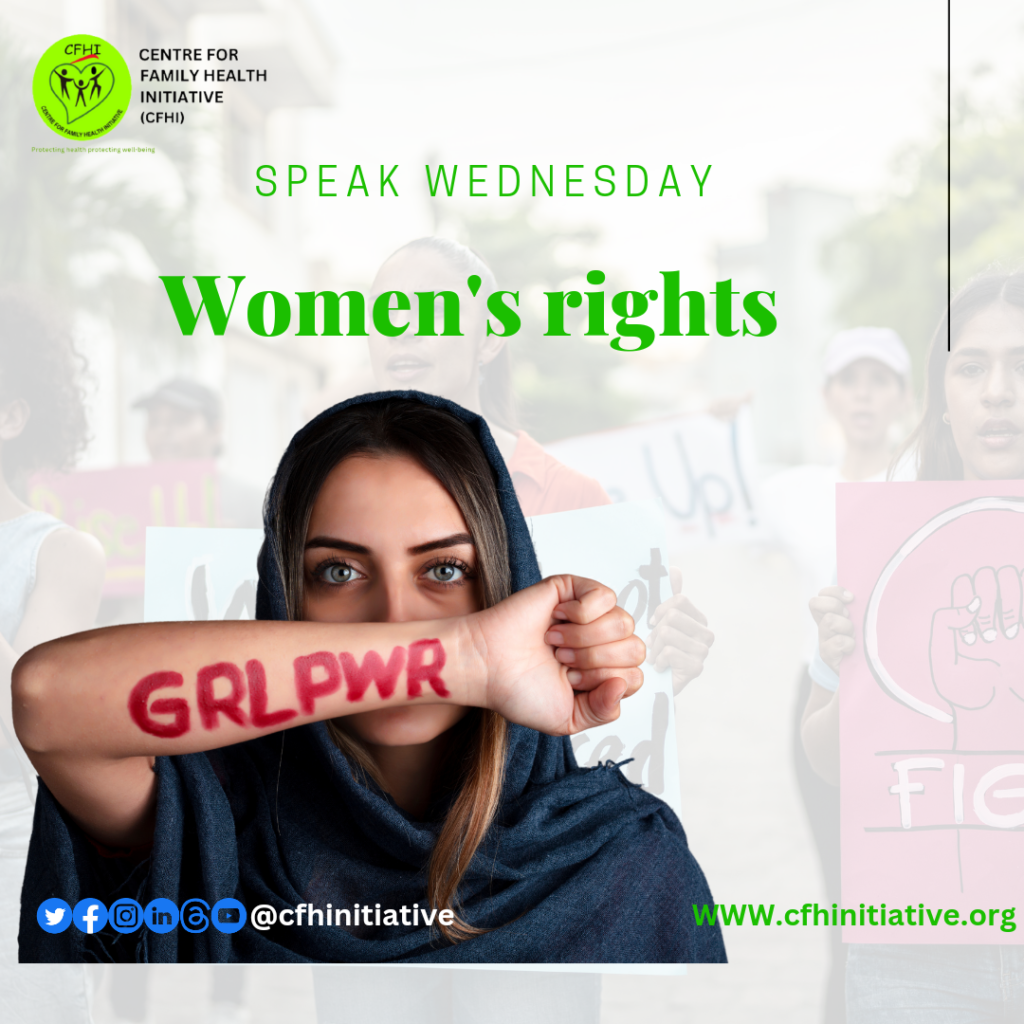
SPEAK WEDNESDAY ON WOMEN’S RIGHTS

On September 5, 1995, Hillary Rodham Clinton, the First Lady of the United States, coined the phrase “women’s rights are human rights,” demonstrating that the struggle for women’s rights is a global issue that has been ongoing for centuries.

The right of women to live free from violence and discrimination, to receive an education, to earn equal pay, to occupy political positions, to have access to sexual and reproductive health, and other rights are not just confined to women but are fundamental human rights.
Despite Nigeria’s government being a signatory to the Convention on the Elimination of all forms of Discrimination against Women (CEDAW), women still face struggles in the country’s patriarchal society, which is rife with discriminatory customs and practices that devalue women.

According to the United Nations, half of the world’s population and potential is represented by women and girls. Therefore, gender equality is not only a fundamental human right but also necessary to achieve peaceful societies, full human potential, and sustainable development. If we all respect women’s rights, we can achieve a society that is free of discrimination. It is critical to remember that women are humans too, and their rights are human rights. Gender inequality is everyone’s problem.

Speak Wednesday is an initiative of CFHI to address issues around gender-based violence and gender bias.

#SpeakWednesday #Women’sRights #HumanRights #GenderStereotype #GenderBias #GenderInequality


SPEAK WEDNESDAY ON WOMEN’S RIGHTS Read More »

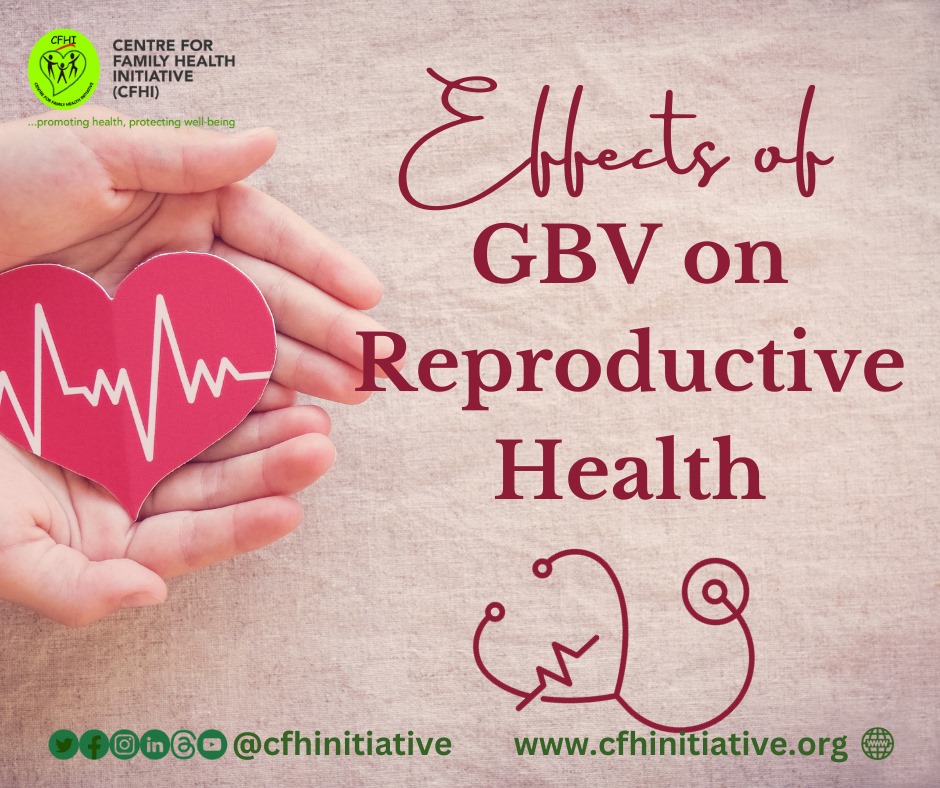
SPEAK WEDNESDAY ON EFFECTS OF GENDER-BASED VIOLENCE (GBV) ON REPRODUCTIVE HEALTH

Gender-Based Violence (GBV) is a pervasive human rights violation that affects millions of individuals worldwide, with significant and far-reaching consequences. Among its numerous adverse effects, GBV has a profound impact on reproductive health, causing physical, psychological, and social harm to survivors. Understanding these effects is crucial for addressing the broader issue of GBV and safeguarding the reproductive health and rights of those affected. Here, we explore the various ways in which GBV can affect reproductive health:

1. Physical Injuries and Complications: Physical violence, such as sexual assault or intimate partner violence, can lead to immediate injuries, including genital trauma. These injuries can result in long-term complications, such as chronic pain, sexually transmitted infections (STIs), and even infertility in some cases. Survivors may also be at a higher risk of unwanted pregnancies due to a lack of control over contraceptive choices.

2. Sexual and Reproductive Coercion: GBV often involves reproductive control, where survivors are coerced into unwanted pregnancies or abortions. Perpetrators may sabotage contraception methods or force survivors into sexual acts without their consent. This coercion can lead to unwanted pregnancies, unsafe abortions, and emotional distress.

3. Psychological Trauma: Survivors of GBV commonly experience psychological trauma, which can have a profound impact on their reproductive health. Post-Traumatic Stress Disorder (PTSD), depression, anxiety, and other mental health conditions can disrupt normal reproductive functioning, affecting menstrual cycles and sexual health.

4. Substance Abuse: Some survivors turn to substance abuse as a coping mechanism to deal with the psychological and emotional trauma caused by GBV. Substance abuse can result in risky sexual behaviors, including unprotected sex, which increases the risk of STIs and unintended pregnancies.

5. Delayed or Avoided Healthcare: Stigma, shame, and fear often prevent survivors from seeking timely medical care and support. Delayed or avoided healthcare can result in untreated injuries, untreated STIs, and complications during pregnancy or childbirth.

6. Reproductive Health Inequities: GBV disproportionately affects marginalized and vulnerable populations, exacerbating existing health inequities. Survivors who face additional layers of discrimination based on factors like race, ethnicity, socioeconomic status, or sexual orientation may encounter further challenges in accessing appropriate reproductive healthcare.

7. Impact on Mother-Child Relationships: If GBV occurs during pregnancy, it can have detrimental effects on both the mother and the developing foetus. Violence during pregnancy is associated with adverse birth outcomes, such as low birth weight and preterm birth. Furthermore, the psychological stress experienced by pregnant survivors can affect the bond between mother and child.

8. Barriers to Family Planning: Survivors of GBV may encounter obstacles to accessing family planning services. They may lack autonomy in making decisions about contraception or face difficulties in negotiating safe sex practices with their partners, resulting in increased risks of unintended pregnancies.

Addressing the effects of GBV on reproductive health requires a comprehensive approach. Efforts should include:

– Awareness and Education: Promoting awareness about GBV and its consequences on reproductive health to encourage survivors to seek help and support.

– Healthcare Services: Ensuring that healthcare providers are trained to recognize and respond to GBV, offering sensitive and confidential care to survivors.

– Counseling and Mental Health Support: Providing survivors with access to mental health services to address trauma and psychological distress.

– Prevention and Advocacy: Implementing policies and programs aimed at preventing GBV and advocating for gender equality.

Speak Wednesday is an initiative of CFHI to address issues around gender-based violence and gender bias.
#SpeakWednesday #GenderEquality #GenderDiscrimination #Women’sFinance

SPEAK WEDNESDAY ON EFFECTS OF GENDER-BASED VIOLENCE (GBV) ON REPRODUCTIVE HEALTH Read More »

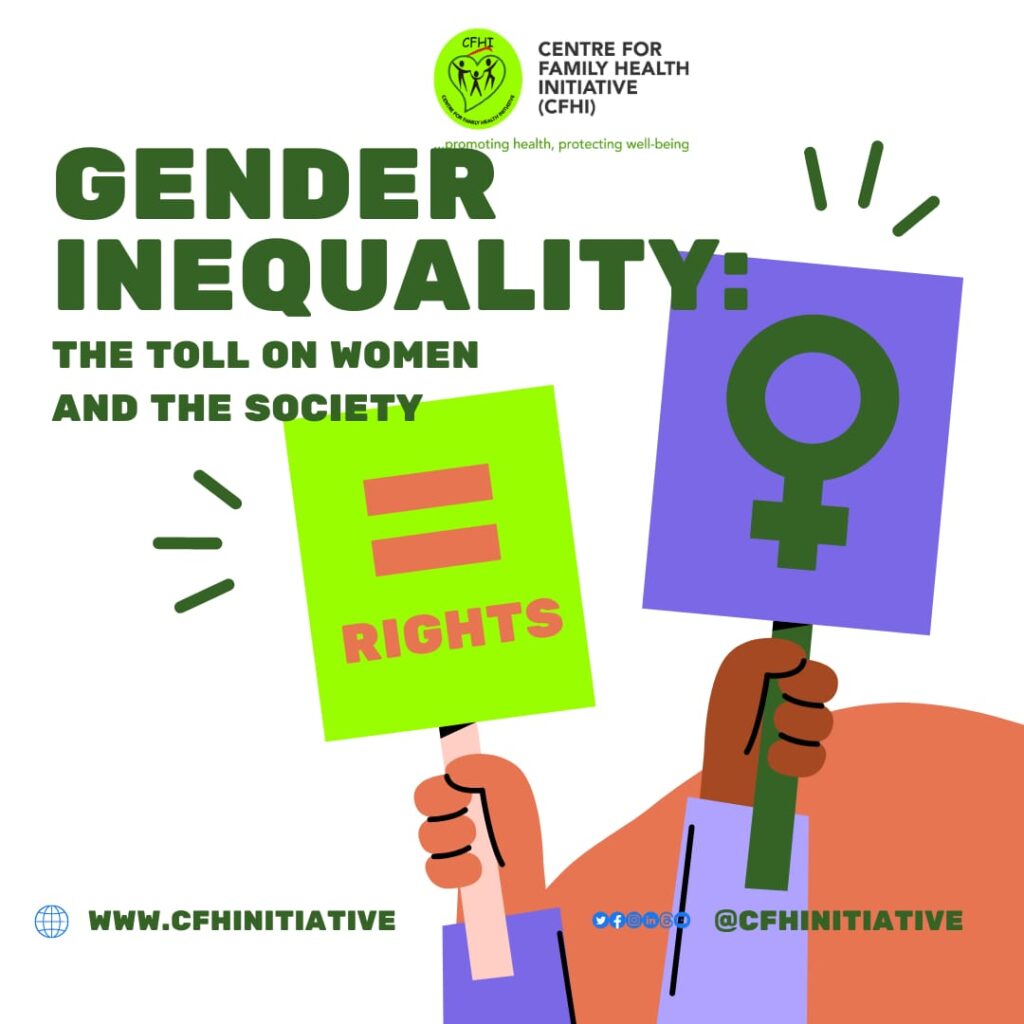
SPEAK WEDNESDAY ON GENDER INEQUALITY: THE TOLL ON WOMEN AND SOCIETY

Gender inequality is a pervasive issue that has plagued societies for centuries. While considerable progress has been made in recent years to address this problem, it continues to exert a profound toll on women and society at large. This article explores the multifaceted impacts of gender inequality, shedding light on the challenges faced by women and the broader repercussions for society.

1. Economic Disparities
One of the most evident consequences of gender inequality is economic disparity. Women often earn less than their male counterparts for equivalent work, leading to a persistent gender pay gap. This disparity not only affects women’s financial independence but also contributes to a cycle of poverty that can be passed down through generations.

2. Limited Educational Opportunities
In many parts of the world, gender inequality restricts women’s access to education. This lack of educational opportunities hampers their personal growth and economic prospects. Moreover, when women are denied access to education, society as a whole miss out on their potential contributions to various fields.
3. Unequal Representation in Leadership
Gender inequality is glaringly evident in the underrepresentation of women in leadership positions. Whether in politics, business, or academia, women continue to face barriers that hinder their ascent to influential roles. This imbalance deprives society of diverse perspectives and innovative solutions that women leaders can bring.

4. Health and Healthcare Disparities
Women often face disparities in healthcare access and quality, with some countries lacking comprehensive reproductive health services and family planning options. This inequity can lead to adverse health outcomes for women and their families. Furthermore, gender-based violence and discrimination can have severe mental and physical health consequences for women.

5. Unpaid Domestic Labour
Women disproportionately shoulder the burden of unpaid domestic labour, including childcare and household chores. This leaves them with less time and energy to pursue personal and professional aspirations. Society misses out on their full potential when this unpaid labour goes unrecognized and unvalued.

6. Gender-Based Violence
Gender inequality is closely linked to gender-based violence, which includes physical, sexual, and emotional abuse. The prevalence of such violence affects not only individual women but also disrupts social cohesion and contributes to a culture of fear and mistrust.

7. Hindrance to Social Progress
Gender inequality poses a significant hindrance to overall social progress. When half of the population is systematically marginalized and denied equal opportunities, society as a whole cannot reach its full potential. Gender equality is a fundamental human right and a cornerstone of a just and prosperous society.

8. The Path to Gender Equality
Efforts to address gender inequality must involve individuals, communities, governments, and institutions working together. Key steps include:

– Implementing and enforcing equal pay policies
– Promoting education and educational access for girls and women
– Encouraging women’s participation in leadership roles
– Providing comprehensive healthcare services, including reproductive health
– Recognizing and valuing unpaid domestic labour
– Combatting gender-based violence through legislation and awareness campaigns

Gender inequality takes a toll on both women and society. It hampers individual potential, perpetuates economic disparities, and fosters social injustice. Achieving gender equality is not just a moral imperative; it is essential for building a fair, prosperous, and progressive society. It is the responsibility of all individuals and institutions to work tirelessly towards a future where gender inequality is eradicated, and the full potential of all members of society can be realized.

Speak Wednesday is an initiative of CFHI to address issues around gender-based violence and gender bias.

#SpeakWednesday #GenderEquality #GenderDiscrimination #WomensFinance

SPEAK WEDNESDAY ON GENDER INEQUALITY: THE TOLL ON WOMEN AND SOCIETY Read More »

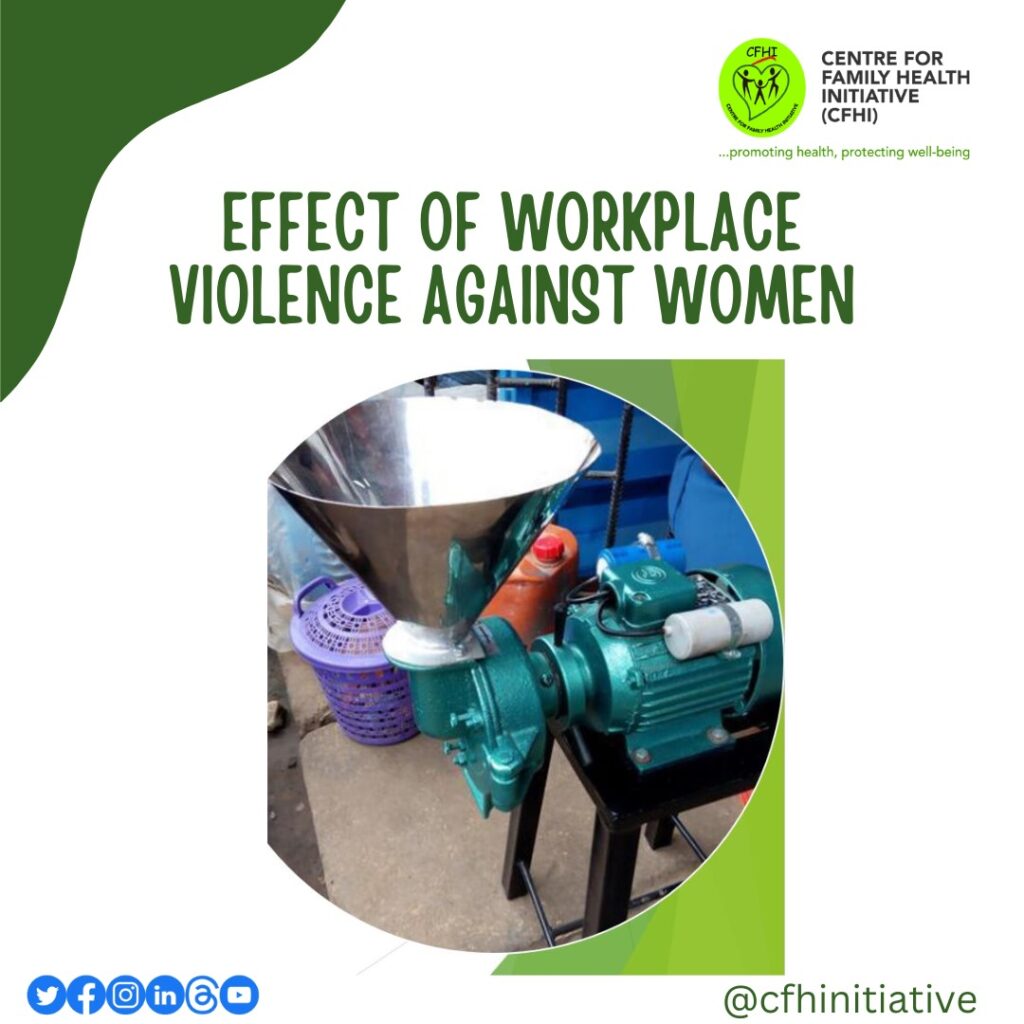
SPEAK WEDNESDAY ON EFFECT OF WORKPLACE VIOLENCE AGAINST WOMEN

A lot of female workers are forced to work in intimidating, hostile or humiliating environment where they are often asked for sexual favors, exposed to inappropriate jokes, insinuations and physical contact that can amount to assault making a work environment uncomfortable for them. According to research, between 40 and 50 percent of women experience unwanted sexual advances, physical contact or other forms of sexual harassment at work.

In today’s edition of Speak Wednesday, we retell the story of one of our beneficiaries, Grace (not her real name). Grace, an orphan, who was discovered by one of our community volunteers in Sabon Lugbe community, was a victim of workplace violence. She worked as a live-in house help for a certain family in the community, but was occasionally sexually abused by her boss. Although she endured for a while out of desperation to keep her job (she was the bread winner of the home), she had to leave because it started affecting her mental health and productivity. Few months later, she got a job in a beer parlour where she was also preyed upon sexually by both the customers and the owner of the business.

When CFHI was made aware of her sad experience, she was immediately enrolled into skills acquisition training and given startup kits for her business through IHVN project. Currently, she is successfully running her tailoring business in the community.

Gender based violence in the workplace is a major hindrance to women’s economic empowerment, autonomy and independence, however, this can be tackled if there is a collective agreement by major stakeholders on policies to prevent and address GBV in the workplace.

Thank you for joining today’s Speak Wednesday on workplace violence. Join us every Wednesday for more episodes as we work together to end all forms of violence against women and girls.

#SpeakWednesday #GBVStory #EndGBVNow

SPEAK WEDNESDAY ON EFFECT OF WORKPLACE VIOLENCE AGAINST WOMEN Read More »

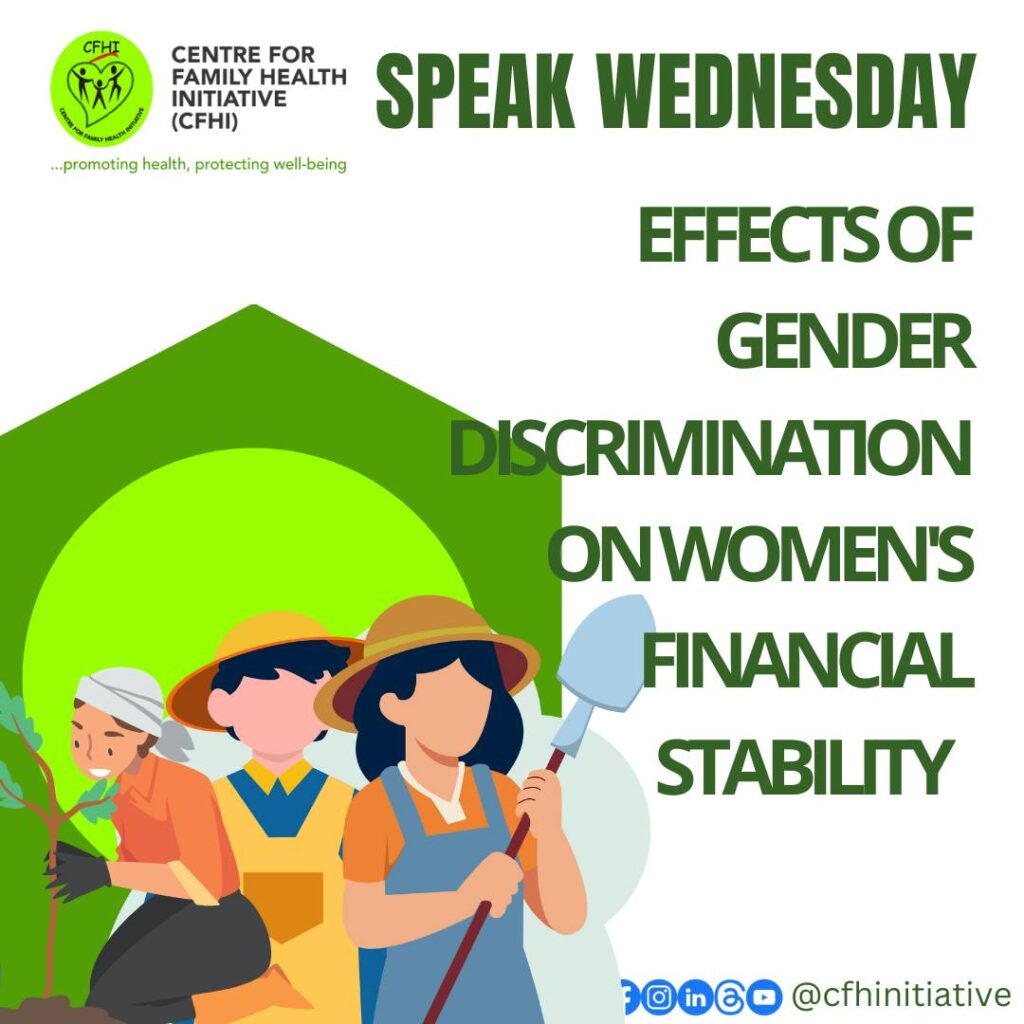
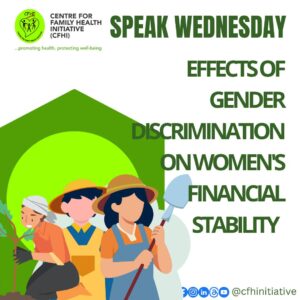
SPEAK WEDNESDAY ON EFFECTS OF GENDER DISCRIMINATION ON WOMEN’S FINANCIAL STABILITY

Article 1 of the Universal Declaration of Human Rights provides that all human beings are born free and equal in dignity and rights. However, women experience gender discrimination in both the public and private spheres, which profoundly impacts their life, including their financial stability and status.
The World Bank reports that Nigeria has one of the highest rates of out-of-school girls worldwide. Without adequate education, women’s chances of securing formal employment and escaping low-wage, informal sectors are severely restricted, leaving them vulnerable to financial instability.
Additionally, the gender wage gap still exists despite the Nigerian Labour Act prohibiting wage discrimination based on gender. The World Bank estimates that women in Nigeria make an average of 30% less money than males. The lack of equal pay makes it more difficult for women to save money, invest it, and ensure their financial future.
In Nigeria, there is a sizable gender difference in account ownership, with fewer women than males having access to formal financial services, according to the World Bank’s Global Findex Database.
The bias against women hinders their potential to establish or expand businesses, engage in politics, save finances, and participate in entrepreneurial activities. This, in turn, sustains the vicious cycle of poverty. Additionally, women’s economic empowerment, safety, and autonomy are hindered by gender discrimination, which impacts the country’s GDP and economy.
The World Bank states that achieving gender equality in financial inclusion can help accomplish eight of the 17 United Nations Sustainable Development Goals. This can be achieved through implementing genuine policies and practices promoting gender equality.
By working together to tear down the barriers of gender discrimination in Nigeria, the government, civil society, international organizations, and individuals can change this narrative.
Speak Wednesday is an initiative of CFHI to address issues around gender-based violence and gender bias.
#SpeakWednesday #GenderEquality #GenderDiscrimination #Women’sFinance

SPEAK WEDNESDAY ON EFFECTS OF GENDER DISCRIMINATION ON WOMEN’S FINANCIAL STABILITY Read More »

SPEAK WEDNESDAY ON THE SIGNIFICANCE OF WOMEN IN POLITICS

The significance of women’s involvement in politics cannot be emphasized enough when it comes to promoting the United Nations Sustainable Development Goals (SDGs). Women have been inadequately represented in politics throughout history due to various cultural factors. On the other hand, recent advances by women in politics have proven the importance of equal representation for women in this sphere. Despite advances in some areas, women in Nigeria face several hurdles when entering politics. Traditional gender roles, patriarchal conventions, and negative stereotypes frequently impede women from seeking active engagement in politics.


In Nigeria, the National Gender Policy (NGP) was created in 2006 to address the gender imbalance. The NGP advocates for a 35% Affirmative Action (AA) to ensure women are adequately represented in all governance processes.


Significantly, women in leadership positions, especially in developing nations, have the obligation and the potential to affect their society through leadership, particularly when empowered. Women who are empowered can aspirate for, achieve, and excel in leadership roles while also playing their roles at home.


Women are empowered when educated, exposed, and given economic freedom. Women in leadership roles have had an excellent social impact throughout history and in every nation. Such women have a long history in human history. Notably, influential figures such as Okonjo Iweala and Dora Akunyili have demonstrated that women can significantly contribute to a country’s political economy.


Speak Wednesday is an initiative of CFHI to address issues around gender-based violence and gender bias.


#SpeakWednesday #WomenInPolitics #Women’sRights #GenderStereotype #GenderBias #GenderInequality


REFERENCES

Emeka, E. O & Monica, E. A. 2015. Women and Leadership in Nigeria: Challenges and Prospects.

SPEAK WEDNESDAY ON THE SIGNIFICANCE OF WOMEN IN POLITICS Read More »