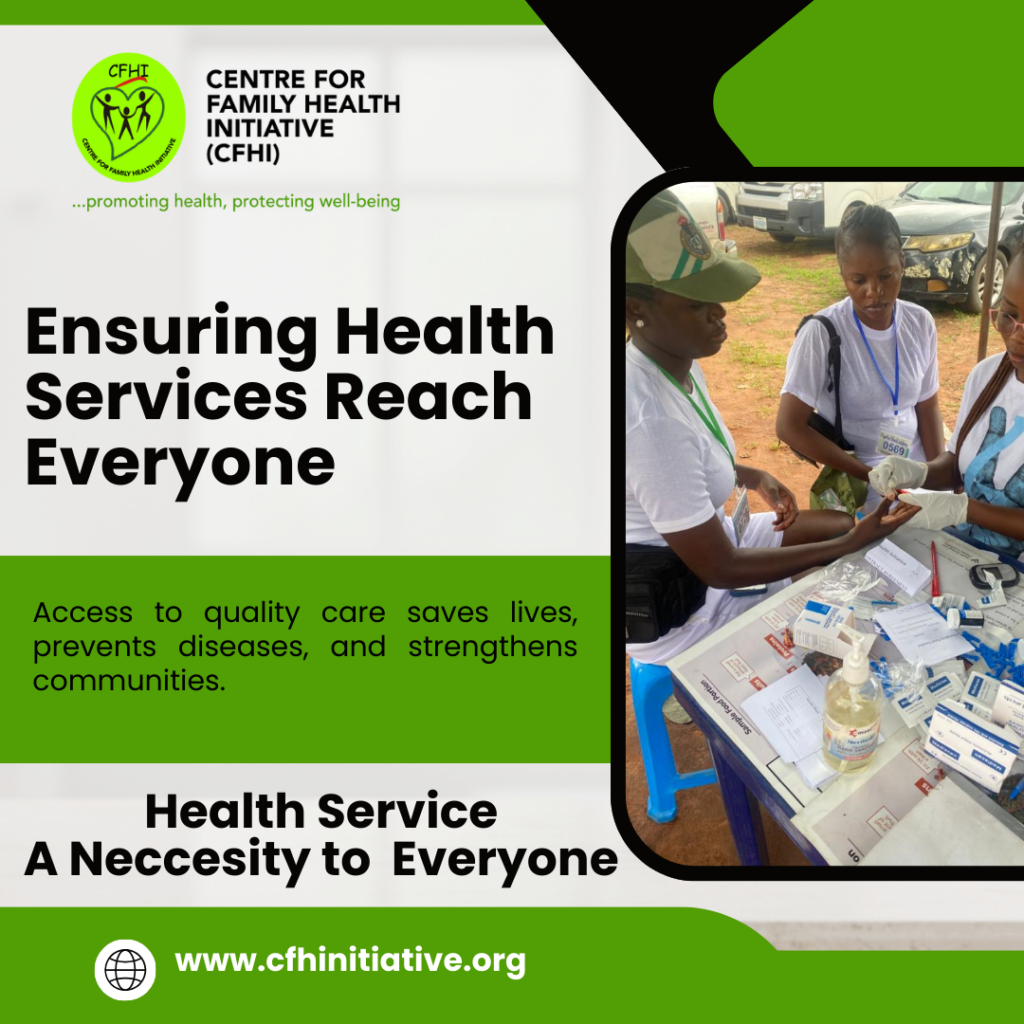
Ensuring that health services reach everyone remains one of the world’s most urgent development challenges, especially as global progress toward Universal Health Coverage (UHC) continues to slow. Worldwide, more than 4.6 billion people still lack access to essential health services, leaving millions at risk of preventable illness and financial hardship [1]. Although the global service coverage index has risen from the mid-50s in 2000 to around 71 in 2023, the gains remain uneven and fragile [2]. In Nigeria, persistent gaps in primary healthcare, maternal and newborn services, limited staffing, shortages of essential supplies and unreliable electricity continue to restrict access for many communities, particularly in rural and underserved areas [3,4].
Electricity is one of the most basic requirements for safe and functional health care. In many low-resource settings, including parts of Nigeria, frequent power interruptions limit the ability of facilities to conduct safe night-time deliveries, sterilize equipment, store vaccines, or run lifesaving laboratory tests. Evidence shows that roughly one-third to two-fifths of Nigeria’s primary health care centres still lack stable electricity, forcing some to rely on kerosene lamps, phone flashlights or fuel-powered generators that often fail when needed most [5,6]. Without reliable light and power, both mothers and newborns face heightened risks, and health workers struggle to provide the standard of care for which they are trained.
These structural challenges contribute to persistent health inequalities. Nigeria retains one of the highest maternal mortality ratios globally, despite substantial global declines since the early 2000s [2,7]. Skilled birth attendance an essential determinant of maternal and newborn survival has improved in some regions but still varies widely across northern states, where many young women remain unable to access skilled care at birth [4]. Preventive services such as immunisation have also fluctuated, with pandemic-related disruptions causing setbacks. Although recovery efforts are ongoing, routine immunisation coverage remains below global and regional benchmarks, leaving children in remote communities at disproportionate risk [3,8].
Nonetheless, evidence from recent interventions demonstrates that targeted, practical investments can quickly strengthen essential health services. Solar electrification of primary health care facilities, particularly through durable systems designed for maternal and emergency care, has been shown to improve night-time service delivery, stabilize cold-chain systems and increase overall service availability [6,9]. When paired with training and continuous supervision, such interventions support proper equipment use, routine maintenance and long-term sustainability an approach consistently endorsed by global health experts and backed by facility-level assessments [7]. Furthermore, integrating community engagement, leadership participation and strong referral mechanisms encourages service uptake and strengthens public trust.
To accelerate progress, policymakers, donors, and community leaders must prioritize primary healthcare revitalization, commit to electrifying facilities, invest in continuous staff training, and support service delivery models proven to work. Ensuring that health services reach everyone is both achievable and urgent. With collective action, equitable investment and strengthened partnerships, Nigeria can move closer to a future where every individual regardless of geography or socioeconomic status receives the essential care needed to live a healthy and dignified life.
References
- World Health Organization. Universal health coverage (UHC) fact sheet. 2024 [cited 2025 Dec 12]. Available from: https://www.who.int/news-room/fact-sheets/detail/universal-health-coverage-%28uhc%29
- World Bank. Tracking Universal Health Coverage — 2025 Global Monitoring Report. 2025 [cited 2025 Dec 12]. Available from: https://www.worldbank.org/en/topic/universalhealthcoverage/publication/2025-global-monitoring-report-gmr
- WHO. Nigeria Country Health Profile — Health System Performance, Immunisation & Primary Care Indicators. 2024 [cited 2025 Dec 12]. Available from: https://www.who.int/countries/nga
- Afape AO, et al. Prevalence and determinants of skilled birth attendance among young women in Northern Nigeria. 2024 [cited 2025 Dec 12]. Available from: https://www.ncbi.nlm.nih.gov/pmc/articles/PMC11389318/
- World Health Organization. Electricity in health-care facilities. 2023 [cited 2025 Dec 12]. Available from: https://www.who.int/news-room/fact-sheets/detail/electricity-in-health-care-facilities
- Sustainable Energy for All. Powering primary healthcare in Nigeria. 2024 [cited 2025 Dec 12]. Available from: https://www.seforall.org
- World Bank. Maternal mortality ratio — Nigeria. 2024 [cited 2025 Dec 12]. Available from: https://data.worldbank.org/indicator/SH.STA.MMRT?locations=NG
- UNICEF. Immunisation data and analysis. 2024 [cited 2025 Dec 12]. Available from: https://data.unicef.org/topic/child-health/immunization/
- Nigeria Health Watch. Solar power solutions for primary healthcare centres. 2024 [cited 2025 Dec 12]. Available from: https://articles.nigeriahealthwatch.com/a-solar-power-project-is-keeping-primary-healthcare-centres-running-in-abuja/