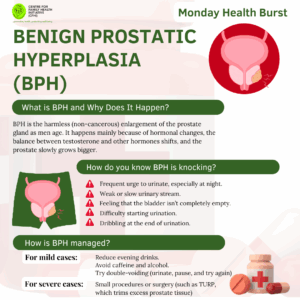

The prostate is a small guardian stationed just below the bladder. When you are young, it’s no bigger than a walnut. But as you age, the prostate can grow and that is where Benign Prostatic Hyperplasia (BPH) comes in.
Benign Prostatic Hyperplasia simply means your prostate is enlarging. It is not cancer; it’s just your prostate showing signs of age.
Why does it grow?
BPH is the body’s natural response to aging, especially after 50. Changing hormone levels such as lower testosterone and relatively more estrogen signal the prostate to grow bigger.
The trouble begins when this larger prostate starts pressing on the urethra (the tube that carries urine out), making urination harder.
How do you know BPH is knocking?
Common signs include:
- You just urinated but feel the need to go again.
- You wake up at night to urinate (nocturia)
- Difficulty starting urination or weak flow.
- Feeling your bladder isn’t fully empty.
- Dribbling at the end of urination
Who gets BPH?
BPH is common in:
- Men over 50
- Men with a family history of BPH
- Those with conditions like diabetes or obesity
How is BPH managed?
For mild cases:
- Reduce evening drinks.
- Avoid caffeine and alcohol.
- Try double-voiding (urinate, pause, and try again)
For moderate cases:
- Medications to relax or shrink the prostate.
For severe cases:
- Small procedures or surgery (such as TURP, which trims excess prostate tissue)
Your prostate is part of your aging journey. When it causes trouble, don’t suffer in silence. Talk to your doctor. Early help leads to a better quality of life.
Monday Health Burst is an initiative of Centre for Family Health Initiative (CFHI) to tackle issues of basic health concerns. Join us every Monday for more health-related articles on all our social media platforms.