MONDAY HEALTH BURST ONBENEFITS OF BREASTFEEDING FOR MOTHERS

Breastfeeding, the natural act of nourishing an infant with breast milk, has been an integral part of human history for centuries. Beyond its well-known advantages for infants, breastfeeding offers many remarkable benefits for mothers. The journey of motherhood is enriched through this bond that not only nurtures the child but also contributes to the physical and emotional well-being of the mother.

Welcome to Monday’s Health Burst! In today’s episode, we will explore the benefits of breastfeeding for mothers.

Breastfeeding offers several health benefits to mothers, including:

• Postpartum Weight Loss: Breastfeeding burns extra calories, aiding in weight loss after childbirth.

• Uterine Contraction: It helps the uterus return to its pre-pregnancy size faster by promoting uterine contractions.

• Reduced Risk of Certain Cancers: Breastfeeding has been linked to a decreased risk of breast and ovarian cancers.

• Bone Health: Women who breastfeed may have improved bone density in the years following childbirth.

• Reduced Risk of Type 2 Diabetes: Breastfeeding may lower the risk of developing type 2 diabetes later in life.

• Cardiovascular Health: It can contribute to improved heart health and reduce the risk of cardiovascular diseases.

• Emotional Well-being: Breastfeeding can enhance the release of hormones that promote maternal bonding and reduce postpartum depression.

Breastfeeding is not only a gift to the child but also a precious gift to the mother. Its physical, emotional, and psychological benefits contribute to the overall well-being of mothers during the postpartum period and beyond. The bond forged through breastfeeding enhances the mother’s self-esteem, emotional stability, and a sense of purpose while reducing the risk of various diseases and fostering a healthier lifestyle.

Monday Health Burst is an initiative of CFHI to address issues of basic health concern. Join us every Monday on all our social media platforms for more episodes.
MONDAY HEALTH BURST ONBENEFITS OF BREASTFEEDING FOR MOTHERS Read More »
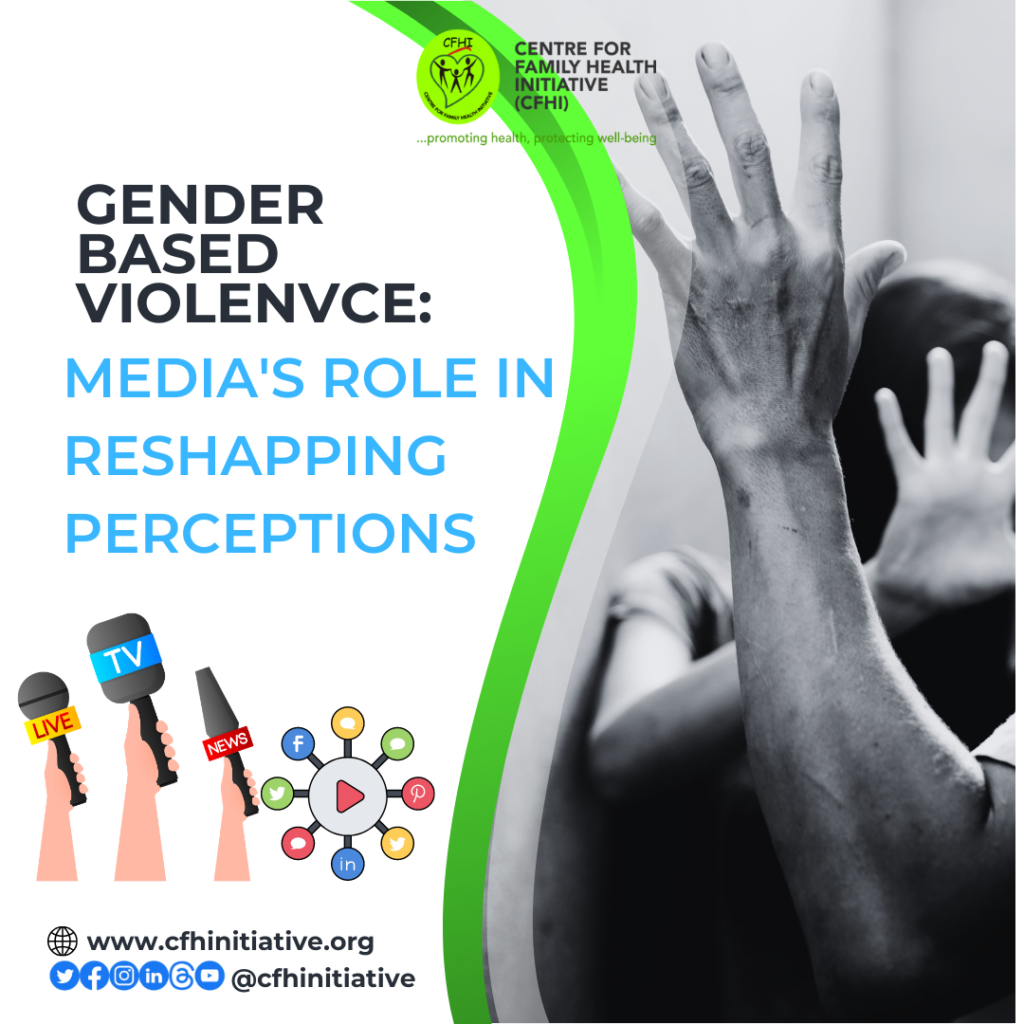
SPEAK WEDNESDAY ON GENDER BASED VIOLENCE; MEDIA’S ROLE IN RESHAPING PERCEPTION

Gender-Based Violence: Media’s Role in Reshaping Perceptions

Media plays a crucial role in reshaping gender-based violence (GBV) perceptions by influencing public awareness, attitudes, and understanding of GBV. Through various platforms like news, movies, TV shows, and social media, media can raise awareness, challenge stereotypes, empower survivors, educate the public, and influence policy and advocacy. However, the media’s responsibility in reporting GBV comes with pitfalls that can perpetuate harmful norms and hinder efforts to address the issue effectively. Examples:

  1. Normalization of Violence:

   – Lack of coverage can create an illusion that GBV is not a prevalent issue, normalizing abusive behaviour and attitudes.

  1. Victim Blaming:

   – When incidents go unreported or underreported, it can reinforce victim-blaming attitudes, suggesting that survivors are responsible for the violence they experience.

  1. Silencing Survivors:

   – Media silence may discourage survivors from coming forward, fearing stigmatization and disbelief, further isolating them and hindering their path to justice and healing.

  1. Lack of Public Awareness:

   – Insufficient reporting prevents the public from understanding the scale and severity of GBV, leading to complacency and inaction.

  1. Impeding Policy and Legal Reforms:

   – Without media attention, the urgency for policy changes and legal reforms to protect victims and hold perpetrators accountable may be undermined.

  1. Missed Opportunities for Prevention:

   – Media can be a powerful tool in promoting prevention efforts, but these opportunities are lost without adequate reporting.

  1. Misrepresentation and Stereotyping:

   – When incidents are reported, media portrayals may perpetuate harmful stereotypes, reinforcing gender norms and biases.

  1. Undermining Advocacy Efforts:

   – Media serves as a conduit for advocacy efforts, but insufficient coverage can hamper campaigns and awareness-raising initiatives.

  1. Fostering a Culture of Silence:

   – A lack of media attention can create a culture of silence around GBV, hindering collective efforts to challenge and combat it.

  1. Impact on Funding and Resources:

   – Insufficient reporting may lead to reduced funding and resources for organizations working to address GBV, impeding their ability to support survivors and prevent future violence.

The Media’s role in reshaping perceptions of gender-based violence is undeniable and carries a significant responsibility in how it reports on the issue.

Speak Wednesday is an initiative of CFHI to address issues around gender-based violence and gender bias.

#SpeakWednesday #GenderEquality #GenderDiscrimination #Women’sFinance

SPEAK WEDNESDAY ON GENDER BASED VIOLENCE; MEDIA’S ROLE IN RESHAPING PERCEPTION Read More »

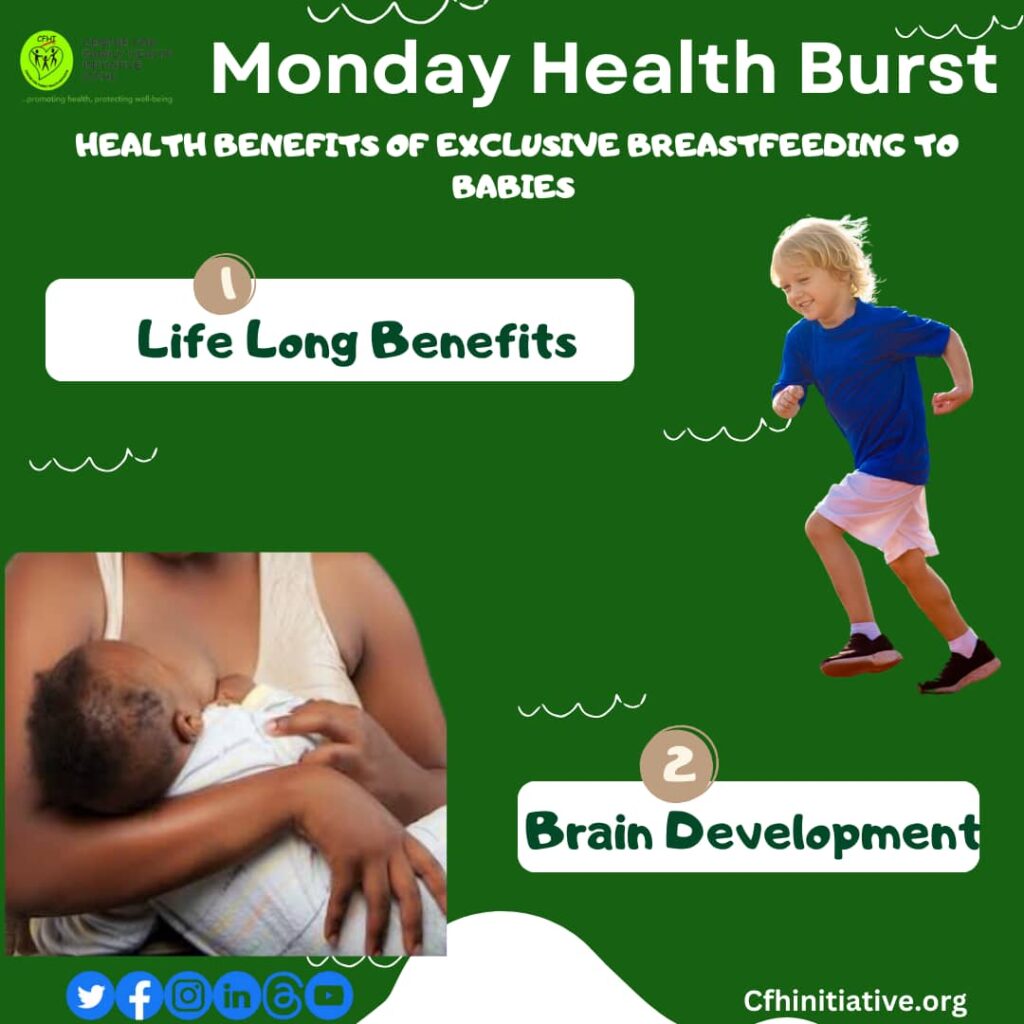
HEALTH BENEFITS OF EXCLUSIVE BREASTFEEDING TO BABIES

Breastfeeding is the act of feeding an infant breast milk from the breast. Exclusive and continued breastfeeding could help prevent 13% of death globally among children under five year old.1

World Health Organization (WHO) recommends exclusive breastfeeding for six months and encourages continuing breastfeeding even after solid foods are introduced until the age of two. It is also recommended, that Children initiate breastfeeding within the first hour of birth.

The benefits of exclusive breastfeeding cannot be understated as it includes;

Brain development: A US study showed that toddlers and preschoolers who had been exclusively breastfed for at least three months had brains with twenty to thirty percent more white matter which connects different regions of the brain and transmits signals between them than those who had no breast milk. Therefore, Infants who are breastfed exclusively are more likely to have higher intelligence quotient (IQ) than formula fed babies.2

Life long benefits: Children who were breastfed are less likely to suffer from diseases such as leukaemia and lymphoma and tend to have better eyesight, and straighter teeth than those who had formula milk.

Breastfeeding also helps to lower baby’s risk of becoming obese or developing type 1 or type 2 diabetes as adult.

Exclusive breastfeeding is known to considerably decrease infant mortality on account of common childhood illness. It is one of the ways to minimize the chances of a baby getting diarrhoea, allergies, pneumonia and suffering from malnutrition.

Sadly, three in five babies are not breastfed in the first hour of life and two out of three infants are not exclusively breastfed for the recommended six months.3


More awareness should be created on the benefits of exclusive breastfeeding. Furthermore, support from family members and friends is vital in encouraging mothers to breastfeed their infants exclusively.


Monday Health Burst is an initiative of CFHI to address issues of basic health concern. Join us every Monday on all our social media platforms for more episodes.

References

  1. World Health Organisation (WHO)
  2. https://www.google.com/url?sa=t&source=web&rct=j&opi=89978449&url=https://www.ncbi.nlm.nih.gov/pmc/articles/PMC8894195/&ved=2ahUKEwjnjqmcj8uAAxWhS0EAHe_iBWYQFnoECB4QAQ&usg=AOvVaw0RkUImQsW9g2c-tH5M8Gud
  3. World Health Organisation (WHO)

HEALTH BENEFITS OF EXCLUSIVE BREASTFEEDING TO BABIES Read More »

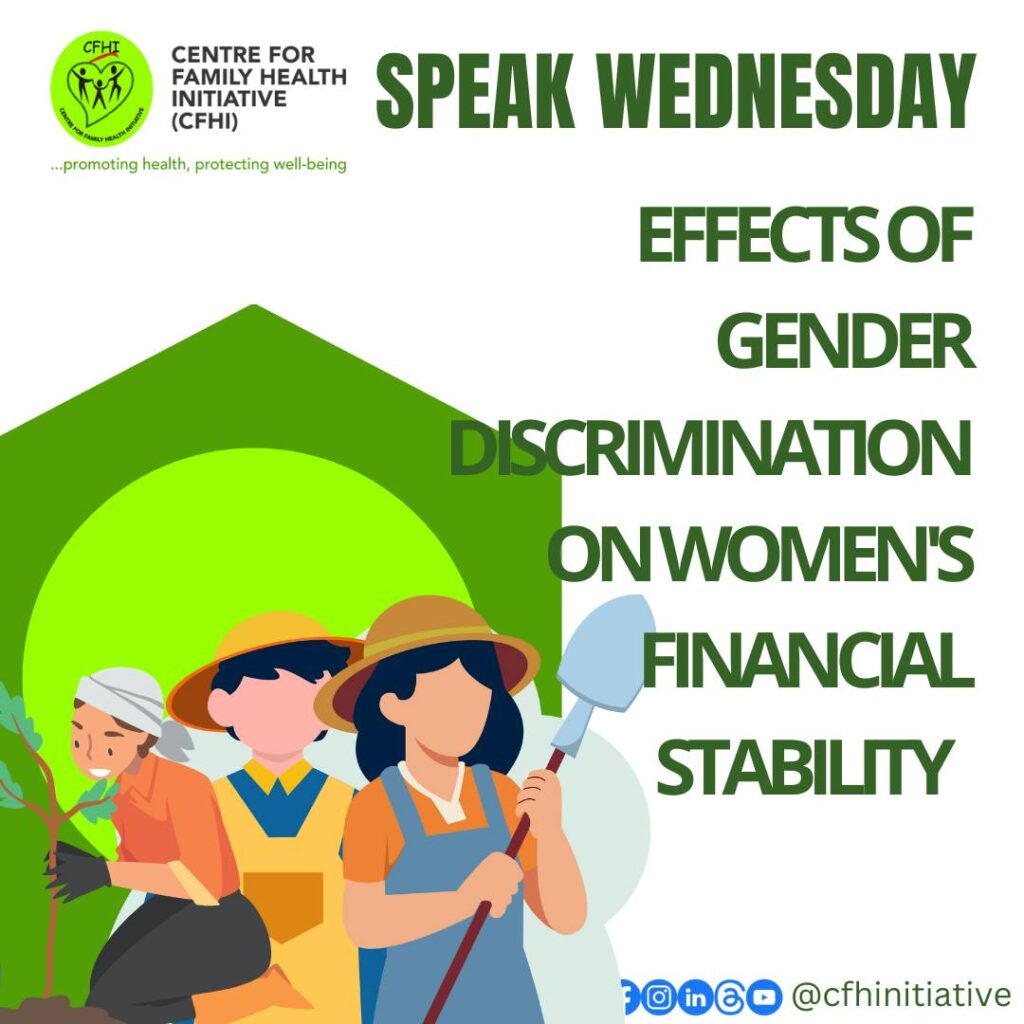
SPEAK WEDNESDAY ON EFFECTS OF GENDER DISCRIMINATION ON WOMEN’S FINANCIAL STABILITY

Article 1 of the Universal Declaration of Human Rights provides that all human beings are born free and equal in dignity and rights. However, women experience gender discrimination in both the public and private spheres, which profoundly impacts their life, including their financial stability and status.
The World Bank reports that Nigeria has one of the highest rates of out-of-school girls worldwide. Without adequate education, women’s chances of securing formal employment and escaping low-wage, informal sectors are severely restricted, leaving them vulnerable to financial instability.
Additionally, the gender wage gap still exists despite the Nigerian Labour Act prohibiting wage discrimination based on gender. The World Bank estimates that women in Nigeria make an average of 30% less money than males. The lack of equal pay makes it more difficult for women to save money, invest it, and ensure their financial future.
In Nigeria, there is a sizable gender difference in account ownership, with fewer women than males having access to formal financial services, according to the World Bank’s Global Findex Database.
The bias against women hinders their potential to establish or expand businesses, engage in politics, save finances, and participate in entrepreneurial activities. This, in turn, sustains the vicious cycle of poverty. Additionally, women’s economic empowerment, safety, and autonomy are hindered by gender discrimination, which impacts the country’s GDP and economy.
The World Bank states that achieving gender equality in financial inclusion can help accomplish eight of the 17 United Nations Sustainable Development Goals. This can be achieved through implementing genuine policies and practices promoting gender equality.
By working together to tear down the barriers of gender discrimination in Nigeria, the government, civil society, international organizations, and individuals can change this narrative.
Speak Wednesday is an initiative of CFHI to address issues around gender-based violence and gender bias.
#SpeakWednesday #GenderEquality #GenderDiscrimination #Women’sFinance

SPEAK WEDNESDAY ON EFFECTS OF GENDER DISCRIMINATION ON WOMEN’S FINANCIAL STABILITY Read More »

MONDAY HEALTH BURST ON SYMPTOMS AND CAUSES OF HEPATITIS B

Hepatitis B is a viral infection that attacks the liver and can cause both acute and chronic diseases. Having chronic hepatitis B raises your risk of getting liver cancer, liver failure, or cirrhosis, which permanently scars the liver.
The World Health Organization (WHO) estimates that around 1.5 million people are diagnosed with chronic hepatitis B infection annually, which affects a total of 296 million individuals.

SYMPTOMS
Hepatitis B may occasionally go undetected without any obvious signs. This is common among children.
Acute hepatitis B symptoms can start to show about 1 to 4 months after contact with the virus. Some of these symptoms include:
• Weakness and exhaustion
• Appetite loss
• Vomiting
• Jaundice
• Clay-colored stool
• the aching in one’s joints

CAUSES:
According to MayoClinic, the causes of Hepatitis B include:
• Sexual contact: It is possible to contract hepatitis B if one engages in unprotected sexual activity with an infected individual. The virus can be transmitted through bodily fluids such as blood, saliva, semen, or vaginal secretions.
• Sharing of needles/Accidental needle sticks: HBV easily spreads through needles and syringes contaminated with infected blood. Sharing IV drug paraphernalia puts one at high risk of hepatitis B.
• Mother to child: Pregnant women infected with HBV can pass the virus to their babies during childbirth. However, the newborn can be vaccinated to avoid getting infected in almost all cases. It is advisable to discuss with a healthcare provider the option of getting tested for hepatitis B if you are pregnant or planning to conceive.

Monday Health Burst is an initiative of CFHI to address issues of basic health concern. Join us every Monday on all our social media platforms for more episodes.

MONDAY HEALTH BURST ON SYMPTOMS AND CAUSES OF HEPATITIS B Read More »

SPEAK WEDNESDAY ON THE SIGNIFICANCE OF WOMEN IN POLITICS

The significance of women’s involvement in politics cannot be emphasized enough when it comes to promoting the United Nations Sustainable Development Goals (SDGs). Women have been inadequately represented in politics throughout history due to various cultural factors. On the other hand, recent advances by women in politics have proven the importance of equal representation for women in this sphere. Despite advances in some areas, women in Nigeria face several hurdles when entering politics. Traditional gender roles, patriarchal conventions, and negative stereotypes frequently impede women from seeking active engagement in politics.


In Nigeria, the National Gender Policy (NGP) was created in 2006 to address the gender imbalance. The NGP advocates for a 35% Affirmative Action (AA) to ensure women are adequately represented in all governance processes.


Significantly, women in leadership positions, especially in developing nations, have the obligation and the potential to affect their society through leadership, particularly when empowered. Women who are empowered can aspirate for, achieve, and excel in leadership roles while also playing their roles at home.


Women are empowered when educated, exposed, and given economic freedom. Women in leadership roles have had an excellent social impact throughout history and in every nation. Such women have a long history in human history. Notably, influential figures such as Okonjo Iweala and Dora Akunyili have demonstrated that women can significantly contribute to a country’s political economy.


Speak Wednesday is an initiative of CFHI to address issues around gender-based violence and gender bias.


#SpeakWednesday #WomenInPolitics #Women’sRights #GenderStereotype #GenderBias #GenderInequality


REFERENCES

Emeka, E. O & Monica, E. A. 2015. Women and Leadership in Nigeria: Challenges and Prospects.

SPEAK WEDNESDAY ON THE SIGNIFICANCE OF WOMEN IN POLITICS Read More »

MONDAY HEALTH BURST ON HEPATITIS C

Hepatitis C is a viral infection that primarily affects the liver. It is caused by the hepatitis C virus (HCV).

According to the World Health Organization, approximately 58 million people worldwide have chronic hepatitis C virus infection. Every year, 1.5 million new cases are reported. Around 3.2 million children and adolescents also have chronic hepatitis C infection.

Hepatitis C is mainly caused by the Hepatitis C Virus. The virus can be transmitted through direct contact with infected blood. It is crucial to understand that the transmission of HCV can only occur if infected blood enters a person’s system.


According to the Centers for Disease Control, the following are the risk factors for contracting Hepatitis C;

  • Receiving organ transplants or transfusions prior to 1992, the year that blood screening became available
  • Exposure to a needle stick, which happens frequently to those who work in the healthcare industry
  • Being born to a hepatitis C-positive mother


People with hepatitis C may not even know they have it because they show no symptoms, especially during the acute stage. This makes spreading it to other people simpler. When symptoms arise, they include: include fever, fatigue, loss of appetite, nausea, vomiting, abdominal pain, dark urine, and yellowing of the skin or eyes (jaundice).

Hepatitis C can be treated with antiviral drugs, but no vaccine prevents it (WHO).

Early diagnosis and treatment can enhance long-term health and stop severe liver damage.

Monday Health Burst is an initiative of CFHI to address issues of basic health concern. Join us every Monday on all our social media platforms for more episodes.


MONDAY HEALTH BURST ON HEPATITIS C Read More »

SPEAK WEDNESDAY ON THE IMPACT OF SEXUAL HARRASSMENT ON WOMEN’S CAREERS.


The Impact of Sexual Harassment on Women’s Careers

The International Labour Organization defines sexual harassment as unwelcome and offensive behavior of a sexual nature that targets individuals based on their sex. Sexual harassment is a widespread problem that impacts women’s careers more than any other area of their lives. The prevalence of sexual harassment at work impedes women’s advancement and limits their ability to advance professionally.

According to a study conducted by the International Centre for Research on Women in collaboration with ActionAid Nigeria, approximately 80% of Nigerian women have experienced some form of sexual harassment in their workplaces.

Sexual harassment fosters a toxic workplace culture, which lowers women’s job satisfaction and increases their departure rates. According to the ICRW survey, 45% of Nigerian women who had experienced sexual harassment at work decided to leave their positions, which interfered with their professional trajectories and reduced their possibilities for progress.

Furthermore, women’s careers are severely disrupted by sexual harassment, which results in traumatic events that affect their ability to advance professionally. The research by the Women in Law and Development in Africa (WILDAF) shows that sexual harassment frequently causes affected women to have lower job satisfaction, lower productivity, and higher turnover rates. The trauma brought on by such events can also cause ongoing emotional anguish, impacting one’s self-worth and confidence at work.

In Nigeria, sexual harassment affects women’s careers negatively, impeding their personal and professional advancement. The fact that this problem is so common highlights the urgent need for all-encompassing measures to combat and eliminate sexual harassment in the workplace. Creating inclusive workplaces that promote gender equality and guarantee the unrestricted career advancement of Nigerian women requires strengthening regulatory frameworks, raising awareness, and cultivating a supportive environment that empowers women.

Speak Wednesday is an initiative of CFHI to address issues around gender-based violence and gender bias.

#SpeakWednesday #SexualHarassment #SayNoToSexualHarassment #Women’srights #genderequality #genderbias

SPEAK WEDNESDAY ON THE IMPACT OF SEXUAL HARRASSMENT ON WOMEN’S CAREERS. Read More »

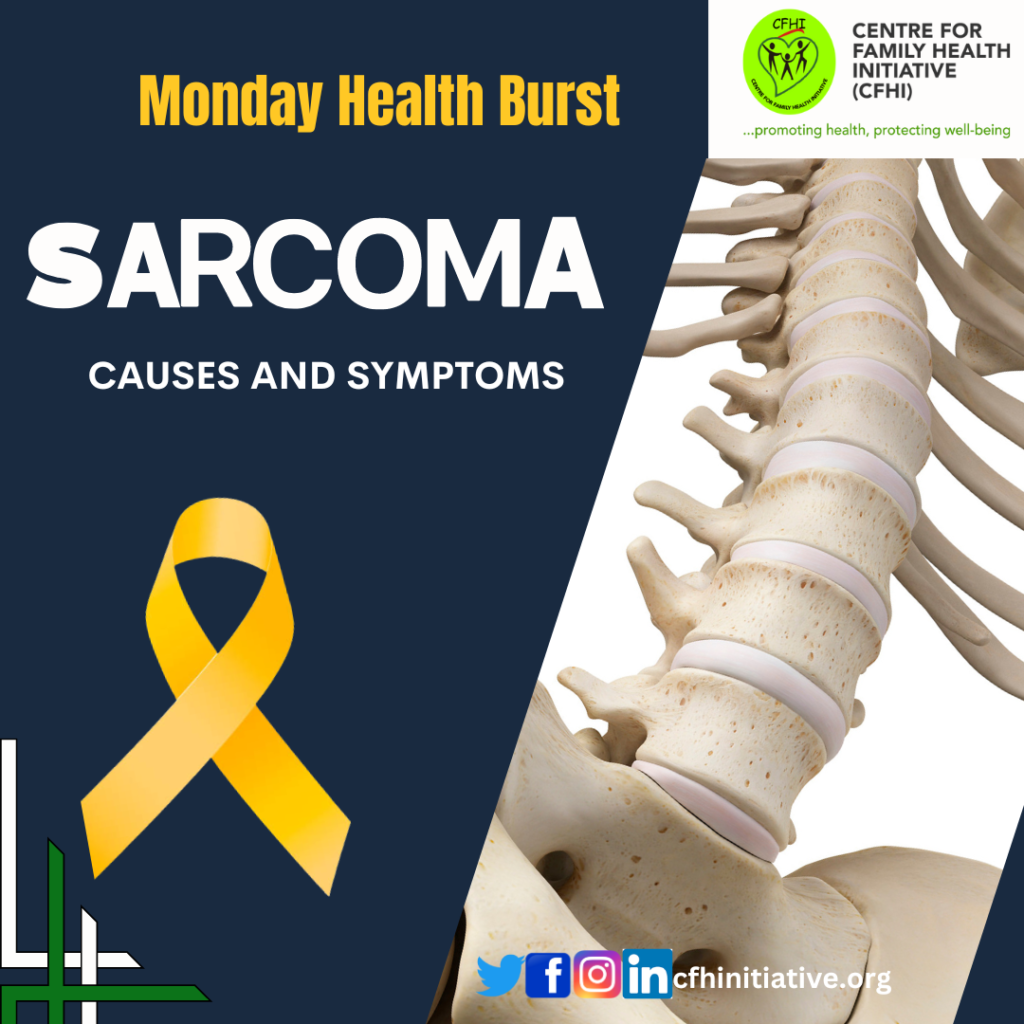
MONDAY HEALTH BURST ON SARCOMA – CAUSES AND TREATMENT

Sarcoma, a rare form of cancer, encompasses a variety of malignancies that arise in the body’s connective tissues, such as bones, muscles, tendons, blood vessels, and soft tissues. Commonly observed symptoms are as follows:

  • Painless lump
  • Weight loss
  • Trouble in breathing
  • Pain in the affected bones
  • Swelling
  • Fatigue
  • A limp when the sarcoma is in your leg.

While the precise causes of sarcoma remain unclear, several factors can contribute to its development. Here are some potential causes and risk factors associated with sarcoma:

  1. Genetic factors: Genetic mutations or inherited conditions can increase the likelihood of developing sarcoma in certain cases.


  1. Radiation exposure: Previous exposure to high levels of ionizing radiation, particularly during cancer treatment or nuclear accidents, has been linked to an elevated risk of sarcoma. This is more common among individuals who have undergone radiation therapy for other types of cancer.


        3. Environmental factors: Certain environmental elements, such as exposure to specific chemicals or toxins, may contribute to sarcoma development. For example, exposure to vinyl chloride, a chemical used in plastics manufacturing, has been associated with an increased risk of a specific type of sarcoma called angiosarcoma.


  1. Chronic lymphedema: Prolonged swelling of the limbs caused by damage or removal of the lymphatic system, often resulting from cancer treatment or surgery, can elevate the risk of developing lymphangiosarcoma, a type of sarcoma.


Treatment:

According to Mayo Clinic’s Publication in December, 2022; Surgery is commonly employed as the primary treatment for sarcoma, aiming to remove the cancerous cells. Additional treatments may be administered before or after surgery, depending on the type and location of the sarcoma, the aggressiveness of the cells, and the presence of metastasis in other parts of the body. The optimal therapy for each individual is determined based on these factors.


Monday Health Burst is an initiative of CFHI to address issues of basic health concern. Join us every Monday on all our social media platforms for more episodes.


MONDAY HEALTH BURST ON SARCOMA – CAUSES AND TREATMENT Read More »

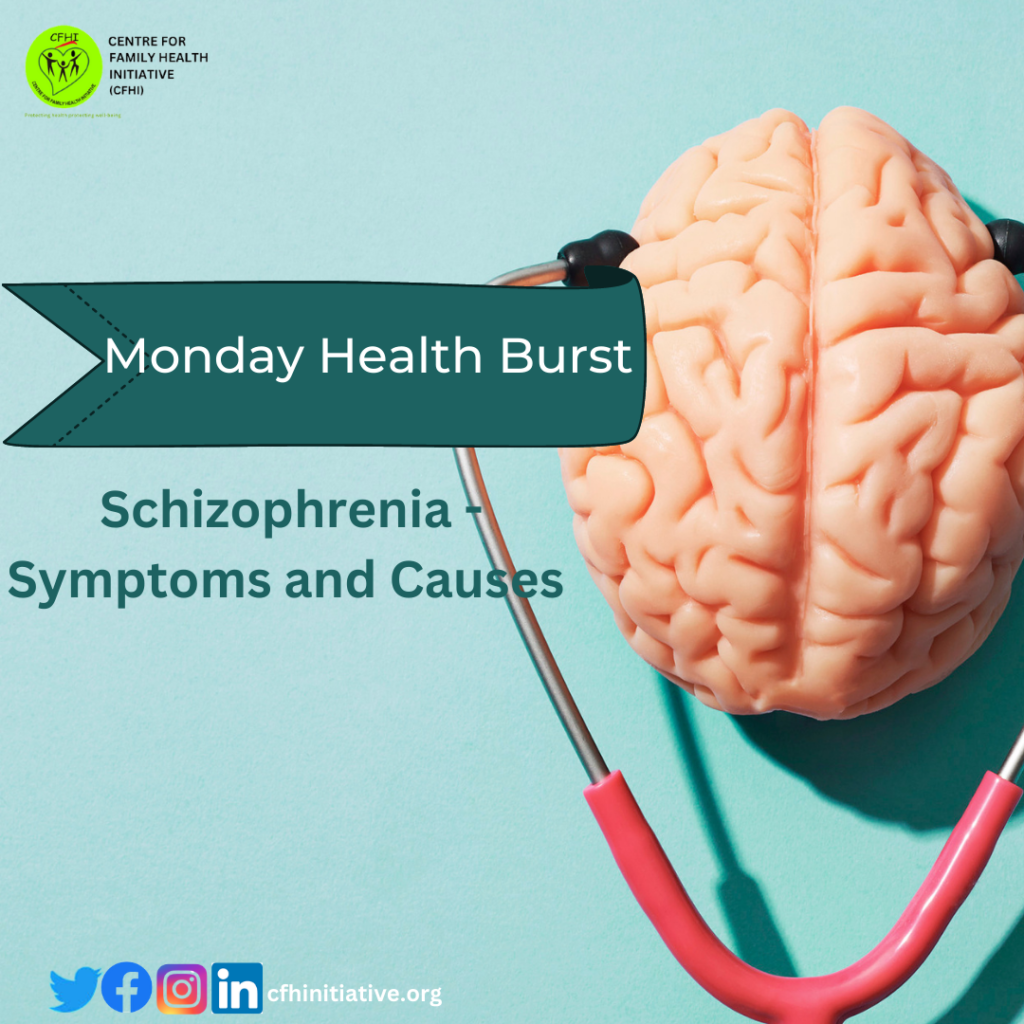
MONDAY HEALTH BURST ON SCHIZOPHRENIA – SYMPTOMS AND CAUSES

Schizophrenia is a chronic and severe mental disorder that affects how a person thinks, feels, and behaves. It is characterized by a range of symptoms that can significantly impact a person’s daily functioning and quality of life.

Around 24 million people, or 1 in 300 persons (0.32%) globally, suffer from schizophrenia. Adults (2) had a rate of 1 in 222 (0.4%). It is not as prevalent as many other mental illnesses. The most common time for onset is in the late teens and twenties, and it often occurs earlier in males than in women. (World Health Organization)

Symptoms:

Delusions: Delusions are false beliefs that are not based on reality. An example of a delusion is when a person believes that they are being watched or that someone is trying to harm them.

Hallucinations: Sensations that are not real but are experienced by the person with schizophrenia. These can include hearing voices, seeing things that are not there, or feeling sensations in the body.

Disorganized thinking and speech: A person with schizophrenia may have difficulty organizing and expressing their thoughts. Their speech may be illogical or unrelated to the topic being discussed.

Abnormal motor behaviour: This can manifest as unusual movements or repetitive behaviours that serve no apparent purpose.

Negative symptoms: These refer to a decrease or absence of normal functioning. Examples include a lack of motivation, social withdrawal, reduced emotional expression, and decreased speech.

Schizophrenia does not have a single identifiable cause, according to the World Health Organization (WHO). The condition is believed to result from genetic and environmental factors. Exposure to viruses or malnutrition before birth and complications during pregnancy or birth may contribute to its development. Additionally, psychosocial stress can play a role in the onset and progression of schizophrenia. Heavy cannabis use is also linked to an increased risk of the disorder.

It is crucial to take decisive action on schizophrenia, and it demands the active cooperation of governments, healthcare systems, communities, and individuals alike.


Monday Health Burst is an initiative of CFHI to address issues of basic health concern. Join us every Monday on all our social media platforms for more episodes.


MONDAY HEALTH BURST ON SCHIZOPHRENIA – SYMPTOMS AND CAUSES Read More »