Gender

SPEAK WEDNESDAY

THE TERM GENDER EQUALITY (WHAT EXACTLY IS GENDER EQUALITY?)

According to United Nations Children Fund (UNICEF), Gender equality is the equal valuing by society of the similarities and the differences of men and women, and the roles they play. It is based on women and men being full partners in the home, community, and society. Equality does not mean that women and men will become the same, but the rights, responsibilities, and opportunities will not depend on whether they are born male or female.

According to gender gap Africa, men earn an average of $140 more than women per month in Nigeria, which is the 17th largest gap in Africa. Presently, Nigeria has one of the lowest rates of female representation in parliament across Africa, and globally, it ranks 181st out of 193 countries. Out of 109 senators in Nigeria Senate and 360 House of Representatives members, there are only seven female senators and 20 female House of Representatives members in the National Assembly.

Gender equality implies that the interests, needs and priorities of women, men, girls and boys are taken into consideration, recognizing the diversity of different groups and that all human beings are free to develop their personal abilities and make choices without the limitations set by stereotypes and prejudices about gender roles. The landmark declaration adopted by the General Assembly on 10 December 1948 reaffirms that “All human beings are born free and equal in dignity and rights” and “everyone is entitled to all the rights and freedoms… without distinction of any kind, such as race, colour, sex, language, religion, birth…

In practice, gender equality would mean educating more girls which would set them up for better job opportunities and income in the future; having more women participate in politics and given equal opportunity in decision making; having more women in the workplace and in leadership positions; and having more women make better choices concerning their sexual and reproductive health and rights.

Gender equality is a matter of human rights and it is considered as an indicator and a precondition for sustainable people-centred development. To achieve peaceful, healthier, and safe societies, with full human potential and sustainable development, gender equality is essential. More so, it has been shown that empowering women spurs productivity and economic growth which is beneficial to everyone.

Speak Wednesday is an initiative of CFHI to address issues around gender-based violence and gender bias. Join us every Wednesday on all our social media platforms for more interesting episodes.

SPEAK WEDNESDAY Read More »

SPEAK WEDNESDAY

CHILD MARRIAGE – THE MAJOR CAUSE OF THE SOCIO-ECONOMIC VULNERABILITY OF WOMEN AND GIRLS

Child marriage is a widespread violation of human rights. It is an impediment to social and economic development, and it is rooted in gender inequality. The low value placed on girls and women brings about the act and acceptability of child marriage in societies where the practice is common. According to UNICEF, Child marriage refers to any formal marriage or informal union between a child under the age of 18 and an adult or another child. Child marriage is principally practiced in the rural and poor communities where young girls are regarded as economic burden and quickly married off to assuage household expenses.

Child marriage has been a common practice among many ethnic groups in the world including Nigeria. However, it has contributed to series of negative consequences both for young girls and the society in which they live. It is a violation of human rights in general and of girl’s rights in particular. For both women and girls, child marriage has profound physical, intellectual, psychological and emotional impacts.

Aside the emotional and mental distress, intolerance, school drop-out, Fistula diseases, early widowhood, frustration and hatred for the man accompanied with child marriage,  child marriage is inherently linked to low educational level, social isolation, severe health risks which results in increased gender inequality and vulnerability to poverty for girls, young women, families and the society at a large.

It is essential that efforts be aligned towards providing easy access for girls to entrepreneurial opportunities. In 2020, CFHI through Institute of Human Virology Nigeria (IHVN) and Catholic Caritas Foundation of Nigeria (CCFN) funded projects empowered 453 women with non- interest loans to start or expand their businesses, thereby increasing their social economic capital while empowering them with financial literacy and accountability. CFHI did not only provide loans, but also provided 97 startup kits to adolescents who were trained in different skills including sewing, barbing, hair dressing, baking, furniture making, Computer, among others. Thirty-three (33) newly enrolled adolescents are still in training.

As we celebrate the International Day of Women and Girls in Science tomorrow, the promotion of girl education should be a priority for NGOs and the Government. This is an ideal solution to the issue of girl-child marriage.

Speak Wednesday is an initiative of CFHI to address issues of gender based violence and gender bias. Join us every Wednesday on all our social media platforms for more episodes.

SPEAK WEDNESDAY Read More »

MONDAY HEALTH BURST

EFFECTS OF FEMALE GENITAL MUTILATION (FGM)

According to World Health Organization, more than 200 million girls and women alive today have undergone female genital mutilation (FGM) in 30 countries in Africa, mostly in the Middle East and Asia. All forms of FGM are associated with increased health risk in the short- and long-term. Below are some of the health risks.

Short-term health risks of FGM

Severe pain. Cutting the nerve ends and sensitive genital tissue causes extreme pain. The healing period is also painful.

Shock. Can be caused by pain, infection and/or haemorrhage.

Genital tissue swelling. Due to inflammatory response or local infection.

Infections. May spread after the use of contaminated instruments (e.g. use of same instruments in multiple genital mutilation operations), and during the healing period.

Excessive bleeding (haemorrhage). Can result if the clitoral artery or other blood vessel is cut.

Human immunodeficiency virus (HIV). The direct association between FGM and HIV remains unconfirmed, although the cutting of genital tissues with the same surgical instrument without sterilization could increase the risk for transmission of HIV between girls who undergo female genital mutilation together.

Urination problems. These may include urinary retention and pain passing urine. This may be due to tissue swelling, pain or injury to the urethra.

Impaired wound healing. Can lead to pain, infections and abnormal scarring.

Death. Death can result from infections, including tetanus, as well as haemorrhage that can lead to shock.

Mental health problems. The pain, shock and the use of physical force during the event, as well as a sense of betrayal when family members condone and/or organize the practice, are reasons why many women describe FGM as a traumatic event.


Long-term health risks of FGM

Infections:

  • Chronic genital infections. With consequent chronic pain, and vaginal discharge and itching. Cysts, abscesses and genital ulcers may also appear.
  • Chronic reproductive tract infections. May cause chronic back and pelvic pain.
  • Urinary tract infections. If not treated, such infections can ascend to the kidneys, potentially resulting in renal failure, septicaemia and death. An increased risk of repeated urinary tract infections is well documented in both girls and adult women who have undergone FGM.

Painful urination. Due to obstruction of the urethra and recurrent urinary tract infections.

Vaginal problems. Discharge, itching, bacterial vaginosis and other infections.

Menstrual problems. Obstruction of the vaginal opening may lead to painful menstruation (dysmenorrhea), irregular menses and difficulty in passing menstrual blood, particularly among women with Type III FGM.

Excessive scar tissue (keloids). Excessive scar tissue can form at the site of the cutting.

HIV (Human immunodeficiency virus). Given that the transmission of HIV is facilitated through trauma of the vaginal epithelium which allows the direct introduction of the virus, it is reasonable to presume that the risk of HIV transmission may be increased due to increased risk of bleeding during intercourse, because of FGM.

Sexual health problems. FGM damages anatomic structures that are directly involved in female sexual function and can therefore also influence women’s sexual health and well-being. Removal of, or damage to, highly sensitive genital tissue, especially the clitoris, may affect sexual sensitivity and lead to sexual problems, such as decreased sexual desire and pleasure, pain during sex, difficulty during penetration, decreased lubrication during intercourse, and reduced frequency or absence of orgasm (anorgasmia). Scar formation, pain and traumatic memories associated with the procedure can also lead to such problems.

Childbirth complications (obstetric complications). FGM is associated with an increased risk of caesarean section, postpartum haemorrhage, recourse to episiotomy, difficult labour, obstetric tears/lacerations, instrumental delivery, prolonged labour, and extended maternal hospital stay. The risks increase with the severity of FGM.

Obstetric fistula. A direct association between FGM and obstetric fistula has not been established. However, given the causal relationship between prolonged and obstructed labour and fistula, and the fact that FGM is also associated with prolonged and obstructed labour, it is reasonable to presume that both conditions could be linked in women living with FGM.

Perinatal risks. Obstetric complications can result in a higher incidence of infant resuscitation at delivery and intrapartum stillbirth and neonatal death.

Mental health problems. Studies have shown that girls and women who have undergone FGM are more likely to experience post-traumatic stress disorder (PTSD), anxiety disorders, depression and somatic (physical) complaints (e.g. aches and pains) with no organic cause.

Pain. Due to tissue damage and scarring that may result in trapped or unprotected nerve endings.

Though FGM may be normative and considered to be of cultural significance in some settings, the practice is always a violation of human rights, with the risk of causing trauma and leading to problems related to girls’ and women’s mental health and well-being. (WHO,2020)

MONDAY HEALTH BURST Read More »

SPEAK WEDNESDAY

EFFECTS OF DOMESTIC VIOLENCE ON CHILDREN

Domestic violence unlike other forms of violence is the most entrenched and pervasive form of violence in our society today. According to Center for Disease Control and Prevention, homes where violence between partners occur, there is a 45% to 60% chance of co-occurring child abuse, a rate 15 times higher than the average. This is to show that even when children are not physically attacked, they witness 68% to 80% of domestic assaults.

The effects of domestic violence can be devastating and long lasting especially on children. Witnessing abuse and living in an environment where someone else, usually a care giver is a victim of abuse, can be psychologically devastating for a child. Such children often believe that they are to blame, live in a constant state of fear, and are 15 times more likely to be victims of child abuse.

Wikipedia states that Children in homes where one parent is abused may feel fearful and anxious. They may always be on guard, wondering when the next violent event will happen which can cause them to react in different ways, depending on their age and this may include but not limited to delays in cognitive and emotional development, extreme withdrawal or aggressiveness, anxiety disorders, internalizing and externalizing behavior problems. These children are also at higher risk for health problems as adults, these can include mental health conditions, diabetes, obesity, heart disease, poor self-esteem, among others.

Children who are witnesses to domestic violence have a greater likelihood of repeating the cycle of violence as adults by entering abusive relationships or becoming abusers themselves. For example, a boy who sees his mother being abused is a lot more likely to abuse his female partner as an adult. A girl who grows up in a home where her father abuses her mother is according to research more than six times as likely to be sexually abused as to a girl who grows up in a non-abusive home.

How successful a child is at recovering from abuse or trauma depends on several factors. Children can be resilient or sensitive to issues of abuse. Having good support systems or good relationships with trusted adults and healthy friendships can aid in easy recovery. The sooner a child gets help, the better his or her chances for becoming a mentally and physically healthy adult.

Centre for Family Health Initiative (CFHI) through its psychosocial support programs has reached thousands of children who are vulnerable and exposed to any form of violence. Also, Speak Wednesday is an initiative of CFHI to address issues of gender-based violence and gender bias.

Join us every Wednesday on all our social media platforms for more episodes.

SPEAK WEDNESDAY Read More »

Effects of Teenage Pregnancy

SPEAK WEDNESDAY

EFFECTS OF TEENAGE PREGNANCY

Effects of Teenage Pregnancy

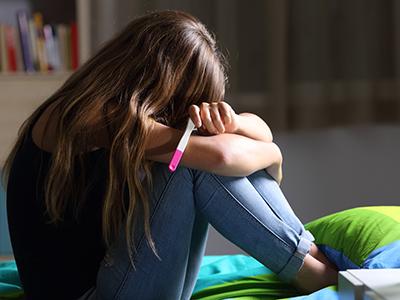
Teenage pregnancy is pregnancy in a woman 19 years of age or younger. A woman can get pregnant if she has vaginal sex with a man at any age after she’s begun having regular monthly periods.

Teenage pregnancies are a global problem that occurs in high, middle, and low income countries. However, there is a higher prevalence in marginalized communities, commonly driven by poverty and lack of education and employment opportunities. According to World Health Organisation (W.H.O), approximately 16 million girls aged 15 to 19 years and 2.5 million girls under 16 years give birth each year in developing regions and the leading cause of mortality for this age group is complication during pregnancy and childbirth. Many girls face considerable pressure to marry early and become mothers at a tender age. Teenage pregnancy increases when girls are denied the right to make decisions about their sexual and reproductive health and well-being.

Studies show that teen mothers face significant levels of stress that can lead to increased mental health concerns. In addition to higher rates of postpartum depression, teenage mothers have higher rates of depression. Pregnant teens also have a higher chance of becoming anemic which is a reduction in the number of red blood cells (RBCs). This can make you feel weak and tired and can affect your baby’s development. They also have higher rates of suicidal ideation than their peers who aren’t mothers. Teen mothers are more likely to experience posttraumatic stress disorder (PTSD) than other teenage women, as well and this is attributed to the fact that they are more likely to have gone through mental and/or physical abuse.

Many pregnant teens drop out of school, and some never complete their education which means that a large proportion of mothers who get pregnant as teenagers live in poverty and are not able to realize their full potential. Their children are not left out also, born to a teenage mother, they have greater risk for lower birth weight and infant mortality; less prepared to enter kindergarten; are more likely to be incarcerated at some time during adolescence; are more likely to drop out of high school; are more likely to be unemployed or underemployed as a young adult.

When teenagers engage in sexual relationships, they do not think about the consequences. That is why it is pertinent to invest much in the issue of reproductive health with more emphasis on adopting the right attitudes about responsible sexual behavior.

Speak Wednesday is an initiative of CFHI to address issues of gender based violence and gender inequality. Join us every Wednesday on all our social media platforms for more episodes.

SPEAK WEDNESDAY Read More »

MONDAY HEALTH BURST

POSTPARTUM DEPRESSION (PPD)

Postpartum depression (PPD) or postnatal depression is a complex mix of physical, emotional, and behavioural changes that happen in some women after giving birth. According to the Diagnostic and Statistical Manual of Mental Disorders, Fifth Edition (DSM-5), PPD is a form of major depression that begins within 4 weeks after delivery.

Symptoms of postpartum depression can be hard to detect. However, many women have these symptoms following childbirth: Difficulty sleeping, change in appetite, excessive fatigue, decreased libido, frequent mood changes, depression, low self-esteem, suicidal thoughts, panic, thoughts of hurting someone else, and obsessive-compulsive disorder (OCD). The OCD obsessions are usually related to concerns about the baby’s health, or irrational fears of harming the baby.

There is no one cause of postpartum depression. A number of factors can increase the chances: A history of depression prior to becoming pregnant, or during pregnancy; Age at time of pregnancy; Ambivalence about the pregnancy; Number of children — the more children, the more likely it is for one to be depressed in a subsequent pregnancy; Having a history of depression or premenstrual dysphoric disorder (PMDD); Limited social support; Loneliness during pregnancy; Marital conflict; Sleeplessness; Anxiety; Hormonal imbalance — The dramatic drop in oestrogen and progesterone after giving birth may play a role. Other hormones produced by the thyroid gland may also drop sharply and make one feel tired, sluggish, and depressed.

The diagnosis of postpartum depression is based not only on the length of time between delivery and onset, but also on the severity of the depression. PPD often keeps one from doing their daily activities. Hence, when the ability to function is affected, it is important to consult a health care provider, such as Obstetrician-gynaecologist or primary care doctor, who will screen for depression symptoms and develop a treatment plan. This is because PDD symptoms worsen when left untreated. Though PPD is a serious condition, it can be treated with medication and counselling.
Postpartum depression is treated differently depending on the type and severity of a woman’s symptoms. Treatment options include anti-anxiety or antidepressant medications, psychotherapy, and participation in a support group for emotional support and education. For severe cases, intravenous infusion of a new medication called brexanolone (Zulresso) may be prescribed.

Monday Health Burst is an initiative of CFHI to address basic health issues. Join us every Monday on all our social media platforms for more health-related articles.

MONDAY HEALTH BURST Read More »

SPEAK WEDNESDAY

FEMALE GENITAL MUTILATION AND ITS EFFECTS

“Have you ever heard of Female genital mutilation? The doctor asked me. This was after my over 20 hours of labor, an ordeal which left me depressed for over a month. It took me a while before I responded because it was the least question I ever would imagine answering at such moment.

I had just come out of one of the difficult deliveries he had ever carried out he continued after I replied “yes”. A delivery which at first didn’t seem like I was going to spend more than 6 hours at most because I was 100% effaced and with my labor progression, getting dilated would not be so much of a trouble. After being fully dilated and the baby just wouldn’t come down the delivery canal, an assisted delivery using a vacuum extractor was performed which left me with a vaginal hematoma and still with no baby, I was opted for a caesarean section due to the excessive bleeding and the other effects an obstructed labor has on both mother and unborn child. After all the medical jargons, he finally disclosed I had been genitally mutilated probably as a child and it was the reason for the complications I had just experienced.”

The above near death experience was recounted by Mrs Mary Alex, a human rights activist and a current volunteer at Centre for Family Health Initiative ……….

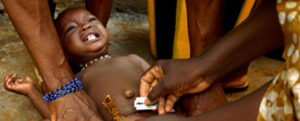
Female genital mutilation (FGM) is a traditional practice that has no medical benefit and severe health consequences for girls and women. According to Wikipedia, It is a procedure that involves partial or completely removing the external females genitalia or other injury to the female genital organs whenever for non-medical reasons. FGM is recognized internationally as a violation of the human rights of girls and women. It deprives them of the opportunity to make critical and informed decisions about their sexuality. It is an act which is deeply rooted in cultural beliefs and perceptions. Data shows that Nigeria, due to its large population, has the highest number of female genital mutilation (FGM) worldwide. About 20 million women and girls in Nigeria have undergone female genital mutilation which is 10% of the global total.

There are 4 types of FGM; Type I, Type II, Type III and Type IV. Types I and II are most prevalent, but variation exists within countries and communities. Type III is experienced by about 10 per cent of all affected women. FGM has serious implications for the sexual and reproductive health of girls and women. Its effects vary depending on the type performed, the expertise of the practitioner and the conditions under which it is performed. Complications can include severe pain, shock, hemorrhage, infection, urine retention and more. In some cases, hemorrhage and infection can be severe enough to cause death. Long-term risks include complications during childbirth (difficult delivery, excessive bleeding, caesarean section, need to resuscitate the baby, etc.) and newborn deaths; vaginal problems (discharge, itching, bacterial vaginosis and other infections); menstrual problems (painful menstruations, difficulty in passing menstrual blood, etc.); scar tissue and keloid; sexual problems (pain during intercourse, decreased satisfaction, etc.) and psychological problems (depression, anxiety, post-traumatic stress disorder, low self-esteem, etc.) among others.

Despite the graveness of the issue, the practicing societies consider it as a necessary part of raising a girl, and a way to prepare her for adulthood and marriage. It is seen as a sure medium to ensure premarital virginity and marital fidelity.
Currently, 13 out of 36 states in Nigeria have their own individual state laws expressly prohibiting FGM/C. These states are Lagos, Osun, Ondo, Ekiti, Bayelsa, Ogun, Delta, Ebonyi, Oyo, Imo, Edo, Cross-River and Rivers. The 2015 Violence Against Persons Prohibition Act (VAPP) acknowledges FGM as a criminal act, however since its enactment, there has been no convictions. Out of the 36 states, only 4 states: Abuja, Anambra, Oyo and Ebonyi have domesticated or actively enforced the law.

Speak Wednesday is an initiative of CFHI to address issues of gender based violence and gender inequality. Join us every Wednesday on all our social media platforms for more episodes.

SPEAK WEDNESDAY Read More »

SPEAK WEDNESDAY

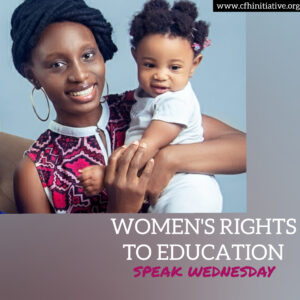
WOMEN’S RIGHTS TO EDUCATION

Education is a basic human right and has been recognized as such since the 1948 adoption of the Universal Declaration on Human Rights. Every one has the human right to education, training and information. Despite widespread agreement that all people have the fundamental human right to education, the United Nations Statistics Division states that 100 million children, with 60% of them being girls, do not have access to primary education. 960 million adults in the world are illiterate, and more than two-thirds of them are women. Women and girls continue to face discrimination at all levels of education, a fact which poses grave hindrance to their advancement. Equality of access to all levels of education is crucial to empowering women and girls to participate in economic, social and political life of their societies. Education unlocks a woman¹s potential, and is accompanied by improvements in health, nutrition, and well-being of women and their families.

According to the United Nations office of the high commissioner on Women and the right to education, it says: “Article 10 of the Convention on the Elimination of All Forms of Discrimination against Women, states that the right to education is the entitlement to access free primary education, and to have equal opportunities to continue with further studies. Such education must be inclusive and accessible to girls and boys, women and men, in law and in practice. Education is not only a right in itself, but is also the surest way to empower individuals to enjoy all of their human rights”.

Women in Nigeria have had various challenges in order to obtain equal education in all forms of formal education. Although more women and girls go to school today, the access to formal education is still being constrained especially in rural communities. They face multiple barriers based on gender and its intersections with other factors, such as age, ethnicity, poverty, and disability. Other barriers to access quality education include among others: harmful gender stereotypes and wrongful gender stereotyping, child marriage, early and unintended pregnancy, paid and unpaid care work which continues to be disproportionately borne by women and girls, gender-based violence against women and girls, lack of inclusive and quality learning environments, inadequate and unsafe education infrastructure, including sanitation.

Research shows that there is an improved health and an overall increase in quality of life of educated women. Educated women are more likely to seek proper medical care both for themselves, especially maternal care and their children. Likewise, higher rates of female education correspond with lower HIV and STD rates. There is a less occurrence of child marriages and teenage pregnancies if the prospects are educated. Many experts agree that focusing on women’s education is one of the best investments a developing nation can make, because female education rates are directly correlated with national economic growth. Educated women are more likely to hold stable jobs, less likely to be in poverty, and more likely to contribute to the overall economy.

Speak Wednesday is an initiative of Centre for Family Health Initiative to stop the cycle of domestic violence by breaking the silence around gender-based violence and gender bias. Join us every Wednesday on all our social media handles for more episodes.

SPEAK WEDNESDAY Read More »

SPEAK WEDNESDAY

WOMEN’S RIGHTS ON DOMESTIC VIOLENCE

The right of women to be free from DOMESTIC VIOLENCE has drawn increasing concern and support since the 1970s. According to Wikipedia, “Domestic violence (also named domestic abuse or family violence) is violence or other abuse in a domestic setting, such as in marriage or cohabitation. It takes a number of forms, including physical, verbal, emotional, economic, religious, reproductive, and sexual abuse, which can range from subtle, coercive forms to marital rape and to physical abuse.

Studies have shown that globally, domestic violence accounts for nearly one quarter of all recorded crimes. The fact that domestic violence prevails across all classes of the Nigerian society is no longer disputable. Despite the boisterous efforts made by the world bodies such as the United Nations (e.g. Universal Declaration of Human Rights, the International Convention on Civil and Political Rights) and Nigeria’s constitutions to eliminate discrimination and violence against women, and promote the idea of equality and justice, the Nigerian woman is often violated.

Domestic violence directed against women by intimate partners is an epidemic of global proportions that has devastating physical, emotional, financial and social effects on women, children, the family and the community. However, it is important to note that domestic violence can also be perpetrated against men.

In Nigeria, women’s rights are largely trampled upon because of many factors. There is the lack of trust in constituted authorities to look into cases of abuse. In fact, the “penal code of the northern Nigeria” do not recognize this as an act worth bringing before the law. It is rather seen as a compulsory disciplinary measure which to some uneducated traditionalists has proven to be very effective. Also, the requirements to prove rape cases in “section 179(5) of the evidence Actform another hurdle.

To promote gender equality and ensure protection of fundamental human rights, perpetrators should be made to face the consequences of their actions. Also, stiffer penalties have to be put in place to discourage prospective abusers like rapists. Over the years, Centre for Family Health Initiative (CFHI) has brought awareness to women in local communities on their rights and created avenues to seek redress in cases of abuse. It has also exposed many women to information about the Violence Against Persons Prohibition(VAPP) Act of 2015, for better understanding of their human rights.

Speak Wednesday is an initiative of Centre for Family Health Initiative to stop the cycle of domestic violence by breaking the silence around gender-based violence and gender bias. Join us every Wednesday on all our social media handles for more episodes.

SPEAK WEDNESDAY Read More »

SPEAK WEDNESDAY

WOMEN DEALING WITH EMOTIONAL ABUSE

According to Tracy, N. (2012, July 29), emotional abuse is one of the most common forms of abuse that occurs in close relationships. It is also known as psychological abuse. Emotional abuse Is when something is consistently said, implied or done intentionally to hurt someone’s feelings over an extended period of time. It is about one person maintaining power or control over another person which usually takes place between intimate partners.

Emotional abuse can include verbal assault, dominance, privacy invasion, economic subordination,  control, isolation, gas lighting, ridicule, or the use of intimate knowledge for degradation. It targets the emotional and psychological well-being of the victim, and it is often a precursor to physical abuse. Studies show that women are at a disadvantaged point and have a higher chance of being abused emotionally due to the deep-rooted patriarchal nature of the society and of men controlling ‘their’ women.

Emotional abuse may be less obvious than physical abuse, but can still have devastating effects on the mental health and wellbeing of the victim. Effects of emotional abuse on women could be short or long-term. According to different reports, psychological or emotional abuse in women can be linked to poor relationship satisfaction, anxiety, depression, insomnia, low self-esteem, suicidal thoughts, increased physical health problems (such as migraine, indigestion, stomach ulcers, chronic pain and chronic disease), among others. Emotional abuse may be contributing factors to the development and/or severity of illnesses such as chronic fatigue syndrome and fibromyalgia.

Victims of emotional abuse often times feel embarrassed to report or open up about issues of emotional abuse especially those with no physical evidence. However, it is necessary to seek help or counselling either from a friend, a doctor or a relationship or family counsellor to avoid the adverse effects it may have on your general well-being.

Speak Wednesday is an initiative of Centre for Family Health Initiative to stop the cycle of domestic violence by breaking the silence around gender-based violence and gender bias. Join us every Wednesday on all our social media handles for more episodes.

SPEAK WEDNESDAY Read More »