Ending HIV Stigma: Community Support Beyond World AIDS Day
Ending HIV stigma remains one of the most critical steps in achieving an effective HIV response globally. Even though scientific progress has transformed HIV from a life-threatening illness to a manageable condition, stigma continues to undermine prevention, testing, treatment, and quality of life. Studies show that nearly 1 in 4 people living with HIV report experiencing discrimination in healthcare settings, which discourages timely care-seeking and contributes to poor health outcomes (1). Community stigma also remains widespread; in sub-Saharan Africa, where the burden of HIV is highest, research found that over 35% of adults still hold discriminatory attitudes toward people living with HIV (2). These attitudes are deeply rooted in misinformation, fear, cultural norms, and moral judgments that continue to silence individuals and limit their ability to access support.
Stigma does not only affect individuals emotionally; it has direct medical consequences. Evidence shows that people who experience HIV-related stigma are three times more likely to delay or avoid HIV testing and up to 50% less likely to adhere to treatment due to fear of being discovered (3). This delay fuels the cycle of transmission and reduces the chances of achieving viral suppression. Yet, viral suppression keeping HIV levels undetectable is proven to eliminate the risk of sexual transmission entirely, a fact summarized in the principle U=U (Undetectable = Untransmittable) (4). Ending stigma, therefore, is not only a human rights issue but a powerful public health strategy.
Beyond World AIDS Day, communities must unite to promote supportive environments where people living with HIV feel safe to disclose, access services, and receive continuous care. Community-led awareness, inclusive language, youth-friendly education, and culturally sensitive advocacy have proven to reduce stigma by strengthening empathy and understanding (5). Empowering young people with evidence-based information also plays a vital role since adolescents remain vulnerable to societal misconceptions and pressure surrounding HIV.
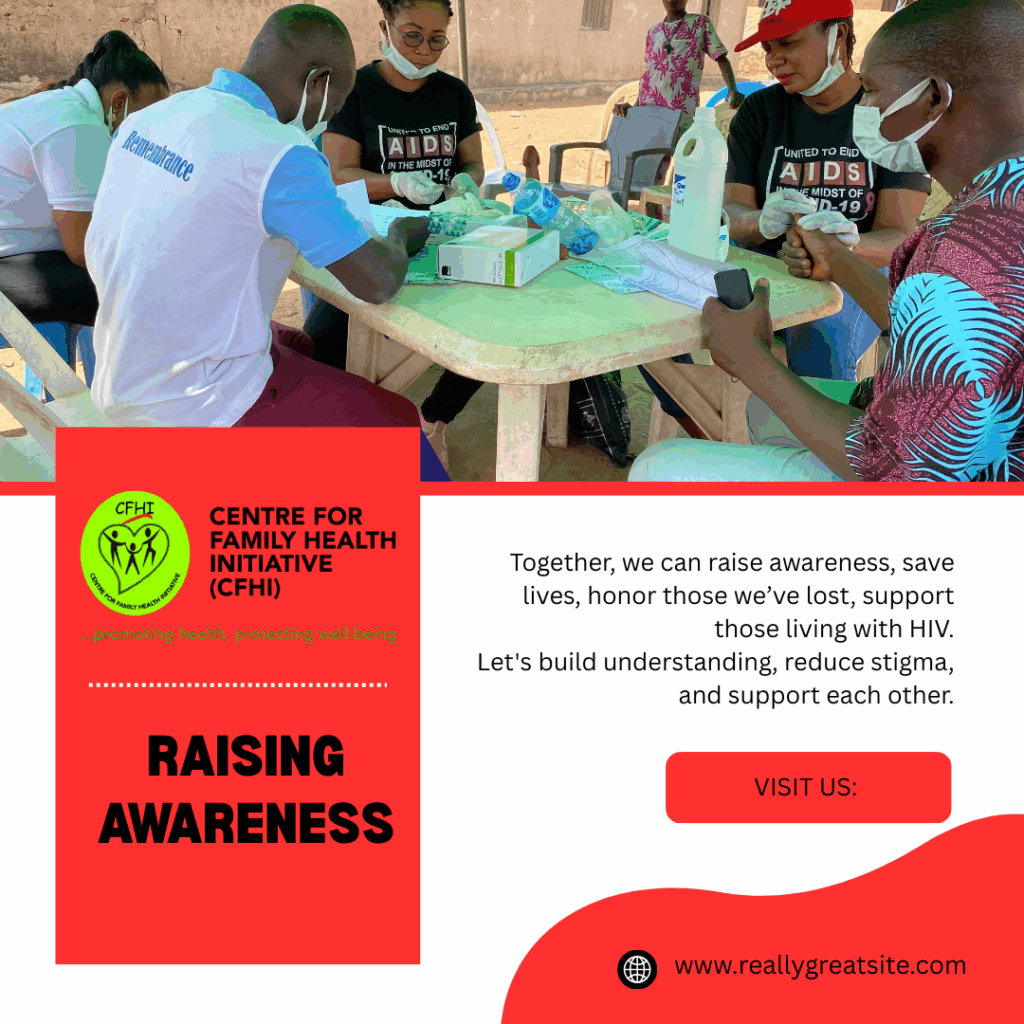
At the Centre for Family Health Initiative, efforts to end HIV stigma go beyond commemoration events. CFHI continues to create safe spaces within communities through targeted HIV education, gender-sensitive communication, counselling support for adolescents and caregivers, and stigma-reduction sessions integrated into school and community health activities. Through the ASPIRE project and other community interventions, CFHI consistently promotes testing uptake, linkage to care, and treatment adherence especially among vulnerable populations. Last year in Imo State, CFHI carried out a community HIV awareness and testing outreach that reached dozens of individuals with prevention messages, counselling, and referrals, reinforcing the message that HIV is manageable and that stigma must never stand between anyone and access to care. As we move beyond World AIDS Day, CFHI encourages everyone to be intentional about kindness, to challenge myths, to stand against discrimination, and to help build communities where people living with HIV are treated with dignity. Ending stigma begins with each of us, and together we can create a society where support is stronger than silence
References
- Joint United Nations Programme on HIV/AIDS (UNAIDS). Confronting Discrimination: Overcoming HIV-related Stigma and Discrimination in Health-care Settings. 2020. Available from: https://www.unaids.org
- United Nations Children’s Fund (UNICEF). HIV and AIDS Statistical Update. 2023. Available from: https://www.unicef.org
- Turan B, et al. The Impact of HIV-related Stigma on Treatment Adherence. AIDS Behav. 2017;21(1):283–291. Available from: https://link.springer.com
- Prevention Access Campaign. The U=U Declaration. 2016. Available from: https://preventionaccess.org
- World Health Organization (WHO). Global HIV Programme: Eliminating Stigma and Discrimination. 2022. Available from: https://www.who.int
Ending HIV Stigma: Community Support Beyond World AIDS Day Read More »