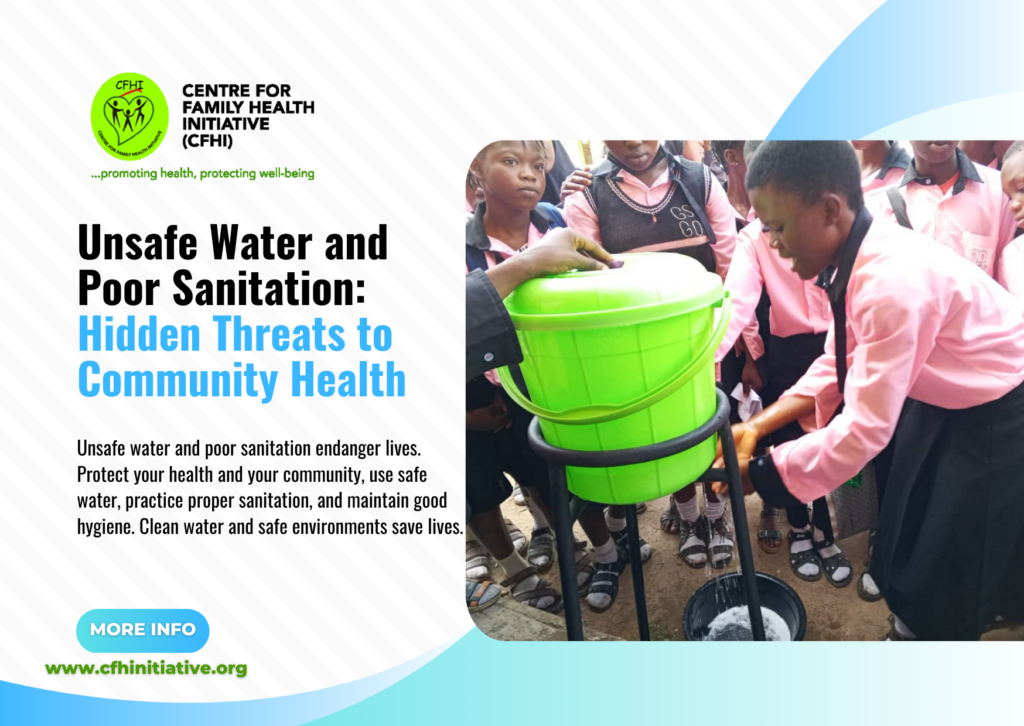
Unsafe Water and Poor Sanitation: Hidden Threats to Community Health
By Chiadika Emmanuel Chidera
Unsafe water and poor sanitation remain major but often overlooked threats to community health. Access to clean drinking water and safe sanitation is a fundamental human right and a critical pillar of disease prevention. Yet millions of people around the world still lack these essential services. According to global health data, about 2 billion people do not have access to safely managed drinking water, while nearly 3.6 billion people lack safely managed sanitation services¹. These gaps create conditions where preventable diseases easily spread, particularly among vulnerable populations such as children and women.
Contaminated water often carries harmful bacteria, viruses, parasites, and toxic substances that can lead to serious illnesses. Diseases such as cholera, typhoid fever, dysentery, hepatitis A, and diarrhoea are commonly transmitted through unsafe water. Health estimates show that approximately 1.4 million deaths each year are linked to inadequate water, sanitation, and hygiene (WASH) services². Diarrhoeal diseases alone cause over 1 million deaths annually, with nearly 395,000 of these deaths occurring among children under the age of five². In Nigeria, the situation remains concerning, as reports indicate that over 100 children die daily from diarrhoeal diseases, many of which are connected to unsafe water sources and poor sanitation practices⁴.
The health hazards associated with unsafe water and poor sanitation are wide-ranging. These include (1) the rapid spread of waterborne diseases such as cholera and typhoid, (2) severe diarrhoeal infections that cause dehydration and malnutrition, (3) parasitic infections like intestinal worms that affect about 1.5 billion people globally³, (4) long-term malnutrition and stunted growth among children due to repeated infections, and (5) exposure to chemical contaminants that can lead to organ damage and developmental problems. Poor sanitation practices such as open defecation further worsen these risks by contaminating water sources and the surrounding environment.
Beyond the health effects, unsafe water and poor sanitation also create social and economic challenges. Families often spend limited resources on treating preventable diseases, children miss school due to illness, and communities experience reduced productivity. Research shows that improving water, sanitation, and hygiene services can reduce diarrhoeal diseases by 30–40 percent³, making WASH one of the most cost-effective public health interventions.
Addressing this hidden crisis requires coordinated action from governments, communities, and development partners. Expanding access to safe water infrastructure, improving sanitation facilities, and promoting hygiene education are critical steps toward protecting public health. Individuals and communities can also contribute by (1) using safe or treated drinking water, (2) practicing proper sanitation and avoiding open defecation, (3) washing hands regularly with soap, and (4) protecting local water sources from contamination.
Improving water, sanitation, and hygiene services is essential for building healthier communities and preventing avoidable diseases. By prioritizing safe water and proper sanitation, societies can protect lives, strengthen public health systems, and ensure a healthier future for all.
Monday Health Burst is an initiative of CFHI to address issues of basic health concern. Join us every Monday on all our social media platforms for more episodes.
References
- UNICEF & World Health Organization Joint Monitoring Programme for Water Supply, Sanitation and Hygiene (JMP). https://washdata.org
- World Health Organization. Global Burden of Disease Attributable to Water, Sanitation and Hygiene. https://www.who.int/health-topics/water-sanitation-and-hygiene-wash
- Centers for Disease Control and Prevention. Global Water, Sanitation, and Hygiene (WASH) Data. https://www.cdc.gov/healthywater/global/index.html
- Nigeria WASH and diarrhoeal disease statistics. https://washnigeria.com
Unsafe Water and Poor Sanitation: Hidden Threats to Community Health Read More »