Reproductive Health

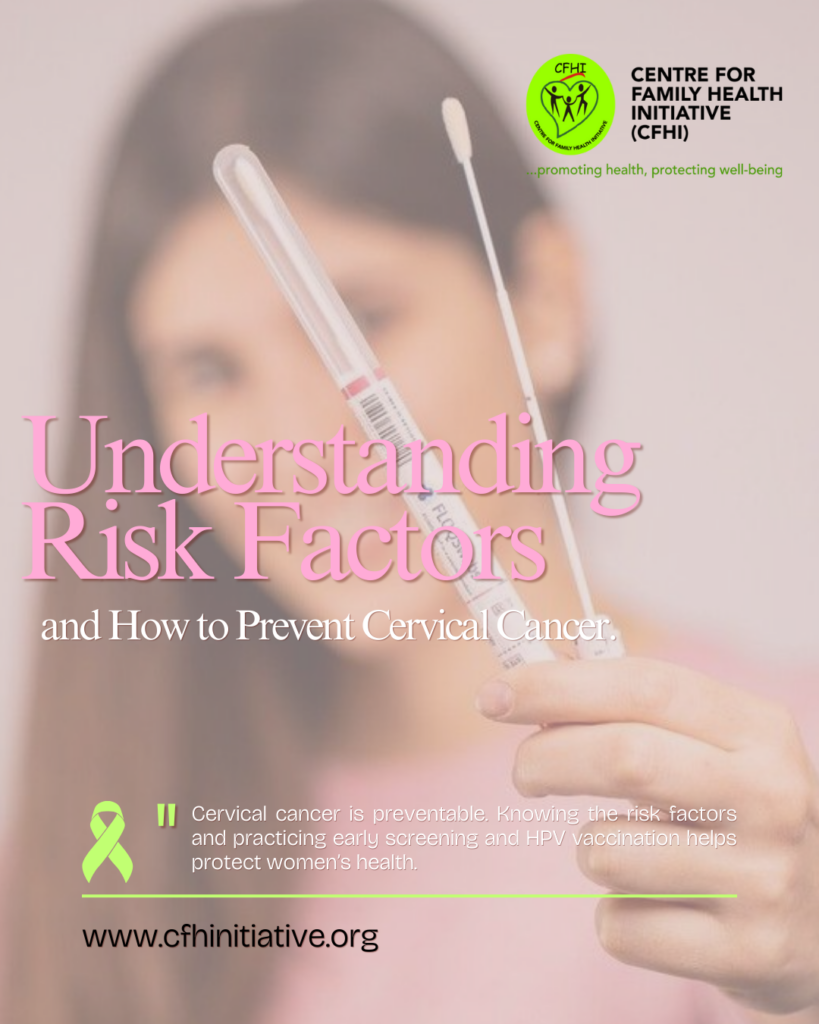
Understanding Risk Factors and How to Prevent Cervical Cancer

Cervical cancer remains one of the most preventable yet deadly cancers affecting women globally and in Nigeria. In 2022 alone, about 660,000 new cases and 350,000 deaths were recorded worldwide, with the highest burden in low- and middle-income countries where access to prevention and care is limited [1]. The disease develops in the cervix and is caused almost entirely by persistent infection with high-risk Human Papillomavirus (HPV), a common sexually transmitted virus that often shows no early symptoms [1].

Several factors increase a woman’s risk of developing cervical cancer. These include early sexual activity, multiple sexual partners, smoking, long-term use of hormonal contraceptives, and weakened immunity, especially among women living with HIV [1]. Women with HIV are up to six times more likely to develop cervical cancer due to reduced immune response to HPV infections [2]. In Nigeria, cervical cancer is the second most common cancer among women, and many cases are detected late due to low screening uptake and limited awareness [2].

The good news is that cervical cancer is largely preventable and treatable when detected early. The HPV vaccine, recommended for girls aged 9–14 years, can prevent up to 70–90% of cervical cancer cases linked to high-risk HPV types [1]. Regular screening through HPV testing or Pap smears helps detect precancerous changes early, allowing timely treatment before cancer develops. However, misinformation, cost, fear, and limited access continue to hinder screening in many communities [3].

In 2023, CFHI partnered with the National Primary Healthcare Development Agency, Women Advocates for Vaccine Access, Johns Hopkins International Vaccine Access Center, and other relevant partners to support HPV vaccine introduction in Nigeria, train ten vaccine champions, and sensitise over 4,000 persons in Bwari LGA, Abuja.

Every woman deserves the chance to prevent cervical cancer. Get screened regularly, ensure eligible girls receive the HPV vaccine, and share accurate information within your community. Together, we can reduce preventable deaths and protect women’s health.

References

  1. World Health Organization. Cervical cancer. Available from: https://www.who.int/news-room/fact-sheets/detail/cervical-cancer
  2. World Health Organization Regional Office for Africa. Cervical cancer early detection saves lives (Nigeria). Available from: https://www.afro.who.int/countries/nigeria/news/cervical-cancer-early-detection-saves-lives
  3. BMC Women’s Health. Cervical cancer screening and vaccination awareness in Nigeria. Available from: https://bmcwomenshealth.biomedcentral.com/articles/10.1186/s12905-023-02345-9


Understanding Risk Factors and How to Prevent Cervical Cancer Read More »

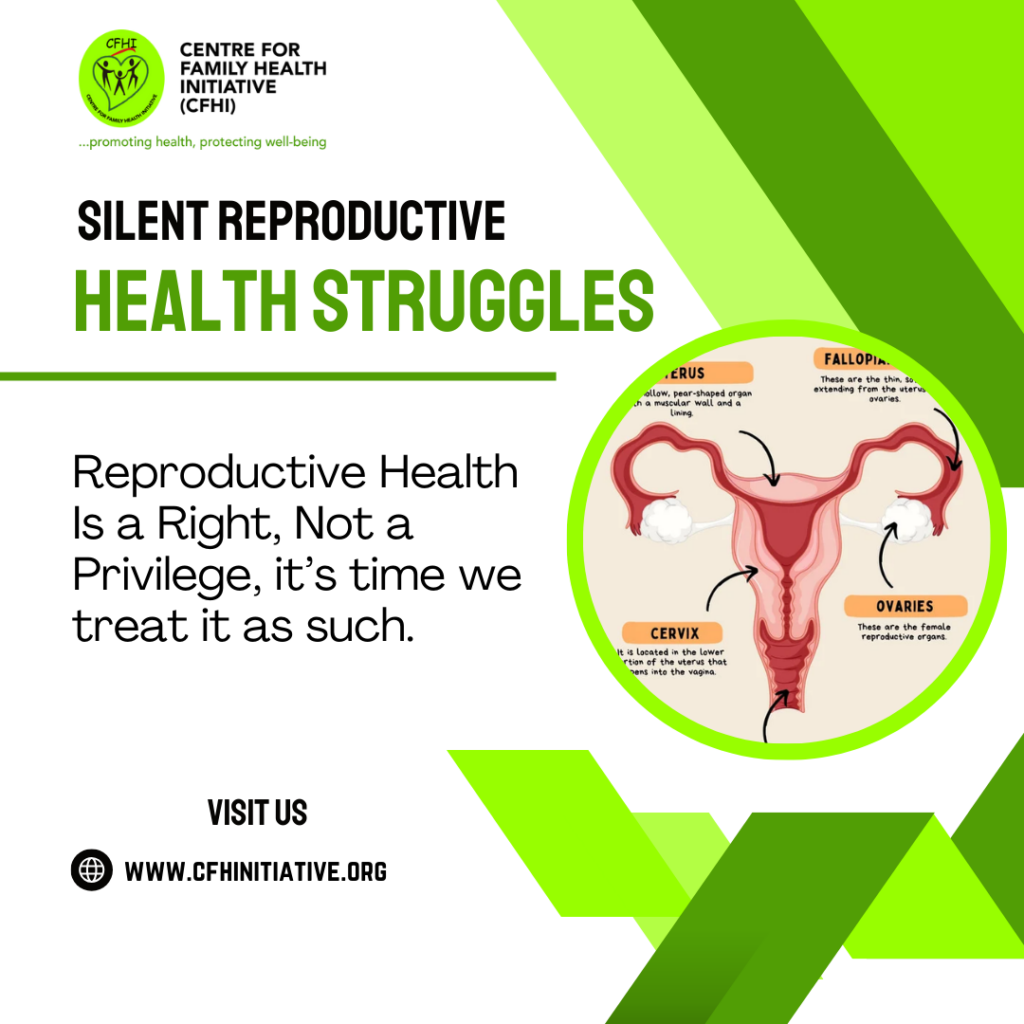
Silent Reproductive Health Struggles

Women’s reproductive health is fundamental to their overall well-being, yet millions of women globally and in Nigeria face persistent, often silent challenges that compromise their health, autonomy, and quality of life [1]. Despite progress in some areas, vast inequities remain in access to services, information, and rights leaving many women vulnerable to preventable health problems [2].

One of the major silent struggles is limited access to essential reproductive health services, including family planning, maternal care, and safe delivery support. In sub-Saharan Africa, one in four women who wish to delay or stop childbearing do not use any contraceptive method, reflecting gaps in availability, choice, and quality of reproductive care [1][5]. These shortfalls contribute to high rates of unintended pregnancies, unsafe abortions, and increased maternal morbidity and mortality. Globally, about 800 women die each day from pregnancy-related causes, many of which are preventable with proper services and support [1].

In Nigeria, reproductive health disparities are stark. A survey of reproductive health concerns found that sexual health, contraception, infections, fertility issues, and reproductive cancers were among the most pressing worries for women, indicating broad unmet needs across the reproductive spectrum [3]. Despite various policies, only a few Nigerian states meet benchmarks for women’s participation in decisions about their sexual and reproductive health, reflecting systemic barriers rooted in socio-cultural norms and limited autonomy [4]. Economic challenges also contribute, with millions of women lacking access to modern contraceptives and comprehensive family planning services due to cost, misinformation, fear of side effects, cultural opposition, and weak health systems [5][6].

Another under-recognized struggle is infertility, which affects a significant portion of women yet remains stigmatized and poorly supported. Recent WHO guidance highlights infertility as a major public health concern, with more than one in six people of reproductive age affected [7]. Access to affordable fertility evaluation and treatment is limited in many countries, forcing women to choose between financial hardship and their desire for children [7].

Maternal health remains a critical issue. Globally, approximately 287,000 women die yearly from complications in pregnancy and childbirth, with nearly all these deaths occurring in low- and middle-income settings where health systems are weak and resources scarce [1]. In areas affected by conflict or economic strain, such as parts of northern Nigeria, women face even greater risks due to disrupted services, insecurity, and collapsed care infrastructure [8].

The impact of these struggles extends beyond physical health. When women cannot access respectful, quality reproductive care, the consequences ripple into social and economic domains limiting educational opportunities, reducing workforce participation, and perpetuating cycles of poverty and inequality [2].

Improving women’s reproductive health requires a holistic approach that ensures affordable and accessible services such as contraception, antenatal care, skilled delivery, and emergency support reach even the most underserved communities [1][5], while also equipping women with accurate, culturally sensitive information to make informed choices about their bodies and health [2]. At the same time, policies must actively protect women’s autonomy and reproductive rights by challenging harmful norms and discrimination [2][4], supported by strong, well-funded health systems with trained personnel to guarantee continuity of care, especially in fragile settings [1][8]. Integrating affordable infertility care and psychosocial support into routine reproductive health services is also essential to address the often hidden emotional and social burdens many women silently endure [7].

Speak Wednesday is an initiative of CFHI to address issues around gender-base violence and gender-bias.

References

  1. WHO Regional Office for Africa. Women’s Health. Available from: https://www.afro.who.int/health-topics/womens-health
  2. United Nations Population Fund (UNFPA). New UNFPA report finds 30 years of progress in sexual and reproductive health has mostly ignored the most marginalized communities. Available from: https://www.unfpa.org/press/new-unfpa-report-finds-30-years-progress-sexual-and-reproductive-health-has-mostly-ignored
  3. Sa’adatu TS, Dieng B, Danmadami AM. Reproductive health issues of concern among Nigerians: an online survey. Int J Community Med Public Health. Available from: https://doi.org/10.18203/2394-6040.ijcmph20234114
  4. Premium Times Nigeria. Only eight Nigerian states meet women’s health benchmark – Report. Available from: https://www.premiumtimesng.com/news/top-news/830200-only-eight-nigerian-states-meet-womens-health-benchmark-report.html
  5. World Health Organization. Sexual and Reproductive Health and Research (SRH): Family planning and contraception. Available from: https://www.who.int/teams/sexual-and-reproductive-health-and-research-%28srh%29
  6. Ballard Brief. Barriers to Family Planning for Women in West Africa. Available from: https://ballardbrief.byu.edu/issue-briefs/barriers-to-family-planning-for-women-in-west-africa
  7. WHO releases first global guideline on infertility care. Reddit; 2025. Available from: https://www.reddit.com/r/EmbryologyIVFSupport/comments/1pcjrzh/who_releases_first_global_guideline_on/
  8. AP News. Pregnancy has become a nightmare for many women in Nigeria’s conflict-hit north. Available from: https://apnews.com/article/c5846961ed87cddd8a24d1c2b04564a0

Silent Reproductive Health Struggles Read More »

Period Poverty_MHM

SPEAK WEDNESDAY – PERIOD POVERTY AND POOR EDUCATION

The backdrop in girls’ education due to lack of menstrual hygiene in Nigeria should no longer be gender issue, but of national concern.

The National Democracy and Health Survey in 2013 has shown that girls make up 60 per cent of the 110.5 million out-of-school children in Nigeria, and 1 in 10 African girls misses school due to their period, according to UNICEF. In order words, they could miss school for four days or more during which the period lasts, and since they cannot manage their period safely without a good sanitary product, such children are most likely to drop out of school in the long run. Moreso, the hike in menstrual products has left most Nigerian girls and young women with no choice but to use unclean napkins, tissue, leaves, newspapers, or nothing at all, during their menstruation.

The old African proverb says “educate a girl, educate a nation”. To curb this damaging menace caused by period poverty, the Nigerian government should borrow a Leaf from Kenya’s policy which introduced the right to free, sufficient and quality sanitary towels, and basic sanitation facilities for schoolgirls; treating access to sanitary pads as a basic human right. This and the total removal of tax on menstrual products will help to make the girl child stay in school during their monthly flow.

Like Michelle Obama rightly said, when girls are educated, their countries become stronger and more prosperous. It is time to embrace this fact and work towards creating a world where everyone irrespective of gender can thrive without limitations.

Speak Wednesday is an initiative of CFHI to address issues of gender-based violence and gender bias. Join us every Wednesday on all our social media platforms for more episodes.

#SpeakWednesday #MenstrualRightsAwareness #MenstrualHygiene #MenstrualEquality #GirlsInSchool #EquityAndJustice #MHDay2022 #WeAreCommitted
#reusablesanitarypad

SPEAK WEDNESDAY – PERIOD POVERTY AND POOR EDUCATION Read More »

Men’s Reproductive Health

Reproductive health is an important component of men’s overall health and well-being. Too often, males have been overlooked in discussions of reproductive health, especially when reproductive issues such as contraception and infertility have been perceived as female-related. Every day, men, their partners, and health care providers can protect their reproductive health by ensuring effective contraception, avoiding sexually transmitted diseases (STDs), and preserving fertility (National Institute of Child Health and Human Development, 2016). The recognized most common issues of male’s reproductive health are Contraception, avoiding sexually transmitted diseases and Infertility/fertility. One may ask why Men’s Reproductive Health is a matter of concern. According to Cummings (2020), research shows that a man’s health before conception can damage sperm in such a way that it affects his offsprings’ health. This may include behaviours such as alcohol and drug use, smoking and lifestyle choices, medications or his exposure to chemicals at home, work, and in the environment. There is increasing evidence that damaged sperm can affect pregnancy outcomes, from miscarriage and birth weight to birth defects and childhood illnesses. There is a growing body of study which is focused on damage in spermatozoa and the effects of ageing on male reproductive health. According to Selvaratnam and Robaire (2019) Deoxyribonucleic acid (DNA)-damaged sperm is the cause of conditions ranging from spontaneous abortion to congenital malformations and genetic defects in children. it is important to pay more attention to men’s reproductive health because it has the potential to improve men’s lives and the lives of their children (Cummings, 2020).  Men can boost their reproductive health by having a healthy lifestyle and maintaining a balanced diet. This may include among others exercising regularly, getting enough vitamin C & D, relaxing and minimizing stress, getting enough zinc, quitting smoking and excessive drinking etc. Society can foster an environment where men pay better attention to their health by raising awareness towards acknowledging first that men have certain reproductive health needs and secondly that these needs need to be catered to. Also, Federal health agencies and professional medical associations can develop Information, Education and Communication (IEC) materials to educate the public about men’s health and how it can potentially affect their children’s health.   Truly as stated by Cummings, paying more attention to men’s reproductive health has the potential to improve life for this generation and for generations to come.

Men’s Reproductive Health Read More »