Women

SPEAK WEDNESDAY

Democracy Fails Women When It Ignores Gender Violence

Democracy is more than ballots, parliaments, and courtrooms it is the everyday reality that allows every person to live with dignity and safety. When a democratic system pretends that voting and institutions alone guarantee equality while turning a blind eye to the daily threat of gender-based violence (GBV), it is failing a fundamental promise: protection for all citizens. For millions of women, the “freedoms” democracy claims to protect are hollow if public systems, laws, and practices do not prevent, punish, and deter gendered violence.

The hard numbers refuse to let us look away. Globally, roughly one in three women has experienced physical and/or sexual violence by an intimate partner or sexual violence by a non-partner in her lifetime a staggering indicator that violence is not an exception but a systemic condition that persists across democratic and non-democratic states alike. (World Health Organization)

Nigeria’s statistics reflect this painful truth at home. National data and large-scale studies point to around a third of women experiencing intimate partner violence (IPV), with some surveys showing 31–35% having experienced some form of IPV in recent measures. These are not abstract percentages they translate to millions of women whose bodily autonomy, mental health, economic participation and civic engagement are continuously undermined. (DHS Program)

Worse, the trendlines in some places show an alarming rise in certain forms of violence over time. Comparative analyses of regional data (for example, conflict-affected northeast Nigeria) demonstrate increases in emotional and sexual IPV between survey rounds a decade apart; a signal that crises, weak accountability, and institutional neglect worsen GBV even within states that hold elections. When democratic systems fail to protect women in times of stress, the social contract fractures. (ResearchGate)

 There are three recurring failures because democracy fail in practice:

  1. Visibility without remedy. Democracies can record crimes and produce statistics, but if police, health systems and courts do not follow through, documentation becomes an exercise in moral hygiene rather than justice. Survivors who report violence often encounter blame, delays, unsafe processes, or outright dismissal.
  2. Law without implementation. Nigeria has laws criminalizing domestic and sexual violence, but enforcement is uneven. Where patriarchy is embedded in institutions, legal protections are toothless. Laws on paper become meaningless when budgets, training, and survivor-centered services are absent.
  3. Public indifference normalized as “private matters.” When GBV is repeatedly framed as a private or cultural problem, democratic debate excludes the voices of survivors and diminishes the urgency required for structural change.

These failures matter because gender violence is not merely a private tragedy it is a public, democratic harm. GBV shrinks women’s political voice (fear limits public participation), undermines economic independence (injury, trauma, time away from work), and burdens health systems. Democracies that do not treat GBV as a governance and human-rights priority are sustaining inequality disguised as civility.

It’s not enough to pass new laws; democracies must transform institutions and social norms. That means guaranteeing emergency health and legal services; training and holding police and judiciary accountable; funding safe shelters; integrating GBV prevention in schools and workplaces; and centering survivors in policy design. It also means political leaders must stop treating GBV as a “women’s issue” and recognize it as a democracy and development crisis.

At the Centre for Family Health Initiative (CFHI), we approach this challenge on three complementary fronts: prevention, survivor support, and advocacy. On prevention, we run community dialogues and gender norms activities that challenge the attitudes that normalize violence and silence survivors. For survivors, CFHI facilitates safe referrals and trains Community Health Workers to provide trauma-informed first response and linkages to legal and psychosocial support. On advocacy, we engage local leaders and stakeholders to press for funded, accountable GBV services and to include GBV metrics in local governance performance reviews.

These actions are small in the face of a systemic problem, but democracy is built from local actions. When community-level institutions protect women’s rights and when civic actors demand accountability, national democracy is strengthened. CFHI’s work shows that when communities are empowered to respond and when survivors are listened to, trust grows, and that trust is the living tissue of democratic life.

A call to action

Democracy will keep failing women until citizens and leaders act as if their safety is a public good. If you read this and care about democracy, do three things today:

  • Speak up publicly: challenge the narrative that GBV is a “private” problem.
    • Support survivors and local organizations: fund and volunteer with groups offering direct services.
    • Hold institutions to account: demand transparent budgets for GBV response and regular reporting on prosecutions, service availability, and survivor outcomes.

Democracy isn’t earned through election cycles alone it is preserved by institutions and communities that protect the most vulnerable. Ignoring gender violence is not neutrality; it is complicity. Let us insist that our democracy lives up to its promise not only in rhetoric but in the daily safety and dignity of every woman.

Speak Wednesday is an initiative of CFHI to address issues around gender-base violence and gender-bias.
SPEAK WEDNESDAY Read More »

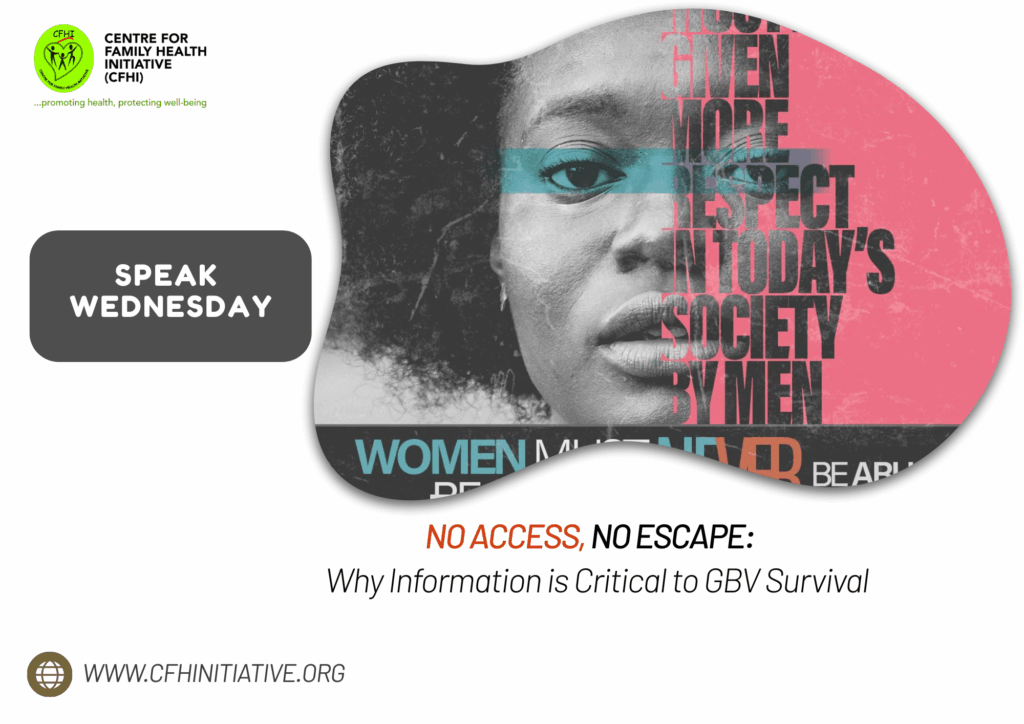
SPEAK WEDNESDAY

No Access, No Escape: Why Information is Critical to GBV Survival

When Sheila was nineteen and living in Lagos, the threats began. Her husband told her that if she ever disobeyed him, he would make sure she lost her job and her reputation. One night, terrified, she sent a friend a message begging for help. But she did not know where to go, which law could protect her, or who to call. Information could have saved her. Its absence trapped her.

This is the silent epidemic within gender-based violence (GBV): not only physical harm but the isolation created by ignorance. Without access to timely and accurate information, survivors are left in darkness. Information is not a luxury. It is the first line of defence and the foundation of justice.

Why Information Saves Lives

When a woman understands that violence against her is a crime, she begins to reclaim her power. When she knows where to report, what medical help to seek, and how to preserve evidence, she increases her chances of survival and justice. Without that knowledge, fear becomes her only companion.

Studies from Nigeria show that most women who experience GBV are unaware of available support. In Adamawa State, 60 percent of women knew that services existed, but fewer than 18 percent understood what those services actually offered. A 2025 study found that even educated young women often avoid post-violence health care because they do not know where to go, or they fear stigma and disbelief.

Globally, the United Nations has affirmed through multiple conventions including the Convention on the Elimination of All Forms of Discrimination against Women (CEDAW) and UN Security Council Resolution that access to information is central to ending violence. Without it, laws, services, and resources remain out of reach.


The Barriers That Keep Survivors Silent


Survivors often do not seek help because they believe nobody will believe them. Others live far from formal services. Many lack access to the internet or even a simple phone number they can trust. Information materials are often written in legal or medical language that ordinary people cannot understand. In rural areas, the absence of community-based awareness campaigns means women do not even know that shelters or hotlines exist.


These are not personal failures. They are systemic failures of governments that under fund awareness programmes, of institutions that do not communicate in local languages, and of communities that allow silence to thrive.


What Survivors Can Do When They Need Help

Every survivor deserves a pathway to safety. Here is what that path can look like:


  1. Seek immediate safety: If you are in danger, leave the space if possible. Go to a trusted friend, relative, neighbour, or nearby public place.
  2. Reach out for help: Call the national GBV toll-free line: 0800 033 3333. You can also contact the organisations that provide counselling, medical referrals, and legal support.
  3. Preserve evidence: Avoid bathing or changing clothes if you experienced physical or sexual violence. Seek medical care immediately.
  4. Know your rights: Violence against women is a crime under the Violence Against Persons (Prohibition) Act, 2015. Every survivor has a right to medical treatment, legal assistance, and protection.
  5. Document and speak. Keep copies of threatening messages or photos. Report to a the police or NAPTIP. You are not alone, and help exists.


Call to Action

Governments and institutions must treat access to information as a legal right and embed it firmly within all GBV policies and action plans. Every state should guarantee that survivors know what services exist and how to reach them. Public awareness must go beyond slogans to reach the offline majority through community radio, schools, and local languages that resonate. Survivor-friendly spaces should be standard in every police station, hospital, and local government office, where trained officers and clear contact points offer judgement-free guidance. Finally, investment in ethical data systems and public education is non-negotiable. Reliable data exposes the gaps, directs resources, and saves lives, as demonstrated by the efforts of UNFPA and Nigeria’s GBV Information Management System.


How CFHI Is Closing the Information Gap

At the Centre for Family Health Initiative (CFHI), we believe that information is power and in the fight against GBV, it is protection. CFHI leads nationwide awareness through the 16 Days of Activism, runs community and school groups that teach health, rights, and safety, and provides direct referrals for survivors to medical, psychosocial, and legal services. Our work reaches those often left behind; the woman without a phone, the girl who cannot read, the family with no internet or transport. By breaking information barriers, we give survivors a voice, a pathway, and a plan. Because when women know their rights and how to use them, violence begins to lose its power.


The Global Urgency

Across the world, violence thrives where information is weakest. For the woman in a remote village without a phone or access to the internet, silence becomes her only shelter. For the girl who cannot read, the poster on the clinic wall might as well be blank. For displaced women in camps, and for widows in informal settlements, help often feels like a rumour whispered too far away to reach. In these spaces, information is not abstract,  it is survival. It is the map that leads from danger to safety, from fear to agency. Every hotline number, every awareness programme, every conversation led in a local dialect is more than communication. It is protection. It is the first step toward justice and the quiet revolution that keeps women alive.


Speak Wednesday is an initiative of CFHI to address issues around gender-based violence and gender bias.


#NoAccessNoEscape #InformationSavesLives #EndGBV #RightsAreKnowledge #SpeakWednesday #GenderJustice


SPEAK WEDNESDAY Read More »

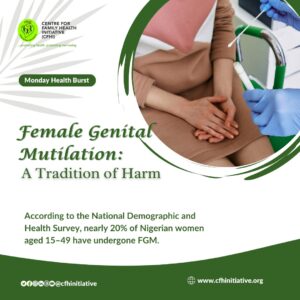
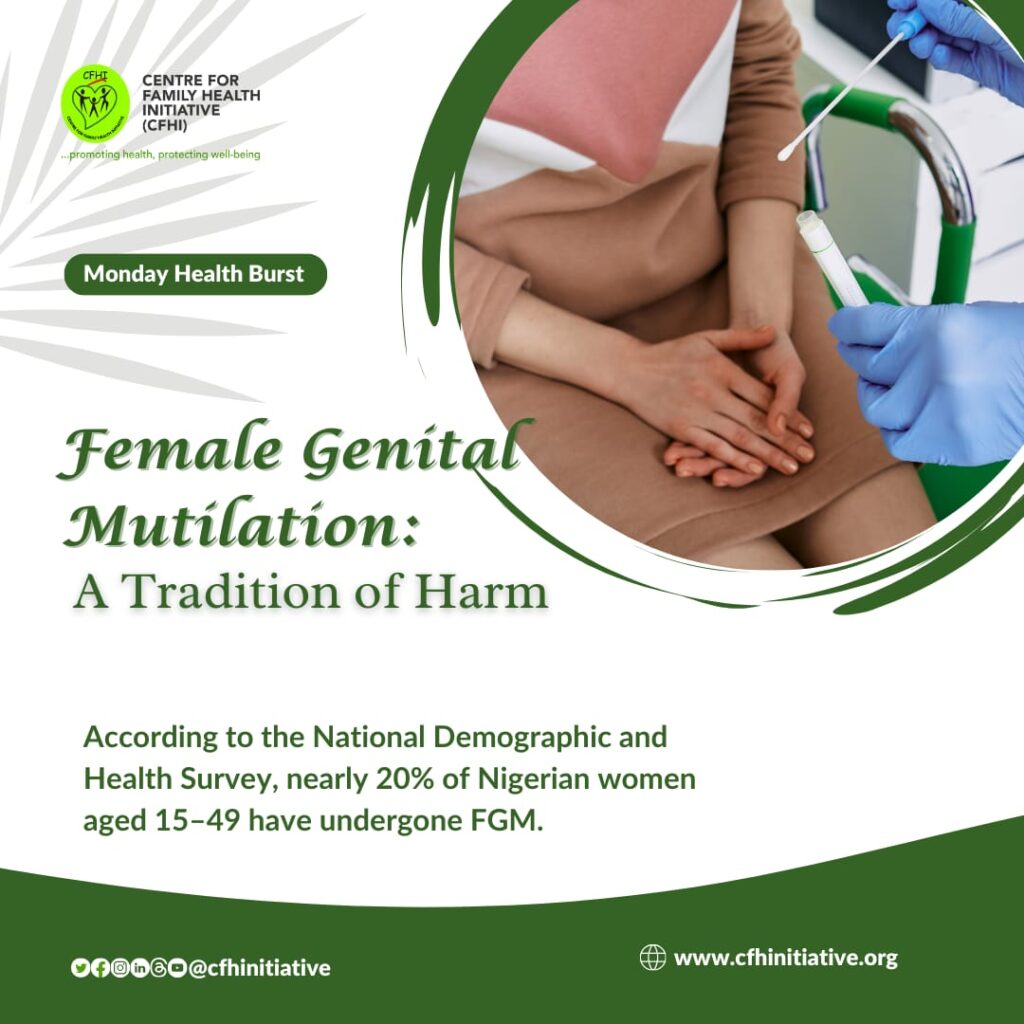
SPEAK WEDNESDAY ON FEMALE GENITAL MUTILATION: A TRADITION OF HARM

Female Genital Mutilation (FGM) remains a widespread practice in Nigeria, performed under the guise of tradition, cultural pride, or morality. It involves the partial or total removal of external female genitalia for non-medical reasons, often carried out on young girls with crude tools and no anaesthesia.

FGM is deeply harmful, leading to immediate risks such as excessive bleeding, infections, and even death. Survivors often face long-term health complications, including chronic pain, difficulty during childbirth, and psychological trauma. Despite no medical benefits, it persists in many Nigerian communities, particularly in the South-South, South-East, and South-West regions. According to the National Demographic and Health Survey, nearly 20% of Nigerian women aged 15–49 have undergone FGM.

Why Does It Continue?

FGM persists due to:

  • Cultural and Social Norms: Many believe it ensures purity or prepares girls for marriage.
  • Patriarchy: It reinforces control over women’s bodies.
  • Economic Motives: Traditional practitioners depend on it for income.

Although Nigeria criminalized FGM under the Violence Against Persons Prohibition (VAPP) Act, 2015, enforcement is weak, especially in rural areas. Advocacy groups and survivors are leading education campaigns to challenge myths, empower women, and engage traditional leaders in changing harmful norms.

Ending FGM requires stronger legal enforcement, education, and accessible healthcare for survivors. Community-driven initiatives must replace harmful practices with traditions that celebrate and uplift women.

FGM is not just a cultural practice; it is a form of violence. By confronting its roots and empowering communities, Nigeria can protect future generations from this harmful tradition.

Speak Wednesday is an initiative of CFHI to address issues around gender-based violence and gender bias.

#SpeakWednesday #EndFGM #GenderEquality #StopGBV #ProtectOurGirls #BreakTheSilence


References:

  • National Population Commission (NPC) and ICF. (2019). Nigeria Demographic and Health Survey 2018. Abuja, Nigeria, and Rockville, Maryland, USA.
  • United Nations Population Fund (UNFPA). (2023). “Female Genital Mutilation in Nigeria.”
  • Federal Government of Nigeria. Violence Against Persons Prohibition Act, 2015.

SPEAK WEDNESDAY ON FEMALE GENITAL MUTILATION: A TRADITION OF HARM Read More »

SPEAK WEDNESDAY ON RAISING EMPOWERED GIRLS: ADDRESSING GENDER BIAS AND VIOLENCE IN YOUTHS

Gender bias remains a pervasive issue that manifests in various aspects of a girl’s life, from education and employment opportunities to healthcare and social expectations. These biases often result in unequal treatment, limiting girls’ potential and contributing to systemic disadvantages. According to a 2020 report by UNESCO, over 130 million girls worldwide are out of school due to factors like poverty, cultural norms, and violence. 

Gender-based violence (GBV), including domestic violence, sexual harassment, and harmful practices like child marriage, further exacerbates these challenges. The World Health Organization (WHO) estimates that one in three women globally has experienced physical or sexual violence, predominantly by an intimate partner. For young girls, the consequences are devastating, affecting their mental and physical health, educational attainment, and future opportunities.

Education is a powerful tool in combating gender bias and violence. Empowering girls with education not only enhance their individual potential but also promotes gender equality in society. Educated girls are more likely to advocate for their rights, delay marriage, and pursue careers, contributing positively to their communities. 

Economic empowerment also plays a key role in raising empowered girls. Providing girls with opportunities for vocational training and access to financial resources can help them achieve independence and gain control over their lives. This not only benefits the girls themselves but also contributes to broader social and economic development.

The importance of addressing gender bias and violence against girls cannot be overstated. Empowering girls is not just about ensuring their rights and well-being; it is also about building stronger, more equitable societies. When girls are educated, healthy, and free from violence, they are more likely to contribute to their communities and economies, leading to broader social and economic benefits.

Speak Wednesday is an initiative of CFHI to address issues around gender-based violence and gender bias.

#SpeakWednesday #GirlChildEmpowerment #GirlsEducation #EqualityForAll #GenderEquality #GenderBias


References

1. UNESCO. (2020). Global Education Monitoring Report 2020: Inclusion and Education – All Means All*. Retrieved from [UNESCO](https://en.unesco.org/gem-report/report/2020/inclusion).

2. World Health Organization. (2021). Violence against women prevalence estimates, 2018. Retrieved from [WHO](https://www.who.int/publications/i/item/9789240022256).

3. UNICEF. (2022). Gender Action Plan 2022-2025: Addressing Gender Inequality for Every Child. Retrieved from [UNICEF](https://www.unicef.org/reports/gender-action-plan-2022-2025).

4. Global Fund for Women. (2021). Advancing Gender Justice: The Power of Women-Led Movements. Retrieved from [Global Fund for Women] (https://www.globalfundforwomen.org/).


SPEAK WEDNESDAY ON RAISING EMPOWERED GIRLS: ADDRESSING GENDER BIAS AND VIOLENCE IN YOUTHS Read More »

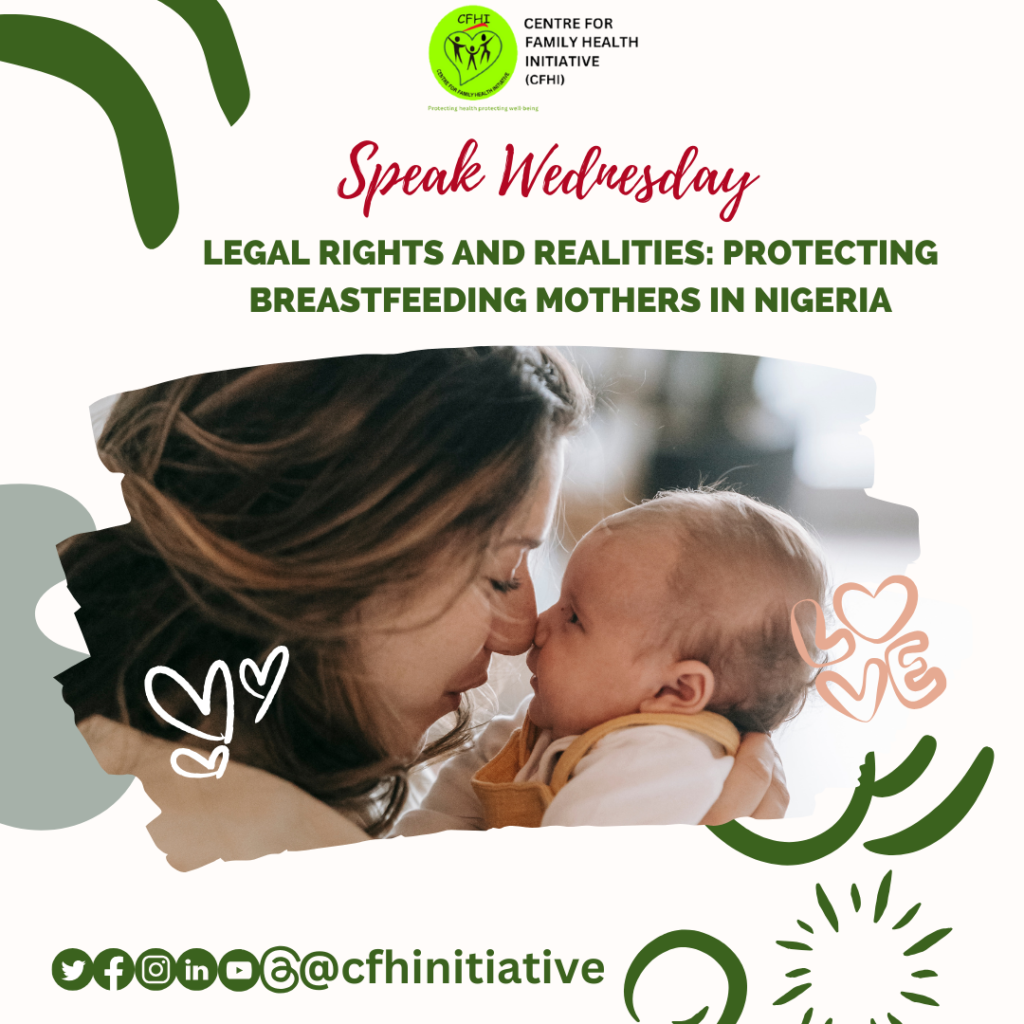
SPEAK WEDNESDAY ON LEGAL RIGHTS AND REALITIES: PROTECTING BREASTFEEDING MOTHERS IN NIGERIA

Breastfeeding is a fundamental right and a crucial aspect of infant health, but breastfeeding mothers often face challenges in public spaces and workplaces. Despite the significant benefits of breastfeeding for both mother and child, public stigma and discrimination against breastfeeding mothers remain prevalent. This social issue not only undermines the health and well-being of children but also infringes on the rights of mothers.

In Nigeria, legal protections exist to support nursing mothers, yet many mothers face discrimination and lack of support when attempting to breastfeed in public spaces or workplaces.

Many employers, particularly in the private sector, are either unaware of these laws or choose to ignore them. The informal sector, where a large percentage of Nigerian women work, is even less regulated, leaving many nursing mothers without legal protection.

Also, breastfeeding in public can provoke a range of reactions, from mild discomfort to outright hostility. Many mothers report feeling judged, embarrassed, or even harassed when they breastfeed outside the privacy of their homes.

Nigeria has made strides in establishing legal frameworks to protect breastfeeding mothers. They include:

  1. Labour Act (S.54): This Act mandates that breastfeeding nursing workers are entitled to breastfeeding breaks of at least 30 minutes twice a day.
  2. The Child Rights Act of 2003 provides that children have the right to be breastfed.
  3. National Policy on Infant and Young Child Feeding: This policy promotes exclusive breastfeeding for the first six months and continued breastfeeding up to two years or beyond, ensuring mothers have the support needed.
  4. Public Health Laws: Various health policies emphasize the importance of breastfeeding and the need to create conducive environments for nursing mothers.

Although Nigeria has taken steps to protect breastfeeding mothers through the above legal frameworks, involving stronger legal protections, better enforcement, and cultural change are required. Furthermore, educating both employers and the public about the importance of breastfeeding and the legal rights of nursing mothers can reduce stigma and improve compliance.

It’s time to celebrate and support the natural act of breastfeeding, ensuring that no mother feels ashamed or discriminated against for nurturing her child in public or at work.

Speak Wednesday is an initiative of CFHI to address issues around gender-based violence and gender bias.

#SpeakWednesday #BreastfeedingRights #HealthyBabiesHealthyNation #GenderEquality #GenderBias

REFERENCES:

  1. Labour Act (Cap L1 LFN 2004):

   – Nigerian Labour Act. (2004). Available at: [ILO Database of Labour Legislation] (https://www.ilo.org/dyn/natlex/docs/WEBTEXT/42156/67562/E90NGA01.htm).

  1. National Policy on Infant and Young Child Feeding:

   – Federal Ministry of Health, Nigeria. (2010). National Policy on Infant and Young Child Feeding in Nigeria. Available at: [Federal Ministry of Health Nigeria] (https://www.health.gov.ng/doc/IYCF_policy_2010.pdf).

  1. Public Health Laws:

   – Federal Ministry of Health, Nigeria. (2005). National Health Policy. Available at: [Federal Ministry of Health Nigeria] (https://www.health.gov.ng/index.php/documents/category/22-policies).

  1. Impact of Public Stigma:

   – World Health Organization. (2020). Breastfeeding. Available at: [WHO] (https://www.who.int/health-topics/breastfeeding#tab=tab_1).

   – Nigerian Health Watch. (2018). Challenges of Breastfeeding in Nigeria. Available at: [Nigerian Health Watch] (https://nigeriahealthwatch.com/challenges-of-breastfeeding-in-nigeria/).


SPEAK WEDNESDAY ON LEGAL RIGHTS AND REALITIES: PROTECTING BREASTFEEDING MOTHERS IN NIGERIA Read More »

SPEAK WEDNESDAY ON The Impact of GENDER BASED VIOLENCE ON WOMEN’S ECONOMIC OPPORTUNITIES

Gender-based violence (GBV) is the most prevalent yet least apparent human rights violation in the world, according to UNICEF. It involves impairment to a person’s bodily, sexual, mental, or financial health brought on by socially accepted gender power disparities. Threats of violence, coercion, and deprivation of public or private liberty are also included.
The profound repercussions of GBV on women’s economic opportunities are broad and substantial, as it is predominantly directed at women.
GBV inflicts direct harm on women’s economic stability. WHO reports highlight that women experiencing GBV often encounter challenges maintaining consistent employment due to absenteeism, reduced productivity, and job instability (WHO, 2013). This leads to a palpable decrease in income, leaving them financially vulnerable. The economic ramifications of GBV are enduring. Women who experience violence may face challenges in building a stable career, accumulating savings, and planning for retirement.
According to UN Women, GBV is a formidable barrier to women’s access to education and vocational training. Fear of violence or harassment may deter them from pursuing educational and skill-building opportunities, curtailing their capacity to attain qualifications essential for higher-paying occupations.

Furthermore, the fear of GBV can discourage women from venturing into entrepreneurship. This is corroborated by UN Women, highlighting that women may hesitate to seek loans, network, or engage in public activities necessary for entrepreneurial success (UN Women, 2019).

GBV is a significant hindrance to women’s economic empowerment and equality. Combating GBV and its economic effects needs comprehensive solutions that include legal reforms, social support systems, education, and awareness campaigns. By fostering violence-free settings, society can enable women to fully participate in economic opportunities, contributing to developing communities and nations.
Speak Wednesday is an initiative of CFHI to address issues around gender-based violence and gender bias.
#SpeakWednesday #Women’sRights #ENDGBV #WomenEconomicRights #GenderBias #GenderInequality

SPEAK WEDNESDAY ON The Impact of GENDER BASED VIOLENCE ON WOMEN’S ECONOMIC OPPORTUNITIES Read More »

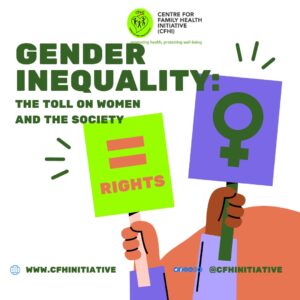
SPEAK WEDNESDAY ON GENDER INEQUALITY: THE TOLL ON WOMEN AND SOCIETY

Gender inequality is a pervasive issue that has plagued societies for centuries. While considerable progress has been made in recent years to address this problem, it continues to exert a profound toll on women and society at large. This article explores the multifaceted impacts of gender inequality, shedding light on the challenges faced by women and the broader repercussions for society.

1. Economic Disparities
One of the most evident consequences of gender inequality is economic disparity. Women often earn less than their male counterparts for equivalent work, leading to a persistent gender pay gap. This disparity not only affects women’s financial independence but also contributes to a cycle of poverty that can be passed down through generations.

2. Limited Educational Opportunities
In many parts of the world, gender inequality restricts women’s access to education. This lack of educational opportunities hampers their personal growth and economic prospects. Moreover, when women are denied access to education, society as a whole miss out on their potential contributions to various fields.
3. Unequal Representation in Leadership
Gender inequality is glaringly evident in the underrepresentation of women in leadership positions. Whether in politics, business, or academia, women continue to face barriers that hinder their ascent to influential roles. This imbalance deprives society of diverse perspectives and innovative solutions that women leaders can bring.

4. Health and Healthcare Disparities
Women often face disparities in healthcare access and quality, with some countries lacking comprehensive reproductive health services and family planning options. This inequity can lead to adverse health outcomes for women and their families. Furthermore, gender-based violence and discrimination can have severe mental and physical health consequences for women.

5. Unpaid Domestic Labour
Women disproportionately shoulder the burden of unpaid domestic labour, including childcare and household chores. This leaves them with less time and energy to pursue personal and professional aspirations. Society misses out on their full potential when this unpaid labour goes unrecognized and unvalued.

6. Gender-Based Violence
Gender inequality is closely linked to gender-based violence, which includes physical, sexual, and emotional abuse. The prevalence of such violence affects not only individual women but also disrupts social cohesion and contributes to a culture of fear and mistrust.

7. Hindrance to Social Progress
Gender inequality poses a significant hindrance to overall social progress. When half of the population is systematically marginalized and denied equal opportunities, society as a whole cannot reach its full potential. Gender equality is a fundamental human right and a cornerstone of a just and prosperous society.

8. The Path to Gender Equality
Efforts to address gender inequality must involve individuals, communities, governments, and institutions working together. Key steps include:

– Implementing and enforcing equal pay policies
– Promoting education and educational access for girls and women
– Encouraging women’s participation in leadership roles
– Providing comprehensive healthcare services, including reproductive health
– Recognizing and valuing unpaid domestic labour
– Combatting gender-based violence through legislation and awareness campaigns

Gender inequality takes a toll on both women and society. It hampers individual potential, perpetuates economic disparities, and fosters social injustice. Achieving gender equality is not just a moral imperative; it is essential for building a fair, prosperous, and progressive society. It is the responsibility of all individuals and institutions to work tirelessly towards a future where gender inequality is eradicated, and the full potential of all members of society can be realized.

Speak Wednesday is an initiative of CFHI to address issues around gender-based violence and gender bias.

#SpeakWednesday #GenderEquality #GenderDiscrimination #WomensFinance

SPEAK WEDNESDAY ON GENDER INEQUALITY: THE TOLL ON WOMEN AND SOCIETY Read More »

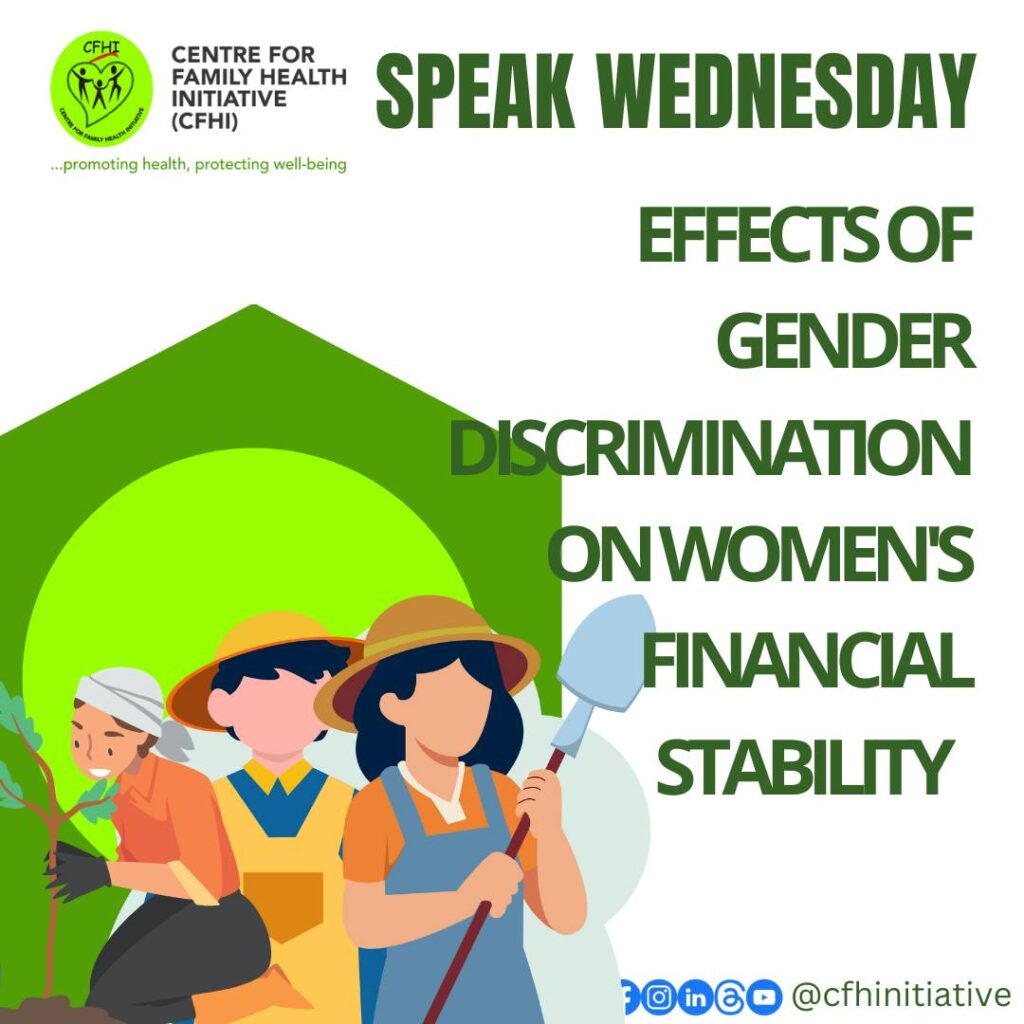
SPEAK WEDNESDAY ON EFFECTS OF GENDER DISCRIMINATION ON WOMEN’S FINANCIAL STABILITY

Article 1 of the Universal Declaration of Human Rights provides that all human beings are born free and equal in dignity and rights. However, women experience gender discrimination in both the public and private spheres, which profoundly impacts their life, including their financial stability and status.
The World Bank reports that Nigeria has one of the highest rates of out-of-school girls worldwide. Without adequate education, women’s chances of securing formal employment and escaping low-wage, informal sectors are severely restricted, leaving them vulnerable to financial instability.
Additionally, the gender wage gap still exists despite the Nigerian Labour Act prohibiting wage discrimination based on gender. The World Bank estimates that women in Nigeria make an average of 30% less money than males. The lack of equal pay makes it more difficult for women to save money, invest it, and ensure their financial future.
In Nigeria, there is a sizable gender difference in account ownership, with fewer women than males having access to formal financial services, according to the World Bank’s Global Findex Database.
The bias against women hinders their potential to establish or expand businesses, engage in politics, save finances, and participate in entrepreneurial activities. This, in turn, sustains the vicious cycle of poverty. Additionally, women’s economic empowerment, safety, and autonomy are hindered by gender discrimination, which impacts the country’s GDP and economy.
The World Bank states that achieving gender equality in financial inclusion can help accomplish eight of the 17 United Nations Sustainable Development Goals. This can be achieved through implementing genuine policies and practices promoting gender equality.
By working together to tear down the barriers of gender discrimination in Nigeria, the government, civil society, international organizations, and individuals can change this narrative.
Speak Wednesday is an initiative of CFHI to address issues around gender-based violence and gender bias.
#SpeakWednesday #GenderEquality #GenderDiscrimination #Women’sFinance

SPEAK WEDNESDAY ON EFFECTS OF GENDER DISCRIMINATION ON WOMEN’S FINANCIAL STABILITY Read More »

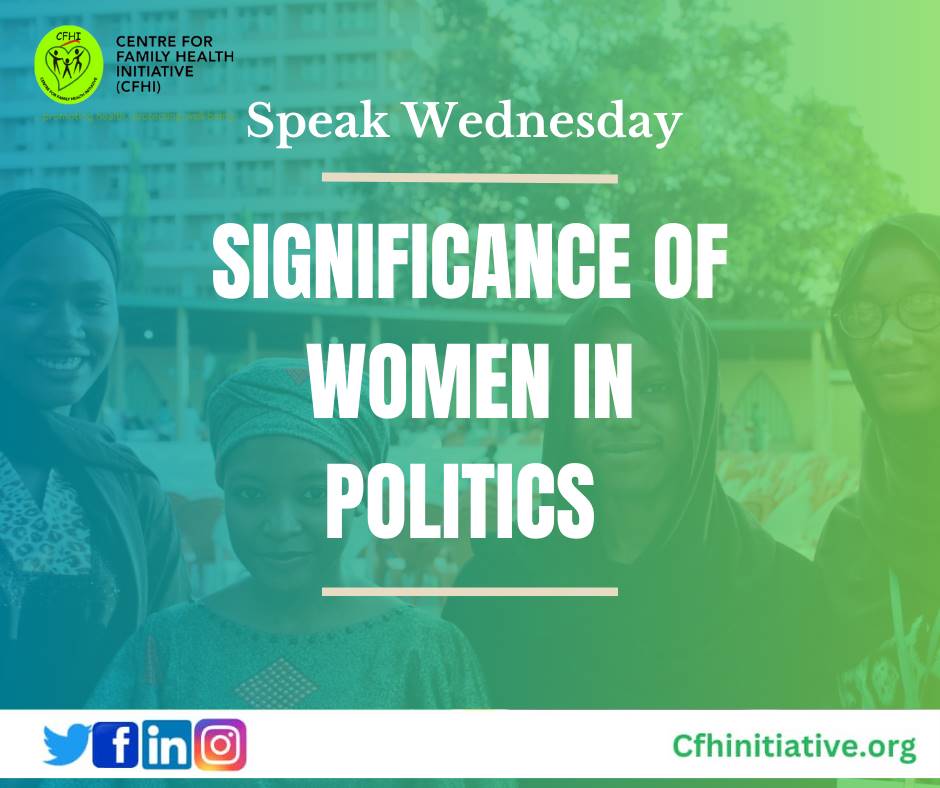
SPEAK WEDNESDAY ON THE SIGNIFICANCE OF WOMEN IN POLITICS

The significance of women’s involvement in politics cannot be emphasized enough when it comes to promoting the United Nations Sustainable Development Goals (SDGs). Women have been inadequately represented in politics throughout history due to various cultural factors. On the other hand, recent advances by women in politics have proven the importance of equal representation for women in this sphere. Despite advances in some areas, women in Nigeria face several hurdles when entering politics. Traditional gender roles, patriarchal conventions, and negative stereotypes frequently impede women from seeking active engagement in politics.


In Nigeria, the National Gender Policy (NGP) was created in 2006 to address the gender imbalance. The NGP advocates for a 35% Affirmative Action (AA) to ensure women are adequately represented in all governance processes.


Significantly, women in leadership positions, especially in developing nations, have the obligation and the potential to affect their society through leadership, particularly when empowered. Women who are empowered can aspirate for, achieve, and excel in leadership roles while also playing their roles at home.


Women are empowered when educated, exposed, and given economic freedom. Women in leadership roles have had an excellent social impact throughout history and in every nation. Such women have a long history in human history. Notably, influential figures such as Okonjo Iweala and Dora Akunyili have demonstrated that women can significantly contribute to a country’s political economy.


Speak Wednesday is an initiative of CFHI to address issues around gender-based violence and gender bias.


#SpeakWednesday #WomenInPolitics #Women’sRights #GenderStereotype #GenderBias #GenderInequality


REFERENCES

Emeka, E. O & Monica, E. A. 2015. Women and Leadership in Nigeria: Challenges and Prospects.

SPEAK WEDNESDAY ON THE SIGNIFICANCE OF WOMEN IN POLITICS Read More »

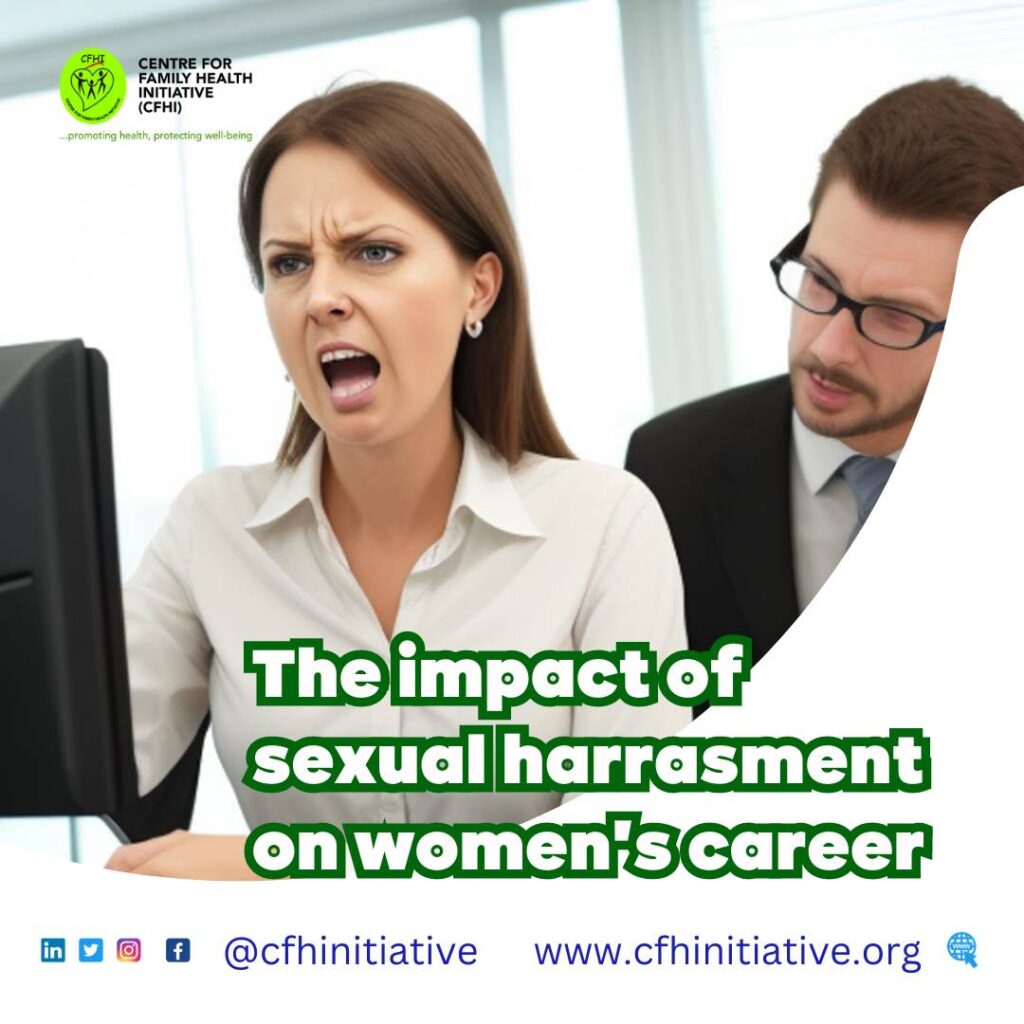
SPEAK WEDNESDAY ON THE IMPACT OF SEXUAL HARRASSMENT ON WOMEN’S CAREERS.


The Impact of Sexual Harassment on Women’s Careers

The International Labour Organization defines sexual harassment as unwelcome and offensive behavior of a sexual nature that targets individuals based on their sex. Sexual harassment is a widespread problem that impacts women’s careers more than any other area of their lives. The prevalence of sexual harassment at work impedes women’s advancement and limits their ability to advance professionally.

According to a study conducted by the International Centre for Research on Women in collaboration with ActionAid Nigeria, approximately 80% of Nigerian women have experienced some form of sexual harassment in their workplaces.

Sexual harassment fosters a toxic workplace culture, which lowers women’s job satisfaction and increases their departure rates. According to the ICRW survey, 45% of Nigerian women who had experienced sexual harassment at work decided to leave their positions, which interfered with their professional trajectories and reduced their possibilities for progress.

Furthermore, women’s careers are severely disrupted by sexual harassment, which results in traumatic events that affect their ability to advance professionally. The research by the Women in Law and Development in Africa (WILDAF) shows that sexual harassment frequently causes affected women to have lower job satisfaction, lower productivity, and higher turnover rates. The trauma brought on by such events can also cause ongoing emotional anguish, impacting one’s self-worth and confidence at work.

In Nigeria, sexual harassment affects women’s careers negatively, impeding their personal and professional advancement. The fact that this problem is so common highlights the urgent need for all-encompassing measures to combat and eliminate sexual harassment in the workplace. Creating inclusive workplaces that promote gender equality and guarantee the unrestricted career advancement of Nigerian women requires strengthening regulatory frameworks, raising awareness, and cultivating a supportive environment that empowers women.

Speak Wednesday is an initiative of CFHI to address issues around gender-based violence and gender bias.

#SpeakWednesday #SexualHarassment #SayNoToSexualHarassment #Women’srights #genderequality #genderbias

SPEAK WEDNESDAY ON THE IMPACT OF SEXUAL HARRASSMENT ON WOMEN’S CAREERS. Read More »