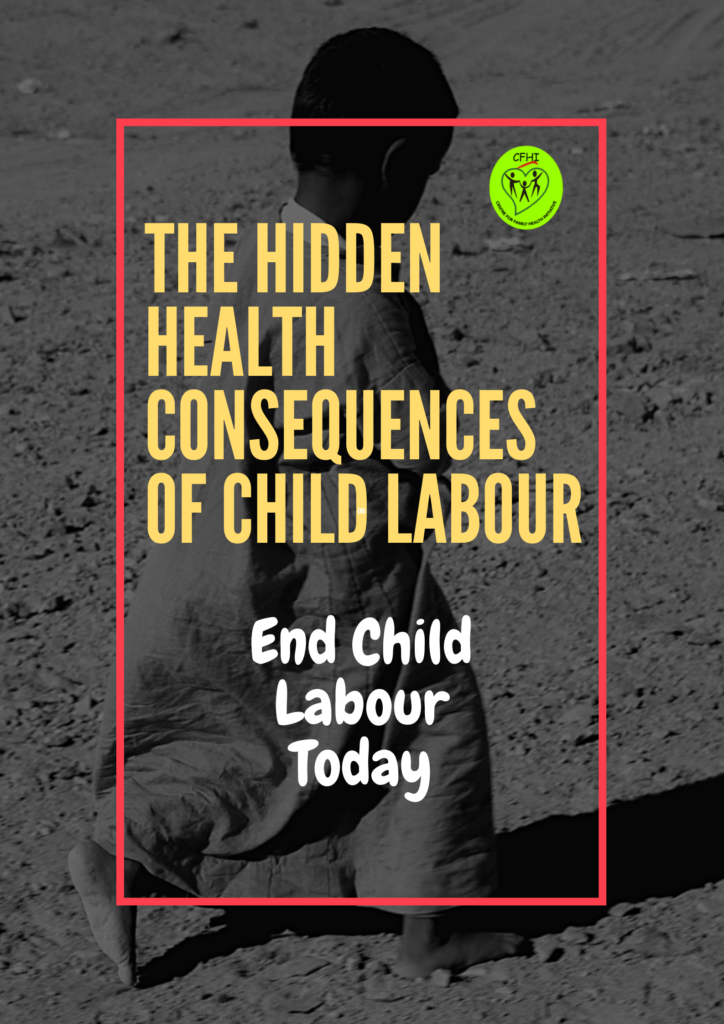
Child labour is often discussed as a social and economic issue, but its profound health consequences receive far less attention. According to the International Labour Organization (ILO) and UNICEF, an estimated 138 million children were engaged in child labour globally in 2024, with approximately 54 million performing hazardous work that endangers their health, safety, and development (1,2). While the visible effects may include fatigue and physical injuries, many of the most damaging consequences remain hidden, affecting children’s bodies, minds, futures, and overall quality of life long after the work has ended.
Children involved in labour are frequently exposed to dangerous environments that place them at risk of cuts, fractures, burns, respiratory diseases, hearing loss, and chronic musculoskeletal disorders (3,4). Research shows that carrying heavy loads, repetitive physical tasks, prolonged standing, and exposure to dust, chemicals, pesticides, and toxic substances can interfere with normal growth and development (4). In some cases, exposure to hazardous substances during childhood can increase the risk of chronic illnesses later in life, including lung disease, neurological disorders, and certain forms of cancer (4,5). These health effects may not be immediately visible but can remain with affected children throughout adulthood.
Beyond physical harm, child labour silently damages mental and emotional well-being. Studies have found that working children are more likely to experience anxiety, depression, emotional distress, low self-esteem, sleep disturbances, and psychological trauma (4,5). Many endure exploitation, violence, verbal abuse, neglect, or unsafe working conditions that create toxic levels of stress. Prolonged exposure to such stress during childhood can affect brain development, impair learning ability, reduce concentration, and increase the likelihood of mental health challenges later in life (4,5).
Another hidden consequence is malnutrition and poor physical development. Children who spend long hours working often miss regular meals, adequate rest, recreation, and healthcare services (3,4). The combination of physically demanding work and inadequate nutrition can lead to stunted growth, weakened immunity, delayed development, and increased vulnerability to infections (4,5). Research has consistently shown that children engaged in labour are more likely to suffer from poor health outcomes than their peers who attend school and live in protective environments (4).
The hidden health consequences of child labour extend far beyond the workplace. They affect physical growth, mental health, educational achievement, economic opportunities, and social development (3,4,5,6). Protecting children from labour is therefore not only a matter of safeguarding rights but also an investment in healthier families, stronger communities, and sustainable national development. Every child deserves the chance to learn, play, grow, and thrive in a safe environment free from exploitation.
Key Points to Remember
- 138 million children were engaged in child labour globally in 2024 (1,2).
• 54 million children were involved in hazardous work (1,2).
• Child labour increases the risk of injuries, respiratory diseases, chronic pain, and developmental problems (3,4).
• Exposure to pesticides, toxic chemicals, dust, and dangerous machinery can cause lifelong health complications (4,5).
• Working children are more likely to experience anxiety, depression, trauma, and emotional distress (4,5).
• Child labour contributes to malnutrition, weakened immunity, and stunted physical growth (4,5).
Many children engaged in labour are exposed to exploitation, violence, verbal abuse, neglect, and unsafe working environments. They may be forced to work long hours, denied adequate rest, subjected to harsh treatment, or placed in situations where their rights and dignity are violated. These experiences create chronic stress and fear, which can have serious consequences for a child’s mental and emotional well-being.
Research shows that prolonged exposure to toxic stress during childhood can interfere with healthy brain development, affecting memory, learning, decision-making, and emotional regulation. Children experiencing such conditions may struggle with concentration in school, have difficulty building healthy relationships, and face an increased risk of anxiety, depression, low self-esteem, and other mental health challenges later in life. Beyond the immediate harm, the psychological effects of child labour can persist into adulthood, limiting opportunities for personal growth and overall well-being (4,5).
Ending child labour requires collective action. Parents, communities, schools, employers, policymakers, and civil society organizations all have a role to play in ensuring that children are protected, educated, and given the opportunity to reach their full potential. Speak up against child exploitation, support access to quality education, and advocate for policies that prioritize the health, safety, and well-being of every child. A child’s place is in the classroom, not the workplace.
References
- International Labour Organization (ILO) & UNICEF. Child Labour: Global Estimates 2024, Trends and the Road Forward. 2025.
- International Labour Organization (ILO). Despite Progress, Child Labour Still Affects 138 Million Children Globally. 2025.
- Child Labour and Children’s Rights. Available at: https://www.unicef.org/protection/child-labour
- Ibrahim A., Abdalla S.M., Jafer M. (2019). Child Labor and Health: A Systematic Literature Review of the Impacts of Child Labor on Children’s Health in Low- and Middle-Income Countries. Journal of Public Health, 41(1), 18–26.
- World Health Organization (WHO). Social Determinants of Health and Child Development. Available at: https://www.who.int
- United Nations Children’s Fund (UNICEF). The State of the World’s Children Reports.