#menstrualhygiene

Cervical Cancer: What Every Woman Should Know

Cervical cancer remains a significant public health concern for women both globally and in Nigeria, yet it is largely preventable and treatable when detected early. Understanding its causes, risk factors, prevention strategies, and interventions is critical for improving women’s health outcomes. Cervical cancer develops in the cervix, the lower part of the uterus that connects to the vagina and is one of the most common cancers affecting women worldwide. In 2022, an estimated 660,000 new cervical cancer cases were reported globally, with about 350,000 deaths attributed to the disease, largely in low- and middle-income countries due to disparities in prevention and care access [1].

Almost all cervical cancers, over 99%, are caused by persistent infection with high-risk types of Human Papillomavirus (HPV), a sexually transmitted virus. While most HPV infections are naturally cleared by the immune system, persistent infection with oncogenic HPV types, particularly HPV 16 and 18, can lead to abnormal cell changes and eventual cancer over many years if not identified and treated [2]. Beyond HPV infection, several factors increase the risk of cervical cancer in women. HIV infection and weakened immunity accelerate cancer progression [1]. Smoking impairs immune response and promotes cellular changes [3]. Early onset of sexual activity, multiple sexual partners, and long-term use of certain hormonal contraceptives also contribute to heightened risk [4].

Cervical cancer is highly preventable and much more treatable when detected early. HPV vaccination, administered to girls typically aged 9 to 14, is highly effective at preventing infections that cause most cervical cancers [1]. Regular screening through Pap smears or HPV tests allows for the detection of precancerous changes before they progress to cancer, significantly improving treatment outcomes [2]. Despite these preventive measures, in Nigeria, cervical cancer remains the second most frequent cancer among women and a leading cause of cancer-related death [5]. Awareness and screening uptake are low, particularly in rural areas, due to financial barriers, limited access to screening facilities, and insufficient information about prevention [6].

To further reduce the burden of cervical cancer, it is essential to scale up HPV vaccination campaigns targeting adolescent girls before exposure to the virus, expand the availability and affordability of cervical cancer screening at primary healthcare levels, and strengthen health education to promote understanding of cervical health through sustained community engagement. Addressing gender and social barriers that limit women’s access to preventive care is also critical. Cervical cancer should not be a life sentence. With knowledge, preventive action, and supportive community health services, every woman can protect her health and future.

References

  1. World Health Organization. Human papillomavirus (HPV) and cervical cancer fact sheet. Dec 2025. Available from: https://www.who.int/news-room/fact-sheets/detail/human-papillomavirus-%28hpv%29-and-cervical-cancer
  2. World Health Organization. Cervical cancer prevention, diagnosis, and screening overview. Available from: https://www.who.int/cancer/prevention/diagnosis-screening/cervical-cancer/en/
  3. Centers for Disease Control and Prevention. Cervical Cancer Risk Factors. Available from: https://www.cdc.gov/cervical-cancer/risk-factors/index.html
  4. National Cancer Institute. Cervical Cancer Causes, Risk Factors, and Prevention. Available from: https://www.cancer.gov/types/cervical/causes-risk-prevention
  5. World Health Organization Regional Office for Africa. Cervical cancer early detection saves lives (Nigeria). Available from: https://www.afro.who.int/countries/nigeria/news/cervical-cancer-early-detection-saves-lives
  6. The Guardian (Nigeria). Screening, awareness gaps slow cervical cancer elimination. Available from: https://guardian.ng/features/health/screening-awareness-gaps-slow-cervical-cancer-elimination/


Cervical Cancer: What Every Woman Should Know Read More »
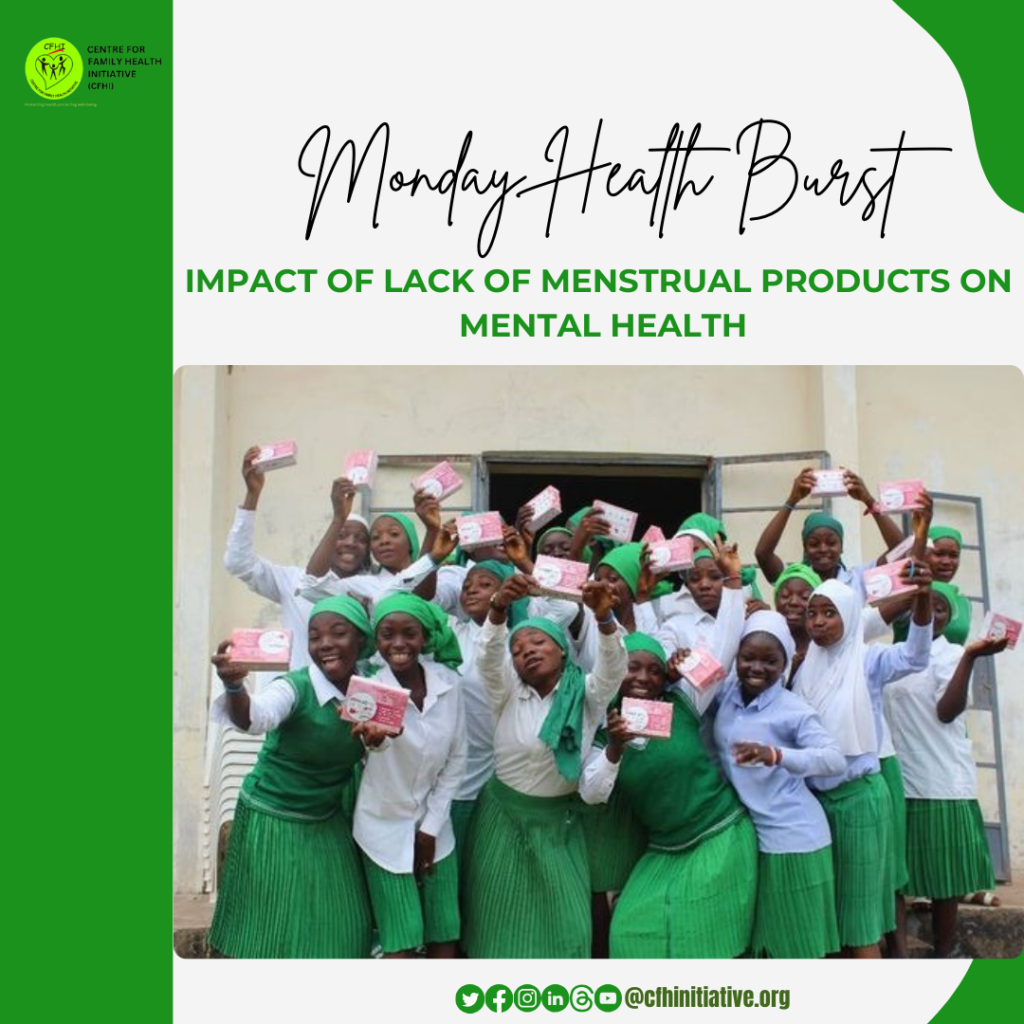
MONDAY HEALTH ON IMPACT OF LACK OF MENSTRUAL PRODUCT ON MENTAL HEALTH

Menstrual hygiene is a crucial aspect of health for individuals who menstruate, yet millions around the world face significant challenges in accessing necessary products and facilities. On any given day, more than 300 million women worldwide are menstruating.  In total, an estimated 500 million lack access to menstrual products and adequate facilities for menstrual hygiene management (MHM).1 The absence of adequate menstrual hygiene products not only affects physical health but also has profound implications for mental health.

Menstruation is often shrouded in stigma and taboo, leading to feelings of shame and embarrassment. Inadequate access to menstrual hygiene products exacerbates this stigma, forcing many individuals to use ineffective alternatives like old clothes, rags, or even paper, which can be uncomfortable and unreliable. This situation often results in leaks and odors, further stigmatizing the individual. The fear of being judged or ridiculed can lead to social isolation, where individuals avoid school, work, or social interactions, perpetuating a cycle of exclusion and loneliness.

The lack of menstrual hygiene products is a significant barrier to education for young girls. Many miss several days of school each month or drop out entirely due to the unavailability of adequate facilities and products. This educational disruption has long-term consequences, including diminished career opportunities and economic instability, which can contribute to chronic stress and anxiety. The constant worry about managing menstruation in public spaces further compounds the mental health burden.

Furthermore, using unsuitable alternatives to sanitary products can cause physical discomfort and health issues, including infections. The constant battle with discomfort and the potential for health complications can create a persistent state of anxiety and stress. The fear of potential health problems and the inability to maintain basic hygiene can severely impact self-esteem and overall mental health.

The recurring monthly challenge of managing menstruation without proper products creates a relentless emotional strain. The inability to afford or access menstrual products can evoke feelings of helplessness, frustration, and inadequacy. For those already struggling with poverty, the added financial burden of purchasing menstrual products can lead to heightened stress and anxiety. The emotional toll of constantly worrying about menstrual hygiene can diminish overall quality of life and lead to more severe mental health issues, such as depression.

Effective menstrual hygiene management (MHM) is crucial for empowering women and girls to reach their full potential. Poor menstrual health and hygiene have far-reaching negative impacts across various sectors. Consequently, the Centre for Family Health Initiative (CFHI) employs a comprehensive approach to improving menstrual hygiene in its operations within vulnerable communities in Nigeria.

Over the years, CFHI has provided SafePadTMfor more than 2000 vulnerable women and girls in underserved communities. We have partnered with many organizations to commemorate Menstrual Hygiene day by campaigning and raising awareness against period poverty, providing education on menstrual hygiene, and distributing free SafePadTM

The impact of lacking menstrual hygiene products extends far beyond physical discomfort, deeply affecting mental health and overall well-being. Addressing this issue is not only a matter of public health but also of human rights and gender equality. By ensuring that everyone has access to the necessary menstrual hygiene products and education, we can alleviate significant mental health burdens and promote a healthier, more inclusive society.

Reference:

https://www.worldbank.org/en/topic/water/brief/menstrual-health-and-hygiene1

https://mailchi.mp/b838e480faa1/cfhi-prioritizing-menstrual-hygeine-in-nigeria


MONDAY HEALTH ON IMPACT OF LACK OF MENSTRUAL PRODUCT ON MENTAL HEALTH Read More »

Period Poverty_MHM

SPEAK WEDNESDAY – PERIOD POVERTY AND POOR EDUCATION

The backdrop in girls’ education due to lack of menstrual hygiene in Nigeria should no longer be gender issue, but of national concern.

The National Democracy and Health Survey in 2013 has shown that girls make up 60 per cent of the 110.5 million out-of-school children in Nigeria, and 1 in 10 African girls misses school due to their period, according to UNICEF. In order words, they could miss school for four days or more during which the period lasts, and since they cannot manage their period safely without a good sanitary product, such children are most likely to drop out of school in the long run. Moreso, the hike in menstrual products has left most Nigerian girls and young women with no choice but to use unclean napkins, tissue, leaves, newspapers, or nothing at all, during their menstruation.

The old African proverb says “educate a girl, educate a nation”. To curb this damaging menace caused by period poverty, the Nigerian government should borrow a Leaf from Kenya’s policy which introduced the right to free, sufficient and quality sanitary towels, and basic sanitation facilities for schoolgirls; treating access to sanitary pads as a basic human right. This and the total removal of tax on menstrual products will help to make the girl child stay in school during their monthly flow.

Like Michelle Obama rightly said, when girls are educated, their countries become stronger and more prosperous. It is time to embrace this fact and work towards creating a world where everyone irrespective of gender can thrive without limitations.

Speak Wednesday is an initiative of CFHI to address issues of gender-based violence and gender bias. Join us every Wednesday on all our social media platforms for more episodes.

#SpeakWednesday #MenstrualRightsAwareness #MenstrualHygiene #MenstrualEquality #GirlsInSchool #EquityAndJustice #MHDay2022 #WeAreCommitted
#reusablesanitarypad

SPEAK WEDNESDAY – PERIOD POVERTY AND POOR EDUCATION Read More »

Monday Health Burst

CHALLENGES AND EFFECTS OF POOR MENSTRUAL HYGIENE MANAGEMENT

Menstruation is a naturally occurring physiological phenomenon in adolescent girls and pre-menopausal women. Menarche is an important biological milestone in a woman’s life as it marks the onset of the reproductive phase of her life. The World Health Organization (WHO) defines Menstrual Hygiene Management (MHM) as ‘Women and adolescent girls using a clean menstrual management material to absorb or collect blood that can be changed in privacy as often as necessary for the duration of the menstruation -period, using soap and water for washing the body as required and having access to facilities to dispose of used menstrual management materials.

Menstrual hygiene management can be particularly challenging for girls and women in developing countries, where clean water and toilet facilities are often inadequate. A World Bank report estimates that at least 500 million women and girls globally lack adequate facilities for menstrual hygiene management (MHM). The challenge menstruating girls and women face is often less tangible than simply the availability of infrastructure and is rooted in social norms and beliefs. In many cultures, menstruating women are considered impure and are systematically excluded from participating in everyday activities, such as education, employment, and cultural and religious practices. A growing body of evidence shows that girls’ inability to manage their menstrual hygiene in schools, results in school absenteeism, which in turn, has severe economic costs on their lives and the country.

According to the Economic times’ health magazine, menstruating women need to pay particular attention to personal hygiene. During this time, a woman’s vulnerability towards potentially life-threatening ailments increases. Poor menstrual hygiene can lead to many issues, such as fungal or bacterial infections of the reproductive tract and the urinary tract. Irritation of the skin causing discomfort and possibly dermatitis, the introduction of bacteria into the urethra leading to possible urinary tract infections (UTIs), alteration in the pH balance of vaginal secretions, amongst others. Asides from its health effects, poor MHM impacts the economy through absenteeism which results in lost wages, with women working in the formal sector missing on average 2.5 days per month. A World bank study linking menstruation to increased absenteeism revealed that not only do women take more sick leave (likely due to menstruation), but a small but measurable portion of the gender wage gap can be attributed to increased absences from work.

Hygiene-related practices of women during menstruation are also of considerable importance because if left unmet can lead to serious psychological impacts. Lack of knowledge regarding menstruation and menstrual hygiene leads to poor attitude and practice. There are various issues such as poor awareness; unavailability of quality sanitary napkins, poor WASH facilities; poor disposal of sanitary napkins, poor sexual and reproductive health rights education which also needs simultaneous attention for the promotion of menstrual hygiene. In this vein, Centre for Family Health Initiative has put at the forefront of its SRHR and WASH activities by adding a gender perspective to its programs by providing girls with not just adequate information on issues around menstruation but also providing these girls with access to conveniently maintaining good hygiene during their menstrual periods, through the provision of reusable sanitary napkins and equipped WASH facilities.

Though according to World Bank, promoting menstrual hygiene management (MHM) is not only a sanitation matter; it is also an important step towards safeguarding the dignity, bodily integrity and overall life opportunities of women and girls that is why an increased global awareness needs to be encouraged to accelerate a social and behavioural change as it relates to Menstrual Hygiene Management.


Monday Health Burst Read More »