Child Labour

The Role of Families and Communities in Preventing FGM

In the landscape of global health in 2026, Female Genital Mutilation (FGM) stands as one of the most persistent violations of human rights, yet the tide is beginning to turn through sophisticated, community-led interventions. As of this year, over 230 million women and girls alive today have undergone the procedure, and UNICEF projects that 4.5 million more remain at risk in 2026 alone [1]. The struggle to end this practice is no longer just a legal battle; it has evolved into a deep-rooted cultural shift focusing on the intersection of family protection and communal health [4].

The prevention of FGM begins at the heart of the home, where families are being empowered to dismantle the “social obligation” myth. Recent research from the UNFPA-UNICEF Joint Programme indicates that when mothers are provided with formal education and economic agency, the likelihood of their daughters being cut drops significantly [3]. Families are now being reached through “Positive Masculinity” programs, where over 800,000 men and boys have pledged to protect their female relatives, challenging the outdated notion that FGM is a prerequisite for marriageability [3]. By addressing the family as the primary decision-making unit, advocacy groups are successfully replacing fear of social exclusion with a shared commitment to a daughter’s physical integrity and future health.

Moving beyond the front door, the most effective preventative measure in 2026 has been the rise of Public Declarations of Abandonment within local communities. This collective approach shifts the “social contract,” ensuring that no single family feels isolated in their choice to stop the practice. Many regions have successfully implemented Alternative Rites of Passage (ARP), which preserve the cultural celebration of womanhood through education, mentorship, and gifts minus the physical harm. This allows communities to maintain their rich heritage while evolving their health standards. Simultaneously, health systems are closing the gap on “medicalization” the dangerous trend of health professionals performing the cut. The World Health Organization has recently tightened codes of conduct, training midwives and doctors to serve as the first line of defense, educating parents on the $1.4 billion annual global cost of treating FGM-related complications, ranging from obstetric hemorrhage to lifelong psychological trauma [2].

To ensure these gains are permanent, a robust network of local surveillance and cross-border cooperation has emerged. In 2026, over 3,200 communities have established “watchdog” groups that monitor girls during school holidays, a peak time for the practice [3]. These grassroots efforts, supported by national laws that criminalize “vacation cutting,” create a safety net that follows a girl from her village to the city and beyond. The data proves that this holistic approach works; for every dollar invested in these prevention measures, there is a tenfold return in health savings and economic productivity [2]. By weaving together, the strength of the family unit with the collective will of the community, we are finally moving toward a world where every girl can grow up whole, healthy, and empowered.

Call to Action

The end of FGM is within our reach, but it requires your voice and your action. You can make a difference today:

  • Educate and Advocate: Share the facts about the health risks of FGM within your social circles. Silence is where the practice thrives.
  • Support Grassroots Organizations: Donate to or volunteer with local NGOs that facilitate Alternative Rites of Passage and provide education to at-risk families.
  • Report Risk: If you know a girl is at risk of being subjected to FGM, contact local child protection services or international helplines immediately.
  • Engage Men and Boys: Start conversations with the men in your community about the importance of protecting the rights and health of women and girls.

Monday Health Burst is an initiative of CFHI to address issues of basic health concern. Join us every Monday on all our social media platforms for more episodes.

References

  • UNICEF Data (2025/2026): FGM Prevalence and Statistics
  • WHO Global Health Update: The Cost of FGM and Prevention Strategies
  • UNFPA 2025 Annual Report: Eliminating FGM through Community Action
  • United Nations: International Day of Zero Tolerance for FGM


The Role of Families and Communities in Preventing FGM Read More »
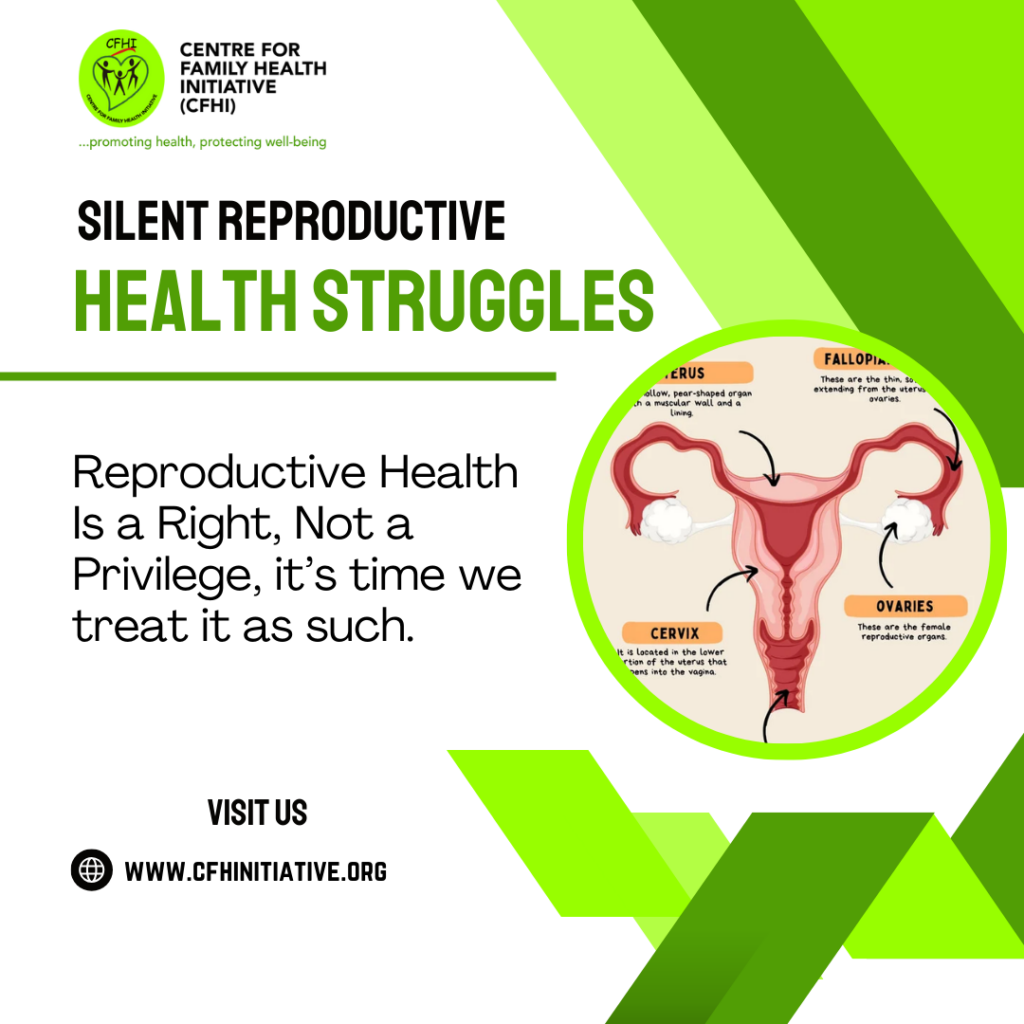
Silent Reproductive Health Struggles

Women’s reproductive health is fundamental to their overall well-being, yet millions of women globally and in Nigeria face persistent, often silent challenges that compromise their health, autonomy, and quality of life [1]. Despite progress in some areas, vast inequities remain in access to services, information, and rights leaving many women vulnerable to preventable health problems [2].

One of the major silent struggles is limited access to essential reproductive health services, including family planning, maternal care, and safe delivery support. In sub-Saharan Africa, one in four women who wish to delay or stop childbearing do not use any contraceptive method, reflecting gaps in availability, choice, and quality of reproductive care [1][5]. These shortfalls contribute to high rates of unintended pregnancies, unsafe abortions, and increased maternal morbidity and mortality. Globally, about 800 women die each day from pregnancy-related causes, many of which are preventable with proper services and support [1].

In Nigeria, reproductive health disparities are stark. A survey of reproductive health concerns found that sexual health, contraception, infections, fertility issues, and reproductive cancers were among the most pressing worries for women, indicating broad unmet needs across the reproductive spectrum [3]. Despite various policies, only a few Nigerian states meet benchmarks for women’s participation in decisions about their sexual and reproductive health, reflecting systemic barriers rooted in socio-cultural norms and limited autonomy [4]. Economic challenges also contribute, with millions of women lacking access to modern contraceptives and comprehensive family planning services due to cost, misinformation, fear of side effects, cultural opposition, and weak health systems [5][6].

Another under-recognized struggle is infertility, which affects a significant portion of women yet remains stigmatized and poorly supported. Recent WHO guidance highlights infertility as a major public health concern, with more than one in six people of reproductive age affected [7]. Access to affordable fertility evaluation and treatment is limited in many countries, forcing women to choose between financial hardship and their desire for children [7].

Maternal health remains a critical issue. Globally, approximately 287,000 women die yearly from complications in pregnancy and childbirth, with nearly all these deaths occurring in low- and middle-income settings where health systems are weak and resources scarce [1]. In areas affected by conflict or economic strain, such as parts of northern Nigeria, women face even greater risks due to disrupted services, insecurity, and collapsed care infrastructure [8].

The impact of these struggles extends beyond physical health. When women cannot access respectful, quality reproductive care, the consequences ripple into social and economic domains limiting educational opportunities, reducing workforce participation, and perpetuating cycles of poverty and inequality [2].

Improving women’s reproductive health requires a holistic approach that ensures affordable and accessible services such as contraception, antenatal care, skilled delivery, and emergency support reach even the most underserved communities [1][5], while also equipping women with accurate, culturally sensitive information to make informed choices about their bodies and health [2]. At the same time, policies must actively protect women’s autonomy and reproductive rights by challenging harmful norms and discrimination [2][4], supported by strong, well-funded health systems with trained personnel to guarantee continuity of care, especially in fragile settings [1][8]. Integrating affordable infertility care and psychosocial support into routine reproductive health services is also essential to address the often hidden emotional and social burdens many women silently endure [7].

Speak Wednesday is an initiative of CFHI to address issues around gender-base violence and gender-bias.

References

  1. WHO Regional Office for Africa. Women’s Health. Available from: https://www.afro.who.int/health-topics/womens-health
  2. United Nations Population Fund (UNFPA). New UNFPA report finds 30 years of progress in sexual and reproductive health has mostly ignored the most marginalized communities. Available from: https://www.unfpa.org/press/new-unfpa-report-finds-30-years-progress-sexual-and-reproductive-health-has-mostly-ignored
  3. Sa’adatu TS, Dieng B, Danmadami AM. Reproductive health issues of concern among Nigerians: an online survey. Int J Community Med Public Health. Available from: https://doi.org/10.18203/2394-6040.ijcmph20234114
  4. Premium Times Nigeria. Only eight Nigerian states meet women’s health benchmark – Report. Available from: https://www.premiumtimesng.com/news/top-news/830200-only-eight-nigerian-states-meet-womens-health-benchmark-report.html
  5. World Health Organization. Sexual and Reproductive Health and Research (SRH): Family planning and contraception. Available from: https://www.who.int/teams/sexual-and-reproductive-health-and-research-%28srh%29
  6. Ballard Brief. Barriers to Family Planning for Women in West Africa. Available from: https://ballardbrief.byu.edu/issue-briefs/barriers-to-family-planning-for-women-in-west-africa
  7. WHO releases first global guideline on infertility care. Reddit; 2025. Available from: https://www.reddit.com/r/EmbryologyIVFSupport/comments/1pcjrzh/who_releases_first_global_guideline_on/
  8. AP News. Pregnancy has become a nightmare for many women in Nigeria’s conflict-hit north. Available from: https://apnews.com/article/c5846961ed87cddd8a24d1c2b04564a0

Silent Reproductive Health Struggles Read More »

When Healthcare Costs Become a Form of Bias

When healthcare costs rise beyond the reach of ordinary people, they silently become a form of bias one that decides who lives, who suffers, and who is forced to endure preventable pain. In Nigeria today, access to quality healthcare is increasingly determined not by need, but by ability to pay. For millions of women and girls, especially in low-income and underserved communities, the cost of care has become a cruel barrier that denies them their most basic right: the right to health. This hidden injustice affects lives, futures, and communities.

The impact of this bias is devastating. Pregnant women delay antenatal care because consultation fees are unaffordable, adolescent girls are denied reproductive health services, and survivors of gender-based violence cannot access timely medical attention due to cost. These barriers fuel inequality, worsen health outcomes, and perpetuate cycles of suffering. When healthcare becomes a privilege instead of a right, women and girls bear the heaviest burden, trapped in a system that marginalizes them and ignores their dignity.

The financial strain of out-of-pocket spending is crushing. Families are forced to choose between food, education, and medical care, often at the expense of women and girls. This reality exposes a health system that has failed to protect those most vulnerable, leaving them at risk of illness, neglect, and further gender-based harm. A functional, responsive healthcare system should uplift women and girls, not push them into vulnerability. Every woman and girl deserve care, respect, and protection regardless of income.

The Nigerian government must act decisively. Investing in maternal, reproductive, and gender-sensitive health services, strengthening primary healthcare, implementing effective insurance schemes, and ensuring accountability at every level are not optional, they are urgent obligations. Health must be treated as a national priority, because no society can prosper while its women and girls remain unwell, unprotected, and underserved. A fair and just society is one where access to healthcare is based on need, not income. Ending cost-driven bias in healthcare requires collective action from policymakers prioritizing women’s health financing, to institutions delivering quality care, to communities demanding equitable systems.

The call to action is clear: the government, stakeholders, and citizens must commit to ensuring healthcare is affordable, accessible, and equitable for all. Healthcare should heal, protect, and empower women and girls, and not discriminate against them. Until costs no longer determine who can access care, gender-based bias will continue to persist quietly, unfairly, and at an unacceptable human cost.

Speak Wednesday is an initiative of CFHI to address issues around gender-base violence and gender-bias.

When Healthcare Costs Become a Form of Bias Read More »

Removing Gender Barriers in Healthcare Access

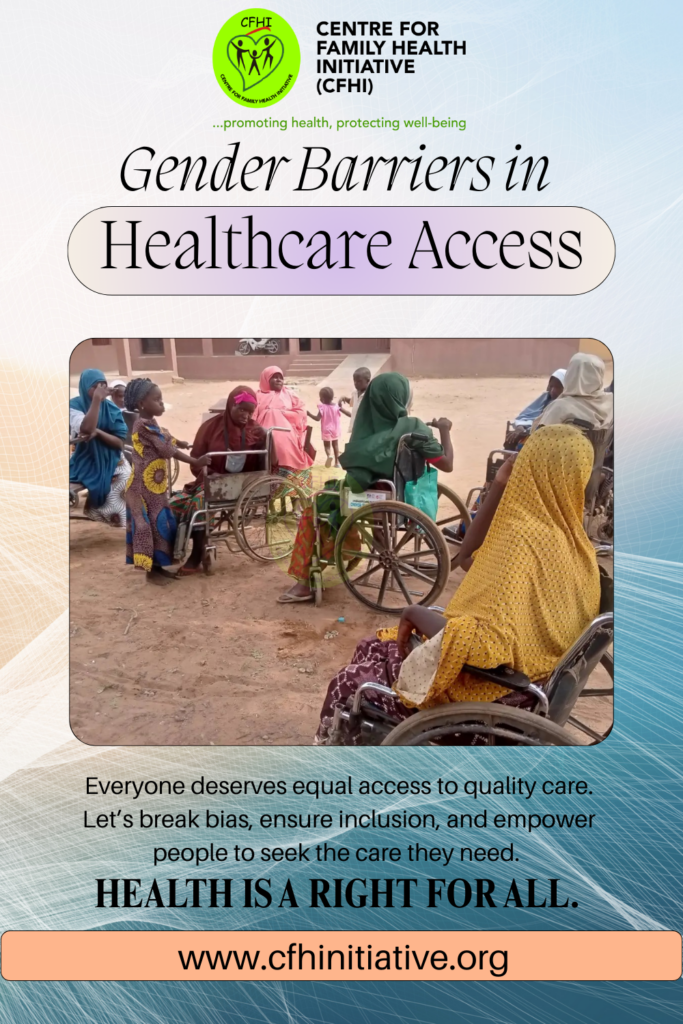
Removing gender barriers to healthcare is not only a matter of equity it is a moral and practical necessity if societies are to survive and thrive. Women and girls face layered obstacles to care: constrained mobility, financial dependence, harmful social norms, and health systems that are under-resourced and sometimes discriminatory. The World Health Organization highlights that gender norms and discrimination systematically limit access to services for women and girls, reducing their ability to obtain timely information, preventive care, and lifesaving treatment (1). These barriers are compounded by grim facility gaps: recent WHO/UNICEF data show billions are treated in health settings that lack basic water, sanitation, hygiene, and reliable electricity conditions that make safe maternal care and emergency treatment precarious (2). At the same time, progress toward universal health coverage (UHC) has slowed, leaving significant groups especially women in rural and low-income communities exposed to out-of-pocket costs and unmet needs (3).

The consequences are measurable and stark. Nigeria, for example, continues to bear a disproportionate share of global maternal deaths, a reality linked to regional inequalities in access, weak infrastructure, and funding shortfalls (4). Globally, analyses of health inclusivity reveal that refugees, displaced women, women with disabilities and other marginalized groups are far more likely to be denied or excluded from care in some cases by more than twenty percentage points compared with non-marginalized groups (5). These are not abstract injustices: they translate into delayed antenatal visits, unattended deliveries, untreated complications, and endless cycles of preventable suffering. Removing gender barriers means addressing the social drivers that prevent women from seeking care as urgently as fixing the physical gaps in facilities.

Civil society organisations and local actors are essential partners in closing these gaps. The Centre for Family Health Initiative (CFHI) works at the community level to confront both practical and cultural barriers to care: we run health education and rights-awareness campaigns that equip women and families with knowledge about available services and how to claim them; we strengthen linkages between households and primary health centres through referrals and case management; we support WASH and menstrual hygiene programmes so women can access services with dignity; and we provide capacity building for community health workers and facility staff so that care is both accessible and respectful (6). Where infrastructure is missing, CFHI has partnered with donors and initiatives to deliver pragmatic solutions for example installing solar birth kits in underserved PHCs to ensure safe night-time deliveries while simultaneously training Healthcare Professionals and Community Health Extension Workers (CHEWs) to enhance their competencies in clinical care, documentation, counselling, and emergency response, ensuring that PHCs can deliver reliable and respectful services across all essential health areas

To remove gender barriers at scale, governments, donors, and health systems must act on several fronts. First, finance primary health care adequately and ensure that essential services are free or financially protected at the point of use, so women are not forced to choose between care and survival. Second, invest in facility infrastructure WASH, electricity, cold chain and privacy provisions because dignity and safety are prerequisites for access. Third, embed gender-responsive policies across health programming: mandate respectful maternity care, train providers on implicit bias and discrimination, involve women and adolescent girls in service design, and expand targeted outreach for marginalized groups. Fourth, strengthen data systems to capture gender-disaggregated indicators and unmet needs so resource allocation can follow the evidence. Finally, create accountability mechanisms community scorecards, patient charters and independent oversight so promises become measurable action.

Change requires more than policy papers; it requires citizens, health workers, NGOs and governments to demand it and to act. We call on policymakers to prioritise gender responsive UHC financing and facility upgrades, on donors to fund long-term health system strengthening rather than short-term projects, on facility managers to adopt respectful care protocols today, and on community leaders to champion women’s right to health. If we truly value half our population, we will remove the gender barriers that deny women the healthcare they are owed.

References

  1. World Health Organization. Gender and health. Available from: https://www.who.int/health-topics/gender.
  2. World Health Organization; UNICEF. Countries making unprecedented efforts but billions still lack basic services in health-care facilities — WHO-UNICEF report warns. WHO website. 24 Sep 2025. Available from: https://www.who.int/news/item/24-09-2025-countries-making-unprecedented-efforts-but-billions-still-lack-basic-services-in-health-care-facilities—who-unicef-new-report-warns.
  3. World Health Organization. Universal health coverage (UHC) fact sheet. Available from: https://www.who.int/news-room/fact-sheets/detail/universal-health-coverage-(uhc).
  4. The Guardian. ‘Difficult choices’: aid cuts threaten effort to reduce maternal deaths in Nigeria. 21 May 2025. Available from: https://www.theguardian.com/world/2025/may/21/aid-cuts-threaten-effort-reduce-maternal-deaths-nigeria.
  5. Economist Impact. Understanding health inclusivity for women. Available from: https://impact.economist.com/projects/health-inclusivity-index/inclusivity-topics/articles/understanding-health-inclusivity-for-women.
  6. Centre for Family Health Initiative (CFHI). Who we are / What we do. Available from: https://www.cfhinitiative.org.


Removing Gender Barriers in Healthcare Access Read More »

Protecting Our Children from Common Illnesses

Children remain highly vulnerable to common illnesses, and preventing these diseases is essential to safeguarding their growth and wellbeing. In Nigeria, infections such as diarrhea, malaria, and acute respiratory infections continue to be among the leading causes of sickness and death in children under five, despite being largely preventable. Evidence shows that environmental and structural factors contribute significantly to this burden. Research highlights that improved water, sanitation, and hygiene (WASH) are strongly associated with reduced childhood diarrhea and respiratory infections (1). Additionally, findings from Nigeria’s Demographic and Health Surveys indicate that poor housing conditions including overcrowding and inadequate ventilation are major predictors of child illness across the country (2).

The impact of these illnesses extends far beyond short-term discomfort. Children who frequently experience diarrhea or respiratory infections are at increased risk of stunting, and spatial health research in Nigeria reveals that these conditions often overlap, creating compounded threats to child growth and development (3). Preventable infections such as measles also have long-term consequences on immunity and overall health in later life, as demonstrated in studies tracking early-life measles exposure (6). Even though effective vaccines exist, childhood immunization coverage remains suboptimal in many regions, prompting the introduction of innovative solutions such as artificial intelligence systems to increase vaccine uptake (5). Reliable hospital data further confirm that pneumonia, malaria, and diarrheal diseases remain major contributors to child mortality in Nigerian healthcare settings (4). Alongside medical treatment, community-based interventions such as hygiene promotion, nutrition counselling, and timely referral are essential to reducing morbidity. Globally, standardized caregiver resources like UNICEF’s “Facts for Life” continue to guide families on preventing and responding to common childhood illnesses (7).

The Centre for Family Health Initiative (CFHI) plays a critical role in reducing the burden of childhood illnesses through targeted community programs. CFHI supports maternal, newborn, and child health activities, including MNCH weeks where children receive essential interventions such as vaccinations, deworming, vitamin A supplementation, growth monitoring, and malnutrition screening (8). The organization also drives WASH improvements aimed at reducing disease spread and implements extensive community health education on hygiene, sanitation, immunization, and early care-seeking. Through capacity-building efforts, CFHI strengthens the skills of health workers and volunteers to deliver quality child health services (9). CFHI’s approach is evidence-based and community-centered, ensuring that interventions respond to local needs and contribute meaningfully to child survival and development.

Protecting children from preventable illnesses requires collective responsibility. Caregivers should ensure full vaccination, practice proper handwashing, maintain clean household environments, and seek medical care early when their children show signs of illness. Community members must actively share health information and support local awareness programs. Policy and government actors should invest in clean water systems, sanitation infrastructure, and housing improvements to create healthier environments for children. Finally, individuals and organizations can strengthen CFHI’s efforts by volunteering, partnering, or supporting programs that promote child health. Together, these actions can secure a safer, healthier future for every child.


References

  1. Oyebanji TO, Chandra-Mouli V. Burden of Common Childhood Diseases in Relation to Improved Water, Sanitation, and Hygiene (WASH) among Nigerian Children. PubMed [Internet]. 2018 [cited 2025 Nov 23]. Available from: https://pubmed.ncbi.nlm.nih.gov/29895758/
  2. Olusanya BO, Odeyemi OA, Abimbola S, Adebowale SA. Housing conditions as predictors of common childhood illness: Evidence from Nigeria Demographic and Health Surveys, 2008–2018. PubMed [Internet]. 2021 [cited 2025 Nov 23]. Available from: https://pubmed.ncbi.nlm.nih.gov/33476186/
  3. Gai T, Cunningham E, Chukwuogo O, et al. Spatial Co-Morbidity of Childhood Acute Respiratory Infection, Diarrhoea and Stunting in Nigeria. PubMed [Internet]. 2022 [cited 2025 Nov 23]. Available from: https://pubmed.ncbi.nlm.nih.gov/35162859/
  4. van den Berg GJ, von Hinke S, Vitt N. Early life exposure to measles and later-life outcomes: Evidence from the introduction of a vaccine. arXiv [Internet]. 2023 [cited 2025 Nov 23]. Available from: https://arxiv.org/abs/2301.10558
  5. Kehinde O, Abdul R, Afolabi B, et al. Deploying ADVISER: Impact and Lessons from Using Artificial Intelligence for Child Vaccination Uptake in Nigeria. arXiv [Internet]. 2023 [cited 2025 Nov 23]. Available from: https://arxiv.org/abs/2402.00017
  6. Morbidity and Mortality Pattern of Childhood Illnesses Seen at the Children Emergency Unit of Federal Medical Center, Asaba, Nigeria. AMHSR [Internet]. [cited 2025 Nov 23]. Available from: https://www.amhsr.org/articles/morbidity-and-mortality-pattern-of-childhood-illnesses-seen-at-the-children-emergency-unit-of-federal-medical-center-asaba-nigeria.html
  7. Facts for Life. [Internet]. [cited 2025 Nov 23]. Available from: https://en.wikipedia.org/wiki/Facts_for_Life
  8. Centre for Family Health Initiative. 2020 Annual Report. Abuja: CFHI; 2020. [Internet]. [cited 2025 Nov 23]. Available from: https://www.cfhinitiative.org/wp-content/uploads/2022/10/CFHI_2020-Annual-Report.pdf
  9. Centre for Family Health Initiative. Who We Are. [Internet]. [cited 2025 Nov 23]. Available from: https://www.cfhinitiative.org/who-we-are/

Protecting Our Children from Common Illnesses Read More »

SPEAK WEDNESDAY ON GIRLS AT RISK: HOW GENDER BIAS FUELS CHILD LABOUR IN NIGERIA

In Nigeria, gender bias is a silent but powerful force driving many young girls into child labour. 

According to UNICEF, over 43% of children between the age of 5 to 17 are engaged in child labour, and girls are disproportionately affected. The reasons are deeply rooted in cultural norms and economic hardships, often pushing girls out of school and into work.

Girls in Nigeria are frequently pulled out of school to support their families through labour, with many working in hazardous conditions. 

The United Nations reports that societal expectations place girls in the roles of caregivers and domestic helpers from a very young age. This unpaid labour within their own homes often extends into exploitative work outside. Tasks like hawking goods, domestic servitude, and even hazardous jobs in agriculture become their daily reality. This not only robs them of their childhood but also of opportunities for education and future economic independence. Furthermore, most of them are exposed to physical abuse, sexual exploitation, and long-term psychological harm.

What can be done? Initiatives and policies that enforces compulsory education to keep girls in school and out of labour, providing them with the tools they need to build a better future can be instrumental in fighting child labour. By challenging gender stereotypes and investing in girls’ education, we can break the chains of child labour and empower the next generation of Nigerian women.

Let’s stand together to protect our girls and ensure they have the bright futures they deserve. 

Speak Wednesday is an initiative of CFHI to address issues around gender-based violence and gender bias.

References:

– UNICEF, “Child Labour,” available at [UNICEF] https://www.unicef.org/nigeria/child-protection/child-labour

– United Nations, “Child Labour in Agriculture,” available at [UN] https://www.un.org/en/global-issues/child-labour

– World Health Organization, “Child Labour and Health,” available at [WHO] https://www.who.int/news-room/fact-sheets/detail/child-labour


SPEAK WEDNESDAY ON GIRLS AT RISK: HOW GENDER BIAS FUELS CHILD LABOUR IN NIGERIA Read More »

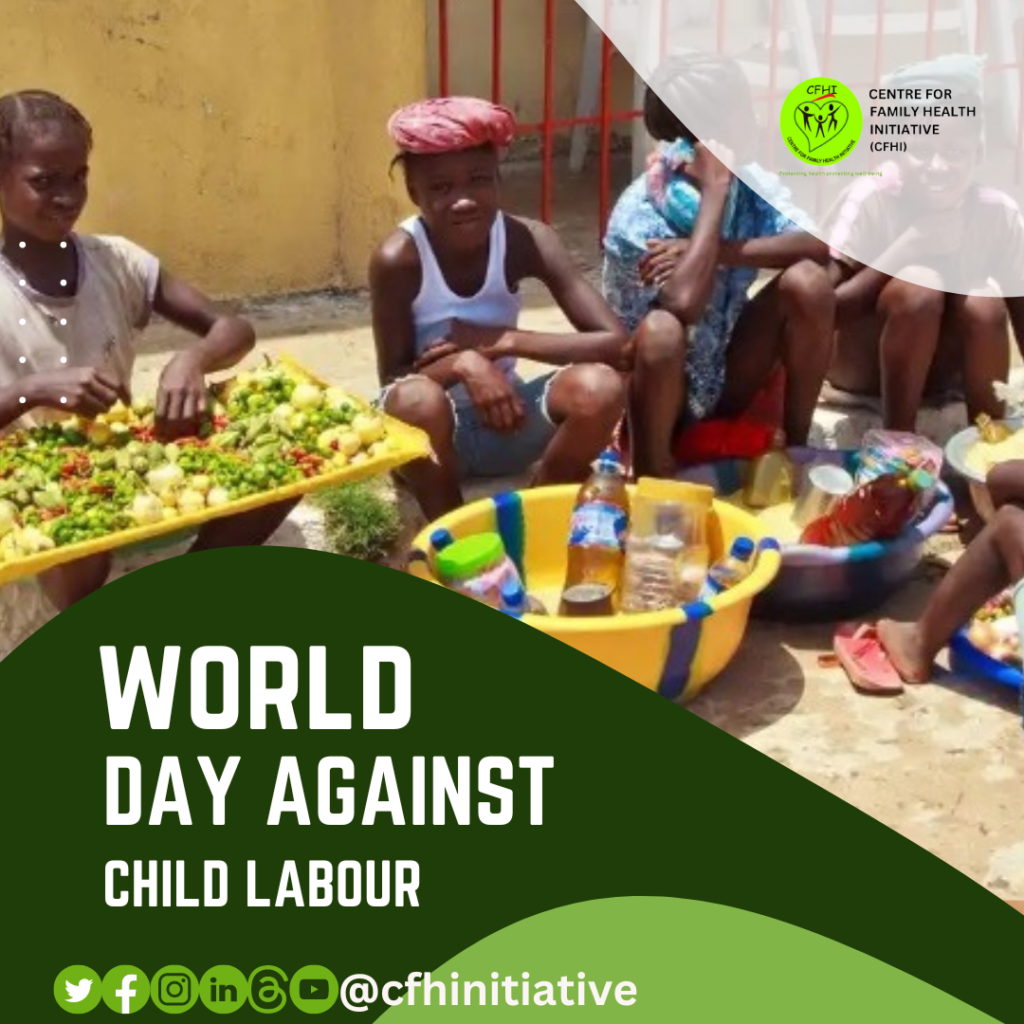
WORLD DAY AGAINST CHILD LABOUR

Every year, on June 12th, the world comes together to recognize World Day Against Child Labour, a day dedicated to raising awareness about the plight of child labourers globally and encouraging actions to eliminate this scourge. This year, the theme, “Let’s Act on Our Commitments: End Child Labour!” calls upon governments, organizations, and individuals to reaffirm their pledges and take concrete steps toward eradicating child labour.

Child labour is defined by the International Labour Organization (ILO) as work that is mentally, physically, socially, or morally dangerous and harmful to children. It deprives them of the opportunity to attend school and impedes their overall development. As per Business Insider (2018), child labour not only denies children their right to education but also exposes them to severe human rights violations, including sexual assault, human trafficking, and exploitation by drug dealers and armed groups.

An estimated 218 million children worldwide, aged between 5 and 17, are engaged in labour, with 152 million of them working under hazardous conditions. These children toil away in fields, factories, and homes, sacrificing their childhood and their future for survival.

In today’s reality, poverty remains a significant driver of child labour, especially in countries like Nigeria. Children are often forced to toil in harsh conditions to support their families, becoming the primary breadwinners. This harsh reality not only perpetuates the cycle of poverty but also compounds social inequality and discrimination.

While constructive activities like helping with light housework or taking on part-time jobs during school breaks can benefit children, child labour starkly contrasts by severely restricting access to education and impeding a child’s physical, mental, and social growth. For girls, the situation is even more dire, as they bear the “triple burden” of school, work, and household chores, heightening their risk of falling behind and increasing their vulnerability to poverty and exclusion.

On this day, CFHI joins the global community in reminding us that there is no justification for child labour. CFHI actively engages in awareness campaigns, educational programs, and advocacy efforts to highlight the dangers of child labour and champion systemic changes that safeguard vulnerable children from exploitation.

As UNICEF aptly puts it, “There is no reason, there is no excuse. Child labour is child abuse.” By acting on our commitments and working together, we can ensure that every child enjoys a childhood free from labour, filled with education, play, and the promise of a brighter future.


WORLD DAY AGAINST CHILD LABOUR Read More »

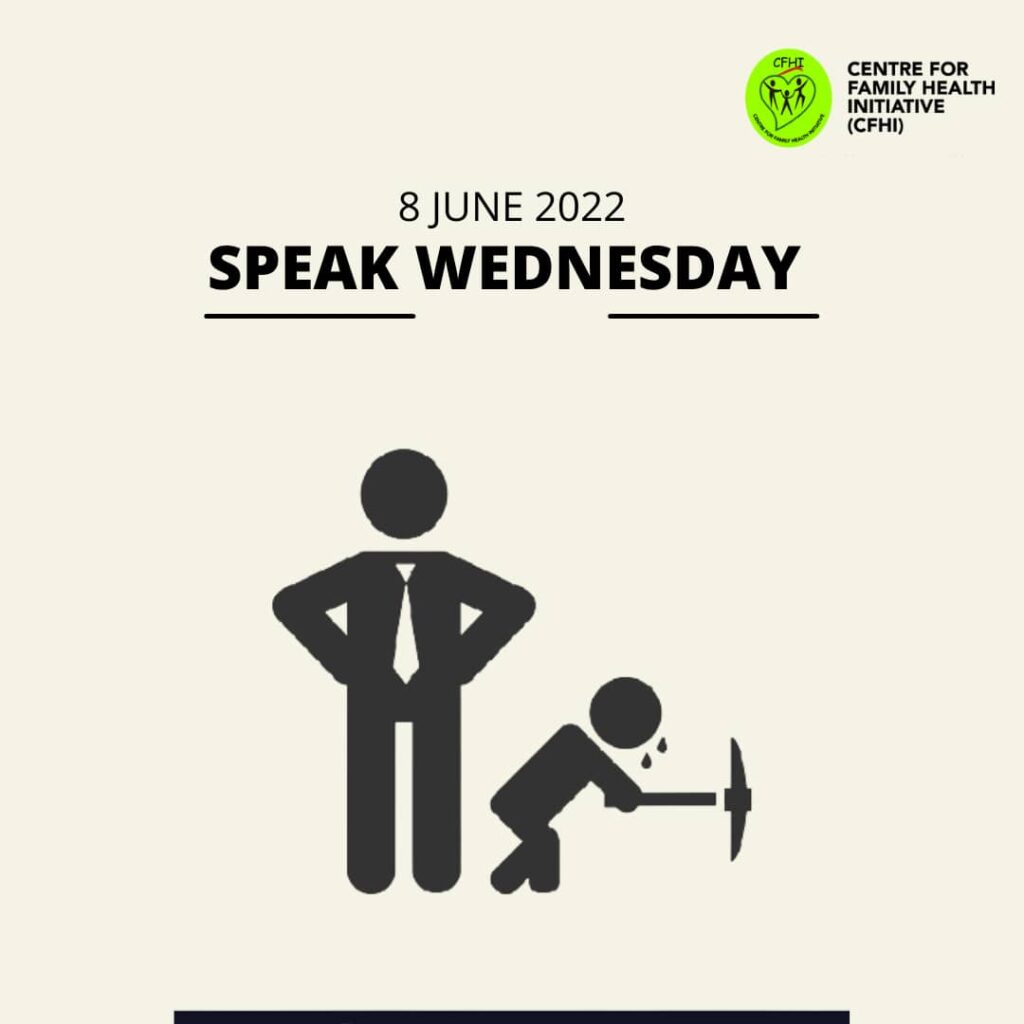
SPEAK WEDNESDAY-CHILD ABUSE

Section 28 of the Child Rights Act provides that no child shall be subjected to any forced or exploitative labour; or employed to work in any capacity where he is employed as a domestic help outside his own home or family environment.

Child labour refers to the permissible and non-permissible work done by children for a third party or an employer, which is sometimes done in hazardous situations. It is, however, important to note that this does not include reasonable household chores carried out by children under supervision in their homes which is a primary part of training children to be responsible adults in the future.

In Nigeria, child labour has persisted due to extreme poverty, lack of access to quality education, poor economic growth and the societal attitude towards child labour. Regardless of the existing laws prohibiting the practice, children are being pushed into domestic work daily just to bring additional income to support the family while facing exposure to sexual exploitation and other hazards associated with child abuse.

According to ILO, estimates determine that the current number of child workers in Nigeria is 15 million, which shows that Nigeria has the highest number of child labour in West Africa. The effects of child labour on children include both bodily and mental harm, poor or zero education, sexual or economic abuse, and other violations of child’s rights.

To eliminate domestic child labour in Nigeria, the problem of poverty should be tackled first by an overhaul of the economy to provide jobs for adult citizens of the country. Education should be made free for children from primary to secondary levels to keep children in school and lessen the financial burden on families. Also, the government should implement laws like the Child Rights Act and the Labour Act to foster the protection of children from exploitation.

Speak Wednesday is an initiative of CFHI to address issues around gender-based violence and gender bias. Join us every Wednesday on our social media platforms for more episodes.

#SpeakWednesday #ChildLabour #DomesticViolence #SDGs #EndChildLabour #PurnishPerpetrators

SPEAK WEDNESDAY-CHILD ABUSE Read More »

World Day Against Child Labour 2021

CHILD ABUSE

Child abuse occurs in different ways and scenarios across the globe with over a 95million children falling victim every year, according to the World Health Organization.  Africa remains the epicentre of this destructive practice which in some cases have been mistaken for discipline and justified by culture. It won’t be too early to mention here that there is a clear-cut difference between child abuse and discipline. Punishment could be essential to instil some set of values in children; however, this sort of punishment is not synonymous with putting the life of a child in danger and any punishment that harm or can harm a child has become an “abuse”.

Also, because sex is related to a temporal anti-depressant and provides relief from stress and pressure, without paying attention to family planning and the use of contraceptives, many children are born out of plan. More often than not, this case is peculiar to indigent families where children become a money-making machine for their parents thereby rendering children’s intellect futile and their emotions of no essence. Oh Yes, Children also have will, intellect and emotions. They are human!

We must consider some type of child abuse, the effect on the child and the effect of this practice on society. Until we come to the acceptance that child abuse is destructive and it happens even when parents are innocently caring for their kids, we may continue to live in the delusion that child abuse is only about sexual molestation and trafficking.

 TYPES OF CHILD ABUSE

  • Physical Abuse: This is often time what many African parents refer to as punishment or discipline. This kind of abuse is characterized by beating and hitting that could be harmful to the child. Contrarily to what parents and guardians think, excessive beating or harming a child has been proven to be counterproductive in the training of a child. “Spanking plants seed of later violent behaviour and spanking doesn’t work”- AskDr.Sears.com
  • Sexual Abuse: This is when an adult has sexual intercourse with a child. Compared to physical abuse, sexual abuse does not usually leave a glaring mark and it is more difficult to identify its victim. Yet, this abuse put children in an extremely traumatized condition.
  • Psychological Abuse: It was earlier mentioned that children also have emotions and would naturally react within them to situations that they perceive as not palatable even though they may not be able to fully express themselves or rebel.

Turning children into money making machine- having them hawk around the street or sending them to a stranger’s house to work for money/food when their mates are in school is abuse that affects children psychologically and can ruin their self-esteem. Children who are quietly forced to live this way may appear unbothered but there’s something in them that yearns for what they are deprived of. All form of neglect and denying children of their basic right, including the opportunity to play may appear negligible but this has a great impact on the well-being and growth of a child.

Also, the kind of names children are called and how they are being addressed as a way of moulding/destroying them. I think I can hear you say what! How?

Shouting at children, calling them bad names and the use of abusive words has been found destructive to the well-being of a child. Even though this might not be measurable, it becomes evident in the lifestyle of a child if not stopped. Signs may include timidity and low self-esteem

EFFECTS OF CHILD ABUSE

The effect of child abuse (of whatever type) on a child is numerous, all of which can result in mental health problem. Mental health problem is a condition yet to be given utmost attention to in Africa and our silence on this is causing us more harm than good. Statistics revealed that 1 out of every 10 children and young people suffer mental health problem as a result of their responses to their daily lives. Facts gathered by Mental Health Foundation from the World Health Organization and various researches show that “20% of adolescents may experience a mental health problem in any given year. 50% of mental health problems are established by age 14. 10% of children and young people (aged 5 -16 years) have a clinically diagnosable mental problem, yet 70% of children and adolescent who experience mental health problems have not had appropriate interventions at a sufficiently early age”.

THE GOODNEWS!

The interesting thing about child abuse is that “it is not an accident, hence, it is controllable”. Here are a few ways:

  • Love – Love is a language everyone understands, including children. Disciplining children in love without harm or bruise is effective in instilling in them moral values that are essential for attaining a beautiful future.
  • Plan for your children – The potency of a man and fertility of a woman is not tested by the number of children. Have the number of children you can cater for. Children rejoice when they have access to basic things and “their joy is not tied to the quantity or the luxury but the access and enjoyment”.
  • Befriend them – Often time adults act like they were never a child or tend to pretend like they were “holy children”. Until children know you will understand their plight, they won’t talk to you/confide in you. Children are not as ignorant as many adults think, they only shrink back out of fear and respect. When they need to talk, you should come to their mind as a parent/guardian.
  • Be Peaceful – Live at peace with your spouse and the people around you. Children learn more from what they see than what they hear. When violence is seeing as a norm around them, they may not be able to tell when they are being abused and/or become abusive. It doesn’t matter what you tell them, they are watching you!

The list cannot be covered in this article but you must be aware of child abuse, the effects and how you can contribute your quota to see that children live and live well. The effect of child abuse on society at large is enormous.

Before a family (and a Nation) can boast of a successful succession plan and an assured posterity, the quality of life and well-being of her adolescent must be evaluated.

World Day Against Child Labour 2021 Read More »