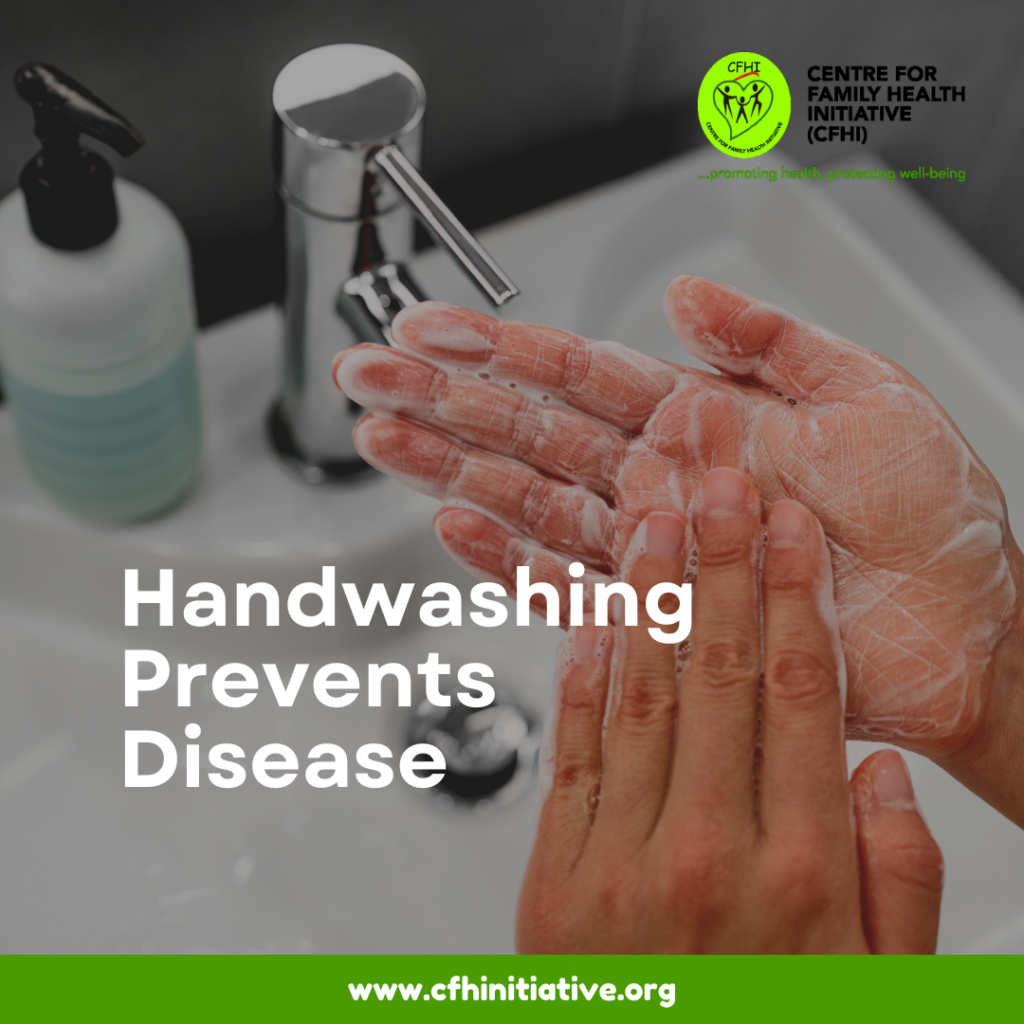
Handwashing Prevents Disease
Handwashing with soap remains one of the most effective and affordable ways to prevent diseases and protect public health. According to the World Health Organization and global health partners, proper hand hygiene significantly reduces the spread of infectious diseases such as diarrhea, respiratory infections, and even emerging outbreaks [1]. Despite its simplicity, handwashing is often overlooked, contributing to millions of preventable illnesses and deaths worldwide.
Scientific evidence shows that unclean hands are a major pathway for disease transmission. Germs from faecal matter, contaminated surfaces, and respiratory droplets easily spread through touch, food handling, and person-to-person contact. Research indicates that a single gram of human faeces can contain up to one trillion germs, making proper hand hygiene critical in breaking the chain of infection [2]. Handwashing with soap has been shown to reduce diarrheal diseases by 23–40% and respiratory infections by up to 21% [3].
Globally, the burden of poor hand hygiene remains alarming. An estimated 2.3 billion people lack access to basic handwashing facilities with soap and water, while 1.7 billion still do not have basic hygiene services at home [4]. Additionally, nearly half of healthcare facilities worldwide lack proper hand hygiene services, putting patients at risk of infections [5]. Among children, poor hygiene contributes significantly to disease, with approximately 1.8 million children under five dying annually from preventable illnesses such as diarrhea and pneumonia conditions that proper handwashing could help reduce [6].
Various interventions have been implemented globally to promote hand hygiene. Organizations such as UNICEF and WHO continue to support handwashing campaigns, improve access to water and sanitation, and integrate hygiene education into schools and communities [1]. Community awareness programs, provision of handwashing facilities, and behavior change communication have proven effective in improving hygiene practices. Studies show that even a small investment less than $1 per person annually can significantly expand access to handwashing facilities and save hundreds of thousands of lives [7].
Our commitment to ‘Standing with Science’ was most evident during the height of the COVID-19 pandemic. Recognizing that awareness is only effective when paired with resources, CFHI conducted extensive sensitization and distribution drives across the FCT. This included critical interventions at the Kuje Prison in Abuja and various schools throughout the FCT, where we provided essential hygiene tools such as professional-grade hand sanitizers, liquid soaps, and specialized buckets and bowls with attached taps to facilitate contactless handwashing. This proactive approach ensured that the most vulnerable populations had the physical means to break the chain of infection.
In conclusion, handwashing is a simple yet powerful tool that everyone can practice daily. Individuals are encouraged to wash their hands regularly especially before eating, after using the toilet, and after contact with potentially contaminated surfaces. Governments and institutions must also invest in accessible hygiene facilities and promote behaviour change. By making handwashing a habit, we can prevent diseases, save lives, and build healthier communities. Clean hands are not just a personal responsibility they are a public health necessity.
References
- https://www.who.int/news-room/fact-sheets/detail/hand-hygiene
- https://www.cdc.gov/hygiene/about/index.html
- https://www.cdc.gov/hygiene/personal-hygiene/hands.html
- https://www.unicef.org/reports/state-worlds-handwashing-2021
- https://www.who.int/publications/i/item/9789240055445
- https://www.who.int/news-room/fact-sheets/detail/diarrhoeal-disease
- https://www.worldbank.org/en/news/feature/2020/04/22/handwashing-for-all-the-value-of-hand-hygiene-to-save-lives-and-economies
Handwashing Prevents Disease Read More »