Girl Education

SPEAK WEDNESDAY

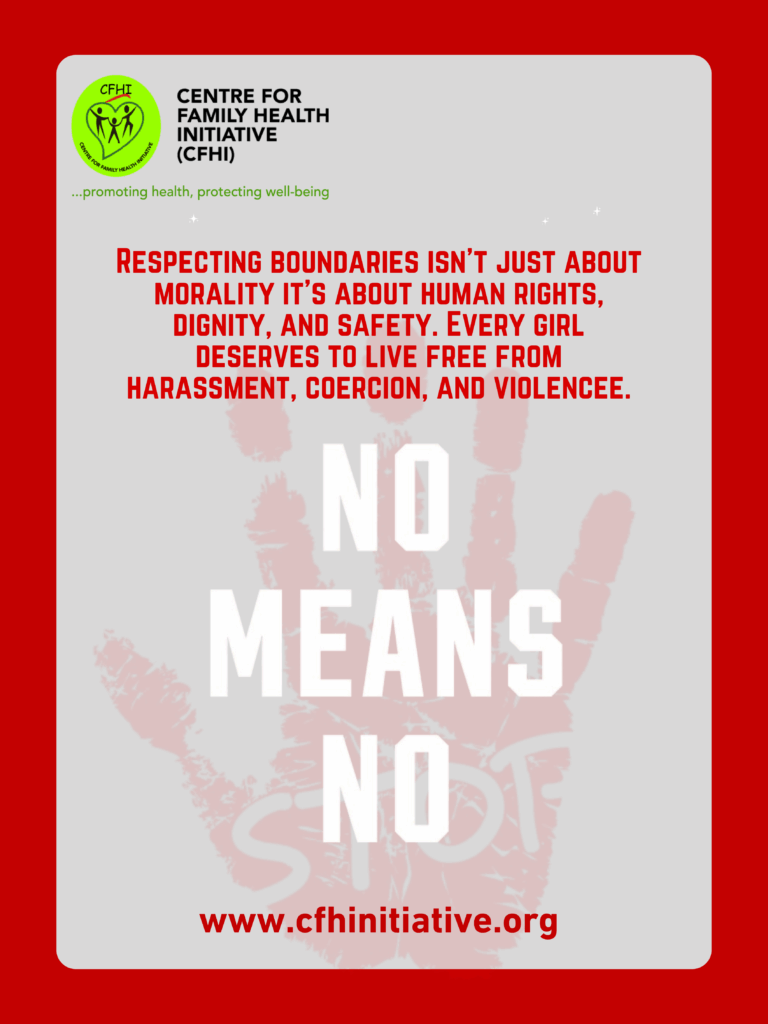
“NO Means NO”

Today, the simple word “No” still struggles to carry the weight it deserves. For many young people, especially girls and young women, saying “no” can come with fear, pressure, or misunderstanding. Yet, “no” should be enough. It is a complete sentence one that should be heard, respected, and never questioned. As we continue to raise awareness around gender equality and safety, understanding the true meaning of consent and personal boundaries becomes essential for building a healthy society.

Consent is more than just permission; it is about respect, autonomy, and communication. It means that every person has the right to decide what happens to their body, their time, and their emotions. Consent must be freely given, not forced, tricked, or coerced. It cannot be assumed from silence or past behaviour, and it can be withdrawn at any time. In relationships, friendships, or social settings, learning to respect a person’s “no” whether spoken or unspoken reflects maturity and integrity.

Unfortunately, the statistics around consent violations remain alarming. According to the World Health Organization (WHO), nearly one in three women globally has experienced physical or sexual violence in her lifetime, most often at the hands of an intimate partner 1. In Nigeria, the National Bureau of Statistics (NBS) reports that many incidents of sexual or domestic violence are never reported, often due to fear of stigma, shame, or disbelief 2. These figures highlight how deeply ingrained gender norms and societal silence can make it difficult for survivors to speak out and for young people to learn what healthy respect truly looks like.

For young girls, learning to say “no” and knowing that it must be respected is an important part of personal development and self-protection. Saying “no” is valid when faced with peer pressure to engage in sexual activity, when uncomfortable with unwanted touching, or when asked to share private information or photos online. “No” is equally powerful in social and emotional spaces: refusing manipulative statements like “If you love me, you’ll do it,” or declining invitations that compromise one’s comfort or safety. Every young person must understand that their voice matters, and their boundaries define who they are.

Equally important is educating boys and young men about consent, empathy, and accountability. True respect means not only hearing “no” but also actively seeking a clear and enthusiastic “yes.” It means understanding that real strength lies in restraint, understanding, and kindness not in control or pressure. When communities, schools, and families foster open conversations about respect and consent, they equip young people with the values needed to build relationships rooted in trust and equality.

Through our gender norms interventions, CFHI empowers young people with knowledge and confidence to challenge and transform harmful gender norms (especially those that disadvantage women and girls) while protecting respect, equality and fairness. Each adolescent club activity, school campaign, and community outreach brings us closer to a society where consent is understood, respected, and upheld where “NO” truly means “NO.

Speak Wednesday is an initiative of CFHI to address issues around gender-base violence and gender-bias.


References

  1. World Health Organization. Violence Against Women: Key Facts. WHO, 2023. Available from: https://www.who.int/news-room/fact-sheets/detail/violence-against-women
  2. National Bureau of Statistics. National Survey on Domestic and Sexual Violence in Nigeria. Abuja: NBS; 2022. Available from: https://nigerianstat.gov.ng/elibrary/read/1241055


SPEAK WEDNESDAY Read More »

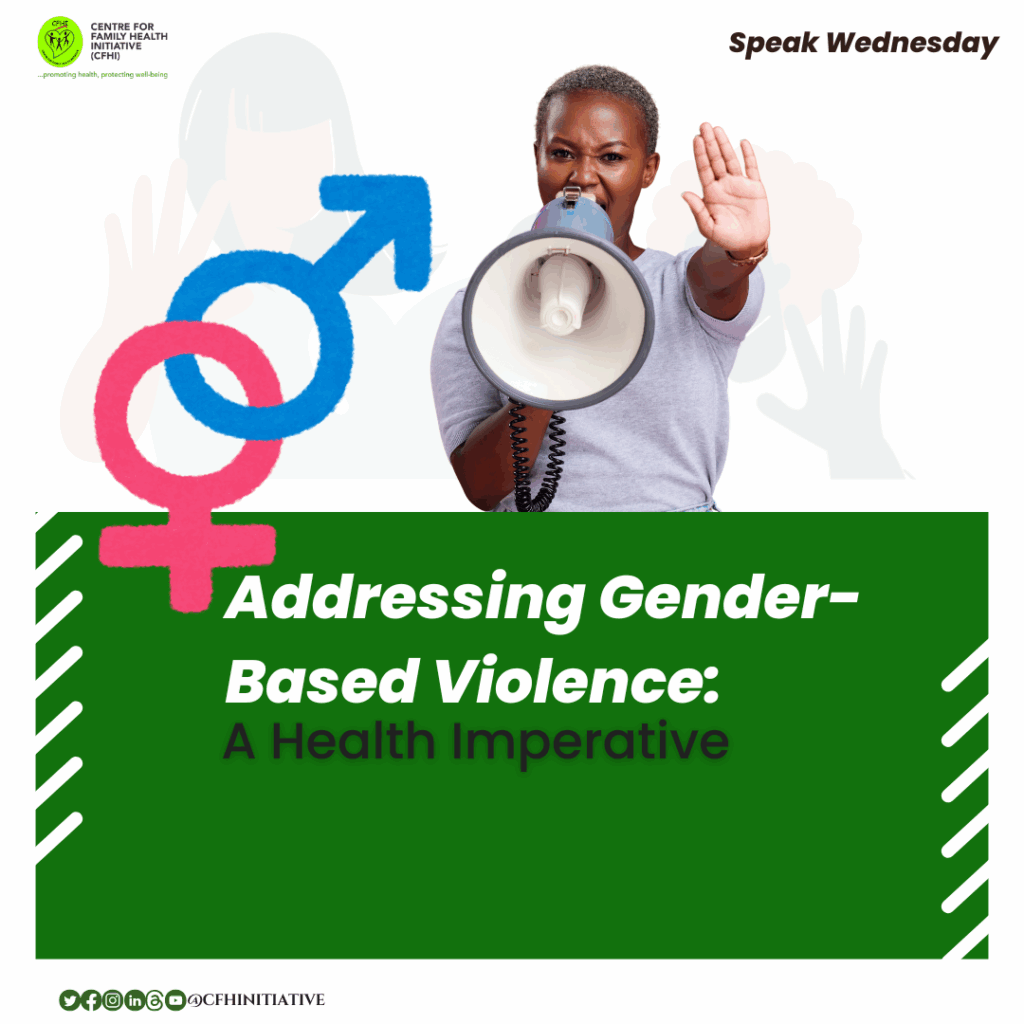
SPEAK WEDNESDAY ON ADDRESSING GENDER-BASED VIOLENCE: A HEALTH IMPERATIVE

Gender-Based Violence (GBV) is not merely a social injustice; it is a profound public health crisis that demands immediate and sustained attention. According to the World Health Organization (WHO), nearly 1 in 3 women worldwide have been subjected to physical and/or sexual violence by an intimate partner or non-partner sexual violence, or both.

The Health Consequences of GBV

The repercussions of GBV extend far beyond immediate physical injuries. Survivors often face long-term health issues, including chronic pain, gastrointestinal disorders, and sexually transmitted infections. Mental health is also severely impacted, with increased risks of depression, anxiety, post-traumatic stress disorder, and suicidal tendencies. WHO emphasizes that GBV has significant and long-lasting impacts on physical and mental health, including injury, unintended pregnancy, pregnancy complications, sexually transmitted infections, HIV, depression, post-traumatic stress disorder, and even death.

GBV as a Barrier to Gender Equality

GBV perpetuates gender inequalities, hindering women’s and girls’ access to education, economic opportunities, and political participation. It reinforces societal norms that devalue females, creating an environment where discrimination and violence are tolerated.

The Role of the Health Sector

Healthcare providers are often the first point of contact for survivors. Therefore, the health sector plays a crucial role in identifying and supporting victims. This includes providing medical care, psychological support, and referrals to legal and social services. Training healthcare workers to recognize signs of abuse and respond appropriately is essential.

Policy and Legal Frameworks

Furthermore, robust legal frameworks are vital in combating GBV. Nigeria’s Violence Against Persons Prohibition (VAPP) Act is a step in the right direction, but effective implementation and enforcement are critical. Policies must be backed by adequate resources and political will to ensure survivors receive justice and perpetrators are held accountable.

Conclusion

GBV is a multifaceted issue that demands a comprehensive response. Recognizing it as a health imperative underscores the urgency of coordinated action across sectors. Community leaders, educators, and religious institutions must be involved in challenging harmful gender norms and promoting respectful relationships. Educational programs that focus on gender equality and non-violent conflict resolution can foster a culture of respect and safety.

By prioritizing survivor-centred care, engaging communities, and strengthening legal systems, we can move towards a society where women and girls live free from violence and discrimination.

Speak Wednesday is an initiative of CFHI to address issues around gender-based violence and gender bias.

#SpeakWednesday #GBV #GenderBasedViolence #EndGBV #ViolenceAgainstWomen #DomesticViolence #EqualityForAll #GenderEquality #GenderBias


References:

  1. World Health Organization. “Violence against women.” WHO
  2. World Health Organization. “Gender-based violence is a public health issue.” WHO
  3. World Health Organization. “Strengthening health sector response to violence against women.” WHO
  4. International IDEA. “Funding and Oversight for VAPP Implementation.” International IDEA

SPEAK WEDNESDAY ON ADDRESSING GENDER-BASED VIOLENCE: A HEALTH IMPERATIVE Read More »

SPEAK WEDNESDAY ON HOW CAN SCHOOLS ENCOURAGE MORE GIRLS TO PURSUE STEM CAREERS?

Why do we still hear “STEM isn’t for girls” in 2025? Despite significant progress, women remain underrepresented in science, technology, engineering, and math. The numbers tell a clear story: according to UNESCO, only 28% of the world’s STEM workforce is female. But here’s the catch, research consistently shows that girls perform just as well as boys in math and science. So, if ability isn’t the issue, what is?

The answer lies in subtle biases, lack of representation, and systemic barriers that start early in education. But schools have the power to change this. They can introduce students to women in STEM through guest speakers, workshops, and mentorship programs. Seeing real-life examples makes these careers feel achievable. Revamping curricula to highlight historical and modern female STEM leaders ensures girls see themselves in these fields. Creating STEM clubs or initiatives specifically designed for girls can foster confidence and interest.

Gender stereotypes often shape students’ aspirations. A study by the American Association of University Women found that teachers and parents often unintentionally discourage girls from pursuing technical fields. Training educators to recognize and eliminate gender bias in teaching methods and classroom interactions is essential. Encouraging girls to take part in STEM competitions, robotics clubs, and coding boot camps helps dismantle the idea that STEM is only for boys. Using gender-neutral language when discussing careers makes a significant difference.

Confidence is another major barrier. Girls often underestimate their abilities in STEM, even when their performance is equal to or better than their male peers. Encouraging resilience and problem-solving instead of perfectionism fosters a growth mindset. Mentorship and peer support programs, where older female students or professionals guide younger girls, can be incredibly impactful. Schools should actively celebrate girls’ achievements in STEM through awards and public recognition to reinforce their belonging in these fields.

Schools shape futures. If we truly want to see gender equality in STEM, the change must start now. The answer isn’t just in policies or statistics, it’s in every classroom, every lesson, and every teacher who believes that a girl’s place is wherever she wants to be. The future of STEM is diverse. The question is, are we ready to build it?

Speak Wednesday is an initiative of CFHI to address issues around gender-based violence and gender bias.

#SpeakWednesday #GirlsInSTEM #STEMEducation #WomenInSTEM #GenderEquality #FutureIsSTEM #EducationForAll #BreakTheBias


SPEAK WEDNESDAY ON HOW CAN SCHOOLS ENCOURAGE MORE GIRLS TO PURSUE STEM CAREERS? Read More »

SPEAK WEDNESDAY ON THE ROLE OF LITERACY IN COMBATING GENDER BASED VIOLENCE AGAINST WOMEN

Gender-based violence (GBV) is a serious issue affecting millions of women worldwide. It includes physical, sexual, emotional, and psychological harm, often linked to deep-rooted gender inequalities. While legal reforms and social programs are crucial in tackling GBV, one of the most powerful tools in this fight is literacy. Improving literacy, especially among women, can play a critical role in reducing GBV and addressing the broader issue of gender bias.
How Literacy Can Help Reduce Gender-Based Violence

1. Awareness and Empowerment
Literacy gives women the ability to access information about their rights and the resources available to help them. Many women who experience violence are unaware of their legal protections or how to seek help. By being able to read and write, women can better understand their options and take steps to escape abusive situations. Literacy also provides a sense of confidence and self-worth, helping women stand up against violence and assert their rights.

2. Shifting Cultural Norms
Cultural attitudes that reinforce gender inequality are a major driver of GBV. Literacy plays a role in challenging these harmful norms. Educated women are more likely to question practices such as child marriage, domestic abuse, and gender discrimination. Men who are educated also tend to have more respect for women and are less likely to engage in violent behaviour. In societies where literacy programs are introduced, there is often a noticeable shift toward gender equality and lower rates of GBV.

3. Economic Independence
One of the reasons many women remain in abusive relationships is their financial dependence on their abusers. Literacy can change this by improving women’s access to better job opportunities and giving them the skills to manage their own finances. When women can earn an income and support themselves, they are less vulnerable to violence and more capable of leaving abusive situations.

4. Creating Safe Spaces for Women
Literacy programs often serve as community hubs where women can come together to learn and share experiences. These programs can also be platforms to discuss sensitive issues like GBV in a safe, supportive environment. By raising awareness of GBV and providing practical solutions, such as legal advice and access to shelters, these programs help women seek the support they need.
Literacy is more than just the ability to read and write—it is a tool for empowerment, economic independence, and social change. When women are literate, they are better equipped to challenge violence, defend their rights, and break free from abusive relationships. As a key part of the fight against gender-based violence, literacy programs offer a path to safety and equality for women everywhere.
Speak Wednesday is an initiative of CFHI to address issues around gender-based violence and gender bias.

References:
1. World Health Organization (2021). Violence against women prevalence estimates. Available at: https://www.who.int
2. UNESCO (2020). Education transforms lives. Available at: https://en.unesco.org/themes/education

SPEAK WEDNESDAY ON THE ROLE OF LITERACY IN COMBATING GENDER BASED VIOLENCE AGAINST WOMEN Read More »

THE ROLE OF EDUCATION IN ADDRESSING GENDER BIAS: WHY LITERACY MATTERS FOR EVERY GIRL

Education is a game-changer, especially for girls. Across the world, millions of girls are held back by gender bias, often missing out on school because of outdated beliefs that prioritize boys’ education. However, the reality is that when girls receive an education, it not only transforms their own lives but also positively impacts their families and entire communities.

Literacy is more than just the ability to read and write; it is a gateway to empowerment and independence. Educated girls are more likely to delay marriage, have healthier children, and earn better incomes. According to UNICEF, when a girl is educated, she has the power to transform her life and lift her community out of poverty.

Moreover, educated women are more likely to advocate for their rights and challenge harmful gender norms. The World Health Organization (WHO) notes that mothers with an education are better equipped to keep their families healthy, which means fewer child deaths and stronger communities.
Schools can be the front line in the fight against gender bias. Education can challenge stereotypes by teaching both boys and girls the importance of equality and respect. When children learn about gender equality early on, they grow up to be adults who value and promote it. -UNESCO

Every girl deserves the chance to learn. When we invest in girls’ education, we invest in a brighter, more equal future for everyone. It’s time to break down the barriers and make sure every girl, everywhere, gets the education she deserves.
Speak Wednesday is an initiative of CFHI to address issues around gender-based violence and gender bias.

References
• UNICEF. (2022). Why Girls’ Education Matters.
• WHO. (2021). Women’s Health and Education.
• UNESCO. (2020). COVID-19 and Education: The Road to Recovery.
• UNESCO. (2019). Gender Equality in Education: A Key to Social Progress.

THE ROLE OF EDUCATION IN ADDRESSING GENDER BIAS: WHY LITERACY MATTERS FOR EVERY GIRL Read More »

SPEAK WEDNESDAY ON The Impact of GENDER BASED VIOLENCE ON WOMEN’S ECONOMIC OPPORTUNITIES

Gender-based violence (GBV) is the most prevalent yet least apparent human rights violation in the world, according to UNICEF. It involves impairment to a person’s bodily, sexual, mental, or financial health brought on by socially accepted gender power disparities. Threats of violence, coercion, and deprivation of public or private liberty are also included.
The profound repercussions of GBV on women’s economic opportunities are broad and substantial, as it is predominantly directed at women.
GBV inflicts direct harm on women’s economic stability. WHO reports highlight that women experiencing GBV often encounter challenges maintaining consistent employment due to absenteeism, reduced productivity, and job instability (WHO, 2013). This leads to a palpable decrease in income, leaving them financially vulnerable. The economic ramifications of GBV are enduring. Women who experience violence may face challenges in building a stable career, accumulating savings, and planning for retirement.
According to UN Women, GBV is a formidable barrier to women’s access to education and vocational training. Fear of violence or harassment may deter them from pursuing educational and skill-building opportunities, curtailing their capacity to attain qualifications essential for higher-paying occupations.

Furthermore, the fear of GBV can discourage women from venturing into entrepreneurship. This is corroborated by UN Women, highlighting that women may hesitate to seek loans, network, or engage in public activities necessary for entrepreneurial success (UN Women, 2019).

GBV is a significant hindrance to women’s economic empowerment and equality. Combating GBV and its economic effects needs comprehensive solutions that include legal reforms, social support systems, education, and awareness campaigns. By fostering violence-free settings, society can enable women to fully participate in economic opportunities, contributing to developing communities and nations.
Speak Wednesday is an initiative of CFHI to address issues around gender-based violence and gender bias.
#SpeakWednesday #Women’sRights #ENDGBV #WomenEconomicRights #GenderBias #GenderInequality

SPEAK WEDNESDAY ON The Impact of GENDER BASED VIOLENCE ON WOMEN’S ECONOMIC OPPORTUNITIES Read More »

SPEAK WEDNESDAY ON IMPACT OF GENDER BASED VIOLENCE ON GIRLS’ EDUCATION

Gender-based violence (GBV) is the most prevalent yet least obvious human rights violation in the world, according to UNICEF. It involves impairment to a person’s bodily, sexual, mental, or financial health brought on by socially accepted gender power disparities. Threats of violence, coercion, and deprivation of liberty—in public or private—are also included.

There are several types of gender-based violence: In every country, there are shockingly high instances of intimate relationship violence, as well as sexual assault, child marriage, female genital mutilation, trafficking for sexual exploitation, female infanticide, and “honour” crimes.

GBV is frequently identified as a serious impediment to girls’ regular school attendance. Fear of violence, harassment, or assault can keep girls at home, preventing them from participating in academic and extracurricular activities. This fear-driven absenteeism, as recorded by UNICEF, results in missed classes and can eventually lead to girls dropping out of school entirely. As a result, their educational path is plagued by gaps, limiting their long-term chances.

Beyond the physical consequences, the psychological stress caused by GBV has a long-term impact on girls’ academic achievement. According to UNESCO, the aftermath of violence can emerge as anxiety, despair, and low self-esteem, impairing children’s ability to concentrate, learn, and actively participate in school activities. This psychological cost detracts from their overall learning experience.

UN reports that the complicated link between GBV and harmful practices such as early marriage and pregnancy is also obvious. For females who have been subjected to violence, the pursuit of education may be overshadowed by societal standards that promote marriage and child-rearing. Early marriage frequently results in girls dropping out of school, creating a cycle of limited education and limited possibilities.

To address the issue of domestic violence and its impact on girls’ education, the government, civil society, international organizations, and individuals can confront gender-based violence head on and create a society in which girls are free from the cycle of violence and have access to high-quality education to succeed in life.

Speak Wednesday is an initiative of CFHI to address issues around gender-based violence and gender bias.
#SpeakWednesday #GBV #Girl’srights #Girls’Education #genderequality #genderbias

SPEAK WEDNESDAY ON IMPACT OF GENDER BASED VIOLENCE ON GIRLS’ EDUCATION Read More »

SPEAK WEDNESDAY ON EFFECT OF WORKPLACE VIOLENCE AGAINST WOMEN

A lot of female workers are forced to work in intimidating, hostile or humiliating environment where they are often asked for sexual favors, exposed to inappropriate jokes, insinuations and physical contact that can amount to assault making a work environment uncomfortable for them. According to research, between 40 and 50 percent of women experience unwanted sexual advances, physical contact or other forms of sexual harassment at work.

In today’s edition of Speak Wednesday, we retell the story of one of our beneficiaries, Grace (not her real name). Grace, an orphan, who was discovered by one of our community volunteers in Sabon Lugbe community, was a victim of workplace violence. She worked as a live-in house help for a certain family in the community, but was occasionally sexually abused by her boss. Although she endured for a while out of desperation to keep her job (she was the bread winner of the home), she had to leave because it started affecting her mental health and productivity. Few months later, she got a job in a beer parlour where she was also preyed upon sexually by both the customers and the owner of the business.

When CFHI was made aware of her sad experience, she was immediately enrolled into skills acquisition training and given startup kits for her business through IHVN project. Currently, she is successfully running her tailoring business in the community.

Gender based violence in the workplace is a major hindrance to women’s economic empowerment, autonomy and independence, however, this can be tackled if there is a collective agreement by major stakeholders on policies to prevent and address GBV in the workplace.

Thank you for joining today’s Speak Wednesday on workplace violence. Join us every Wednesday for more episodes as we work together to end all forms of violence against women and girls.

#SpeakWednesday #GBVStory #EndGBVNow

SPEAK WEDNESDAY ON EFFECT OF WORKPLACE VIOLENCE AGAINST WOMEN Read More »

SPEAK WEDNESDAY ON BARRIES INHIBITING WOMEN’S ADVANCEMENT IN DECISION-MAKING ROLES

In recent decades, significant strides have been made toward gender equality in various spheres of life. However, despite these advancements, a substantial gender gap persists when it comes to women’s representation in decision-making roles across industries and sectors. The underrepresentation of women in positions of power and authority, particularly in decision-making capacities, remains a complex and concerning issue. Gender discrimination impedes women’s advancement in decision-making roles, economic empowerment, safety, and autonomy, which has an impact on the country’s GDP and economy. These stereotyping and unconscious biases are barriers to obtaining gender balance. They are also linked to larger sociological, political, economic, and governance issues. Furthermore, internal hurdles within women, along with insufficient leadership support, add to the imbalance. In Nigeria’s Senate and House of Representatives, men hold 96.5% of the 423 seats, while women only have 3.5%. In addition, during the recent Ministerial screening, out of 48 seats, less than 16% were occupied by women.
The primary factors contributing to the underrepresentation of women include:
A lack of effective government action;
Lower levels of female employment and education;
Sexism, sometimes but not always deriving from religion or traditional practices;
A corrupt and patronage-based political system;
Violence at elections, including against women candidates.
Additionally, within the professional sphere, despite notable growth in the number of women occupying middle management positions over the past two decades, the proportion of female Chief Executive Officers within major corporations remains remarkably low. This discrepancy can be attributed to a variety of factors, including:
Inadequate exposure to line management roles.
Limited access to promising career paths.
Gender-related variations in linguistic styles and socialization.
Prevalent gender-based stereotypes.
The persistence of established networks favouring male advancement.
Superficial inclusion efforts, often referred to as tokenism.
However, this can be addressed with conscious efforts by the government, civil society, international organizations, and individuals. By deliberately and cooperatively addressing gender discrimination barriers in Nigeria through policy reforms, transformation of discriminatory cultural norms, provision of funds, mentoring, and leadership training, women can attain greater participation and prosper in leadership roles.
According to the UNDP, gender equality (Goal 5) will help to enable women’s full and effective involvement and equal chances for leadership at all levels of decision-making in political, economic, and public life.
Speak Wednesday is an initiative of CFHI to address issues around gender-based violence and gender bias.
#SpeakWednesday #GenderEquality #GenderDiscrimination #WomenInLeadership

REFERENCES
Kelly, L. (2019). Barriers and enablers for women’s participation in governance in Nigeria. K4D Helpdesk Report. Brighton, UK: Institute of Development Studies.
Oakley, J.G. Gender-based Barriers to Senior Management Positions: Understanding the Scarcity of Female CEOs. Journal of Business Ethics 27, 321–334 (2000). https://doi.org/10.1023/A:1006226129868
Kayode Oyero. (2023). #IWD2023: Women Get 15 Out Of 423 Senate, Reps Seats.
https://www.channelstv.com/2023/03/08/iwd-women-get-15-out-of-423-senate-reps-seats/

SPEAK WEDNESDAY ON BARRIES INHIBITING WOMEN’S ADVANCEMENT IN DECISION-MAKING ROLES Read More »

GENDER DIGITAL DIVIDE IMAGE

GENDER DIGITAL DIVIDE AGAINST WOMEN AND GIRLS

Digital divide according to Investopedia, encompasses the technical and financial ability to utilize available technology, along with access (or a lack of access) to the internet.

As observed in education and other areas of life, women and girls face a wide divide in the digital space which is significantly taking over the universe and economic opportunities with the world adjusting to the change. This indicates that gender disparity has also found its undeserving place in the digital world.

This wide gender gap in digital access, literacy and skills is caused by the social norms, gender roles and expectations of women in the household. This includes the negative stereotyping of women and girls in their career paths and the assumptions that boys and men do better in science, technology, engineering, and mathematics (STEM) fields than girls.

The digital divide against women and girls will worsen gender discrimination and promote unequal access to employment opportunities for girls, which can lead to financial lack and poverty.

Government and stakeholders can work towards the inclusion of girls and women in the digital ecosystem and close the gap by ensuring that girls are educated and have access to ICT, improve gender-responsive systems and programs, and the like.

Speak Wednesday is an initiative of CFHI to address issues around gender-based violence and gender bias.

#SpeakWednesday #Genderbias #GenderDigitalDivide

GENDER DIGITAL DIVIDE AGAINST WOMEN AND GIRLS Read More »