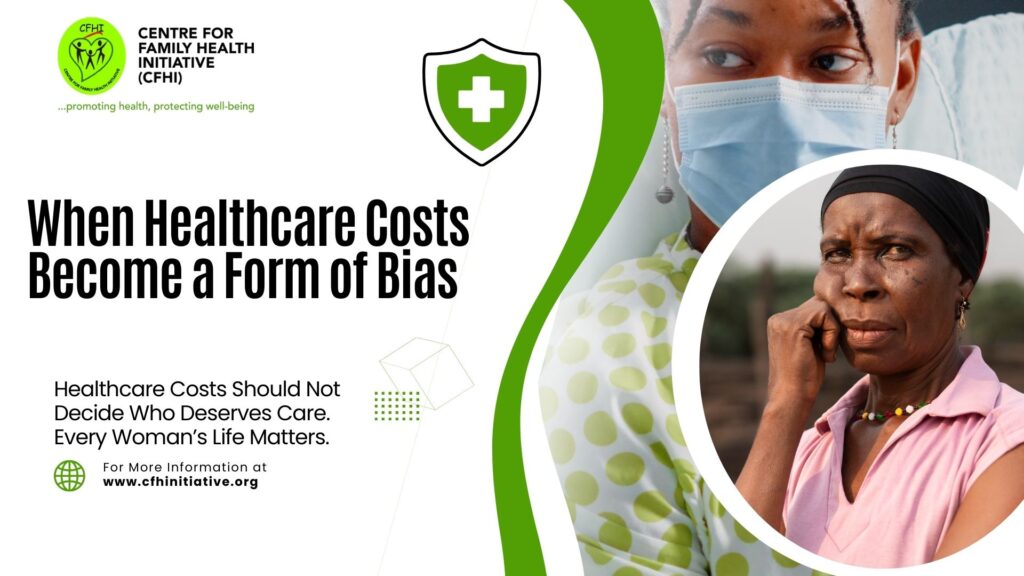
When Healthcare Costs Become a Form of Bias
When healthcare costs rise beyond the reach of ordinary people, they silently become a form of bias one that decides who lives, who suffers, and who is forced to endure preventable pain. In Nigeria today, access to quality healthcare is increasingly determined not by need, but by ability to pay. For millions of women and girls, especially in low-income and underserved communities, the cost of care has become a cruel barrier that denies them their most basic right: the right to health. This hidden injustice affects lives, futures, and communities.
The impact of this bias is devastating. Pregnant women delay antenatal care because consultation fees are unaffordable, adolescent girls are denied reproductive health services, and survivors of gender-based violence cannot access timely medical attention due to cost. These barriers fuel inequality, worsen health outcomes, and perpetuate cycles of suffering. When healthcare becomes a privilege instead of a right, women and girls bear the heaviest burden, trapped in a system that marginalizes them and ignores their dignity.
The financial strain of out-of-pocket spending is crushing. Families are forced to choose between food, education, and medical care, often at the expense of women and girls. This reality exposes a health system that has failed to protect those most vulnerable, leaving them at risk of illness, neglect, and further gender-based harm. A functional, responsive healthcare system should uplift women and girls, not push them into vulnerability. Every woman and girl deserve care, respect, and protection regardless of income.
The Nigerian government must act decisively. Investing in maternal, reproductive, and gender-sensitive health services, strengthening primary healthcare, implementing effective insurance schemes, and ensuring accountability at every level are not optional, they are urgent obligations. Health must be treated as a national priority, because no society can prosper while its women and girls remain unwell, unprotected, and underserved. A fair and just society is one where access to healthcare is based on need, not income. Ending cost-driven bias in healthcare requires collective action from policymakers prioritizing women’s health financing, to institutions delivering quality care, to communities demanding equitable systems.
The call to action is clear: the government, stakeholders, and citizens must commit to ensuring healthcare is affordable, accessible, and equitable for all. Healthcare should heal, protect, and empower women and girls, and not discriminate against them. Until costs no longer determine who can access care, gender-based bias will continue to persist quietly, unfairly, and at an unacceptable human cost.
Speak Wednesday is an initiative of CFHI to address issues around gender-base violence and gender-bias.
When Healthcare Costs Become a Form of Bias Read More »